The Income Tax Appellate Tribunal, Delhi, has clarified that offshore repair and overhaul services provided by a U.S.-based entity to Indian airlines do not attract taxation as Fees for Technical Services under the India-USA Double Taxation Avoidance Agreement, as the critical 'make available' condition remains unfulfilled. This ruling reinforces the narrow interpretation of FTS in tax treaties and provides significant relief to multinational service providers operating outside India.
Background & Facts
The Dispute
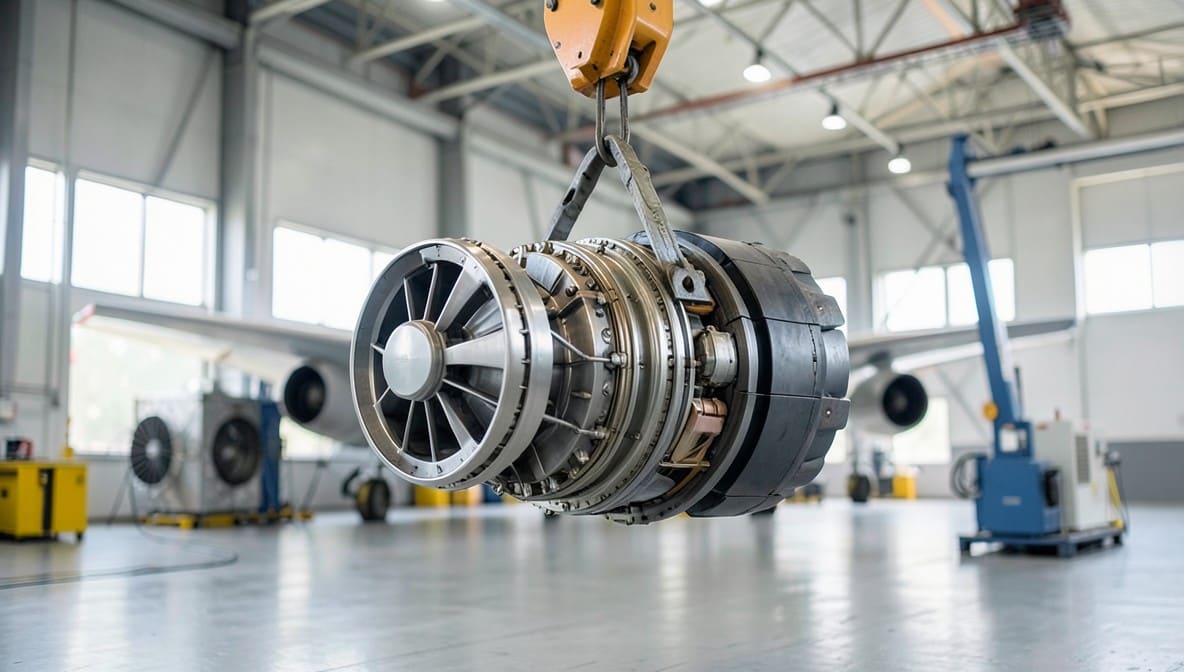
The appellant, GE Engine Service LLC, a U.S.-based company incorporated under the laws of the United States of America, provides overhaul, repair, inspection, testing, and spare parts supply services for GE aircraft engines used by Indian airline operators. The services are performed entirely at offshore facilities located outside India. Indian customers transport defective engine components to the appellant’s facilities abroad, where repairs are carried out, and the restored components are then shipped back to India. The appellant received aggregate receipts of Rs. 471,64,50,980 during the Assessment Year 2022-23 from these services, which the Assessing Officer taxed as Fees for Technical Services (FTS) under Section 9(1)(vii) of the Income Tax Act, 1961, and Article 12(4)(b) of the India-USA Double Taxation Avoidance Agreement (DTAA).
Key Facts
- The appellant is a non-resident taxpayer with a Tax Residency Certificate (TRC) from the United States.
- All repair and maintenance activities are performed exclusively at facilities located outside India.
- Indian customers retain ownership of the engines and parts throughout the process.
- The appellant does not send personnel to India to perform services, provide training, or establish any permanent establishment.
- The repair process involves inspection, replacement of parts, refurbishment, and re-shipping; no technical knowledge, design, or process is transferred to the Indian customers.
- The Indian customers continue to engage the appellant for subsequent repairs, indicating ongoing reliance on the service provider rather than self-sufficiency.
- The appellant’s services are governed by contractual agreements specifying offshore performance and no transfer of technology.
- The receipts were taxed at 10% by the Assessing Officer under Section 9(1)(vii) read with Article 12(4)(b) of the India-USA DTAA.
Procedural History
- 30.12.2024: Final Assessment Order passed under Section 143(3) r.w.s. 144C(13) by the Assistant Commissioner of Income Tax, Circle International Taxation 1(3)(1), Delhi, adding Rs. 471,64,50,980 as FTS.
- 06.04.2026: Hearing before the Income Tax Appellate Tribunal, Delhi Bench 'D'.
- 15.04.2026: Judgment pronounced by the Tribunal.
The Parties' Positions
For the Appellant
The appellant contended that:
- The services rendered are purely offshore and do not involve any presence or activity in India.
- The 'make available' condition under Article 12(4)(b) of the India-USA DTAA is not satisfied, as no technical knowledge, skill, experience, know-how, process, or technical design is transferred to the Indian customers.
- The Indian customers remain dependent on the appellant for repairs and do not gain the ability to perform similar services independently.
- The Tribunal’s own earlier decision in ITA No. 3700/Del/2023 (AY 2021-22) for the same assessee, dated 11.03.2026, had already held that such services are not FTS.
- The Tribunal’s decisions in Pratt & Whitney Canada Corp. v. DCIT (ITA No. 665/DEL/2025), Rockwell Collins Southeast Asia Pte Ltd v. DCIT (ITA No. 2409/DEL/2023), and Goodrich Corporation v. ACIT (ITA No. 988/DEL/2024) are directly applicable and binding as coordinate bench precedents.
- The Delhi High Court’s rulings in CIT v. De Beers India Minerals P. Ltd. and CIT v. BioRad Laboratories (Singapore) Pte. Ltd. affirm that mere use of a product or incidental learning does not constitute 'make available'.
For the Respondent
The Revenue contended that:
- The services involve technical expertise and are rendered to Indian customers for use in India, thus satisfying the source-based taxation principle under Section 9(1)(vii).
- The appellant shares technical data, diagnostic protocols, and troubleshooting guidance with Indian customers, thereby 'making available' technical knowledge.
- The Indian customers become 'wiser' through interaction with the appellant’s engineers and gain enduring benefit from the advice provided.
- The High Court’s decision in Director of Income Tax, Delhi v. M/S Lufthansa Cargo India supported taxing such services as FTS.
- The place of rendition is irrelevant if the services are utilized in India.
Relief Sought
The appellant sought deletion of the addition of Rs. 471,64,50,980 as FTS, arguing that the receipts are not taxable in India under the India-USA DTAA and that the assessment order should be set aside.
The Legal Issue
The central question was whether the offshore repair and overhaul services provided by a U.S.-based non-resident to Indian airline customers constitute 'Fees for Technical Services' under Article 12(4)(b) of the India-USA DTAA, requiring the satisfaction of the 'make available' condition.
Arguments Presented
For the Appellant
The appellant relied on the binding precedent of its own case for AY 2021-22, where the Tribunal had already held that similar services did not satisfy the 'make available' clause. It cited Pratt & Whitney Canada Corp., Rockwell Collins, and Goodrich Corporation to demonstrate consistent judicial interpretation that mere provision of specialized repair services, without transfer of technical knowledge enabling independent future use, does not qualify as FTS. It emphasized that the Indian customers do not acquire the ability to perform repairs themselves, continue to rely on the appellant for every service, and receive no training, documentation, or transfer of proprietary designs. The appellant also invoked CIT v. De Beers India Minerals and CIT v. BioRad Laboratories to underscore that 'enduring benefit' from using a repaired product is not equivalent to 'making available' technical knowledge.
For the Respondent
The Revenue argued that the appellant’s provision of diagnostic protocols, maintenance guidelines, and troubleshooting advice constituted the transfer of technical know-how. It contended that the Indian customers, through repeated engagement, gained cumulative expertise in identifying engine faults and making maintenance decisions, thereby satisfying the 'make available' test. It relied on Lufthansa Cargo India to assert that services utilized in India are taxable regardless of place of rendition. The Revenue also argued that the continuous nature of the service relationship implied ongoing knowledge transfer.
The Court's Analysis
The Tribunal undertook a meticulous analysis of Article 12(4)(b) of the India-USA DTAA, which defines 'fees for included services' as payments for technical services that either (a) are ancillary to another payment, or (b) 'make available technical knowledge, experience, skill, know-how, or processes, or consist of the development and transfer of a technical plan or technical design'. The Tribunal held that the second limb - 'make available' - is the only relevant criterion in this case.
The Tribunal rejected the Revenue’s argument that incidental learning or cumulative experience gained by Indian engineers constitutes 'make available'. It emphasized that the clause requires a deliberate, conscious transfer of technical knowledge that enables the recipient to independently replicate the service in the future without reliance on the provider. The Tribunal quoted from CIT v. De Beers India Minerals and CIT v. BioRad Laboratories: "The technical knowledge or skills of the provider should be imparted to and absorbed by the receiver so that the receiver can deploy similar technology or techniques in the future without depending upon the provider."
"The engineers/technicians working with the Indian customers will have a knowledge of aeronautical engineering relating to the aeroplanes which includes its engine for which they have been hired by the respective Indian companies for which they were paid. But the issue here is if the Indian customers could get their engines repaired by their inhouse engineering team then why the Indian customers would send the engines to the assessee at the service centres by paying such huge amount towards 'Receipts towards repair and overhaul support'."
The Tribunal further noted that the appellant’s business model is predicated on the Indian customers’ inability to perform repairs themselves, which is precisely why they outsource the work. The fact that repairs are required repeatedly and continuously indicates the absence of self-sufficiency. The Tribunal also dismissed the Revenue’s reliance on Lufthansa Cargo India, distinguishing it on facts and noting that the High Court’s observation on safety norms did not equate to a finding of 'make available'.
The Tribunal held that the Revenue failed to produce any evidence that the appellant transferred technical plans, designs, or processes to the Indian customers. The sharing of diagnostic data or troubleshooting tips, without enabling independent replication, falls short of the statutory requirement. The Tribunal concluded that the 'make available' condition is not satisfied merely because the service is technical, specialized, or requires expertise.
The Verdict
The appellant succeeded. The Tribunal allowed the appeal and deleted the addition of Rs. 471,64,50,980 as Fees for Technical Services. The Tribunal held that the receipts from offshore engine repair and overhaul services are not taxable in India under the India-USA DTAA as the 'make available' condition under Article 12(4)(b) is not satisfied. The assessment order dated 30.12.2024 was set aside, and the income was excluded from taxation. The Tribunal also affirmed that the decision in its own earlier order for AY 2021-22 is binding and applicable.
What This Means For Similar Cases
'Make Available' Requires Transfer, Not Just Exposure
- Practitioners must now argue that mere interaction, advice, or incidental learning by a client’s staff does not satisfy the 'make available' test.
- The burden lies on the Revenue to prove that technical knowledge, design, or process was transferred in a manner enabling independent future use.
- Services involving repair, maintenance, or troubleshooting of complex equipment are unlikely to be classified as FTS if performed offshore and without training or documentation transfer.
Offshore Service Providers Gain Clarity on Tax Exposure
- Non-resident service providers performing repair, overhaul, or maintenance outside India can confidently structure contracts to avoid FTS taxation, provided no knowledge transfer occurs.
- The ruling reinforces that place of performance and absence of permanent establishment are decisive factors under tax treaties.
- Companies in aviation, aerospace, medical equipment, and industrial machinery sectors can rely on this precedent to challenge FTS assessments.
Precedent Binding Across Coordinate Benches
- The Tribunal reaffirmed that coordinate bench decisions on identical facts are binding unless overruled by a larger bench.
- Practitioners should cite Goodrich Corporation, Rockwell Collins, and Pratt & Whitney Canada Corp. as authoritative precedents in similar FTS disputes.
- Revenue authorities are now on notice that blanket assumptions about 'technical' services equating to FTS are legally untenable.