Income Tax Appellate Tribunal judgments

893 Income Tax Appellate Tribunal judgments explained in plain English: what was decided, the law applied and why it matters. Page 20 of 38.

Section 68 IT Act | ITAT Delhi Holds 'Source of Source' Not Required for Loan Genuineness if Banking Channel & Lender’s Financials Prove Creditworthiness : ITAT Delhi
Case Law Analysis
|Income Tax Appellate Tribunal

Section 68 IT Act | ITAT Delhi Holds 'Source of Source' Not Required for Loan Genuineness if Banking Channel & Lender’s Financials Prove Creditworthiness : ITAT Delhi

ITAT Delhi dismisses Revenue’s appeal, ruling that for Section 68 IT Act, the assessee need not prove the 'source of source' if the lender’s creditworthiness is established through banking channels and financial records. The decision clarifies the scope of unexplained credit provisions, impacting tax assessments for loans and financial transactions.

ITAT Territorial Jurisdiction | Appeal Must Be Filed Before Bench Where Assessing Officer Is Situated : ITAT Delhi Reaffirms Situs Rule
Case Law Analysis
|Income Tax Appellate Tribunal

ITAT Territorial Jurisdiction | Appeal Must Be Filed Before Bench Where Assessing Officer Is Situated : ITAT Delhi Reaffirms Situs Rule

ITAT Delhi dismisses appeal for lack of territorial jurisdiction, holding that the situs of the Assessing Officer-not the assessee’s location-determines the appropriate bench. The ruling reinforces the binding precedent from the Supreme Court in PCIT Vs. ABC Papers Ltd., impacting taxpayers filing appeals under the Income Tax Act.

Section 234C Income Tax Act | No Interest Leviable on Advance Tax Instalments Before Business Commencement : ITAT Mumbai
Case Law Analysis
|Income Tax Appellate Tribunal

Section 234C Income Tax Act | No Interest Leviable on Advance Tax Instalments Before Business Commencement : ITAT Mumbai

The ITAT Mumbai has ruled that interest under Section 234C cannot be imposed on advance tax payments made before a business begins operations, since no income could reasonably be estimated during that period. This clarifies a critical exemption for startups and new enterprises, ensuring they are not penalized for tax obligations tied to non-existent income.

Section 270A IT Act | Penalty Void Without Specific Misreporting Clause Invocation : ITAT Bangalore Quashes Rs. 1.23 Crore Levy
Case Law Analysis
|Income Tax Appellate Tribunal

Section 270A IT Act | Penalty Void Without Specific Misreporting Clause Invocation : ITAT Bangalore Quashes Rs. 1.23 Crore Levy

ITAT Bangalore ruled that a penalty under Section 270A cannot stand unless the assessment order explicitly specifies which limb of misreporting under subsection (9) applies. The tribunal set aside a Rs. 1.23 crore penalty, reinforcing that procedural fairness mandates clear identification of the legal basis for tax penalties, directly impacting tax assessment practices for trusts and entities.

Section 147/148 ITA | Reassessment Without Tangible Evidence Violates Natural Justice : ITAT Delhi Quashes Conjecture-Based Notices
Case Law Analysis
|Income Tax Appellate Tribunal

Section 147/148 ITA | Reassessment Without Tangible Evidence Violates Natural Justice : ITAT Delhi Quashes Conjecture-Based Notices

ITAT Delhi sets aside reassessment notices issued under Sections 147/148 of the Income Tax Act, ruling that mere conjectural estimates from accommodation entry networks do not meet the threshold of 'tangible evidence'. The decision reinforces the principle that reassessment proceedings must be grounded in concrete facts, not assumptions, safeguarding taxpayers from arbitrary scrutiny.

Section 272A IT Act | ITAT Dehradun Condones 983-Day Delay Citing Bona Fide Reliance on Deceased Counsel : ITAT
Case Law Analysis
|Income Tax Appellate Tribunal

Section 272A IT Act | ITAT Dehradun Condones 983-Day Delay Citing Bona Fide Reliance on Deceased Counsel : ITAT

ITAT Dehradun condoned a 983-day delay in filing appeals, accepting the assessee's bona fide reliance on a deceased counsel whose illness and death disrupted proceedings. The Tribunal remanded the quantum assessment for de-novo proceedings and set aside penalties under Section 272A, reinforcing due process protections for taxpayers facing unforeseen disruptions.

Section 153C IT Act | Separate Satisfaction Note Mandatory for Each Assessment Year : ITAT Delhi Quashes Consolidated Note
Case Law Analysis
|Income Tax Appellate Tribunal

Section 153C IT Act | Separate Satisfaction Note Mandatory for Each Assessment Year : ITAT Delhi Quashes Consolidated Note

ITAT Delhi rules that a consolidated satisfaction note under Section 153C IT Act for multiple assessment years is invalid, violating the Supreme Court's precedent in Sunil Kumar Sharma. The Tribunal quashed the assessment for AY 2017-18, reinforcing that jurisdictional validity hinges on year-specific satisfaction notes, impacting tax litigation and assessment proceedings.

Section 68 & 69C IT Act | Suspicion Alone Cannot Disregard Documentary Proof of Genuine LTCG from Listed Shares : ITAT Nagpur
Case Law Analysis
|Income Tax Appellate Tribunal

Section 68 & 69C IT Act | Suspicion Alone Cannot Disregard Documentary Proof of Genuine LTCG from Listed Shares : ITAT Nagpur

ITAT Nagpur rules that additions under Sections 68 and 69C for long-term capital gains from listed shares cannot be sustained without concrete evidence disproving the genuineness of transactions. The tribunal emphasizes that mere suspicion cannot override documentary proof, setting a precedent for tax assessments involving LTCG claims.

Section 80P Deduction | Condonation of Delay Granted Where Assessee Proves Genuine Hardship and No Revenue Prejudice : ITAT Mumbai
Case Law Analysis
|Income Tax Appellate Tribunal

Section 80P Deduction | Condonation of Delay Granted Where Assessee Proves Genuine Hardship and No Revenue Prejudice : ITAT Mumbai

ITAT Mumbai condoned a 10-day delay in filing an appeal, emphasizing that procedural technicalities cannot override substantial justice where the assessee demonstrated genuine hardship (portal unavailability and loss of physical copy) and no prejudice to the Revenue. The ruling reaffirms that co-operative credit societies are entitled to Section 80P(2) deductions on their entire income, including disallowed provisions for bad debts.

Section 147 IT Act | Reassessment Based Solely on Investigation Wing Report Invalid Without Independent Application of Mind: ITAT Kolkata
Case Law Analysis
|Income Tax Appellate Tribunal

Section 147 IT Act | Reassessment Based Solely on Investigation Wing Report Invalid Without Independent Application of Mind: ITAT Kolkata

ITAT Kolkata sets aside reassessment proceedings initiated under Section 147 where the Assessing Officer relied exclusively on an investigation wing report without independent scrutiny. The ruling reinforces that procedural fairness mandates personal satisfaction of the AO, not borrowed satisfaction, to uphold reassessment validity.

Section 12A/12AB & 80G Registration | Natural Justice Mandates Adequate Opportunity Before Rejection : ITAT Ahmedabad
Case Law Analysis
|Income Tax Appellate Tribunal

Section 12A/12AB & 80G Registration | Natural Justice Mandates Adequate Opportunity Before Rejection : ITAT Ahmedabad

ITAT Ahmedabad ruled that rejection of tax exemption registration under Sections 12A/12AB and 80G without granting the trust a fair hearing violates principles of natural justice. The tribunal set aside the order, emphasizing procedural fairness and the interdependency of these provisions for charitable trusts seeking tax benefits.

Section 249(3) Income Tax Act | Condonation of Delay Requires Proof of 'Sufficient Cause' : ITAT Hyderabad Remands Case for Merits Hearing
Case Law Analysis
|Income Tax Appellate Tribunal

Section 249(3) Income Tax Act | Condonation of Delay Requires Proof of 'Sufficient Cause' : ITAT Hyderabad Remands Case for Merits Hearing

ITAT Hyderabad condoned a 419-day delay in filing an income tax appeal, holding that assessees must establish 'sufficient cause' with evidence under Section 249(3) of the Income Tax Act. The tribunal remanded the case to CIT(A) for merits consideration, emphasizing procedural compliance in faceless assessments and the assessee's duty to maintain updated contact details.

Section 151(ii) IT Act | Incorrect Approval Authority Voids Reassessment Beyond 3 Years : ITAT Mumbai Quashes Proceedings
Case Law Analysis
|Income Tax Appellate Tribunal

Section 151(ii) IT Act | Incorrect Approval Authority Voids Reassessment Beyond 3 Years : ITAT Mumbai Quashes Proceedings

ITAT Mumbai ruled that reassessment proceedings initiated beyond three years from the relevant assessment year are invalid if approved by an incorrect authority under Section 151(ii) of the Income Tax Act. The tribunal held that only the 'specified authority' as amended in 2021 could grant approval, rendering the notice and subsequent proceedings null and void. This decision reinforces jurisdictional compliance in tax reassessment cases, impacting taxpayers and revenue authorities alike.

Section 69C IT Act | Only Profit Margin, Not Full Bogus Purchase Amount, Addable Where Assessee Voluntarily Discloses Portion : ITAT Mumbai
Case Law Analysis
|Income Tax Appellate Tribunal

Section 69C IT Act | Only Profit Margin, Not Full Bogus Purchase Amount, Addable Where Assessee Voluntarily Discloses Portion : ITAT Mumbai

ITAT Mumbai rules that when an assessee voluntarily discloses a portion of bogus purchases, only 12.5% profit margin-not the entire purchase amount-can be added under Section 69C. The decision aligns with jurisdictional High Court precedent, offering relief to taxpayers facing reassessment for non-genuine expenditures where partial disclosure is made.

Section 37(1) IT Act | Double Taxation Barred Even If Same Amount Offered to Tax in Subsequent Year : ITAT Mumbai
Case Law Analysis
|Income Tax Appellate Tribunal

Section 37(1) IT Act | Double Taxation Barred Even If Same Amount Offered to Tax in Subsequent Year : ITAT Mumbai

ITAT Mumbai rules that while disallowance of commission expenditure under Section 37(1) of the IT Act is valid on merits, the same amount cannot be taxed again in a subsequent assessment year, reinforcing the bar on double taxation. This holding protects taxpayers from punitive reassessments where income was already disclosed and taxed.

Section 68 IT Act | Partner Capital Contributions Exempt from Income Addition If Identity & Creditworthiness Proven : ITAT Ahmedabad
Case Law Analysis
|Income Tax Appellate Tribunal

Section 68 IT Act | Partner Capital Contributions Exempt from Income Addition If Identity & Creditworthiness Proven : ITAT Ahmedabad

ITAT Ahmedabad rules that capital introduced by partners cannot be treated as unexplained income under Section 68 of the Income Tax Act if the partner's identity and creditworthiness are established. The decision reinforces that tax authorities must accept documented partner contributions unless material discrepancies exist, offering relief to partnership firms under tax scrutiny.

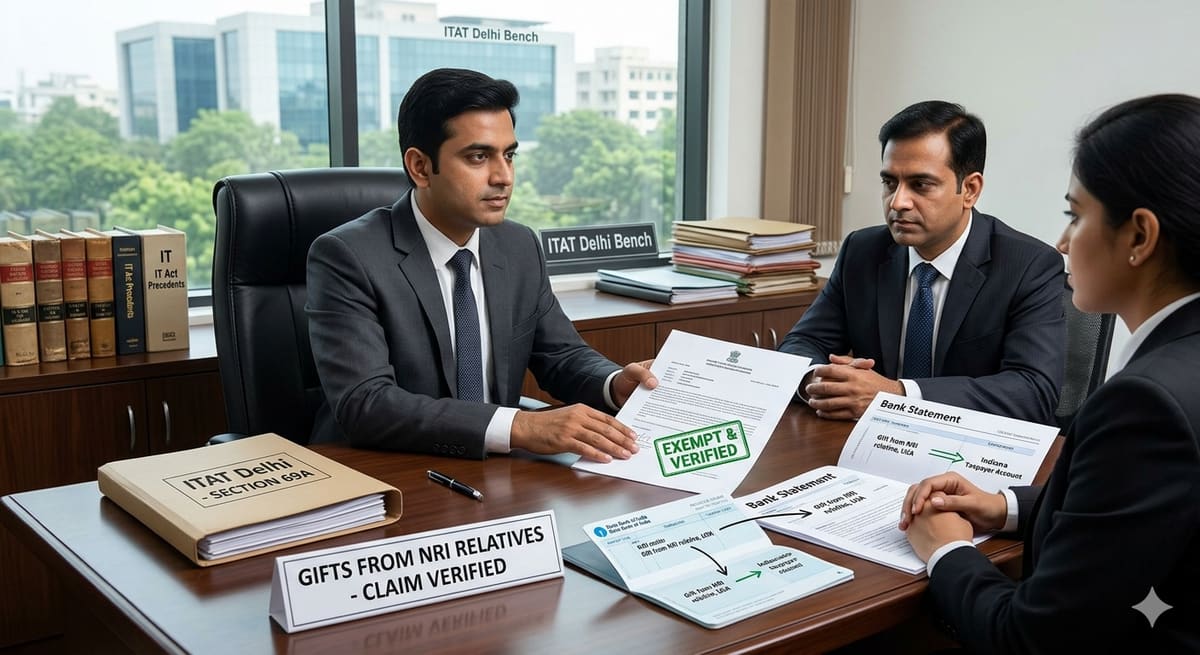
Section 69A IT Act | Gifts from NRI Relatives Exempt from Unexplained Income Addition If Source and Bank Trail Verified : ITAT Delhi
Case Law Analysis
|Income Tax Appellate Tribunal

Section 69A IT Act | Gifts from NRI Relatives Exempt from Unexplained Income Addition If Source and Bank Trail Verified : ITAT Delhi

ITAT Delhi rules that gifts from NRI relatives cannot be taxed as unexplained income under Section 69A if the assessee proves the source, identity, and bank trail. The ruling clarifies that mere suspicion without evidence of cash circulation is insufficient for addition, protecting taxpayers from arbitrary tax demands on legitimate family transfers.

Section 69A IT Act | Cash Deposits from Prior Withdrawals Not 'Unexplained Income' Without Proof of Diversion : ITAT Delhi
Case Law Analysis
|Income Tax Appellate Tribunal

Section 69A IT Act | Cash Deposits from Prior Withdrawals Not 'Unexplained Income' Without Proof of Diversion : ITAT Delhi

ITAT Delhi rules that cash deposits during demonetization, sourced from prior bank withdrawals (e.g., salary income), cannot be taxed as unexplained income under Section 69A without evidence of diversion or unaccounted utilization. The ruling shifts the burden of proof to the tax authorities to establish diversion, reinforcing taxpayer rights in banking transactions.