The Bombay High Court has clarified that mesne profits cannot be determined by comparing non-commercial properties with prime retail or office spaces, establishing a critical boundary in property valuation jurisprudence. This judgment reinforces that courts must reject speculative or misleading valuations that distort market reality, particularly when public funds are at stake.
Background & Facts
The Dispute
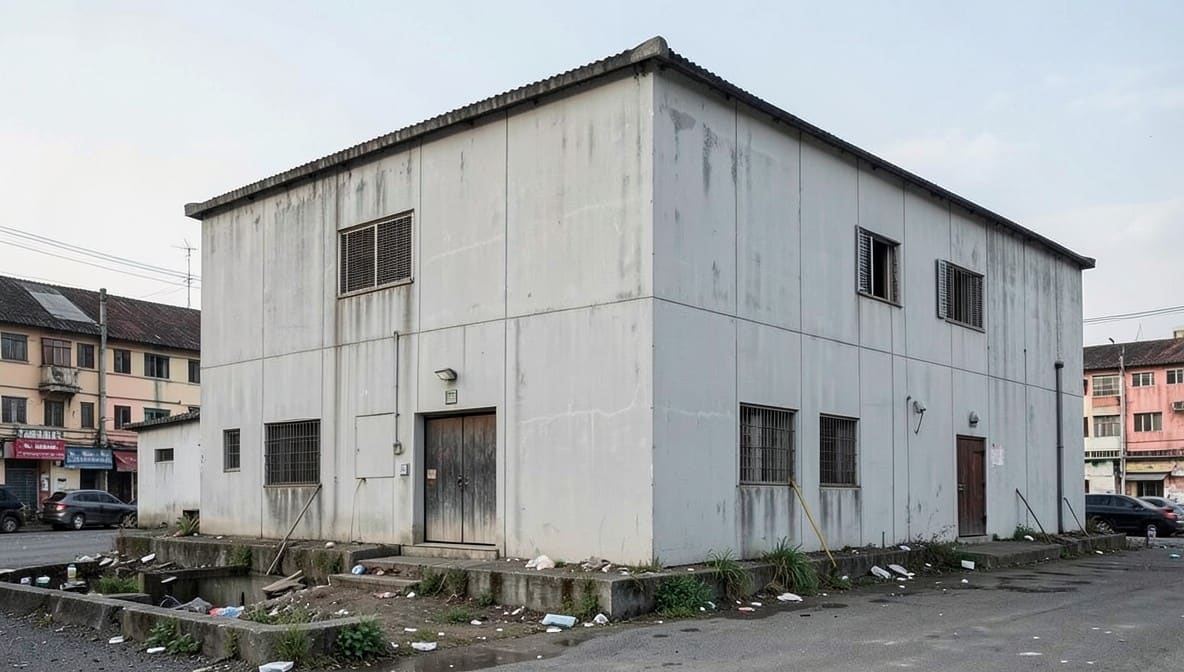
The Applicant, National Small Industries Corporation Limited (NSICL), a Government of India Public Sector Undertaking, was a monthly tenant of a commercial godown measuring 4,256 square feet (408.22 sq.m.) located on the ground floor of Gita Building, Gamdevi, Mumbai. The monthly rent was Rs.1,017/-. The tenancy was terminated by notice dated 12 April 2010 on the ground that NSICL had become an exempted entity under Section 3(1)(b) of the Maharashtra Rent Control Act, 1999. The Respondent, M/s. Gita Corporation, filed a Title, Ejectment and Recovery (T.E. & R.) Suit No.129/170 of 2010 seeking possession and mesne profits.
Key Facts
- The godown had no road frontage and was situated at the rear of the building.
- NSICL alleged that the Respondent had caused structural damage to the roof through drilling and erected tin sheds blocking both entrances, rendering the premises unusable.
- NSICL filed an application under Section 29 of the MRC Act on 30 July 2014 seeking removal of the sheds and restoration of ingress/egress rights, supported by photographs.
- The application remained pending as NSICL voluntarily handed over possession on 16 November 2014.
- The Trial Court, by order dated 13 February 2015, held that possession had been restored and directed a separate inquiry into mesne profits under Order XX Rule 12 of the Code of Civil Procedure, 1908.
- The Respondent filed Mesne Profit Application No.648 of 2015 on 8 September 2015.
- The Respondent’s valuer, Mr. Vinit R. Shah, submitted a report dated 2021, valuing mesne profits at Rs.12,14,660/- per month.
- NSICL did not file a valuation report before the Trial Court but submitted one via pursis before the Appellate Court on 24 November 2025, estimating rent at Rs.1,00,000/- per month based on Ready Reckoner rates.
Procedural History
- 12 April 2010: Tenancy terminated by notice.
- 26 July 2010: T.E. & R. Suit No.129/170 of 2010 filed.
- 30 July 2014: NSICL filed application under Section 29 MRC Act.
- 16 November 2014: Possession handed over.
- 13 February 2015: Trial Court decreed T.E. & R. Suit, ordered mesne profit inquiry.
- 8 September 2015: Mesne Profit Application No.648 of 2015 filed.
- 7 March 2022: Trial Court awarded mesne profits at Rs.12,14,660/- per month with 9% interest.
- 24 November 2025: NSICL filed valuer’s report via pursis before Appellate Court.
- 27 February 2026: Appellate Bench upheld mesne profit amount but reduced interest to 6%.
- 7 May 2026: Bombay High Court delivered judgment on Civil Revision Application No.244 of 2026.
Relief Sought
NSICL sought reduction of mesne profits from Rs.12,14,660/- to Rs.1,00,000/- per month, and revision of interest. It also sought to avoid liability for exorbitant payments on premises rendered unusable by the Respondent’s encroachments.
The Legal Issue
The central question was whether mesne profits can be determined by relying on rental comparables from prime commercial properties with road frontage when the subject property is a rear-facing godown with no such amenities, and whether courts are bound to accept valuation reports that contain internal contradictions and speculative adjustments.
Arguments Presented
For the Petitioner
NSICL contended that the valuation report of the Respondent’s valuer was fundamentally flawed because it compared the godown with shops and offices in Napean Sea Road, Opera House, and Tardeo - locations with entirely different usage, accessibility, and market dynamics. The valuer falsely claimed the comparables were of "similar premises" and artificially inflated the value by assuming a 100% increase in usable area via slab construction, despite no evidence such modification had been made. NSICL argued that mesne profits must reflect actual or reasonably probable receipts, not hypothetical potential, as per Section 2(12) of the Code. It further submitted that its own valuation, based on Ready Reckoner rates, was more credible but was improperly disregarded due to procedural lapse.
For the Respondent
The Respondent argued that the Trial and Appellate Courts had correctly relied on the valuer’s report, which was duly proved through examination of the valuer. It contended that NSICL had failed to file an application under Order XLI Rule 27 of the Code to produce additional evidence before the Appellate Court, rendering its valuation report inadmissible. The Respondent maintained that concurrent findings on valuation are entitled to high deference and that the reduction of interest from 9% to 6% already constituted judicial moderation.
The Court's Analysis
The Court conducted a meticulous review of the valuer’s report and found it riddled with material errors and self-contradictions. The report listed four comparable properties: two shops on Napean Sea Road, one office in Tardeo, and one commercial unit at Opera House - all of which were fundamentally dissimilar to a rear-facing, non-frontage godown used for machinery storage. The valuer’s assertion that these were "similar premises" was categorically rejected.
"The statement in the Valuer's report that rents of 'similar premises' in comparable localities are considered is far from truth. Neither the compared premises are of similar nature nor they are in comparable localities. How the rent payable in respect of shop located at Napean Sea Road can be compared with godown at Gamdevi is difficult to comprehend."
The Court further noted the absurdity of the valuer’s adjustment for "double floor height" - a speculative assumption that the godown could be converted into a two-story structure by adding a slab, despite no evidence of such intent or feasibility. The Court held that mesne profits under Section 2(12) of the Code must be based on actual or reasonably probable receipts, not imagined enhancements.
The Court observed that the Trial and Appellate Courts had failed in their duty to critically examine the valuation report, instead accepting it mechanically. The Court emphasized that judicial deference to concurrent findings does not extend to patently erroneous or speculative evidence.
While acknowledging NSICL’s failure to file a valuation report before the Trial Court, the Court declined to remand the matter for fresh inquiry, citing the 11-year litigation history and the relatively short period of four years and five months for which mesne profits were claimed. To prevent further delay and injustice, the Court adopted a pragmatic approach by determining a reasonable rate based on the Ready Reckoner values cited in NSICL’s report.
The Court calculated the median value of the property over the relevant period at Rs.14 crores and applied a conservative 5% annual rental return, yielding a monthly rent of Rs.5,83,333/-. It rounded this down to Rs.5,80,000/- per month as a fair and equitable figure.
The Verdict
The Civil Revision Application was partly allowed. The orders dated 7 March 2022 and 27 February 2026 were set aside. Mesne profits were fixed at Rs.5,80,000/- per month for the period from 1 June 2010 to 16 November 2014. Simple interest at 6% per annum was awarded on the aggregate amount. Any amount already paid was to be adjusted. No costs were awarded.
What This Means For Similar Cases
Valuation Must Match Property Type and Location
- Practitioners must challenge valuation reports that compare dissimilar property types (e.g., godowns vs. shops or offices) as legally unsustainable.
- Courts are obligated to scrutinize the relevance of comparables - not merely accept them if formally tendered.
- The burden is on the claimant to prove comparability; courts cannot assume similarity based on location alone.
Speculative Adjustments Are Inadmissible
- Assumptions about potential structural modifications (e.g., adding slabs, converting floors) without evidence of actual use or feasibility cannot form the basis of mesne profit calculation.
- Any valuation must be grounded in reality, not hypothetical enhancements.
Judicial Pragmatism Over Procedural Technicalities
- Where prolonged litigation and clear evidentiary flaws exist, courts may exercise revisional jurisdiction to fix a fair quantum without remand, even if one party failed to follow procedure.
- This approach prevents abuse of process and protects public funds, especially when the petitioner is a government entity.
Documentary Evidence Still Required
- While the Court exercised discretion here, practitioners must still file valuation reports before the Trial Court under Order XLI Rule 27 to preserve evidentiary rights.
- Pursis submissions alone are insufficient to override procedural rules unless the court invokes its inherent powers to prevent injustice.