The Madhya Pradesh High Court has affirmed that even when a commercial vehicle suddenly brakes on a highway, the driver of the following vehicle bears significant responsibility for failing to maintain a safe distance. In a detailed analysis of evidence and precedent, the Court upheld a 50-50 apportionment of fault and substantially enhanced compensation to reflect accurate income assessment and statutory principles.
Background & Facts
The Dispute
The dispute arose from a fatal motor accident on 11.02.2006, when the deceased, Shri Rajesh Varshney, aged 44, was driving his Maruti car on a highway and collided with a stationary truck owned and driven by respondent No. 1, Shri Prem Narayan Sharma. The deceased died on impact. His legal heirs, including his wife Smt. Bhavana Varshney and other dependents, filed a claim petition under Section 166 of the Motor Vehicles Act, 1988, seeking compensation of Rs. 3 crores 16 lakhs.
Key Facts
- The deceased was Assistant Vice President at Reliance Petroleum, earning Rs. 22 lakhs per annum as per income tax returns for FY 2004-2005 (Exhibit P/18)
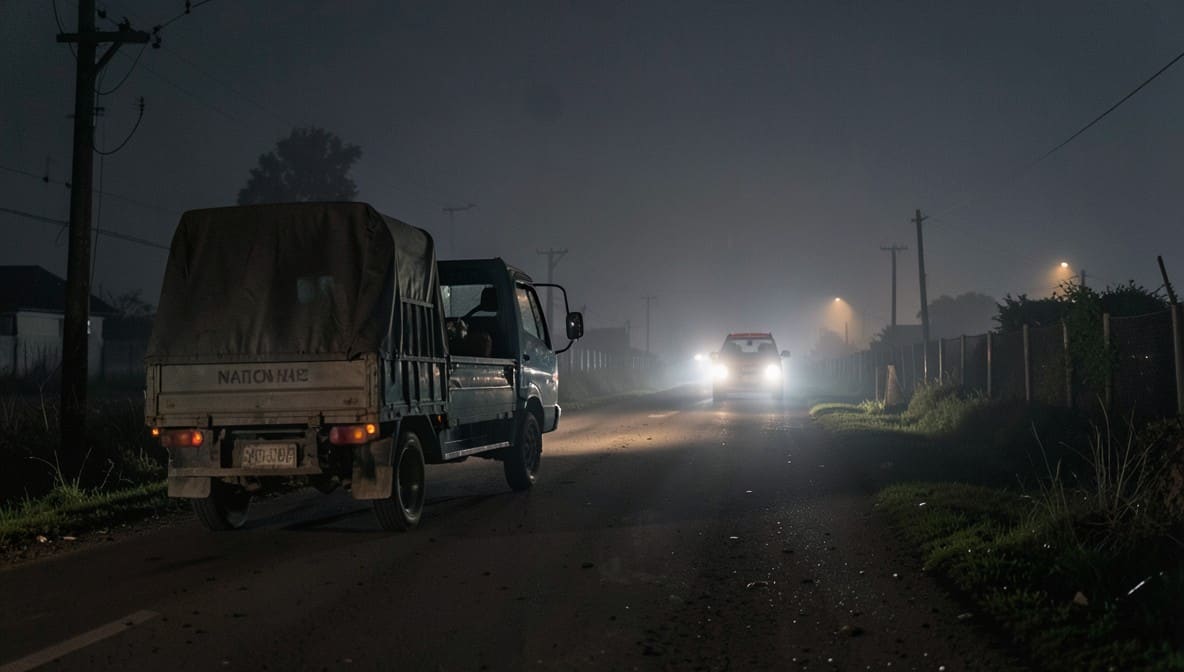
- The truck was parked on the roadside near a petrol pump, with parking lights on, according to the claimants’ witness Shabbir Ali
- The truck driver claimed his vehicle had a mechanical defect and he was forced to stop, but no mechanical report was produced
- The truck driver fled the scene after the accident
- An FIR was registered against the truck driver on the same day, naming him as responsible for rash and negligent driving
- The claim petition was filed on 03.04.2006
- The deceased’s date of birth was recorded as 27.08.1961 in his income tax return
Procedural History
- 11.02.2006: Fatal accident occurred on highway near Bhopal
- 03.04.2006: Claim petition filed before 2nd Additional Motor Accident Claims Tribunal, Bhopal
- 23.11.2006: Insurance Company filed application under Section 170 of the Motor Vehicles Act; application allowed by Tribunal
- 13.04.2007: Tribunal passed award granting Rs. 64,10,224/- as compensation, holding deceased and truck driver each 50% negligent
- 2007: Cross-appeals filed before the High Court
- MA No. 2531/2007: Filed by Oriental Insurance Co. Ltd. challenging liability and quantum
- MA No. 3157/2007: Filed by claimants challenging contributory negligence finding and seeking enhancement
- 19.02.2026: Oral arguments heard before the High Court
- 26.03.2026: Judgment pronounced
The Parties' Positions
For the Claimants (Appellants in MA 3157/2007)
- Argued that the truck driver’s sudden braking was the sole cause of the accident
- Contended that the deceased was not negligent, as he was driving normally on a highway
- Claimed the Tribunal erred in applying a multiplier of 16 instead of 18
- Sought 18% interest on compensation
- Asserted that income tax returns showed gross income of Rs. 23 lakhs per annum
For the Insurance Company (Appellant in MA 2531/2007)
- Argued the truck driver was not negligent; the vehicle was lawfully parked with lights on
- Claimed the deceased was driving rashly and negligently without a valid license
- Contested the income assessment, arguing only basic salary should be considered
- Sought exclusion of house rent allowance and travelling allowance from income calculation
- Argued that no deduction for income tax was made, which should have reduced the income figure
- Challenged the multiplier of 16, asserting the deceased was 44 years old and should have been assigned a lower multiplier
Relief Sought
- Claimants sought enhancement of compensation to Rs. 3 crores 16 lakhs, 18% interest from 03.04.2006, and inclusion of future prospects at 50%
- Insurance Company sought dismissal of the claim or substantial reduction in compensation on grounds of contributory negligence, incorrect income calculation, and lack of valid license
The Legal Issue
The central questions were: (1) Whether the deceased’s failure to maintain a safe distance constituted contributory negligence under the Motor Vehicles Act, despite the truck’s sudden braking; (2) Whether the Tribunal correctly assessed the deceased’s annual income and applied the appropriate multiplier; and (3) Whether the Insurance Company, having been granted permission under Section 170, could raise defenses beyond those under Section 149(2).
Arguments Presented
For the Appellant/Petitioner (Claimants)
The claimants relied on the testimony of Shabbir Ali, a chance witness, and the FIR to establish that the truck driver suddenly braked without justification. They argued that the Tribunal erred in attributing 50% negligence to the deceased, as the truck driver’s conduct was the proximate cause. They cited Nishan Singh v. Oriental Insurance Co. Ltd. to argue that safe distance is a duty of the following vehicle, but contended that in this case, the sudden stop was unforeseeable. They further argued that the Tribunal’s income calculation was conservative and that future prospects should be enhanced to 50% for a senior executive.
For the Respondent/State (Insurance Company)
The Insurance Company relied on United India Insurance Co. Ltd. v. Sheela Dutta to assert that once permitted under Section 170, it could raise all defenses, including lack of valid license and contributory negligence. It challenged the credibility of Shabbir Ali, arguing he was a planted witness and that no commercial establishment existed near the accident site. It contended that the deceased’s income should be calculated net of income tax and that fringe benefits should be excluded. It also argued that the multiplier of 16 was excessive for a 44-year-old and that the award of Rs. 64,10,224/- was already generous.
The Court's Analysis
The Court undertook a meticulous review of the evidence, including the FIR, spot map, witness testimony, and the truck driver’s conduct. It noted that the truck driver fled the scene - an act inconsistent with innocence - and that no mechanical report was produced to substantiate his claim of a defect. The Court held that the presence of a petrol pump near the accident site rendered the sudden stop plausible.
"The thumb rule of sufficient distance is to keep at least a safe distance of two to three seconds gap in ideal condition to avert collision and to allow following driver time to respond."
The Court applied the principle from Nishan Singh v. Oriental Insurance Co. Ltd. to conclude that even if the truck braked suddenly, the car driver’s failure to maintain a safe distance constituted contributory negligence. The Court rejected the claimants’ argument on "highway hypnosis," noting that such a state reflects lack of alertness, not an excusable condition under law.
On income assessment, the Court accepted the Tribunal’s reliance on income tax returns for FY 2004-2005. It held that fringe benefits like HRA and TA were integral to the salary package and must be included. The Court rejected the Insurance Company’s argument to deduct income tax, noting that the claimants had not pressed the FY 2005-2006 return showing higher income.
The Court found the deceased was 44 years old at the time of death (born 27.08.1961; accident on 11.02.2006). The multiplier of 16 was appropriate for the age group 41-45. Future prospects of 25% were applied, not 50%, as the deceased was not self-employed but a salaried executive.
The Court recalculated compensation as follows:
- Monthly income: Rs. 1,00,003.50
- Annual income: Rs. 12,00,042
- Future prospects (25%): Rs. 3,00,010.50
- Total annual income: Rs. 15,00,052.50
- Deduction for personal expenses (1/3): Rs. 5,00,017.50
- Dependency (2/3): Rs. 10,00,035
- Multiplying by 16: Rs. 1,60,00,560
- Loss of consortium: Rs. 80,000
- Funeral and loss of estate: Rs. 30,000
- Total: Rs. 1,61,10,560
- 50% reduction for contributory negligence: Rs. 80,55,280
The Court found the Tribunal’s original award of Rs. 64,10,224/- was inadequate and enhanced it by Rs. 16,45,000/-.
The Verdict
The claimants succeeded in part. The High Court allowed MA No. 3157/2007 and dismissed MA No. 2531/2007. The compensation was enhanced to Rs. 80,55,280/-, with interest at 6% per annum from the date of filing the claim petition, 03.04.2006. The Insurance Company and the truck driver are jointly and severally liable. The enhanced amount of Rs. 16,45,000/- is to be paid in addition to the Tribunal’s original award. Compliance is to be effected in accordance with the Tribunal’s directions.
What This Means For Similar Cases
Safe Distance Is a Non-Negotiable Duty
- Practitioners must argue that even in cases of sudden braking by preceding vehicles, the following driver’s failure to maintain a two-to-three-second gap constitutes contributory negligence
- The Nishan Singh precedent now firmly establishes that Regulation 23 of the Rules of the Road Regulations, 1989, is binding in accident claims
- Evidence of road conditions, visibility, and vehicle speed must be systematically documented to rebut claims of unforeseeable braking
Income Assessment Must Reflect Total Compensation
- Fringe benefits (HRA, TA, bonuses) must be included in income calculation unless explicitly excluded by statute
- Income tax deductions cannot be applied unless the actual tax-paid income for the relevant financial year is produced by the claimants
- Future prospects for salaried employees should be capped at 25% unless exceptional circumstances (e.g., rapid promotion, high-growth sector) are proven
Insurance Companies May Raise Broad Defenses After Section 170 Permission
- Once an insurer is granted permission under Section 170, it is not restricted to defenses under Section 149(2)
- Claimants cannot challenge the validity of such permission at the appellate stage if no appeal was filed against the Tribunal’s order
- The United India Insurance v. Sheela Dutta doctrine now applies uniformly across all Motor Accident Claims Tribunals