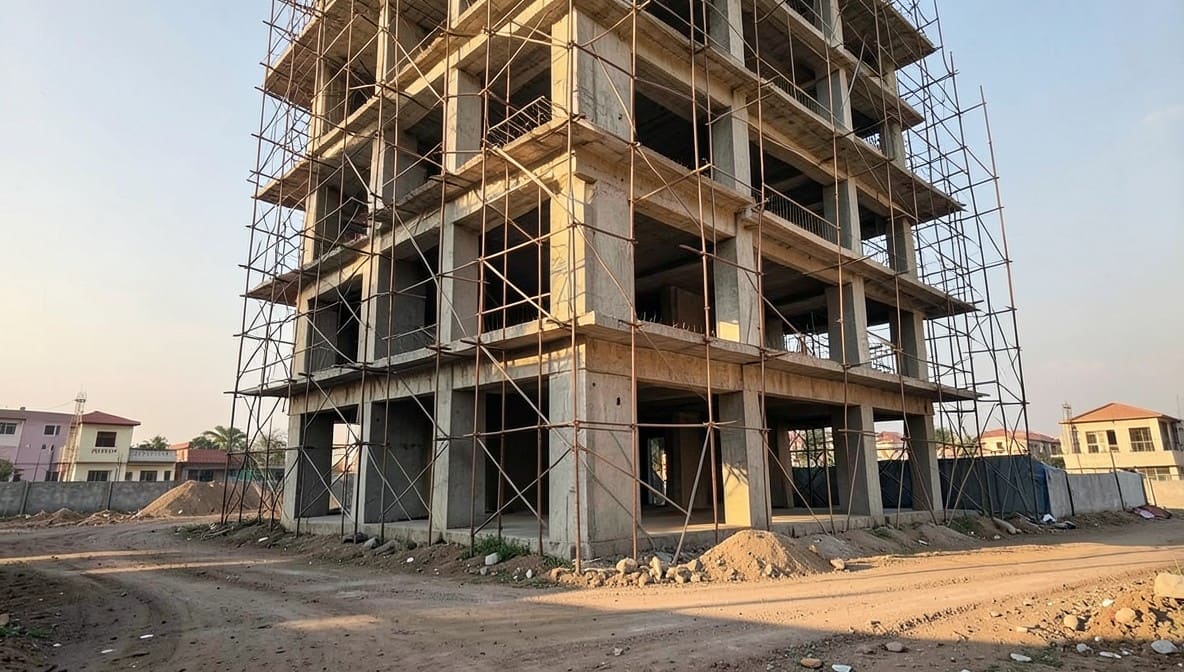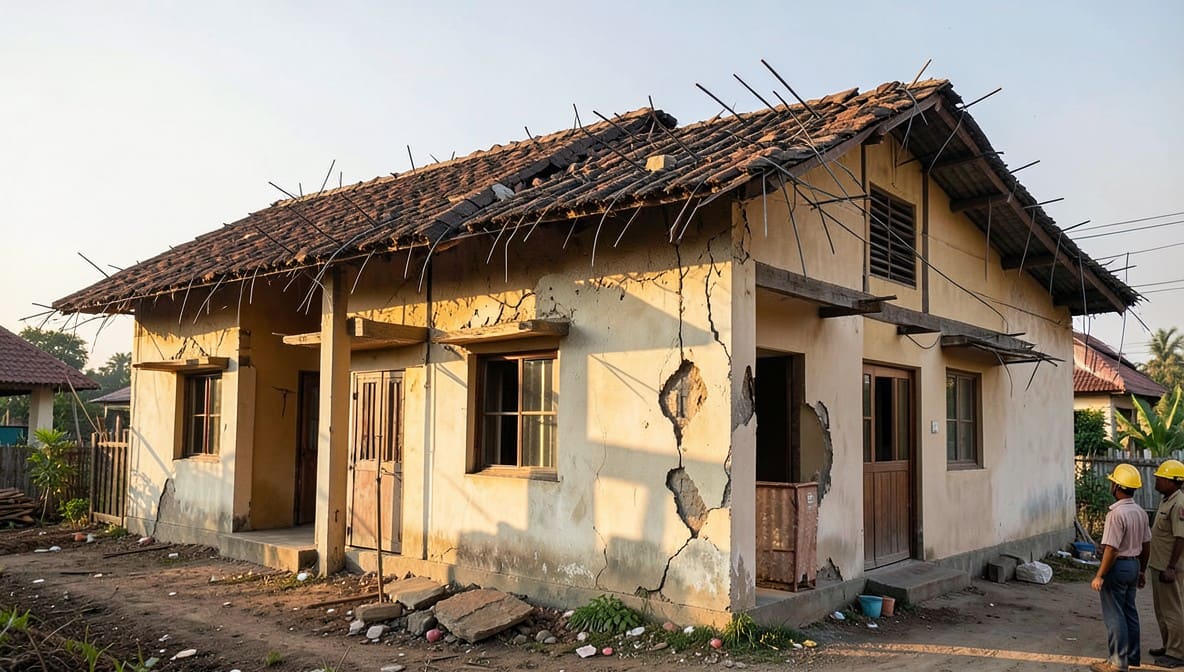
The Siliguri State Consumer Disputes Redressal Commission has clarified that consumer complaints alleging deficiency in residential construction services cannot be summarily dismissed at the admission stage without recording evidence. This ruling reinforces the procedural obligation of consumer forums to afford parties a fair hearing before determining jurisdictional or substantive admissibility.
Background & Facts
The Dispute
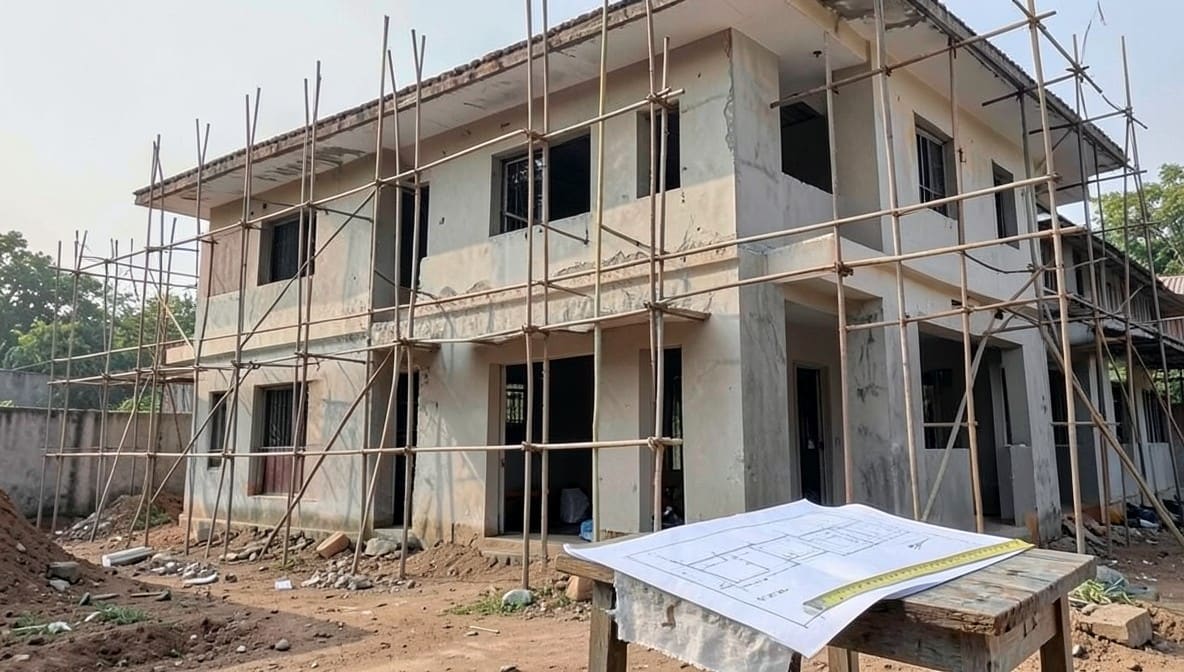
The appellant, Ashok Kumar Mandal, engaged the respondents, Sudipta Pramanik and Amit Singha, to construct a residential building at Mahadebpur, West Bengal, pursuant to a sanctioned plan dated 24.11.2022 issued by the Sub-Assistant Engineer, Development and Planning Department, Old Malda Development Block, and approved by the Executive Officer, Old Malda Panchayat Samiti. The appellant alleged that the respondents failed to adhere to structural specifications, resulting in serious defects.
Key Facts
- The construction work was undertaken for a residential purpose, not commercial.
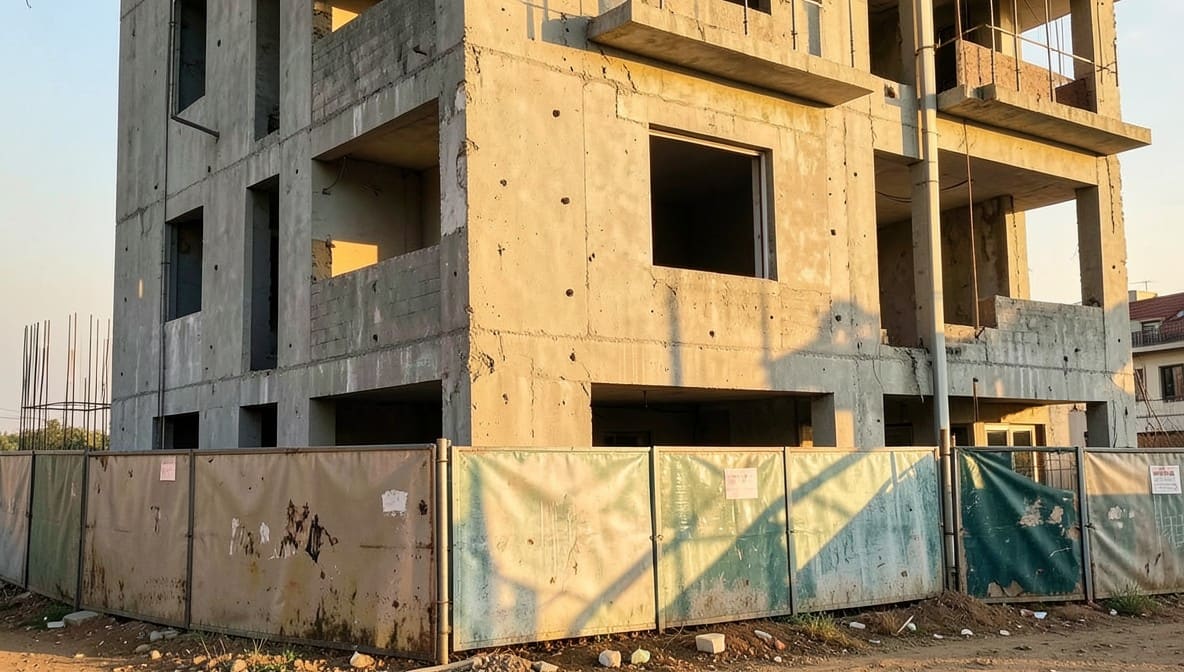
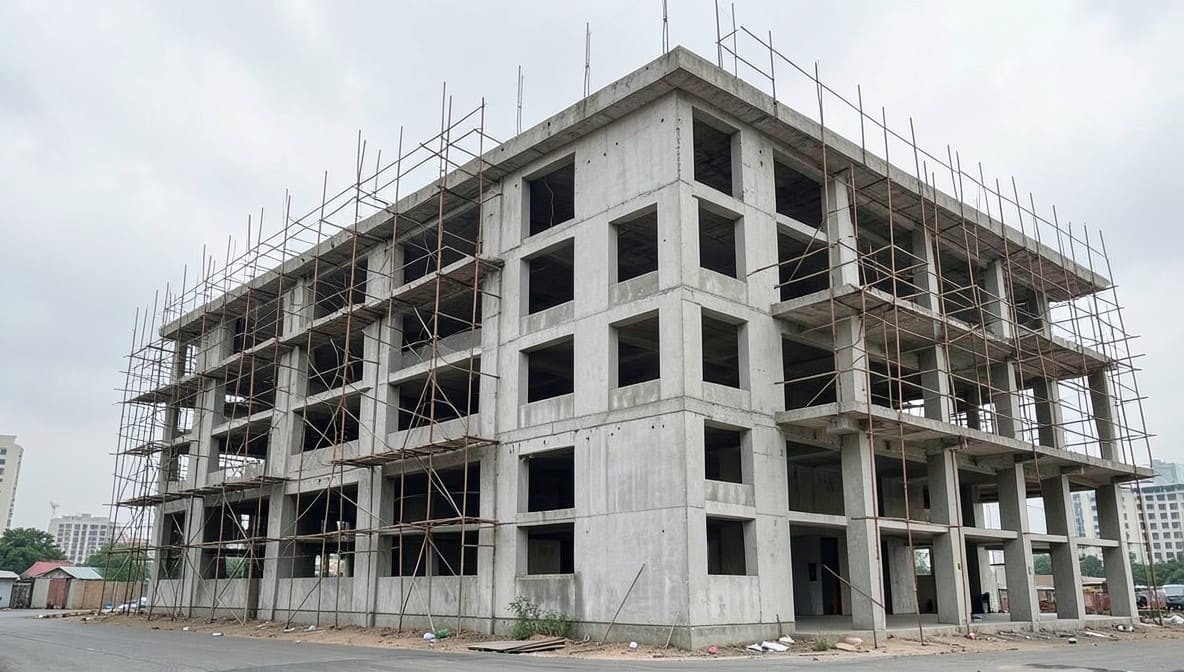
- The appellant alleged specific deficiencies including: inadequate thickness of roof, undersized footing foundation, improper cantilever dimensions, and incorrect spacing between pillars.
- The appellant claimed financial loss of Rs. 45,22,581/- due to the defective work.
- He also sought compensation for mental agony and harassment.
- The complaint was filed before the District Consumer Disputes Redressal Commission (DCDRC), Malda, under Consumer Protection Act, 2019.
Procedural History
- 24.11.2022: Sanctioned construction plan issued by Sub-Assistant Engineer and approved by Panchayat Samiti.
- Date unspecified: Construction commenced based on the sanctioned plan.
- Date unspecified: Appellant discovered structural defects and raised grievances with respondents.
- Date unspecified: Formal complaint filed before DCDRC, Malda as Complaint Case No. CC/78/2024.
- 20.11.2024: DCDRC, Malda dismissed the complaint at the admission stage, holding that the object of construction was commercial.
- 11.06.2026: First Appeal filed before Siliguri State Consumer Disputes Redressal Commission under Section 41 of the Consumer Protection Act, 2019.
The Parties' Positions
For the Appellant
The appellant contended that the DCDRC erred in dismissing the complaint without hearing evidence. He emphasized that the construction was for residential use, as per the sanctioned plan, and that the alleged defects constituted deficiency in service under Section 2(1)(g) of the Consumer Protection Act, 2019. He argued that the forum cannot pre-judge the nature of the service based on mere allegations without evidence.
For the Respondents
The respondents did not appear or file any written submission. The Commission noted the absence of any rebuttal from the opposite parties.
Relief Sought
The appellant sought: (1) setting aside of the order dated 20.11.2024; (2) admission and restoration of Complaint Case No. CC/78/2024; and (3) direction to the DCDRC to decide the matter on merits after recording evidence.
The Legal Issue
The central question was whether a consumer complaint alleging deficiency in residential construction services may be dismissed at the admission stage solely on the assertion that the purpose of construction is commercial, without recording any evidence or affording the complainant an opportunity to substantiate his claim.
Arguments Presented
For the Appellant
The appellant’s counsel argued that the DCDRC acted contrary to the principles of natural justice by dismissing the complaint without hearing the complainant or examining any documents. He relied on Section 38 of the Consumer Protection Act, 2019, which mandates that complaints shall be admitted unless they are frivolous or vexatious on prima facie examination. He further cited Punjab National Bank v. M. K. Gupta to emphasize that consumer forums must adopt a liberal approach in admitting complaints involving service deficiencies. The appellant maintained that the nature of the building - residential - was evident from the sanctioned plan and the nature of the alleged defects, which are typical of residential construction.
For the Respondent
The respondents did not appear before the Commission and filed no written or oral submissions. The Commission noted their non-appearance and treated the matter as unopposed.
The Court's Analysis
The Commission observed that the DCDRC’s dismissal was based on a speculative assumption that the construction was for commercial purposes, despite the absence of any documentary or testimonial evidence to support this claim. The Commission emphasized that the burden of proving the nature of the service lies with the forum, not the complainant, at the admission stage.
"Without taking the evidence by the parties in the record the matter cannot be dismissed at the stage of admission hearing."
The Court held that the allegations of structural defects - such as thickness of roof, size of footing, and spacing of pillars - are inherently residential in nature and relate to habitability and safety, not commercial utility. The Commission further noted that the sanctioned plan, which forms part of the complaint record, was issued by a development authority for residential construction, and no contrary evidence was presented by the respondents.
The Commission reiterated that Section 38 of the Consumer Protection Act, 2019, requires a consumer forum to admit a complaint unless it is patently frivolous or vexatious. Dismissal at the admission stage without evidence violates the right to a fair hearing under Article 14 of the Constitution and the principles of natural justice.
The Verdict
The appeal was allowed. The order dated 20.11.2024 passed by the DCDRC, Malda, was set aside. The complaint in Case No. CC/78/2024 was admitted and restored to the file of the DCDRC, Malda. The DCDRC was directed to proceed with the case in accordance with law, issue notices to the respondents, and dispose of the matter within three months from the date of their appearance. A certified copy of the order was to be supplied to the appellant.
What This Means For Similar Cases
Admission Stage Dismissals Require Evidence, Not Assumptions
- Practitioners must now challenge summary dismissals of consumer complaints where the nature of service is contested.
- Consumer forums cannot rely on speculative inferences about the purpose of construction without examining the sanctioned plan, correspondence, or witness statements.
- A complaint alleging structural defects in a building is prima facie covered under the Act if the complainant asserts residential use.
Structural Defects in Residential Construction Are Clearly Service Deficiencies
- Defects in foundation, roof thickness, pillar spacing, and cantilevers are not mere contractual disputes - they constitute deficiency in service under Section 2(1)(g).
- Legal representatives should explicitly link each alleged defect to safety, habitability, or compliance with approved plans to strengthen the claim.
- Compensation claims for mental agony and financial loss remain valid even if the construction is incomplete or partially defective.
Procedural Compliance Is Non-Negotiable
- Failure to record evidence before dismissal renders the order voidable.
- All consumer forums must now maintain a clear record of why a complaint was admitted or rejected at the admission stage.
- Non-appearance by respondents does not justify dismissal; the forum must independently assess the complaint’s prima facie merit.