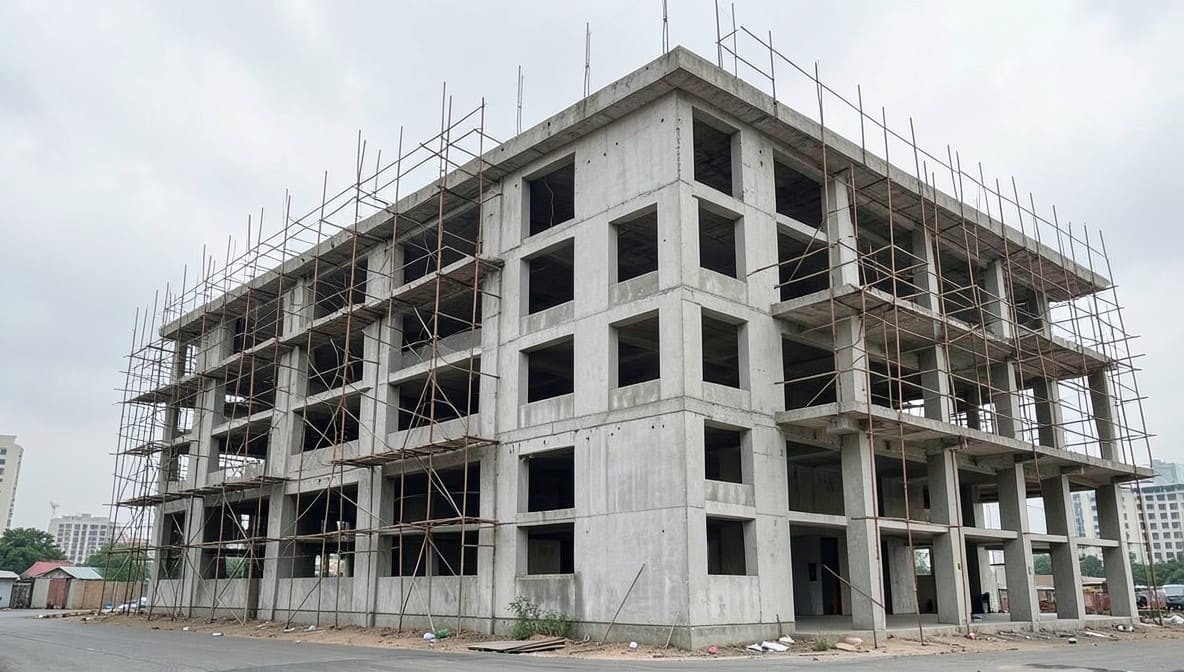
The Delhi State Consumer Disputes Redressal Commission has clarified that failure to deliver possession of an allotted plot constitutes a continuous deficiency in service under the Consumer Protection Act, 1986, and that forfeiture of more than 10% of the sale consideration as earnest money is unreasonable in the absence of proof of actual loss. This ruling reinforces consumer rights in real estate transactions and sets a clear limit on developer penalties.
Background & Facts
The Dispute
The complainant, Ms. Preeti Gupta, booked a residential plot bearing No. B-276, measuring 502.32 sq. yds., in the Suncity Rohtak project developed by Sun City Projects Pvt. Ltd. The booking was made on 11.12.2008, and an Agreement dated 23.09.2009 was executed for a total basic sale consideration of Rs. 23,10,672/-. The developer assured possession within 12 months of the agreement. Despite repeated payments, possession was never delivered.
Key Facts
- The complainant made cumulative payments of Rs. 29,24,394/- by the time of the dispute.
- On 17.12.2012, the Opposite Party issued an offer of possession, stating an outstanding balance of Rs. 9,91,077/-.
- The complainant made an additional payment of Rs. 41,077/- on 15.06.2013.
- The complainant requested a detailed statement of dues but received no clarification.
- A tripartite agreement was executed in April 2013 with Indiabulls Housing Finance Ltd. for a loan of Rs. 9,72,536/- against the plot, with the developer issuing a no-objection letter on 30.04.2013.
- The complainant shifted residence from Mehrauli to Vasant Kunj in 2015 and informed the developer on 23.05.2016.
- The developer issued reminder notices on 04.04.2014, 17.07.2014, 20.08.2014, 05.09.2014, 16.10.2014, 01.06.2013, 15.01.2015, 16.04.2015, 24.06.2015, and 21.10.2015.
- The plot was cancelled by the developer via notice dated 02.07.2016.
- The complaint was filed on 16.01.2017.
Procedural History
- 11.12.2008: Plot booked by complainant.
- 23.09.2009: Agreement executed for sale consideration of Rs. 23,10,672/-.
- 17.12.2012: Offer of possession issued with outstanding dues of Rs. 9,91,077/-.
- 30.04.2013: Developer issued no-objection for mortgage to Indiabulls Housing Finance Ltd.
- 02.07.2016: Allotment cancelled by developer.
- 16.01.2017: Complaint filed before Delhi State Consumer Disputes Redressal Commission.
- 20.04.2026: Judgment delivered by the Commission.
Relief Sought
The complainant sought:
- Delivery of possession of plot No. B-276.
- Restraint on allotment of the plot to any third party.
- Compensation of Rs. 5,00,000/- for harassment, financial loss, and mental agony.
- Litigation costs.
- Any other relief deemed fit.
The Legal Issue
The central questions were: (1) Whether the complainant qualifies as a 'consumer' under the Consumer Protection Act, 1986, despite purchasing a plot; (2) Whether the complaint is barred by limitation; (3) Whether the developer’s cancellation of allotment and retention of funds beyond 10% of the sale consideration constitutes deficiency in service.
Arguments Presented
For the Petitioner
The complainant argued that she was a consumer as defined under Section 2(1)(d) of the Consumer Protection Act, 1986, having paid for a service - housing construction and plot allotment. She relied on Aashish Oberai v. Emaar MGF Land Limited and Narinder Kumar Bairwal v. Ramprastha Promoters to establish that purchase of multiple plots does not automatically imply commercial purpose. She contended that failure to deliver possession was a continuous wrong, and the limitation period ran from the date of cancellation on 02.07.2016. She further argued that the developer failed to provide clear statements of dues and ignored her requests for clarification.
For the Respondent
The developer contended that the complainant was not a consumer because she purchased the plot for speculative profit. It argued that the complaint was barred by limitation as the offer of possession was made in December 2012 and the complaint was filed in January 2017. It further claimed that the complainant defaulted on payment despite multiple reminders and that cancellation was justified under the agreement. It relied on IREO Grace Realtech v. Abhishek Khanna and Haryana RERA v. Neetu Gupta to assert that contractual disputes fall outside consumer jurisdiction.
The Court's Analysis
The Commission first addressed the issue of consumer status. It held that mere ownership of multiple plots does not convert a purchase into a commercial purpose. The burden lies on the developer to prove that the purchase was made with intent to resell, which it failed to do. The Commission relied on Aashish Oberai and Narinder Kumar Bairwal to affirm that the complainant was a consumer.
"A person cannot be said to have purchased a house for a commercial purpose only by proving that he owns or had purchased more than one houses or plots."
On limitation, the Commission held that failure to deliver possession is a continuous wrong, and the cause of action arises afresh with each passing day until possession is delivered or the contract is terminated. Since cancellation occurred on 02.07.2016 and the complaint was filed on 16.01.2017, it was well within the two-year limitation period under Section 24A.
The Commission further held that the developer’s jurisdiction to adjudicate was not barred. Housing construction is a service under Section 2(1)(o), and deficiency in delivery of possession falls squarely within the ambit of the Act, as affirmed in Narne Construction v. Union of India.
Regarding deficiency, the Commission found that while the complainant failed to clear dues after the offer of possession, the developer’s conduct was also deficient. It failed to provide a clear, itemized statement of dues, and despite the complainant’s request for clarification, no response was given. The tripartite agreement and no-objection letter did not absolve the developer of its obligation to communicate transparently.
The Commission then examined the forfeiture of earnest money. It relied on Ramesh Malhotra v. EMAAR MGF Limited, which held that forfeiture beyond 10% of the total sale consideration is unreasonable unless actual loss is proven. The total sale consideration was Rs. 23,10,672/-. The developer retained Rs. 29,24,394/- paid by the complainant, which far exceeded 10% (Rs. 2,31,067/-). The Commission held that the developer was entitled to forfeit only up to 10% and must refund the balance.
"Only a reasonable amount can be forfeited as earnest money... forfeiture beyond 10% of the total sale consideration cannot be said to be reasonable in the absence of proof of actual loss."
The Commission rejected the complainant’s claim for possession as the contract was lawfully cancelled due to her default. However, it found the developer’s conduct in withholding funds unjustified and directed refund with interest.
The Verdict
The complaint was partly allowed. The Commission directed Sun City Projects Pvt. Ltd. to refund Rs. 25,11,838.60 (after deducting 10% of Rs. 23,10,672/- as earnest money) along with interest: (A) 6% per annum from 17.12.2012 to 20.04.2026, provided full payment is made by 20.06.2026; (B) if payment is delayed beyond 20.06.2026, interest shall be 9% per annum from 17.12.2012 until actual realization. Additionally, the developer was directed to pay Rs. 1,00,000/- as compensation for mental agony and Rs. 50,000/- as litigation costs. All other reliefs were dismissed.
What This Means For Similar Cases
Earnest Money Forfeiture Is Capped at 10%
- Practitioners must now argue that any forfeiture exceeding 10% of the total sale consideration is void unless the developer proves actual loss.
- Developers cannot rely on contractual clauses to retain more than 10% - courts will apply the Ramesh Malhotra standard regardless of agreement terms.
- Buyers can challenge retention of amounts beyond this threshold even if the agreement permits it.
Continuous Wrong Doctrine Applies to Possession Delays
- Failure to deliver possession is a continuing cause of action, extending the limitation period until cancellation or delivery.
- Complaints filed within two years of cancellation are maintainable, even if the initial breach occurred years earlier.
- This protects buyers from being barred by technical limitation defenses when developers delay indefinitely.
Developer’s Duty to Provide Clear Financial Statements
- Developers must provide itemized, transparent statements of dues upon offering possession.
- Silence or refusal to clarify dues after a buyer’s request constitutes deficiency in service.
- Buyers should document all requests for clarification to establish this deficiency in future proceedings.