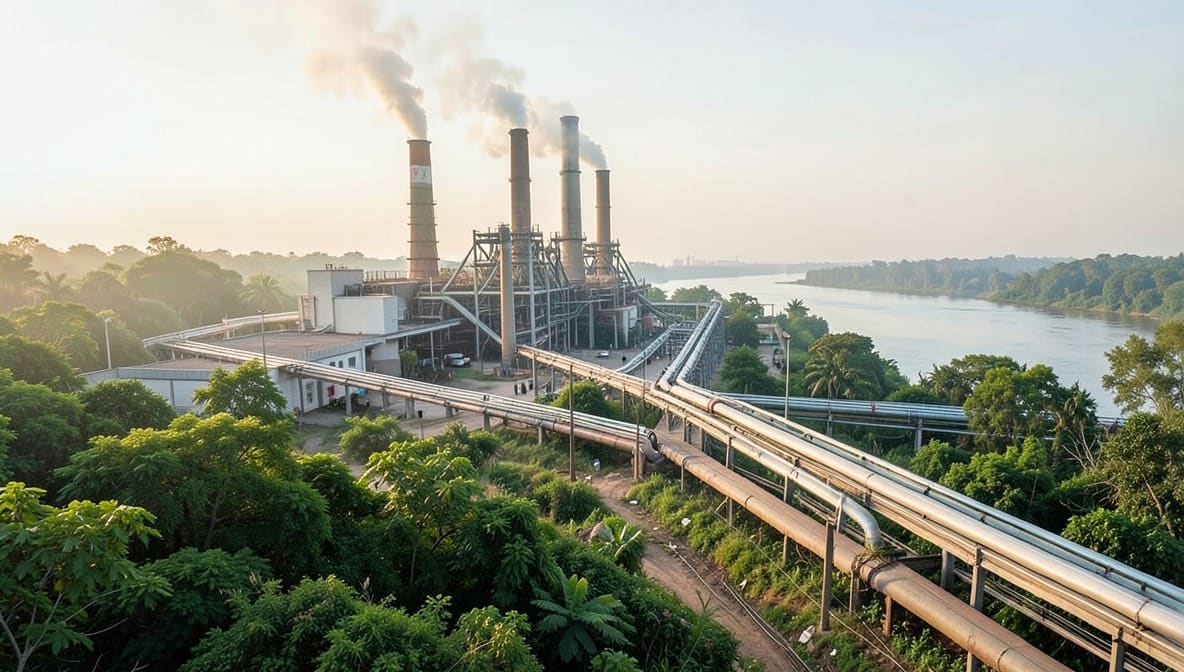
The National Green Tribunal Southern Zone has issued a pivotal ruling affirming that industrial operations cannot continue indefinitely without compliance with statutory environmental conditions, particularly where land use permissions and effluent disposal mechanisms are expired or unregulated. The judgment underscores the non-negotiable nature of procedural compliance under the Environment (Protection) Act, 1986, and the critical role of state authorities in enforcing environmental governance.
Background & Facts
The Dispute
The applicants, residents of Rajamahendravaram in East Godavari District, Andhra Pradesh, filed an Original Application before the National Green Tribunal (NGT) against M/s. Andhra Paper Limited (APL), the Union of India, the State of Andhra Pradesh, the Central Pollution Control Board (CPCB), the Andhra Pradesh Pollution Control Board (APPCB), and the District Collector, East Godavari. The core grievance was that APL, a major pulp and paper manufacturer, was operating in violation of its Environmental Clearance (EC) dated 06.03.2014 and Consent to Operate (CTO), causing pollution to the Godavari River and surrounding areas including Turupulanka, Kotilingalapeta, and Seetampeta. The applicants sought closure of the industry and implementation of a remediation plan.
Key Facts
- APL operates a Red Category industry under EIA Notification, 2006, with a production capacity of 650 TPD pulp, 593 TPD paper, and 46 MW captive power.
- The industry is located 700 meters from the Godavari River on 123.86 acres of land.
- The EC mandated 33% greenbelt development; APL claims to have developed 32.8%.
- The EC required treated effluent to be discharged only into designated lagoons at Turupulanka Island, subject to a valid lease agreement.
- The lease for Turupulanka lands, originally granted in 1969 and renewed in 1983 and 1992, expired in 1999 and has not been renewed since.
- APL has been discharging treated effluent into Turupulanka sand shoals without a valid lease since 1999.
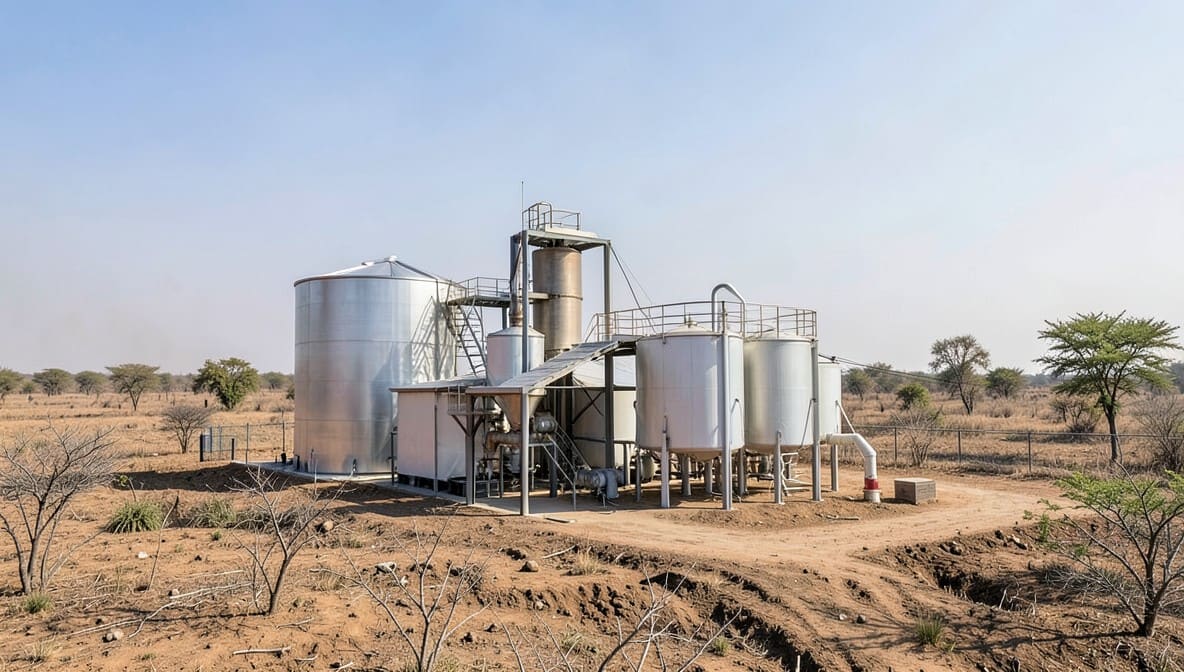
- APL’s ETP has a capacity of 45,000 KLD and treats 27,532 KLD of effluent daily.
- Effluent parameters (pH, BOD, COD, TSS, AoX, oil & grease) were found within CPCB standards during inspections.
- OCEMS (Online Continuous Effluent Monitoring System) at the ETP outlet was functional and linked to CPCB portal.
- However, OCEMS for air emissions were found to underreport particulate matter by 2 to 4.5 times due to improper calibration.
- Hydrogen Sulphide (H2S) emissions from Rotary Lime Kilns-1 and -2 exceeded permissible limits.
- Cooling tower outlet temperature was 40 - 45°C, exceeding the EC requirement of <35°C prior to microbial treatment.
- Only two of the four required Continuous Ambient Air Quality Monitoring Stations (CAAQMS) were operational.
- APL invested Rs. 20.566 Crores between 2023 - 2024 on pollution control upgrades including ETP cooling tower renovation, additional AAQMS, ESP augmentation, and sludge storage shed.
- APL implemented ZLD measures for black liquor via multi-effect evaporation and recovery boiler use, though full ZLD for all effluents was deemed not techno-economically feasible by CPPRI.
- APL engaged M/s. CII-Triveni Water Institute in 2017 to study alternative effluent disposal options, proposing pipeline discharge via Ava Drain to Bay of Bengal.
- APPCB issued multiple notices and directions between 2015 - 2024, including a 2024 order directing cessation of discharge into Turupulanka until 25.03.2024 and mandating implementation of alternative disposal.
Procedural History
- 06.03.2014: Environmental Clearance granted by MoEF&CC for expanded production capacity.
- 10.07.2015: APPCB issued closure order against APL for pollution violations.
- 27.07.2015: Closure order revoked with conditions including study of sea discharge options.
- 30.01.2017: APPCB issued non-compliance order for failure to implement conditions.
- 19.05.2023: CPCB filed interim inspection report with findings of non-compliance.
- 10.08.2023: CPCB submitted detailed report identifying seven key non-compliances.
- 28.08.2024: APPCB submitted status report confirming lease renewal pending.
- 10.12.2024: APPCB submitted compliance status report.
- 15.03.2024: NGT Task Force issued directions to APL for remediation.
- 05.03.2026: APPCB submitted Action Taken Report confirming partial compliance.
- 29.04.2026: Judgment delivered by NGT Southern Zone.
The Parties' Positions
For the Applicants
The applicants contended that APL’s continued operation without a valid lease for effluent discharge into Turupulanka lagoons constituted a clear violation of EC conditions. They argued that the absence of a legal basis for discharge rendered all effluent disposal unlawful, regardless of treatment quality. They cited repeated failures to calibrate OCEMS, exceed H2S limits, and delay in installing CAAQMS as evidence of systemic non-compliance. They urged closure of the industry and remediation of the Godavari River stretch.
For the Respondents
APPL and the regulatory authorities (CPCB, APPCB, District Collector) acknowledged the technical non-compliances but emphasized substantial remedial efforts: Rs. 20.566 Crores invested in upgrades, cooling tower renovation completed, H2S emissions brought within limits, and a feasible alternative disposal plan (via Ava Drain) prepared. The District Collector stated that the lease renewal process was in its final stage, with land survey completed and recommendation pending from the Revenue Department. The respondents argued that closure would cause massive economic disruption to 5,300 employees and regional supply chains, and that the violations were procedural, not substantive.
Relief Sought
The applicants sought:
- Immediate closure of APL’s operations;
- Implementation of a comprehensive remediation plan for polluted areas;
- Prosecution of APL and regulatory agencies for negligence;
- Direction to enforce Zero Liquid Discharge;
- Compensation for environmental damage.
The Legal Issue
The central question was whether an industry can lawfully continue operations under an Environmental Clearance and Consent to Operate when the statutory basis for its primary effluent discharge mechanism - a lease agreement for land use - has expired for over two decades, despite otherwise meeting effluent and emission standards.
Arguments Presented
For the Appellant/Petitioner
The applicants relied on M.C. Mehta v. Union of India and Vellore Citizens Welfare Forum v. Union of India to argue that environmental compliance is not a matter of technical adherence but of legal necessity. They contended that the lease for Turupulanka land was a condition precedent to discharge, and its expiry rendered all effluent discharge unlawful under Section 3 of the Environment (Protection) Act, 1986. They emphasized that pollution control equipment performance cannot override the absence of legal authorization for disposal. They cited Indian Council for Enviro-Legal Action v. Union of India to argue that the burden of proof for lawful operation lies with the industry.
For the Respondent/State
The respondents argued that the non-compliance was procedural and remediable, not substantive. They relied on T.N. Godavarman Thirumulpad v. Union of India to assert that courts must balance environmental protection with economic viability. They highlighted APL’s Rs. 20.566 Crore investment, completion of cooling tower renovation, H2S control, and the approved alternative disposal plan as evidence of good faith compliance. They contended that the lease renewal was pending due to administrative delays by the State, not industry negligence, and that closure would be disproportionate.
The Court's Analysis
The Tribunal conducted a meticulous review of the factual and regulatory landscape. It acknowledged that APL’s effluent quality met CPCB standards, its air emissions were largely controlled, and its investments in pollution abatement were substantial. The Court noted that the OCEMS calibration failure and H2S exceedance were identified and addressed through corrective actions, including calibration in August 2024 and installation of online H2S analyzers.
"The fact that the treated effluent meets discharge norms does not validate the absence of legal authority for its disposal. The lease for Turupulanka lands expired in 1999, and continued use without renewal constitutes a violation of the Environmental Clearance conditions and the Environment (Protection) Act, 1986."
The Tribunal emphasized that environmental clearances are not static permits but conditional authorizations. The discharge into Turupulanka lagoons was a specific, approved method under the EC. Once the lease expired, that method lost its legal foundation. The Court rejected the argument that administrative delay by the State justified continued unlawful discharge.
However, the Tribunal also recognized the scale of APL’s operations, its employment impact, and the existence of a viable alternative - the pipeline-based disposal plan via Ava Drain to the Bay of Bengal, approved by M/s. CII-Triveni Water Institute. The Court found that the industry had acted in good faith to secure the lease renewal and develop an alternative, and that closure would be disproportionate.
The Court distinguished between substantive environmental harm (which was absent) and procedural non-compliance (which was clear). It held that the appropriate remedy was not closure but enforcement of compliance through directed timelines and oversight.
The Verdict
The applicants’ petition was disposed of with the following directions:
- The District Collector, East Godavari, is directed to decide on the lease renewal application for Turupulanka lands within 8 weeks.
- M/s. Andhra Paper Limited is directed to implement the approved alternative effluent disposal mechanism via the Ava Drain pipeline to the Bay of Bengal within 6 months.
- APL shall submit monthly compliance reports to the APPCB on progress toward the alternative disposal system.
- APL shall maintain all pollution control systems in operational condition and ensure continuous calibration of OCEMS and CAAQMS.
- Failure to comply with the 6-month deadline for alternative disposal shall result in immediate suspension of effluent discharge into Turupulanka lagoons and initiation of enforcement proceedings.
What This Means For Similar Cases
Procedural Compliance Is Non-Negotiable
- Industries cannot rely on technical compliance with emission standards to justify unlawful land use or discharge mechanisms.
- Expired leases, permits, or approvals render even well-treated effluent discharge illegal under the Environment (Protection) Act, 1986.
- Practitioners must audit not just effluent quality but also the legal basis for disposal methods.
Remediation Over Closure Is the New Norm
- Courts are increasingly willing to permit continued operations if the industry demonstrates good faith, substantial investment, and a credible remediation plan.
- Closure is now reserved for cases of repeated, willful, or irreversible environmental harm - not procedural lapses.
- Practitioners should prioritize developing and documenting alternative compliance pathways early in litigation.
State Accountability Is Now Part of the Equation
- The judgment implicitly holds state agencies accountable for delays in lease renewals or approvals.
- Industries must document all communications and submissions to state authorities to demonstrate due diligence.
- Legal strategies should now include parallel petitions against state inaction where delays are unreasonable.