The Karnataka High Court has reaffirmed that statutory authorities cannot remain inert when faced with pending applications for renewal of licenses essential to livelihood. In this case, the Court intervened to compel the Forest Department to decide on a delayed saw mill license renewal, emphasizing that administrative inaction, even if not malicious, violates the principle of lawful governance.
Background & Facts
The Dispute
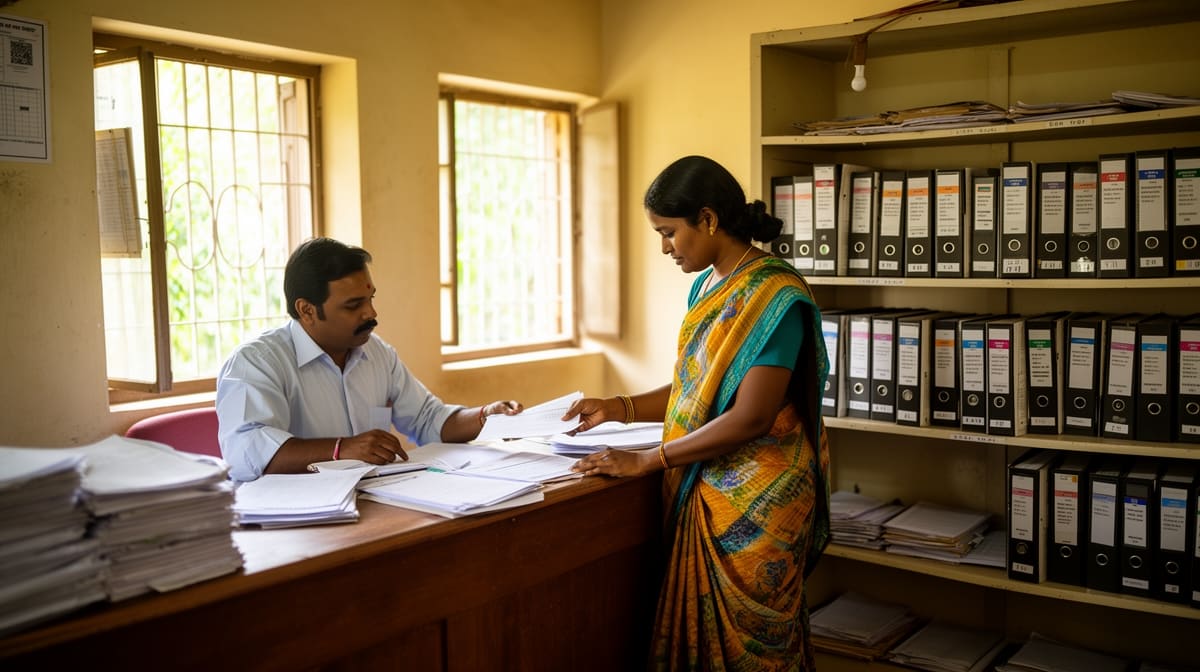
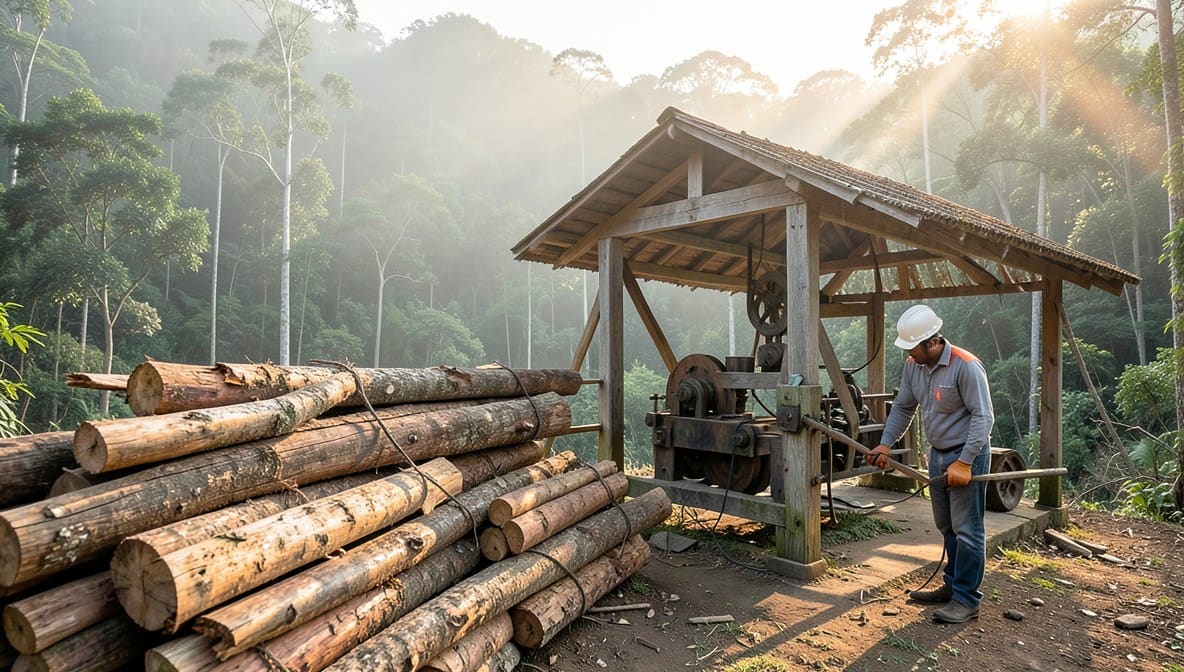
The petitioner, proprietor of Holy Family Wood Industries based in Virajpet, Kodagu, holds a saw mill license issued under the Karnataka Forest Act and Rules. The license, valid until 31.03.2024, expired due to operational and logistical constraints that prevented timely filing of the renewal application. The petitioner submitted a fresh application for renewal on 07.01.2026, which remained unacknowledged and unadjudicated for over 14 months.
Key Facts
- The petitioner’s existing saw mill license was valid until 31.03.2024
- The petitioner filed an application for renewal on 07.01.2026 (Annexure-A)
- No acknowledgment, notice, or communication was issued by the Forest Department in response to the application
- The petitioner’s business relies on lawful operation of the saw mill for timber processing and employment of local workers
- No allegations of violation of forest laws or environmental norms were raised against the petitioner during or after the license period
Procedural History
- 31.03.2024: Expiry of the existing saw mill license
- 07.01.2026: Petitioner filed renewal application with the Deputy Conservator of Forests, Virajpet Division
- 07.05.2026: Writ Petition No. 14856 of 2026 filed before the Karnataka High Court seeking mandamus
- 07.05.2026: Petition heard and disposed of by the Court on the same day
Relief Sought
The petitioner sought a writ of mandamus directing the respondent to consider and decide the renewal application dated 07.01.2026 without further delay.
The Legal Issue
The central question was whether the Forest Department, having received a complete and lawful application for renewal of a statutory license, can lawfully remain silent indefinitely, or whether such inaction amounts to a failure to perform a public duty enforceable by writ.
Arguments Presented
For the Petitioner
The petitioner’s counsel argued that the renewal application was complete, duly filed, and fell squarely within the statutory framework governing saw mill licenses. He relied on the principle that where a statutory right exists, the authority must act within a reasonable time. He cited State of Punjab v. Jalaj and K. S. Puttaswamy v. Union of India to underscore that administrative silence in the face of a legitimate claim violates Article 14 and Article 21 of the Constitution.
For the Respondent
The Additional Government Advocate conceded that the application had not been processed and acknowledged the delay. However, no legal objection was raised to the renewal application itself. The AGA submitted that the matter could be resolved if the Court granted a reasonable time for the competent authority to examine the application and pass an order.
The Court's Analysis
The Court observed that the petitioner’s application was not frivolous, nor was it filed after an unreasonable lapse. The delay in filing was explained and unchallenged. The Court emphasized that the grant or renewal of a saw mill license is not a discretionary privilege but a statutory right governed by clear procedural norms under the Karnataka Forest Rules.
"The State cannot be permitted to remain a silent spectator to a lawful application for renewal of a license essential to the livelihood of the petitioner and his employees. Administrative delay, even if not mala fide, amounts to denial of justice."
The Court noted that the respondent had not cited any statutory bar, procedural defect, or substantive ground for rejecting the application. The absence of any communication or notice to the petitioner further indicated a failure to discharge the mandatory duty under the law.
The Court held that the principle of audi alteram partem and the doctrine of legitimate expectation require that applications for renewal of statutory licenses be decided within a reasonable time. Silence, in this context, is not neutrality - it is dereliction.
The Verdict
The writ petition was allowed. The Court directed the respondent to consider the petitioner’s renewal application dated 07.01.2026 and pass an appropriate order in accordance with law as expeditiously as possible, but in any case not later than three months from the date of receipt of a copy of this order. The Court further directed that the order be communicated in writing to the petitioner.
What This Means For Similar Cases
Administrative Silence Is Not an Option
- Practitioners may now invoke this judgment to challenge inaction on any statutory license renewal - forest, mining, industrial, or environmental - where the application is complete and lawful
- Delay beyond six months without communication or reason may now be treated as a prima facie violation of Article 14
- A writ of mandamus is maintainable even without proof of mala fide, if the authority has a clear statutory duty to decide
Renewal Applications Are Not Discretionary
- The Court clarified that renewal of licenses under forest and environmental statutes is not a favor but a right conditioned on compliance
- Authorities must issue notices of defect or rejection within a reasonable time; silence cannot be construed as approval or denial
- Petitioners should retain proof of submission (registered post, acknowledgment receipt, portal confirmation) to establish filing date and completeness
Three-Month Deadline as a New Benchmark
- The three-month timeline set by the Court is likely to become a de facto standard for similar applications across Karnataka
- Other High Courts may adopt this as a model for expediting administrative decisions on statutory licenses
- Practitioners should cite this judgment when seeking timelines in pending applications before forest, pollution control, or municipal authorities