The Delhi State Consumer Disputes Redressal Commission has reaffirmed the strict application of limitation periods in consumer disputes, dismissing an appeal filed 194 days late due to the appellant’s failure to substantiate claims of sufficient cause with credible evidence. This ruling underscores that procedural compliance is non-negotiable, even in cases involving personal hardship.
Background & Facts
The Dispute
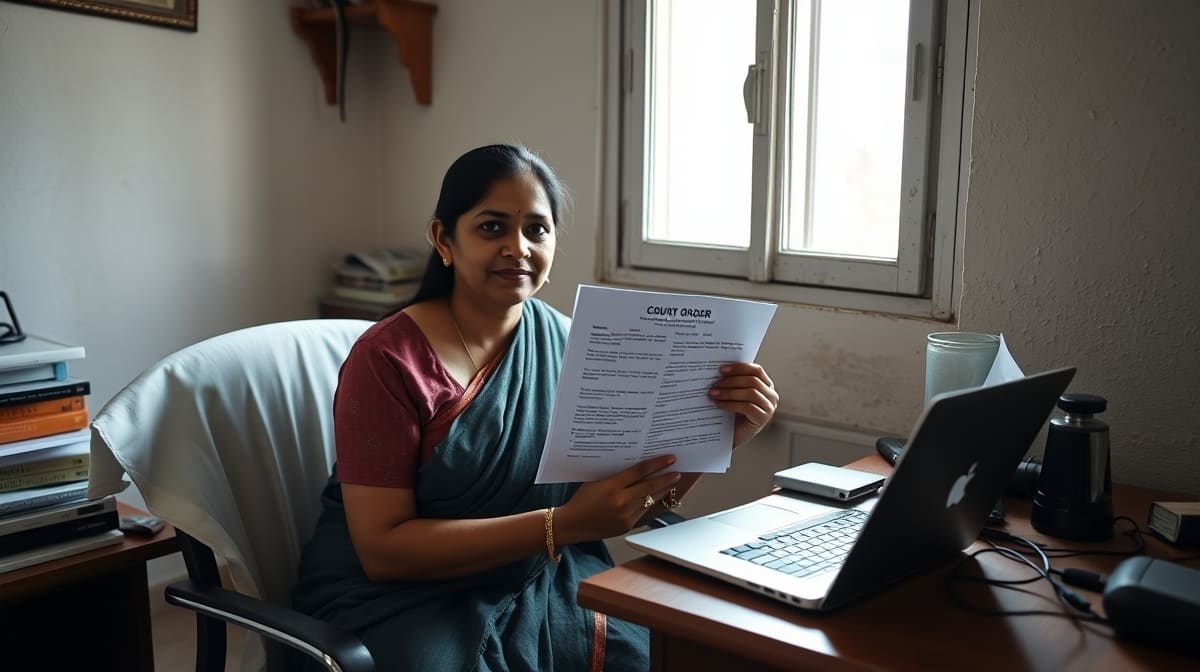
The appellant, Mr. Dharmendra Sunani, filed a complaint before the District Consumer Disputes Redressal Commission-X (South District), New Delhi, in Complaint Case No. 43/2017 against Shopit Marketing Pvt. Ltd. The nature of the complaint related to alleged deficiency in service or goods, though the specific grievance is not detailed in the judgment. The District Commission passed its order on 06.06.2025, which the appellant sought to challenge by filing a first appeal before the State Commission.
Key Facts
- The impugned order of the District Commission was dated 06.06.2025.
- The statutory period for filing an appeal under Section 15 of the Consumer Protection Act, 1986 is 30 days from the date of the order.
- The appeal was filed on 16.01.2026, resulting in a delay of 194 days.
- The appellant filed an application for condonation of delay (IA No. 157/2025) along with the appeal.
- The appellant claimed he became aware of the order on 16.07.2025, which is 40 days after its pronouncement.
- He cited two reasons for the delay: (i) a serious family health issue requiring him to stay in Hyderabad for almost a month, and (ii) a change of advocate, during which time he was unable to locate new counsel.
- No medical records, hospital documents, or details of the previous advocate were submitted.
- No dates were provided for when he traveled to Hyderabad or returned to Delhi.
Procedural History
- 06.06.2025: District Consumer Disputes Redressal Commission (South District) passed the impugned order in Complaint Case No. 43/2017.
- 16.07.2025: Appellant claims to have received knowledge of the order.
- 16.01.2026: First Appeal (FA/45/2026) filed before the Delhi State Consumer Disputes Redressal Commission, along with IA No. 157/2025 for condonation of delay.
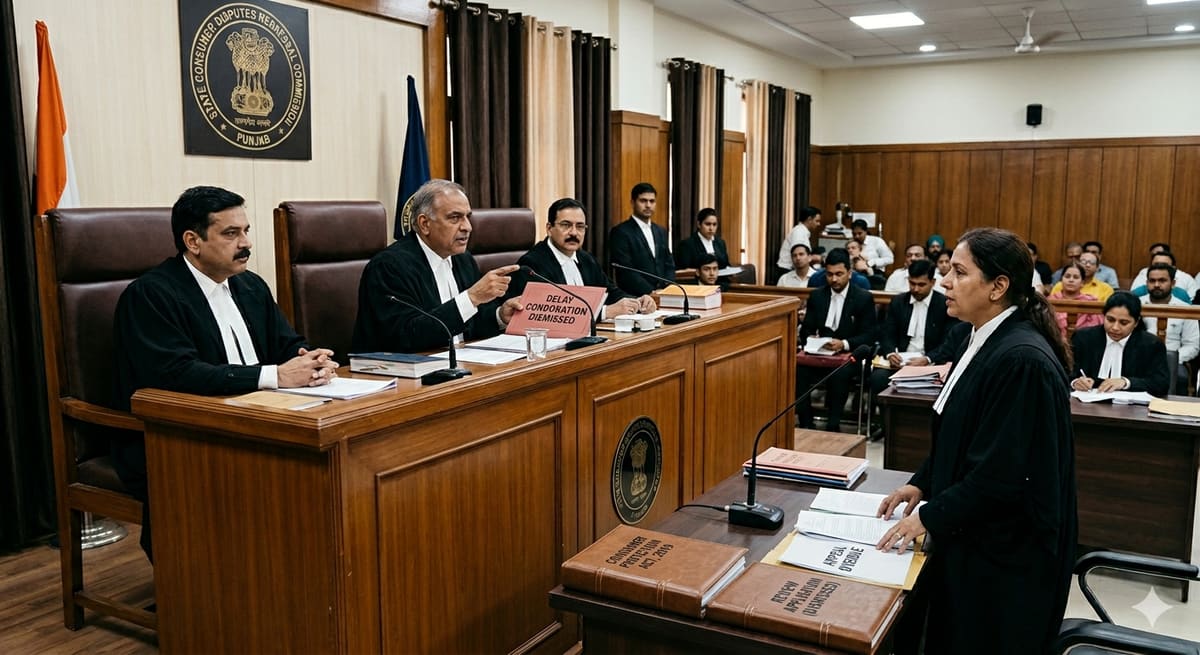
- 05.02.2026: Hearing conducted before the Commission.
- 17.03.2026: Judgment delivered dismissing both the condonation application and the appeal.
Relief Sought
The appellant sought to challenge the District Commission’s order and obtain relief in the form of reversal or modification of the impugned decision. No specific monetary relief or direction was sought beyond the setting aside of the order.
The Legal Issue
The central question was whether the appellant’s explanation for a delay of 194 days in filing an appeal under Section 15 of the Consumer Protection Act, 1986 constituted "sufficient cause" under the law, particularly in the absence of documentary evidence to substantiate claims of family illness and advocate change.
Arguments Presented
For the Appellant
The appellant contended that the delay was due to circumstances beyond his control: (i) he only became aware of the District Commission’s order on 16.07.2025, and (ii) during this period, a family member suffered a serious illness requiring his presence in Hyderabad for nearly a month. He further stated that he had to change advocates and required time to locate new counsel and gather documents. He relied on the principle of equity and the need to do substantial justice.
For the Respondent
The respondent did not file a written reply, but the Commission noted that the appellant bore the burden of proving sufficient cause. The absence of any rebuttal did not absolve the appellant of his obligation to provide credible, documented justification for the delay.
The Court's Analysis
The Commission began by determining the applicable law. It held that since the original complaint was filed before 20.07.2020, the case continued to be governed by the Consumer Protection Act, 1986, and not the 2019 Act, in accordance with Section 107 of the 2019 Act and Section 6(b) of the General Clauses Act, 1897. The Court emphasized that unless expressly made retrospective, legislation operates prospectively, citing CIT v. Vatika Township (P) Ltd. and Hitendra Vishnu Thakur v. State of Maharashtra.
The Commission then turned to Section 15 of the Consumer Protection Act, 1986, which mandates that appeals be filed within 30 days, with a discretionary power to condone delay only if "sufficient cause" is shown. The Court examined the meaning of "sufficient cause" as interpreted by the Supreme Court in Basawaraj v. Spl. Land Acquisition Officer and Anshul Aggarwal v. New Okhla Industrial Development Authority. It held that "sufficient cause" requires more than a vague assertion - it demands a bona fide, non-negligent explanation supported by evidence.
"The applicant must satisfy the Court that he was prevented by any 'sufficient cause' from prosecuting his case, and unless a satisfactory explanation is furnished, the Court should not allow the application for condonation of delay."
The Commission found the appellant’s explanation wholly inadequate. He failed to produce any medical records, hospital discharge summaries, or treatment details to substantiate the alleged family illness. He did not state when he left for Hyderabad or returned. He did not name his previous advocate or provide any correspondence regarding the change of counsel. The Court observed that the appellant’s conduct amounted to negligence and a failure to discharge his burden.
The Commission further relied on Lingeswaran v. Thirunagalingam and H. Guruswamy & Ors. v. A. Krishnaiah, where the Supreme Court held that limitation is not a technicality but a matter of public policy. The Court stated:
"The law of limitation may harshly affect a particular party but it has to be applied with all its rigour when the statute so prescribes. The Court has no power to extend the period of limitation on equitable grounds."
The Commission concluded that the appellant had abused the process of law by filing a highly belated appeal without credible justification.
The Verdict
The appeal was dismissed. The application for condonation of delay (IA No. 157/2025) was rejected for failure to establish sufficient cause. The first appeal (FA/45/2026) was consequently dismissed as being filed beyond the statutory period. No costs were imposed. The Commission directed that the order be uploaded on its website and forwarded to the parties’ email addresses.
What This Means For Similar Cases
Documentary Evidence Is Mandatory for Condonation
- Practitioners must always accompany condonation applications with verifiable documents - medical certificates, hospital records, communication with former counsel, or affidavits from third parties.
- Vague assertions of "family illness" or "change of advocate" without supporting proof will be summarily rejected.
Delay Cannot Be Excused by Equitable Considerations Alone
- Courts will not entertain appeals based on the principle of "substantial justice" if the delay is unexplained or uncorroborated.
- The burden of proving "sufficient cause" lies entirely on the appellant; it cannot be inferred or presumed.
Limitation Is a Statutory Imperative, Not a Formality
- The 30-day limitation under the Consumer Protection Act, 1986 is mandatory and strictly enforced.
- Practitioners must advise clients to file appeals within the statutory period and not rely on condonation as a fallback.
- Even in cases of genuine hardship, failure to document the cause renders the plea legally unsustainable.