The Allahabad High Court has clarified that demolition notices issued under the Uttar Pradesh Urban Planning and Development Act, 1973, cannot be deployed as a tactical tool to undermine a landowner’s statutory right to fair compensation under the Right to Fair Compensation and Transparency in Land Acquisition, Rehabilitation and Resettlement Act, 2013. This ruling reinforces the principle that procedural mechanisms under different statutes must not be used to circumvent substantive rights.
Background & Facts
The Dispute
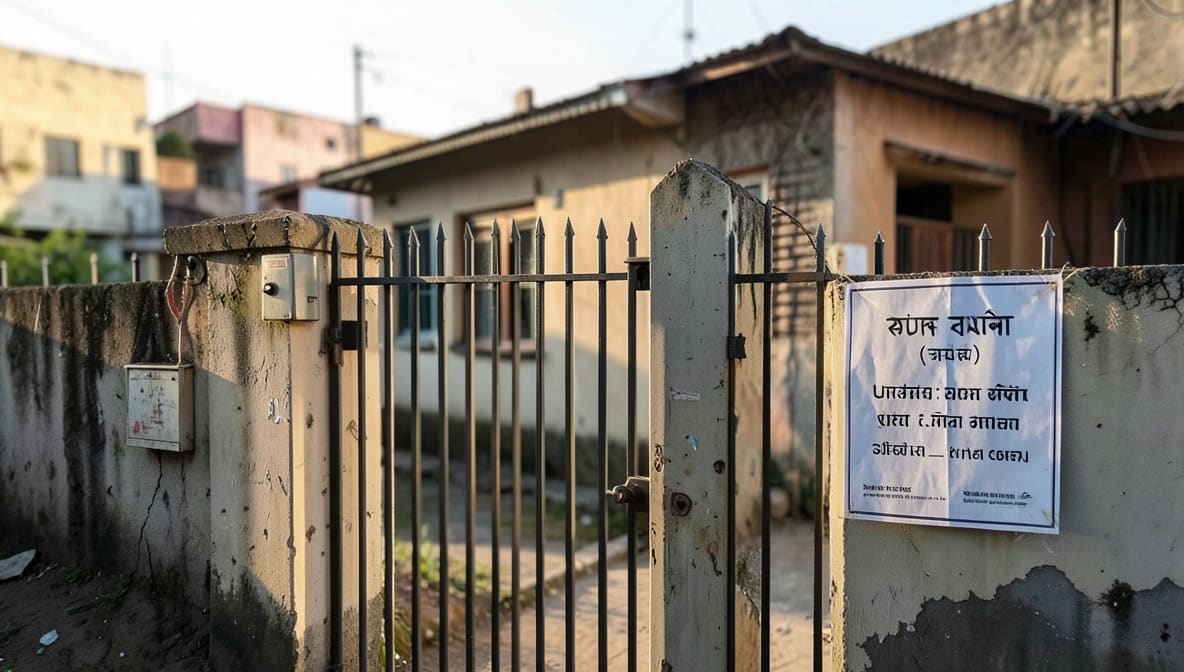
The petitioner, Shahid Akthar, is the lawful owner of House No. D-50/226-11-201, located in Dalmandi, Ward Dashashmedh, Varanasi. He has been in continuous, peaceful possession of the property for many years and has consistently paid all property taxes and municipal dues. The Varanasi Development Authority (VDA), one of the respondents, initiated land acquisition proceedings under the Right to Fair Compensation and Transparency in Land Acquisition, Rehabilitation and Resettlement Act, 2013 (LARR Act, 2013), for public infrastructure purposes. Simultaneously, the VDA issued a demolition notice dated 14.05.2026 under Section 27(1) of the Uttar Pradesh Urban Planning and Development Act, 1973 (Act, 1973), alleging unauthorized construction.
Key Facts
- The petitioner has resided in the property for over two decades without any prior notice or order of violation under the Act, 1973.
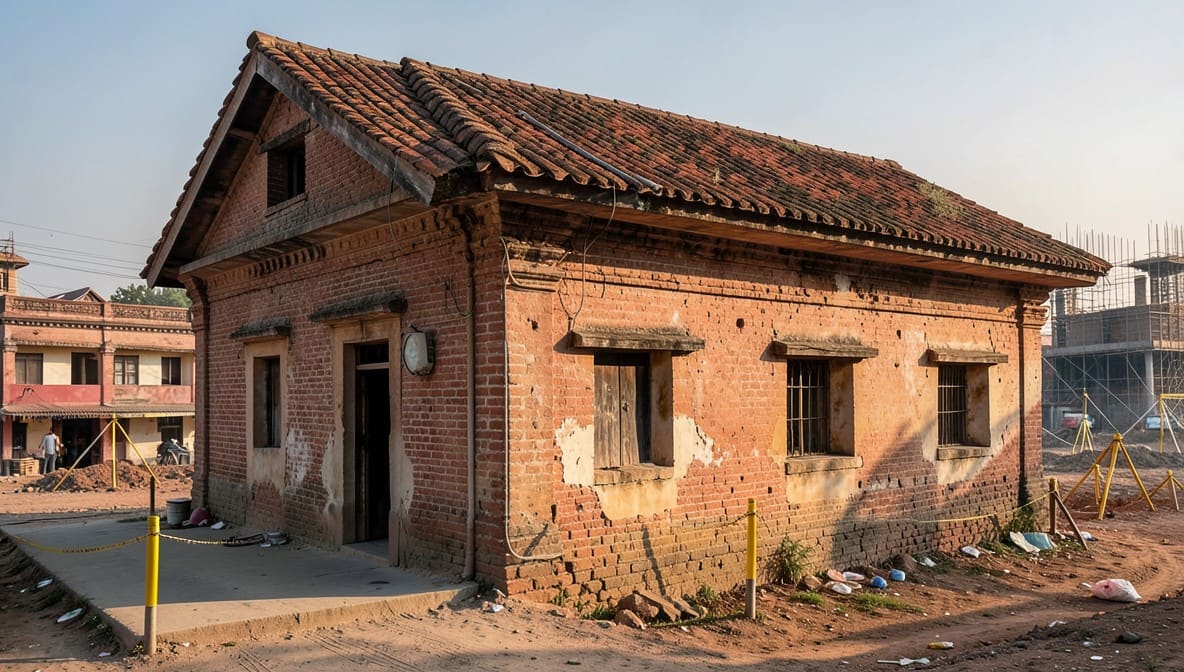
- The property is not newly constructed; it is an old structure with no recent alterations.
- The petitioner filed a detailed written objection to the demolition notice on 20.05.2026, challenging its legality and asserting his entitlement to compensation under the LARR Act, 2013.
- No prior notice, show-cause, or penalty order was ever issued under the Act, 1973 during the petitioner’s long-term occupation.
- The petitioner has paid all property taxes regularly, as evidenced by receipts.
- The acquisition process under the LARR Act, 2013 is ongoing, with land survey and valuation stages yet to be completed.
Procedural History
- 14.05.2026: Demolition notice issued by Varanasi Development Authority under Section 27(1) of the Act, 1973.
- 20.05.2026: Petitioner filed written objections to the demolition notice.
- 21.05.2026: Writ Petition (WP(C) No. 21735 of 2026) filed before the Allahabad High Court seeking quashing of the demolition notice and a writ of mandamus to restrain demolition.
- 29.05.2026: Hearing before the Division Bench of the Allahabad High Court.
The Parties' Positions
Petitioner’s Position: The demolition notice is mala fide and intended to deprive him of his right to compensation under the LARR Act, 2013. The notice is issued in bad faith, after acquisition proceedings have commenced, to create a pretext for denying ownership rights. The structure is old, lawful, and no prior violation was ever recorded.
Respondents’ Position: The acquisition proceedings under the LARR Act, 2013 have not yet been formally initiated with a declaration under Section 19. The demolition notice under the Act, 1973 is a separate, independent action based on alleged unauthorized construction. The petitioner has not filed a formal objection under Section 27(2) of the Act, 1973, and therefore the notice cannot be challenged at this stage.
Relief Sought
The petitioner sought:
- Quashing of the demolition notice dated 14.05.2026.
- A writ of mandamus directing the respondents not to demolish the property.
- A declaration that the demolition notice is an abuse of process intended to defeat his claim under the LARR Act, 2013.
The Legal Issue
Can a demolition notice issued under Section 27 of the Uttar Pradesh Urban Planning and Development Act, 1973, be lawfully invoked to dispossess a landowner whose property is already subject to acquisition proceedings under the LARR Act, 2013, where no prior violation was ever recorded and the structure is longstanding?
Arguments Presented
For the Petitioner
The petitioner’s counsel argued that the demolition notice is a collateral attack on the petitioner’s ownership rights during an ongoing acquisition. They cited State of U.P. v. Rameshwar Prasad to assert that authorities cannot create new grounds for dispossession once acquisition proceedings are underway. The notice was issued after the initiation of acquisition, with no prior history of violation, indicating mala fide intent to deny compensation. The petitioner’s long-standing possession and tax payments establish lawful occupancy, and the Act, 1973 cannot override the statutory protections under the LARR Act, 2013.
For the Respondent
The State’s counsel contended that the acquisition process under the LARR Act, 2013 had not yet reached the stage of a formal declaration under Section 19, and therefore no legal restraint on development actions under the Act, 1973 had been triggered. They argued that the two statutes operate independently: one governs acquisition and compensation, the other governs urban planning violations. The petitioner had not filed a formal objection under Section 27(2) of the Act, 1973, making the petition premature.
The Court's Analysis
The Court examined the procedural posture and the timing of the demolition notice in relation to the acquisition process. It noted that while the LARR Act, 2013 does not explicitly bar actions under other laws, the spirit of the statute requires that landowners not be deprived of their right to compensation through procedural manipulation. The Court observed that the petitioner had been in continuous possession for decades without any prior notice of violation, and the demolition notice emerged only after acquisition proceedings were initiated.
"The issuance of a demolition notice under the Act, 1973 at this stage, when acquisition proceedings are already underway and no prior violation has been established, raises a strong inference of mala fide intent to circumvent the compensation mechanism under the LARR Act, 2013."
The Court rejected the argument that the two proceedings are entirely independent, holding that when an authority initiates acquisition, it assumes a fiduciary duty to protect the landowner’s rights under the LARR Act. Using demolition proceedings to pressure or displace a claimant before compensation is determined undermines the legislative intent of fair compensation and transparency.
The Court also noted that the petitioner had filed objections to the demolition notice, and the authority had not yet considered them. The failure to consider objections before proceeding to demolition violates principles of natural justice.
The Verdict
The writ petition was disposed of with directions. The petitioner was granted one week to file a formal objection under Section 27(2) of the Act, 1973, along with a certified copy of this order. The Vice Chairman of the Varanasi Development Authority shall consider the objection within three weeks of its receipt. Until then, the status quo of possession shall be maintained. No demolition shall be carried out during this period. If no objection is filed within the stipulated time, the authority may proceed as per law.
What This Means For Similar Cases
Demolition Notices Cannot Be Weaponized During Acquisition
- Practitioners must challenge demolition notices issued during ongoing acquisition as mala fide if no prior violation exists.
- The timing of the notice - especially after acquisition initiation - is a critical factor in establishing bad faith.
- Courts will scrutinize whether the notice is a genuine enforcement action or a tactical maneuver to deny compensation.
Status Quo Must Be Preserved Until Objections Are Heard
- Authorities cannot proceed with demolition merely because a formal objection under Section 27(2) has not yet been filed.
- The filing of any written objection, even informally, triggers the duty to consider it before taking coercive action.
- Courts will enforce status quo as a default remedy when procedural fairness is at risk.
Dual Statutory Frameworks Require Harmonious Interpretation
- The LARR Act, 2013 and state urban development laws must be read together to avoid conflict.
- Landowners are entitled to compensation under the LARR Act even if their structure is technically non-compliant with zoning rules, provided they are lawful occupants.
- Authorities must resolve compensation claims before invoking demolition powers.