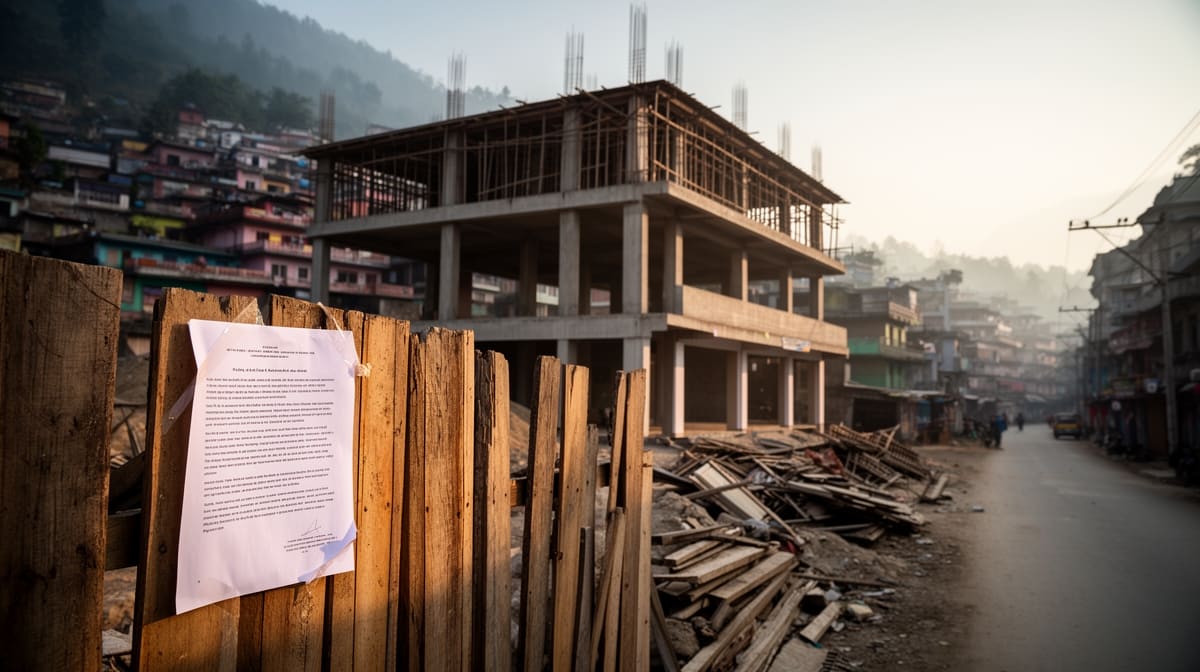
The Uttarakhand High Court has affirmed that administrative authorities cannot proceed with demolition of structures while a statutory revision is pending, establishing a clear procedural safeguard for property owners challenging urban development orders. This ruling reinforces the principle that due process must precede enforcement, even in cases involving unauthorized construction.
Background & Facts
The Dispute
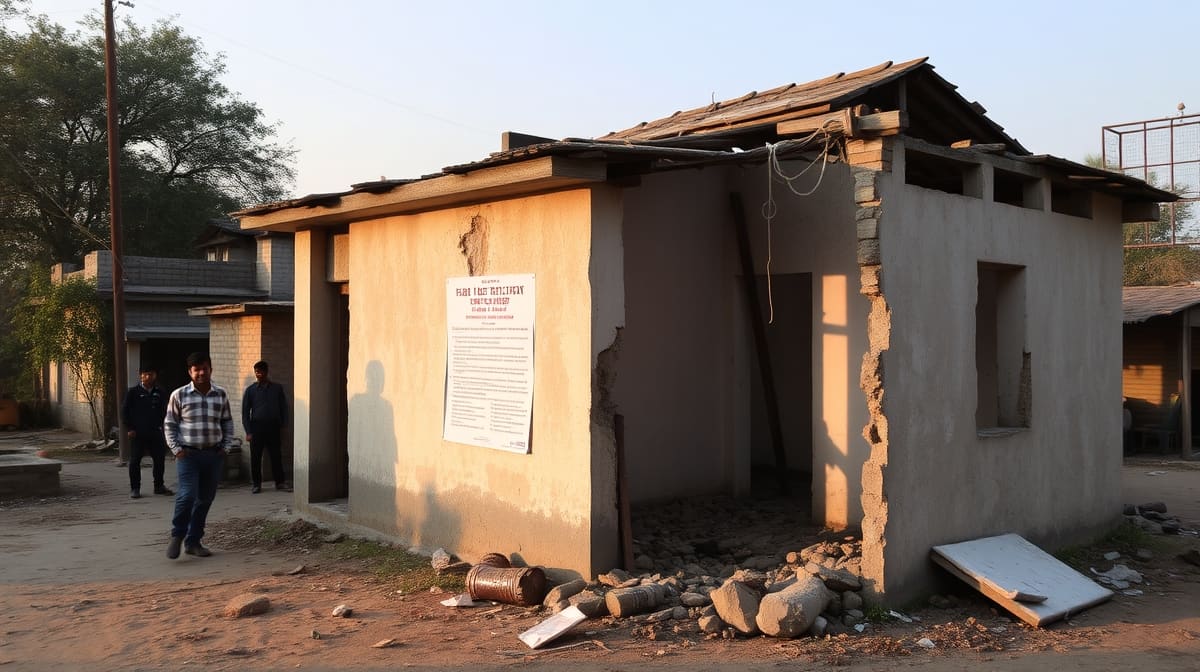
The petitioner, Vikram Singh Danu, constructed a commercial building on his own land in Bageshwar after obtaining permission from the District Level Development Authority. However, the authority later found that a portion of the structure exceeded the sanctioned map. Proceedings were initiated under the Uttarakhand Urban and Country Land Planning and Development Act, 1973, leading to a demolition notice.
Procedural History
The case progressed through multiple administrative forums:
- 2024: Demolition notice issued by District Level Development Authority on 01.06.2024
- 2025: Statutory appeal filed before Commissioner, Kumaon Mandal; dismissed on 28.05.2025
- 11.10.2025: Revision filed before Joint Chief Administrator, Housing and Urban Development Authority (Respondent No.3)
- 31.10.2025: Demolition notice issued by Respondent No.4 while revision was still pending
Relief Sought
The petitioner sought a writ of mandamus directing Respondent No.3 to decide the pending revision within a stipulated time and restraining Respondent No.4 from demolishing the disputed portion until the revision was disposed of.
The Legal Issue
The central question was whether an administrative authority may enforce a demolition notice under the Uttarakhand Urban and Country Land Planning and Development Act, 1973 while a statutory revision challenging the underlying order remains pending before a higher authority.
Arguments Presented
For the Petitioner
Learned counsel argued that enforcing demolition during pendency of revision violated the doctrine of audi alteram partem and rendered the revision remedy illusory. Reliance was placed on State of U.P. v. Mohammad Jaffar to assert that statutory remedies must be meaningful, not symbolic. The petitioner emphasized that the revision was filed within the statutory period and no stay was sought because the law did not require it.
For the Respondent
The State contended that the unauthorized construction posed a public interest threat and that demolition was necessary to uphold land use regulations. It argued that the revision was merely a procedural step and did not automatically suspend enforcement powers under the Act.
The Court's Analysis
The Court examined the nature of statutory revision under the Uttarakhand Urban and Country Land Planning and Development Act, 1973, noting that revisional jurisdiction is inherently supervisory and intended to correct jurisdictional errors or manifest illegality. The Court held that allowing demolition during pendency would defeat the very purpose of the revision mechanism.
"The remedy of revision is not a mere formality; it is a statutory right conferred upon the aggrieved party to seek redressal from a higher authority. To permit demolition while such a remedy is pending would render the revision futile and violate the principles of natural justice."
The Court distinguished this from cases involving public safety emergencies, noting no such exigency was pleaded or proven. It emphasized that the petitioner had not been given an opportunity to be heard by the revisional authority before enforcement action was taken. The Court further observed that the State’s own counsel did not oppose the prayer for status quo, reinforcing the reasonableness of the petitioner’s request.
The Verdict
The petitioner succeeded. The Court held that enforcement of demolition notices must be stayed during the pendency of statutory revision, and directed the Revisional Authority to decide the revision within two months. Parties were ordered to maintain status quo over the disputed construction until then.
What This Means For Similar Cases
Status Quo Is Presumed During Revision
- Practitioners must immediately seek status quo orders when challenging demolition notices under urban planning statutes
- Courts will presume that statutory revision remedies are ineffective if enforcement proceeds prematurely
- No separate stay application is required if the revision is filed within time and no prejudice to public interest is shown
Revisional Authority Must Act Promptly
- Administrative bodies must prioritize pending revisions to avoid judicial intervention
- Delay beyond statutory timelines may invite contempt proceedings or writs for non-compliance
- The two-month deadline set here sets a benchmark for future revisional proceedings
Enforcement Powers Are Not Absolute
- Authorities cannot unilaterally override statutory appellate mechanisms
- Public interest claims must be substantiated with evidence, not assumed
- Demolition without exhausting revision remedies may be deemed arbitrary under Article 14 of the Constitution