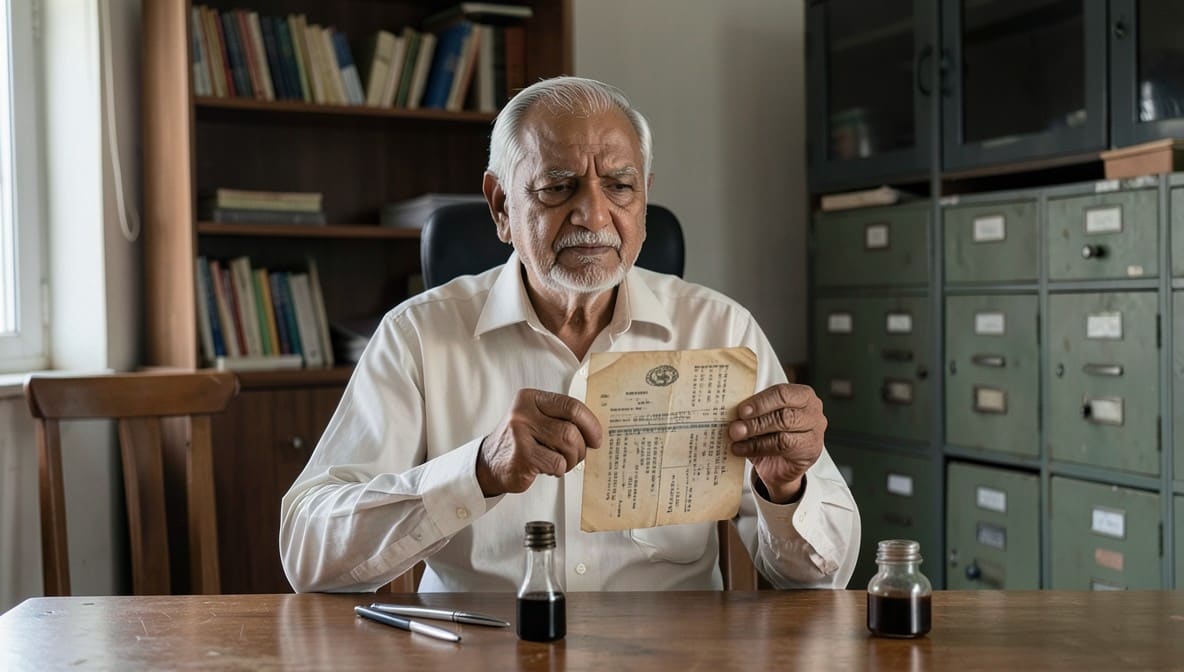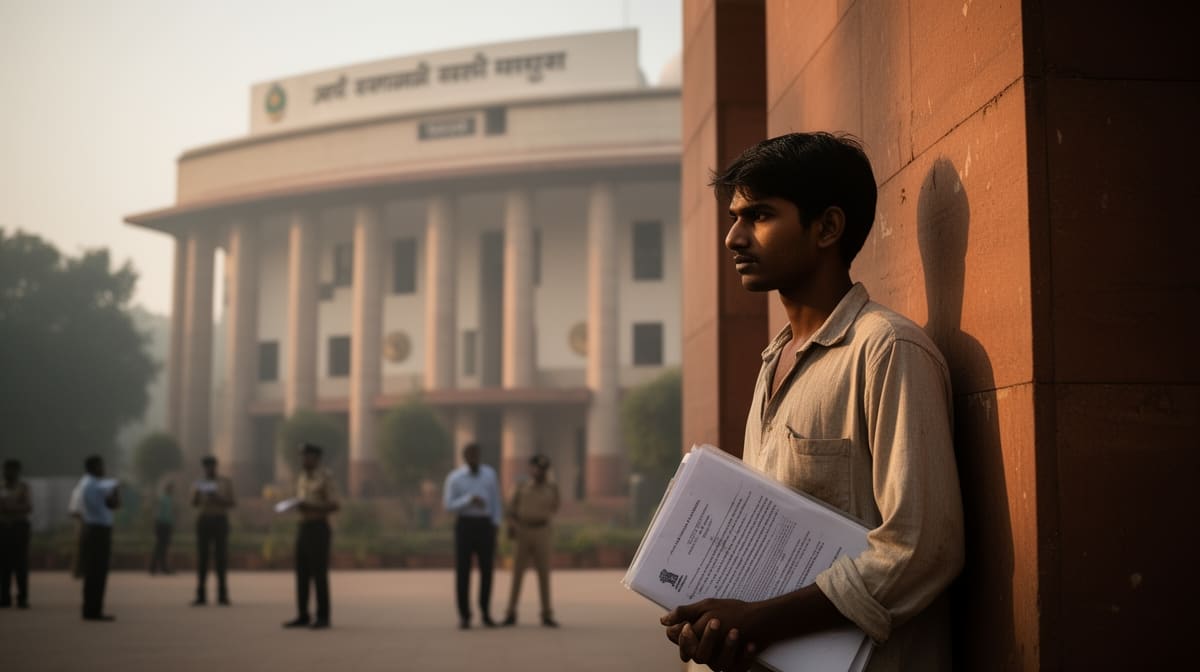
The Rajasthan High Court has clarified that a minor criminal conviction involving a nominal fine under the Rajasthan Public Gambling Ordinance cannot serve as a ground to cancel a compassionate appointment in government service. This ruling reinforces the principle that administrative decisions must be proportionate and grounded in substantive legal standards, not mechanical application of disqualification clauses.
Background & Facts
The Dispute
The petitioner, Virendra Singh, sought compassionate appointment under the Rajasthan Compassionate Appointment of Dependents of Deceased Government Servants Rules, 1996, following the death of his father, a regular government employee, on 04.07.2024. The petitioner, aged 36, applied for the post of Assistant Employee (Sahayak Karamchari) in the Secondary Education Department, Sri Ganganagar.
Key Facts
- The petitioner’s father died in service on 04.07.2024
- The petitioner applied for compassionate appointment shortly thereafter
- On 25.02.2025, the respondents approved the petitioner’s candidature and issued an appointment order
- During police verification, it was discovered that the petitioner had been convicted under Section 13 of the Rajasthan Public Gambling Ordinance, 1949
- The conviction arose from FIR No. 306 dated 23.10.2011
- The petitioner was sentenced to a fine of Rs. 100/-, with no imprisonment
- On 28.11.2025, the Director, Secondary Education, Bikaner, cancelled the appointment order on the ground of this conviction
Procedural History
- 04.07.2024: Death of petitioner’s father in service
- Late 2024: Petitioner submitted application for compassionate appointment
- 25.02.2025: Appointment approved by competent authority
- 28.11.2025: Appointment cancelled by Director, Secondary Education, on grounds of prior conviction
- 04.01.2026: Writ Petition No. 1104/2026 filed before the High Court of Judicature for Rajasthan at Jodhpur
- 04.05.2026: Judgment delivered by Hon’ble Mr. Justice Kuldeep Mathur
Relief Sought
The petitioner sought:
- Quashing of the order dated 28.11.2025 cancelling his compassionate appointment
- Restoration of the appointment order dated 25.02.2025
- Declaration that Personnel Department Notification dated 04.12.2019 is inapplicable to his case
- Grant of seniority, pay fixation, and all consequential benefits from the date of original appointment
The Legal Issue
The central question was whether a conviction resulting in a fine of Rs. 100/- under Section 13 of the Rajasthan Public Gambling Ordinance, 1949, constitutes an offence involving moral turpitude sufficient to disqualify a candidate from compassionate appointment under government service rules.
Arguments Presented
For the Petitioner
Learned counsel argued that the offence under the Rajasthan Public Gambling Ordinance is a minor, non-violent, and non-moral turpitude offence. He relied on the binding precedent of Alok Garg v. State of Rajasthan & Ors. (2015), which held that imposition of a fine under this Ordinance does not amount to moral turpitude. He further invoked the Department of Personnel’s circular dated 04.12.2019, which restricts disqualification to convictions involving moral turpitude or violence. He emphasized that denying appointment for such a trivial offence violates the principles of proportionality, rehabilitation, and the right to livelihood under Article 21.
For the Respondent
Learned counsel for the State contended that Clause 1 of the 04.12.2019 circular permits denial of appointment to any candidate who has been convicted and sentenced, regardless of the nature of the offence. He argued that the appointment is a privilege, not a right, and that the state has the discretion to maintain integrity in public service. He submitted that the petitioner’s conviction, however minor, rendered him ineligible under the broad language of the circular.
The Court's Analysis
The Court examined the interplay between the Compassionate Appointment Rules, 1996, and the Personnel Department’s circular dated 04.12.2019. It noted that while the Rules do not explicitly list disqualifying offences, the circular provides a guiding framework for administrative discretion.
"This Court prima facie finds that in cases where a candidate has been convicted, the decision to deny appointment is not to be taken in a mechanical manner. Rather, a duty is cast upon the appointing authority to examine such cases carefully, and unless the offence for which the candidate has been convicted involves moral turpitude or violence, appointment may be granted."
The Court emphasized that the circular was issued to prevent arbitrary denials and to ensure that minor offences do not lead to lifelong disqualification. It held that the offence under Section 13 of the Rajasthan Public Gambling Ordinance, which criminalizes mere gambling with small stakes, is not inherently immoral or violent. The Court reaffirmed the Alok Garg precedent, which cited Pawan Kumar v. State of Haryana (1996) to hold that such convictions do not involve moral turpitude.
The Court rejected the State’s argument that any conviction, irrespective of severity, automatically disqualifies a candidate. It observed that such an interpretation would render the circular meaningless and violate the principle of reasonable classification under Article 14. The Court further noted that the petitioner had been approved for appointment for over nine months before cancellation, indicating that the initial assessment was correct.
The Verdict
The writ petition was allowed. The impugned order dated 28.11.2025 cancelling the petitioner’s compassionate appointment is set aside. The respondents are directed to permit the petitioner to join service as Sahayak Karamchari forthwith. The petitioner shall be entitled to seniority, pay fixation, and all consequential benefits on a notional basis from the date of the original appointment order dated 25.02.2025. The stay petition stands disposed of.
What This Means For Similar Cases
Moral Turpitude Must Be Clearly Established
- Practitioners must challenge denials of compassionate or regular appointments where the conviction is for minor, non-violent, non-moral turpitude offences such as petty gambling, minor theft, or public nuisance
- The burden shifts to the state to prove that the offence involves moral turpitude; mere conviction is insufficient
- Circulars and guidelines must be interpreted in light of constitutional principles of proportionality and rehabilitation
Administrative Discretion Is Not Unfettered
- Appointing authorities cannot rely on blanket disqualification clauses without applying judicially recognized standards
- Delay in acting on police verification reports (here, over 14 months) may undermine the legitimacy of cancellation
- Where a candidate has already been approved and is awaiting joining, cancellation without fresh, compelling grounds amounts to arbitrariness
Precedent Binding Across Departments
- The Alok Garg precedent now applies uniformly across all Rajasthan government departments
- Similar cases involving convictions under the Rajasthan Public Gambling Ordinance, Motor Vehicles Act (minor offences), or similar statutes must be decided consistently
- Legal advisors in state departments must now review all pending cases involving minor convictions and reconsider denials in light of this judgment