The Central Administrative Tribunal has delivered a landmark ruling affirming that compassionate appointments cannot be denied on the basis of unproven criminal allegations against a deceased government servant, even when those allegations led to a pending case that abated upon death. The judgment reinforces the constitutional principle that criminal liability is personal and cannot be vicariously imposed on family members, regardless of administrative policy.
Background & Facts
The Dispute
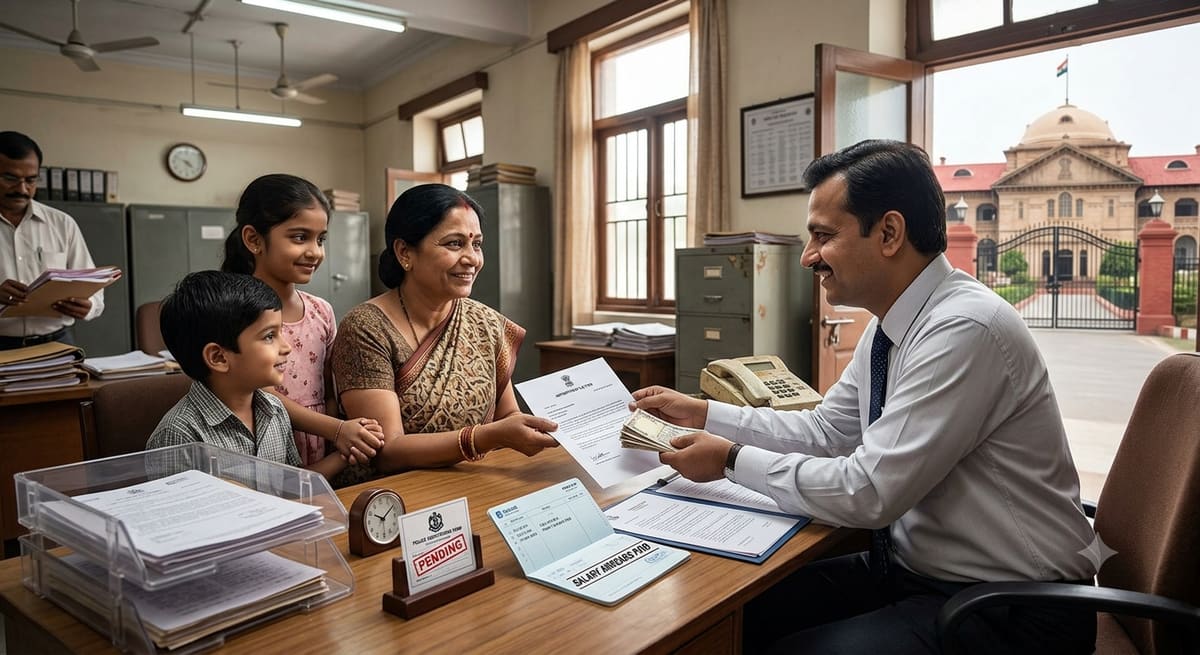
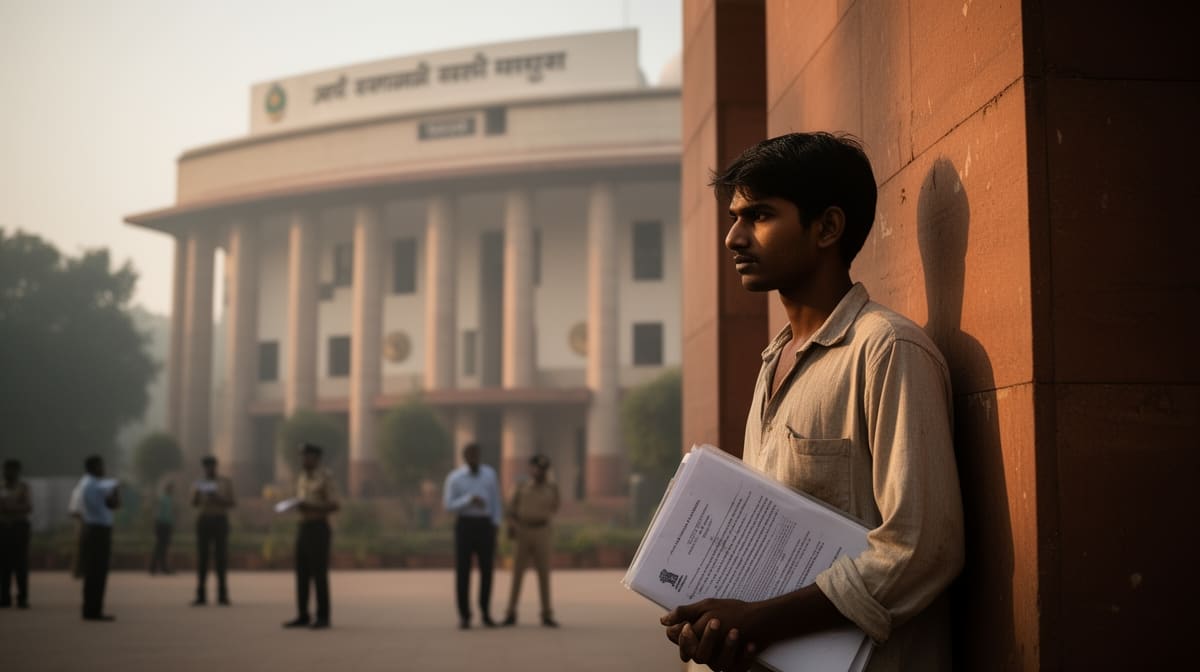
The applicant, Harsh Malik, sought compassionate appointment in Delhi Police following the sudden death of his father, Head Constable Subhash Chand, on 16 October 2012. The family, consisting of the applicant, his two unmarried sisters, and his widow, faced severe financial hardship with no stable income or property. The applicant’s mother submitted multiple representations seeking appointment on compassionate grounds, but each was rejected on the grounds that the deceased father was涉案 in FIR No. 442/2007 under Sections 409, 420, and 411 IPC.
Procedural History
- October 2012: Head Constable Subhash Chand died in service.
- August 2013: Applicant’s mother requested compassionate appointment; respondents advised applying after applicant turned 18.
- January 2016: Applicant, having attained majority, formally applied for compassionate appointment.
- February 2017: First rejection cited non-coverage under Standing Order No. 39/2014.
- May 2017: Second rejection invoked FIR No. 442/2007, despite no conviction.
- January 2018: Third rejection reiterated FIR-based disqualification.
- February 2019: Tribunal in OA No. 578/2019 directed respondents to reconsider the case, taking into account the abatement of the FIR and dropping of departmental proceedings.
- April 2019: Respondents issued a new order denying appointment, relying on the same FIR and a restrictive note under Standing Order No. 39/2018.
The Parties' Positions
- Applicant: Argued that the deceased was never convicted, the criminal case abated upon death, and departmental proceedings were dropped with suspension treated as duty. The denial violated Articles 14 and 16 of the Constitution.
- Respondents: Contended that the deceased was charge-sheeted in a serious criminal case and involved in undesirable activities, making the applicant ineligible under the Note to Clause 4 of Standing Order No. 39/2018.
Relief Sought
The applicant sought quashing of all rejection orders, direction for reconsideration of his compassionate appointment claim, consequential benefits, and costs.
The Legal Issue
The central question was whether compassionate appointment can be denied to a dependent solely on the basis of unproven criminal allegations against a deceased government servant, when those allegations resulted in an abated criminal case and dropped departmental proceedings, with no finding of guilt.
Arguments Presented
For the Appellant/Petitioner
Learned counsel argued that the presumption of innocence is a fundamental right under Articles 14 and 21 of the Constitution and survives even after the death of the accused. The abatement of the criminal case and dropping of departmental proceedings, coupled with the treatment of suspension as duty under FR-54B(2), meant no stigma remained. The impugned Note under Standing Order No. 39/2018 was ultra vires, arbitrary, and violated the principle of non-vicarious liability. Reliance was placed on Saroja Shivakumar v. State Bank of Mysore and Noor Aga v. State of Punjab to argue that dependents cannot be punished for the alleged misconduct of a deceased relative.
For the Respondent/State
The respondents contended that compassionate appointment is not a vested right and must strictly comply with policy. They argued that the deceased was charge-sheeted in a serious criminal case involving misuse of official position, and the Note to Clause 4 of Standing Order No. 39/2018 explicitly disqualifies such cases. They relied on Union of India v. Sima Banerjee to argue that delay in application disentitles the claim, and that the abatement of proceedings does not equate to exoneration.
The Court's Analysis
The Tribunal undertook a rigorous constitutional and doctrinal analysis, beginning with the foundational principle that criminal liability is personal and cannot be inherited. It emphasized that the presumption of innocence is not extinguished by death, and that mere pendency or charge-sheeting, without conviction, cannot justify denial of a civil benefit.
"The presumption of innocence is a golden thread in criminal jurisprudence... and continues even after the death of the accused. Denial of compassionate appointment on unproven allegations violates the very essence of Article 14 and Article 21."
The Court distinguished between proven misconduct and mere allegations. It noted that the departmental proceedings had been dropped, the suspension period had been treated as duty, and the deceased’s name had been removed from the list of personnel involved in criminal cases - all indicating that no adverse finding was recorded. The respondents’ reliance on the Note to Clause 4 of Standing Order No. 39/2018 was found to be legally unsustainable because it imposed a vicarious penalty on the applicant for acts never adjudicated against his father.
The Tribunal cited Noor Aga v. State of Punjab to affirm that presumption of innocence is a human right, and Canara Bank v. M. Mahesh Kumar to hold that administrative policies must not introduce extraneous, arbitrary disqualifications. It further held that the Note’s requirement to consider "results of police investigation" was superfluous, as a charge-sheet is the product of investigation, and its filing alone cannot be a disqualifier.
The Court also rejected the respondents’ argument on delay, noting that the applicant had acted promptly upon attaining majority, following the respondents’ own advice to apply at that stage. The Tribunal concluded that the denial was not merely erroneous but constitutionally impermissible.
The Verdict
The applicant won. The Court held that compassionate appointment cannot be denied on the basis of unproven criminal allegations against a deceased government servant, especially when the case has abated and no finding of guilt exists. The impugned orders were quashed, and the respondents were directed to reconsider the applicant’s claim without reference to the criminal allegations.
What This Means For Similar Cases
Compassionate Appointment Cannot Be Denied on Unproven Allegations
- Practitioners must challenge denials of compassionate appointments where the deceased had no conviction or formal finding of misconduct.
- Administrative orders relying on pending FIRs or charge-sheets without final adjudication are legally vulnerable.
- The burden shifts to the authority to prove proven misconduct, not on the applicant to disprove allegations.
The Note to Clause 4 of Standing Order No. 39/2018 Is Constitutionally Suspect
- Similar restrictive notes in other departments (e.g., Railways, Postal Services) may now be challenged as ultra vires.
- Any policy that links civil benefits to unproven criminal allegations violates Article 14 and Article 21.
- Authorities must base decisions on objective criteria: financial distress, dependency, and absence of property - not speculative associations.
Delay Is Not a Bar When Applicant Follows Official Guidance
- Delay in applying for compassionate appointment is not fatal if the applicant acted in accordance with the authority’s own instructions.
- If an authority advises a dependent to apply at a later stage (e.g., upon majority), it cannot later use delay as a ground for rejection.
- This creates a new precedent for procedural fairness in administrative benefit schemes.