The Delhi High Court has affirmed that a public authority may lawfully terminate a toll collection contract under a pre-agreed clause for windfall gain, even if the contract term has not expired, provided the termination is not arbitrary or mala fide. This ruling reinforces the principle that commercial contracts entered into by the State with private entities are governed by their express terms, and judicial intervention is limited to procedural fairness, not commercial outcomes.
Background & Facts
The Dispute
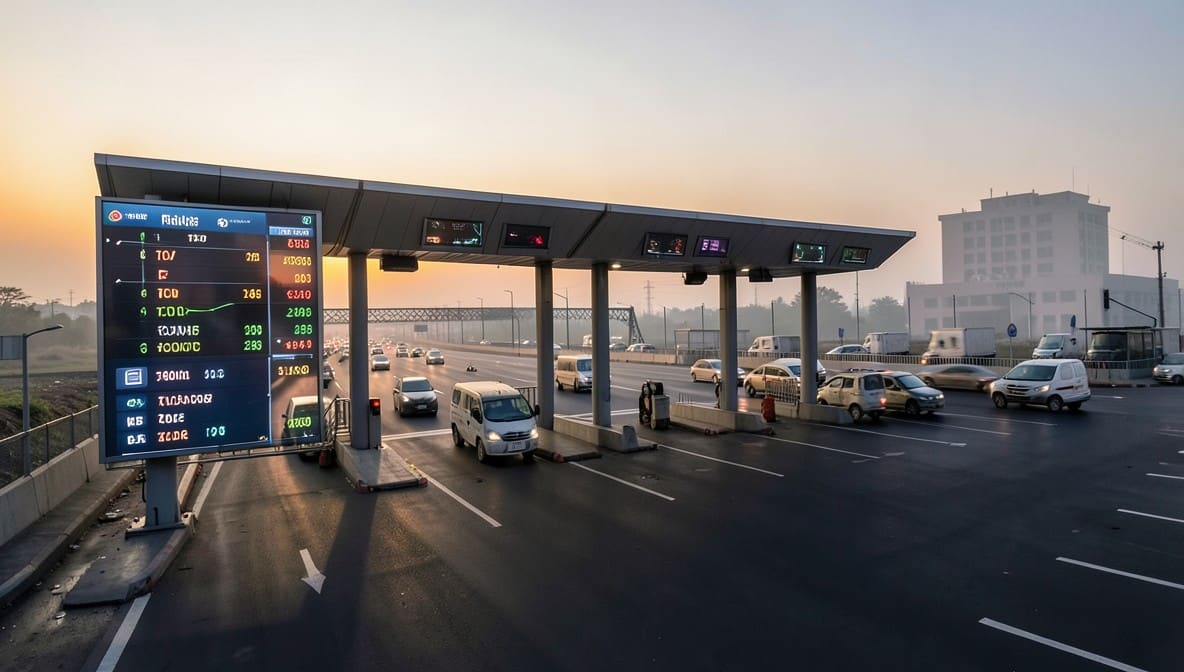
The petitioner, Md. Karimunnisa, was engaged by the National Highways Authority of India (NHAI) as a User Fee Collection Agency for the Pawangaon Fee Plaza on NH-353J in Maharashtra under a contract dated 26.05.2025. The contract was for a fixed term of one year, commencing on 17.06.2025 and set to expire on 17.06.2026. The petitioner was declared the successful bidder after a competitive e-tender process, with a daily remittance of Rs.2,62,430 (Rs.2,58,737 as per NHAI’s calculation), substantially higher than the reserve price and the second-highest bid.
Key Facts
- The petitioner had previously operated the same fee plaza for two months in April - May 2025.
- The contract incorporated Clause 35, which included two termination provisions: Clause 35(2) permitted termination with seven days’ notice without assigning reasons; Clause 35(6) permitted termination if the moving average of ETC and cash collections over the preceding fifteen days exceeded 40% of the contractual remittance - termed a "windfall gain."
- The Pawangaon Fee Plaza was not a newly constructed plaza but had been operational prior to the contract.
- Monthly toll collection data showed a consistent and steep increase from June 2025 onwards:
- June 2025: Rs.4,50,264 (74.02% above remittance)
- December 2025: Rs.8,90,220 (244.06% above remittance)
- February 2026: Rs.9,58,560 (270.48% above remittance)
- NHAI estimated a daily revenue loss of approximately Rs.7,50,000 due to the contractual remittance cap.
- On 02.04.2026, NHAI issued a show cause notice invoking both Clause 35(2) and Clause 35(6), and simultaneously floated a fresh tender for a three-month interim agency.
- The petitioner submitted a reply on 04.04.2026 and was granted a personal hearing on 06.04.2026.
- On 08.04.2026, the contract was terminated.
Procedural History
- 17.06.2025: Contract executed between petitioner and NHAI.
- 02.04.2026: NHAI issued show cause notice and fresh tender.
- 04.04.2026: Petitioner submitted written reply.
- 06.04.2026: Personal hearing held.
- 08.04.2026: Contract terminated by NHAI.
- 20.04.2026: Writ Petition dismissed by Delhi High Court.
The Parties' Positions
Petitioner: Argued that Clause 35(6) was inapplicable because the Pawangaon Fee Plaza was not a "new" fee plaza; termination was pre-determined, mala fide, and violated Article 14; the notice was mechanical; and the simultaneous tender issuance proved bad faith.
NHAI: Contended that Clause 35(6) was validly invoked due to sustained windfall gain; termination under Clause 35(2) was permissible regardless of contract expiry; the decision was made after due process; and judicial review cannot substitute commercial judgment.
Relief Sought
The petitioner sought quashing of the termination order and show cause notice, reinstatement of the contract, and a direction to restrain NHAI from issuing the fresh tender.
The Legal Issue
The central question was whether a public authority may lawfully terminate a toll collection contract under a contractual windfall gain clause (Clause 35(6)) even if the contract term has not expired, and whether such termination constitutes arbitrariness or mala fide exercise of power under Article 14 of the Constitution.
Arguments Presented
For the Petitioner
The petitioner relied on the principle that termination without breach is arbitrary and violates Article 14. It argued that Clause 35(6) was intended only for newly commissioned plazas, not existing ones, and its invocation here was an abuse of power. It further contended that the simultaneous issuance of a fresh tender on the same day as the show cause notice demonstrated a pre-determined intent to terminate, rendering the process a sham. The petitioner also cited the doctrine of unfair contractual terms from Central Inland Water Transport Corporation Ltd. v. Brojo Nath Ganguly, asserting that the clause was oppressive given its disproportionate impact.
For the Respondent
NHAI argued that the contract was a commercial agreement entered into voluntarily after competitive bidding, and both parties were bound by its terms. Clause 35(2) permitted termination with notice, and Clause 35(6) was a legitimate safeguard to protect public revenue. The authority had followed due process: notice, reply, hearing, and reasoned order. Judicial review cannot interfere with administrative decisions on public finance unless mala fide or irrational. The petitioner, as an experienced operator of over 80 plazas, was fully aware of the contractual risks.
The Court's Analysis
The Court began by reaffirming the settled principle that judicial review under Article 226 in contractual matters is confined to examining the decision-making process - not the commercial wisdom of the decision. It cited Tata Cellular v. Union of India, Jagdish Mandal v. State of Orissa, and N.G. Projects Ltd. v. Vinod Kumar Jain to emphasize that courts must not substitute their own view for that of the competent authority.
"A commercial arrangement governed by agreed contractual conditions necessarily remains subject to termination in accordance with those very conditions, unless the decision is established as arbitrary, passed with mala fide intent or bias."
The Court rejected the petitioner’s argument that Clause 35(6) was inapplicable because the plaza was not "new." It held that the contract, as a whole, was accepted by both parties, and the term "new" was not defined in the tender documents. NHAI’s interpretation - that the plaza was less than a year old and had previously operated under a short-term arrangement - was reasonable and within its administrative discretion.
The Court further noted that the petitioner had operated the plaza for nearly nine months, availing all benefits under the contract, and could not now challenge the very clause that formed part of the agreed terms. The doctrine of estoppel applied.
The Court also dismissed the claim of mala fide due to the simultaneous tender issuance, holding that administrative preparedness to ensure uninterrupted toll collection was prudent governance, not evidence of bad faith.
"Judicial interference in such administrative decisions, absent demonstrable illegality, would amount to substituting administrative discretion with judicial preference, which is impermissible in exercise of writ jurisdiction."
The Court emphasized that hardship or financial loss to a contractor, however severe, does not render lawful contractual termination arbitrary. The petitioner’s experience and sophistication as a contractor negated any claim of unequal bargaining power.
The Court also clarified that the appropriate remedy for breach of contract lies in damages, not specific performance, under the Specific Relief Act, 1963.
However, the Court made a critical observation: NHAI had delayed invoking Clause 35(6) for nearly ten months despite clear financial data indicating windfall gain since June 2025. This delay caused avoidable loss of approximately Rs.7.5 lakh per day to the public exchequer. The Court directed NHAI to implement an automated monitoring system and conclude disciplinary proceedings against responsible officials within six months.
The Verdict
The writ petition was dismissed. The termination of the contract dated 26.05.2025 under Clauses 35(2) and 35(6) was upheld as lawful. The fresh tender issued on 02.04.2026 was not set aside. The petitioner is not entitled to reinstatement or specific performance. The Court directed NHAI to implement a real-time automated monitoring system for toll collections and conclude disciplinary proceedings against officials responsible for the delay in invoking Clause 35(6) within six months, with the outcome to be filed before the Court.
What This Means For Similar Cases
Contractual Terms Prevail Over Commercial Expectations
- Practitioners must advise clients that competitive tenders with termination clauses are binding, even if they result in financial loss.
- A contractor cannot invoke Article 14 to challenge a termination clause merely because it becomes disadvantageous.
- Courts will not intervene unless mala fide, arbitrariness, or procedural unfairness is proven.
Public Authorities May Enforce Revenue-Safeguarding Clauses
- Clauses allowing termination for windfall gain, underperformance, or revenue imbalance are enforceable if clearly worded and part of the tender.
- Delay in invoking such clauses may expose authorities to disciplinary action, even if the termination itself is upheld.
- Administrative preparedness, including automated systems, is now a de facto expectation in public infrastructure contracts.
Judicial Restraint in Commercial Disputes
- Writ petitions under Article 226 cannot be used to renegotiate commercial contracts.
- Damages, not reinstatement, are the proper remedy for breach of contract.
- Parties must carefully assess risk exposure before bidding on public contracts with termination triggers.