The Rajasthan High Court has affirmed that termination of a railway contract and forfeiture of a security deposit are lawful where the contractor repeatedly violates safety norms and contractual obligations, particularly when public safety is at stake. The judgment clarifies the scope of judicial review in contractual disputes involving public infrastructure and reinforces the primacy of contractual terms over subjective interpretations.
Background & Facts
The Dispute
The petitioner, M/s. Shree Ji Resources LLP, a Limited Liability Partnership registered under the GST Act, was awarded Contract Agreement No. CA 11 RTM Wagon Cleaning-1 dated 29.09.2023 through an e-auction conducted by the Western Railway. The contract, executed on 30.09.2023, was for a term of three years from 04.11.2023 to 03.11.2026, for cleaning goods wagons and disposal of raw material in the Chittorgarh area under Ratlam Division. The petitioner furnished a security deposit of Rs. 5,05,000/- as required under the contract.
Key Facts
- The contract was governed by the "Standard Conditions of Contract for Commercial Earning and NFR Contracts Awarded through E-Auction", issued by the Ministry of Railways vide Railway Board Letter No. 2022/TC(FM)/10/4 dated 13.06.2022 (Annexure R/1).
- Clause 18.1 of the contract permitted termination without notice for breach of terms or serious misconduct, including violation of safety norms, and authorized forfeiture of the security deposit.
- On 12.12.2023, the Railway authorities issued a communication alleging irregularities in cleaning BOX-N wagons and imposed a penalty of Rs. 2,02,000/-. The petitioner replied on 18.12.2023, citing operational difficulties due to clinker accumulation and communication gaps.
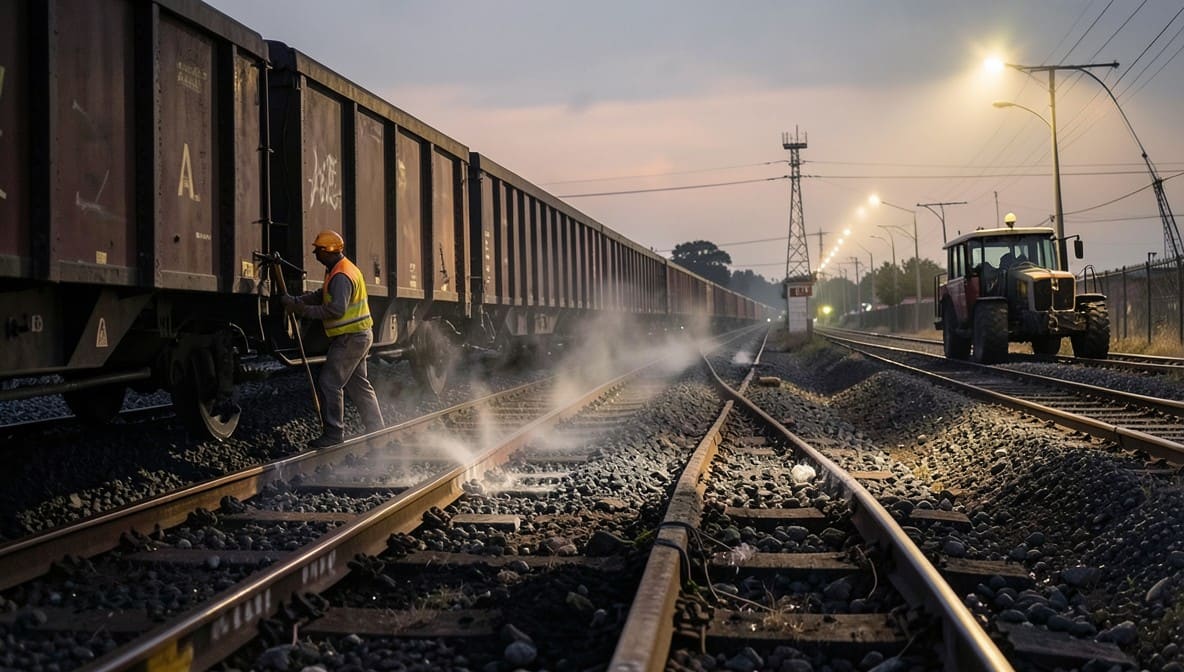
- A show cause notice dated 24.06.2024 was issued alleging failure to remove material within six hours, use of tractor-trolleys between railway lines, and unsafe practices.
- The petitioner submitted a detailed reply on 29.06.2024, asserting adequate manpower deployment and attributing delays to continuous rake movement and restricted access.
- On 08.07.2024, the Railway issued an advisory urging strict compliance with contractual conditions, but did not withdraw the earlier allegations.
- An inspection report dated 29.09.2024 (Annexure R/8) documented: accumulation of coal near tracks, uneven surfaces affecting rake examination, use of burning sigdi near combustible material, erection of a temporary hut near OHE poles, and obstruction of maintenance work.
- The impugned order dated 14.10.2024 terminated the contract with immediate effect and forfeited the security deposit of Rs. 5,05,000/-.
- The petitioner filed an appeal on 17.10.2024, which was rejected on 25.10.2024 without detailed reasoning.
- The respondents initiated a fresh tender process after termination.
Procedural History
- 29.09.2023: Contract awarded via e-auction
- 30.09.2023: Contract executed
- 12.12.2023: First penalty notice issued
- 18.12.2023: Petitioner’s reply to penalty notice
- 19.12.2023: Reiteration of penalty demand
- 24.06.2024: Show cause notice issued
- 29.06.2024: Petitioner’s detailed reply
- 08.07.2024: Advisory on compliance issued
- 29.09.2024: Inspection report documenting safety violations
- 14.10.2024: Termination order and forfeiture of security deposit
- 17.10.2024: Petitioner’s appeal filed
- 25.10.2024: Appeal rejected
- 15.04.2026: Writ petition dismissed by Rajasthan High Court
Relief Sought
The petitioner sought quashing of the termination order dated 14.10.2024, restoration of the contract, and return of the security deposit of Rs. 5,05,000/-. Alternatively, it sought a direction to conduct a fair hearing before any penalty.
The Legal Issue
The central question was whether termination of a railway contract and forfeiture of a security deposit under Clause 18.1 of the Standard Conditions of Contract, issued on 13.06.2022, are legally sustainable where the contractor has repeatedly violated safety norms and contractual timelines, and whether such action is subject to judicial review under Article 226 of the Constitution.
Arguments Presented
For the Petitioner
The petitioner contended that the termination order was arbitrary and violative of natural justice, as no adequate opportunity of hearing was granted. It argued that Clause 18.1, as understood from an older version of the contract, applied only to cases of illegal gratification or corruption, which were not alleged. It further submitted that the use of tractors and delays in material removal were due to operational constraints beyond its control, and that the earlier penalty had been effectively waived by the advisory dated 08.07.2024. Reliance was placed on Harbanslal Sahnia v. Indian Oil Corporation, Subodh Kumar Rathour v. CEO, and West Bengal Small-Scale Industries Development Corporation v. Hindustan Detergent to argue that termination must be proportionate and based on clear breach.
For the Respondent
The respondents contended that the contract was governed by the amended Standard Conditions of Contract dated 13.06.2022, which explicitly permitted termination for breach of any term or serious misconduct, including violation of safety norms. They submitted that the inspection report dated 29.09.2024 and multiple communications established a pattern of non-compliance, including unsafe practices that endangered railway operations. The show cause notice was duly replied to, and the appeal was considered before rejection. Reliance was placed on Indian Thermal Power Ltd. v. State of M.P., Noble Resources Ltd. v. State of Orissa, and ABL International Ltd. v. ECGC to argue that judicial review under Article 226 is limited to procedural illegality, not merits, especially where public safety is involved.
The Court's Analysis
The Court first addressed the petitioner’s contention regarding the applicability of Clause 18.1. It held that the petitioner’s reliance on an outdated version of the contract was misplaced, as the respondents had clearly established that the contract was governed by the amended Standard Conditions of Contract issued on 13.06.2022. The petitioner failed to produce any document to rebut this, and the Court accepted the respondents’ version as binding.
"Clause 18.1 under the 'Standard Conditions of Contract for Commercial Earning and NFR contracts awarded through e-auction' issued by the Ministry of Railways vide Railway Board Letter No. 2022/TC(FM)/10/4 dated 13.06.2022 is reproduced as under: '18. Termination of the contract: 18.1 Railway shall reserve the right to terminate the contract as a punitive measure without any notice at any time in case of violation of any of the terms and conditions of the contract or due to any other serious misconduct (including but not limited to violation of Railway Act, 1989, commissioning of an unlawful act which is not in line with good industry practices, or an activity of moral turpitude) by the lease holder, forfeiting full EMD/SD amount.'"
The Court emphasized that the clause was broad and encompassed breaches of safety norms and operational procedures, not merely corruption. The inspection report dated 29.09.2024, corroborated by prior communications, demonstrated persistent non-compliance: accumulation of coal near tracks, use of prohibited machinery, erection of unauthorized structures near OHE poles, and obstruction of maintenance. These were not technical lapses but serious safety hazards in a high-risk environment.
The Court reiterated that judicial review under Article 226 in contractual matters is confined to examining whether the decision was arbitrary, mala fide, or procedurally flawed - not whether the decision was correct on merits. The respondents had acted within their contractual rights, and the termination was supported by documented evidence. The petitioner’s appeal was rejected after consideration, and the Court found no procedural illegality.
The Court further noted that railway safety is a matter of public interest, and the Railway Administration is entitled to take stringent measures to prevent risks to passengers, staff, and infrastructure. The petitioner’s argument that prior contractors used similar methods did not justify continued violation after explicit warnings.
The Verdict
The writ petition was dismissed. The termination order dated 14.10.2024 and the forfeiture of the security deposit of Rs. 5,05,000/- were upheld. The Court held that the respondents acted lawfully within the terms of the contract and in the interest of public safety. No costs were awarded. The respondents were permitted to proceed with the fresh tender process.
What This Means For Similar Cases
Contractual Terms Prevail Over Past Practices
- Practitioners must verify the exact version of contract terms in force at the time of award - past industry practices do not override written contractual conditions.
- Contractors cannot assume that prior leniency by authorities creates a binding precedent for future compliance.
Safety Breaches Justify Summary Termination
- In contracts involving public infrastructure, especially railways, safety violations constitute "serious misconduct" under termination clauses even without proof of intent.
- Inspection reports and contemporaneous communications are sufficient to establish breach; no additional hearing is required if the show cause process was followed.
Judicial Review Is Narrow in Contractual Disputes
- Courts will not interfere with termination decisions unless there is procedural arbitrariness or mala fide.
- The burden is on the contractor to prove that the termination was not grounded in the contract or was disproportionate.
- Where public safety is implicated, courts defer to the administrative authority’s judgment unless the action is clearly unreasonable.