A landmark ruling by the Madras High Court has clarified that a contract cannot be terminated after its contractual term has expired, even if the party alleges breach. The Court invalidated the forfeiture of earnest money, performance guarantee, and security deposits where termination was issued post-expiry, establishing that no subsisting contract exists to terminate. This decision reinforces the foundational principle that termination requires a live contract and sets a critical precedent for infrastructure and public works disputes.
Background & Facts
The Dispute
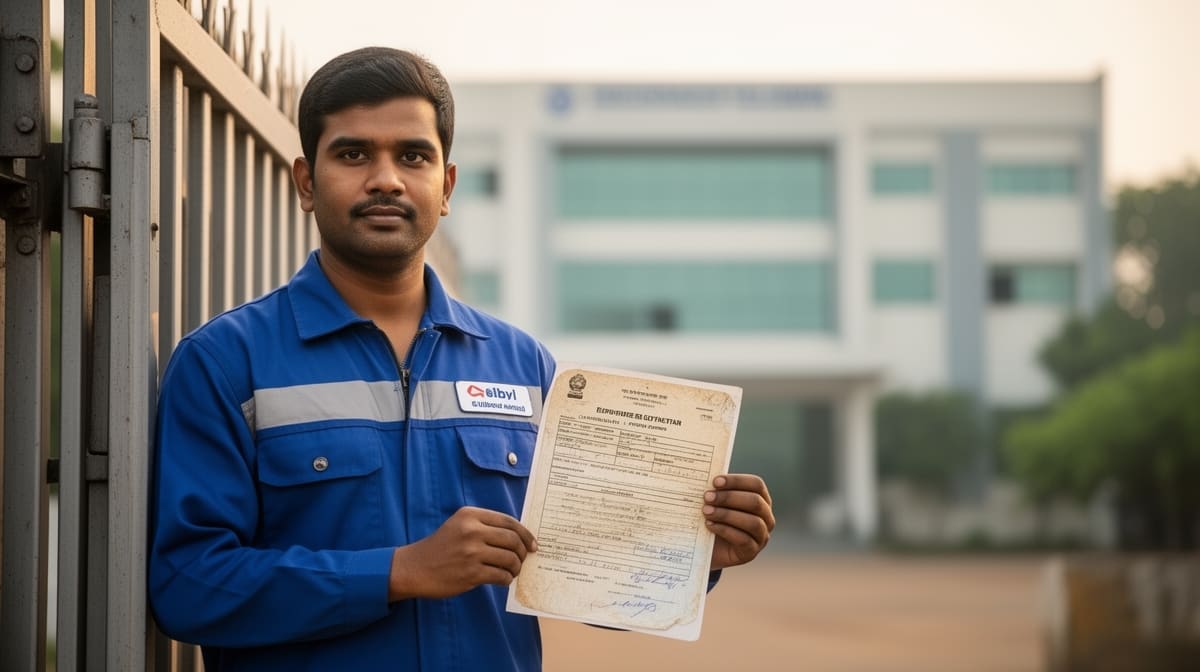
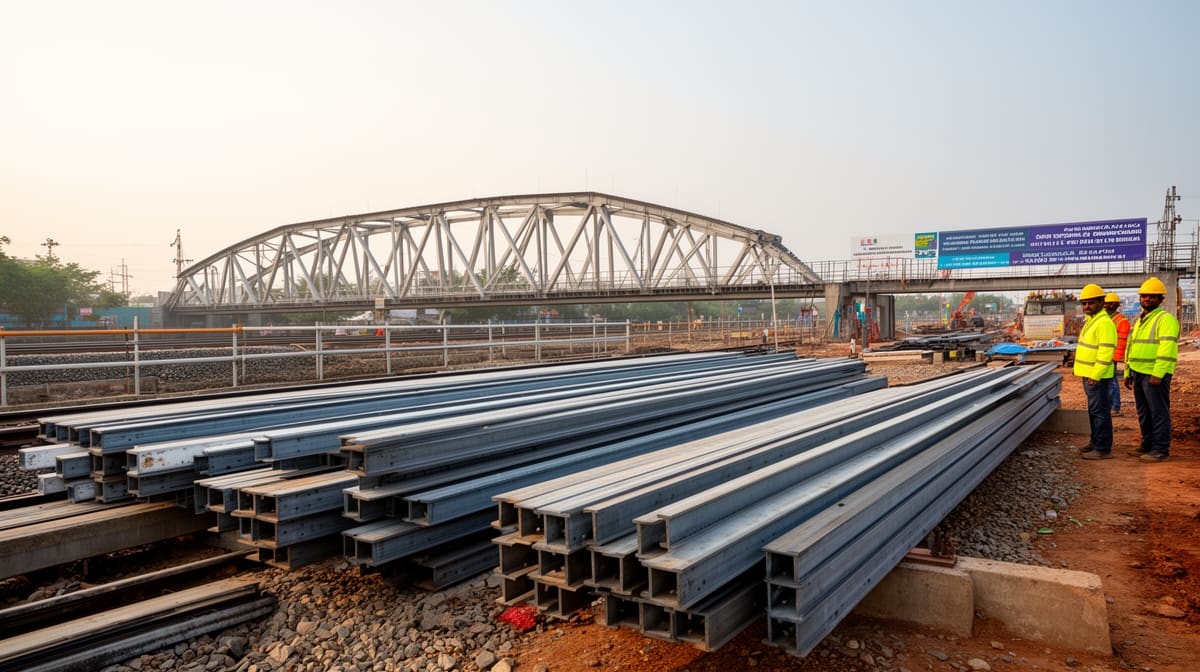
The petitioner, M/s. Sivashankar & Co., entered into a contract with the Southern Railway for constructing a foot over bridge at Chennai Egmore. The original contract period was 12 months, commencing in 2016. Three extensions were granted under Clause 17A(ii) of the General Conditions of Contract (GCC), extending the deadline to 30.06.2020. No further extension was sought or granted. On 30.09.2020, the Railway issued a termination notice, alleging failure to complete work, and forfeited the Earnest Money Deposit (EMD), Performance Guarantee (PG), and Security Deposit (SD). The dispute was referred to an Arbitral Tribunal.
Procedural History
- 27.03.2017: Contract executed for bridge construction
- 30.06.2020: Contractual period expired without further extension
- 30.09.2020: Respondent issued termination notice and forfeited deposits
- 27.03.2022: Arbitral Tribunal upheld termination and forfeiture, awarding only price variation and GST claims
- 13.02.2026: Madras High Court set aside the Tribunal’s findings on termination and forfeiture
Relief Sought
The petitioner sought to set aside the arbitral award under Section 34(2) of the Arbitration and Conciliation Act, 1996, and demanded: (a) declaration that termination was unlawful; (b) refund of EMD, PG, and SD with interest; (c) compensation for stock at site; and (d) loss of profit on unexecuted work.
The Legal Issue
The central question was whether a party can lawfully terminate a contract after its contractual term has expired by efflux of time, and whether forfeiture of deposits under Clause 16(4)(f) of the GCC remains valid when the underlying contract no longer subsists.
Arguments Presented
For the Petitioner
The petitioner argued that the contract had ceased to exist on 30.06.2020, as no extension was granted beyond that date. Termination after expiry is a legal nullity, as there is no subsisting contract to terminate. Reliance was placed on Union of India v. M/s. Quick Communication Systems Pvt. Ltd. and The Chief Engineer/CN/East v. Mrs. V. Kalyani to establish that termination requires a live contract. The petitioner further contended that extensions under Clause 17A(ii) were granted for delays not attributable to either party, and thus could not constitute breach.
For the Respondent
The respondent contended that the petitioner’s persistent inaction from March 2020 constituted repudiatory breach, justifying termination even after expiry. It argued that the termination notice was merely a formal declaration of an already existing breach. The Arbitral Tribunal’s finding that the termination was retrospective was relied upon to validate the forfeiture of deposits under GCC Clause 16(4)(f).
The Court's Analysis
The Court undertook a rigorous analysis of the contractual framework and the nature of termination under the GCC. It emphasized that termination is a remedy available only when a contract is subsisting. Once the contractual period expires without renewal, the relationship reverts to a completed or discharged state. The Court held:
"The very process of termination pre-supposes that there is a subsisting contract. If there is no subsisting contract, there is nothing to be terminated thereafter."
The Court rejected the Arbitral Tribunal’s reasoning that termination was a "declaration" of breach occurring after expiry. Such a rationale conflates breach with termination and ignores the temporal requirement of contract law. The Tribunal’s reliance on Air India Limited v. Gati Limited was distinguished, as that case involved active delay by the contractor, not expiration of time.
The Court further noted that Clause 17A(ii) explicitly contemplated delays not attributable to either party, and thus the extensions granted could not be treated as breaches. The Tribunal’s bias was evident in its attempt to justify forfeiture by manufacturing reasons for termination, despite the absence of a live contract.
Regarding Claim No.7 (stocked steel), the Court held that the petitioner had established physical possession of materials at the site, and the respondent’s failure to take custody did not absolve it of liability. The Tribunal’s rejection of this claim was perverse.
On loss of profit (Claim No.11), the Court acknowledged the principle of honest guesswork under GCC Clause 61(3) but found the petitioner’s claim of 10% on unexecuted work was arbitrary and unsupported by cost breakdowns or evidence of anticipated margins. The Tribunal’s refusal to award this was upheld.
Finally, the Court ruled that interest was due on refunded deposits because their retention was unlawful. Interest at 9% p.a. from 30.06.2020 was ordered.
The Verdict
The petitioner succeeded. The Madras High Court held that termination of a contract after its expiry is legally invalid, rendering forfeiture of EMD, PG, and SD unlawful. The Court set aside the Arbitral Tribunal’s findings on termination and forfeiture, ordered refund of deposits with interest, and awarded compensation for stocked materials. The claim for loss of profit was denied for lack of evidentiary basis.
What This Means For Similar Cases
Termination Requires a Subsisting Contract
- Practitioners must challenge termination notices issued after contractual expiry as legally void ab initio
- Arbitral Tribunals cannot retroactively validate termination by claiming "declaration of breach"
- Parties must prove breach occurred during the subsistence of the contract
Extension Clauses Shield Against Breach Allegations
- Extensions granted under GCC Clause 17A(ii) for delays not attributable to the contractor cannot be treated as breaches
- Employers cannot use extensions as a pretext to later allege default
- Documentation of extension requests and approvals is critical to rebut allegations of delay
Forfeiture of Deposits Is Conditional on Lawful Termination
-
Forfeiture under GCC Clause 16(4)(f) is not automatic; it is contingent on valid termination
-
If termination is set aside, deposits must be refunded with interest from the date of expiry
-
Interest is not discretionary - it becomes mandatory when retention is found unlawful
-
Refund EMD, PG, and SD with interest from the date of contract expiry if termination is invalid
-
Do not rely on post-expiry termination notices as valid grounds for forfeiture
-
Always verify whether extensions were granted under non-attributable delay clauses before alleging breach