The Customs, Excise and Service Tax Appellate Tribunal has clarified a critical boundary in indirect tax law: the classification of Ayurvedic proprietary medicines under the Central Excise Tariff Act. In a decisive ruling, the Tribunal overturned demands for excise duty, penalties, and confiscation against a manufacturer, establishing that therapeutic intent and regulatory licensing must prevail over commercial sales patterns in determining tariff classification. This judgment redefines how revenue authorities must approach the classification of traditional medicine products.
Background & Facts
The Dispute
M/s. Glamour World Ayurvedic Company Pvt. Ltd. and its Director, Shri Amit Gupta, were assessed for alleged evasion of central excise duty on products marketed as Ayurvedic proprietary medicines. The Revenue classified these products under Chapter 33 of the Central Excise Tariff Act, 1985, as cosmetics and toiletry preparations, attracting higher duty rates. The appellants contended that their products were Ayurvedic medicaments falling under Chapter 30, which was exempt from duty until March 2011 and later subject to nominal rates.
Procedural History
- April 2012: DGCEI conducted searches at the appellant’s premises, seizing finished goods and records.
- January 2013: Show Cause Notice issued demanding duty of Rs. 4.55 crore, interest, penalty, and confiscation of goods.
- March 2014: Commissioner issued Order-in-Original confirming classification under Chapter 33, imposing duty, interest, and penalty.
- May 2014: Second Show Cause Notice issued for additional duty of Rs. 76.4 lakh.
- September 2015: Second Order-in-Original confirmed additional demand.
- 2014 - 2015: Appeals filed before the Tribunal challenging both orders.
Relief Sought
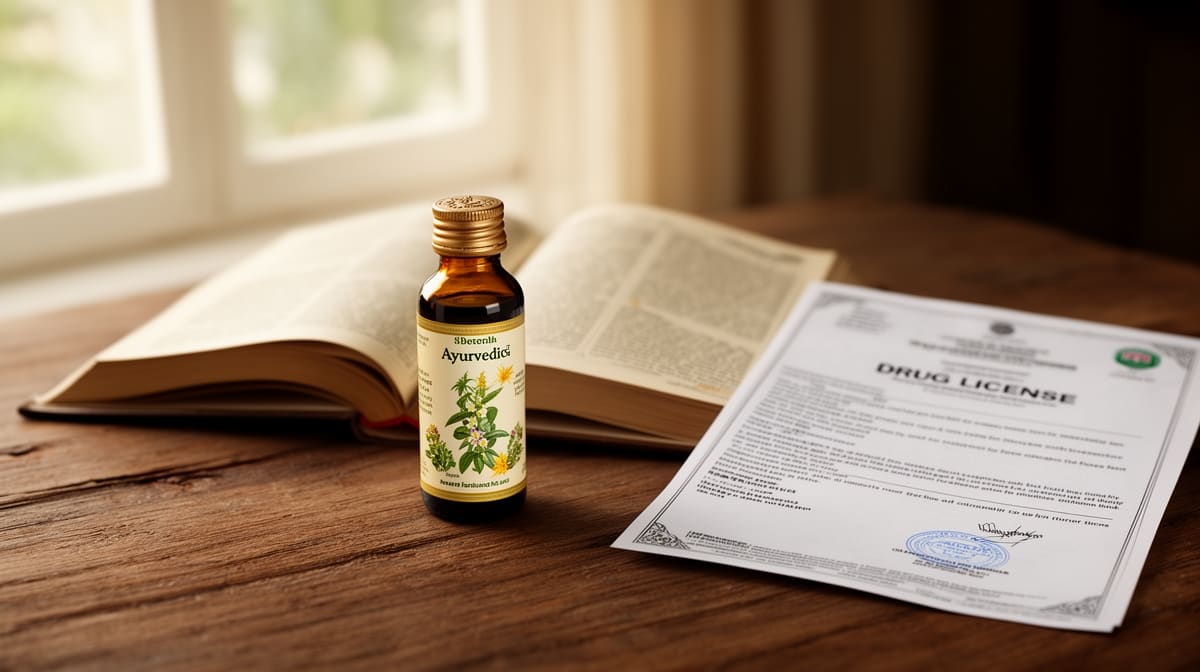
The appellants sought quashing of the duty demands, interest, penalties, and confiscation orders. They argued that their products were Ayurvedic medicaments under Chapter 30, supported by valid drug licenses, GMP certification, and an official opinion from the Directorate of ISM Drug Control.
The Legal Issue
The central question was whether Ayurvedic proprietary medicines, manufactured under a valid drug license and with therapeutic claims documented on packaging, can be classified as cosmetics under Chapter 33 of the Central Excise Tariff Act, 1985, in the absence of objective scientific evidence from the Revenue.
Arguments Presented
For the Appellant
The appellant relied on Commissioner of Central Excise Kolkata v. Sharma Chemical Works to argue that classification must depend on the product’s intended use, not its sales channel. They submitted that their products were manufactured strictly according to authoritative Ayurvedic texts, bore dosage instructions, and were licensed under the Drugs and Cosmetics Act, 1940. The letter from the Directorate of ISM Drug Control dated 28.08.2012, which classified the products as medicaments, was withheld by the Revenue during adjudication, constituting mala fides. The burden of proving misclassification lay with the Revenue, which failed to produce any test reports or analytical data.
For the Respondent
The Revenue contended that the products were sold over-the-counter without prescription, contained preservatives and fragrances, and were marketed as beauty or wellness products. They argued that such characteristics aligned with Chapter 33’s definition of cosmetics and toiletries. The Revenue did not dispute the existence of the drug license but asserted that regulatory compliance under the Drugs Act did not override tariff classification under the Excise Act.
The Court's Analysis
The Tribunal emphasized that classification under the Central Excise Tariff Act must be determined by the product’s essential character and intended use, not by marketing practices or incidental ingredients. The Court noted that the Revenue had failed to discharge its burden of proving that the goods were not medicaments. As held in Sharma Chemical Works, mere sale without prescription does not negate medicinal use, especially when dosage instructions and therapeutic claims are clearly stated on packaging.
"Mere fact that a product is sold across the counters and not under a Doctor’s prescription, does not by itself lead to the conclusion that it is not a medicament."
The Tribunal further held that the opinion issued by the Directorate of ISM Drug Control on 28.08.2012, which explicitly recognized the products as Ayurvedic medicaments, was material evidence that the Revenue had suppressed. This suppression rendered the Show Cause Notices procedurally flawed and tainted by mala fides. The absence of any test report, chemical analysis, or expert opinion from the Revenue further weakened its case. The Tribunal concluded that the products were manufactured under a licensed framework for medicinal purposes, with ingredients derived from Ayurvedic texts, and thus fell squarely within Chapter 30.
The Verdict
The appellants won. The Tribunal held that Ayurvedic proprietary medicines with therapeutic claims, manufactured under a valid drug license, and documented as medicaments by the Drugs Control Authority, cannot be classified as cosmetics under Chapter 33 without objective, scientific evidence from the Revenue. All duty demands, interest, penalties, and confiscation orders were set aside.
What This Means For Similar Cases
Classification Must Be Based on Use, Not Sales Channel
- Practitioners must challenge Revenue classifications that rely solely on over-the-counter sales or packaging aesthetics.
- Evidence of dosage instructions, therapeutic claims, and regulatory licensing under the Drugs Act must be central to defense arguments.
- The burden remains on the Revenue to prove misclassification with scientific or technical evidence.
Suppression of Favorable Evidence Is Fatal to Revenue’s Case
- If the Revenue withholds an official opinion from a statutory authority (e.g., Drugs Controller), the adjudication order is vitiated by mala fides.
- Appellants should immediately flag non-disclosure of such documents in appeals and seek adverse inference.
- This judgment establishes suppression as a ground for setting aside orders, even if the underlying duty demand appears prima facie valid.
Licensing Under Drugs Act Is a Strong Indicator of Medicinal Classification
- A valid license under the Drugs and Cosmetics Act, 1940, coupled with GMP certification, creates a rebuttable presumption of medicinal use.
- Revenue authorities cannot override this presumption without independent analytical data.
- Practitioners should routinely obtain and preserve official correspondence with Drugs Control Authorities for use in excise disputes.