The Customs Excise and Service Tax Appellate Tribunal, Mumbai West Zonal Bench, has clarified a critical boundary in indirect tax law: charges for optional, post-manufacturing customer-specific tests cannot be included in the assessable value of excisable goods. This ruling reinforces the principle that transaction value under the Central Excise Act must reflect only consideration intrinsically tied to the sale of the goods themselves, not ancillary services rendered separately.
Background & Facts
The Dispute
The appellant, Crompton Greaves Ltd., manufactures transformers and is registered under the Central Excise Act, 1944, availing CENVAT credit on inputs and input services. The Department alleged that the appellant had excluded "type test charges" - amounts recovered from certain customers - for testing transformers prior to dispatch, from the assessable value of the goods, and instead discharged service tax on these charges. The Department contended that these charges formed part of the consideration for the sale of transformers and should therefore be included in the transaction value for excise duty calculation.
Key Facts
- The period under dispute is April 2014 to September 2014
- The appellant manufactures transformers and conducts routine quality control tests as part of the manufacturing process
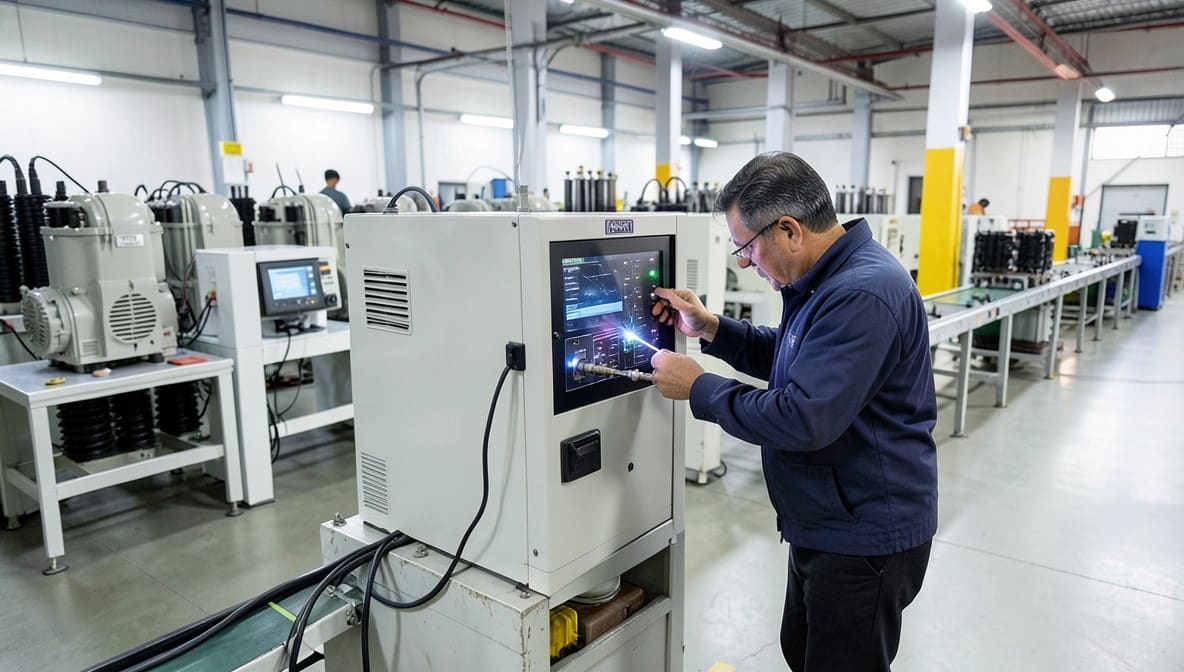
- "Type test" is not a routine or mandatory step in manufacturing; it is conducted only upon specific customer request
- Type tests are performed on selected units on a random basis, not on every transformer
- Customers bear the cost of type testing separately, and it is not a condition for sale or delivery
- The appellant has consistently treated type test charges as taxable under service tax, not excise duty
- The Department issued a show cause notice dated 06.05.2015 proposing excise duty demand of Rs. 4,77,968/-, along with interest and penalty
- Adjudicating Authority confirmed the demand vide Order-in-Original dated 06.11.2015
- Commissioner (Appeals) set aside the penalty but upheld the duty demand in Order-in-Appeal dated 18.05.2016
Procedural History
- 06.05.2015: Show cause notice issued by Department proposing excise duty demand of Rs. 4,77,968/-
- 06.11.2015: Adjudicating Authority confirmed duty demand and imposed penalty
- 18.05.2016: Commissioner (Appeals) set aside penalty but upheld inclusion of type test charges in assessable value
- 01.04.2026: Hearing before CESTAT Mumbai West Zonal Bench
- 30.04.2026: Final Order passed by CESTAT
Relief Sought
The appellant sought setting aside of the Commissioner (Appeals)’s order dated 18.05.2016, particularly the portion that included type test charges in the assessable value of transformers, and requested deletion of the excise duty demand of Rs. 4,77,968/-.
The Legal Issue
The central question was whether charges collected by a manufacturer for optional, customer-requested "type tests" conducted after completion of manufacture constitute part of the transaction value of excisable goods under the Central Excise Act, 1944.
Arguments Presented
For the Appellant
The appellant argued that type tests are not part of the manufacturing process but are distinct services rendered post-manufacture at the buyer’s request. The charges are paid separately, are not mandatory, and are not a condition of sale. The appellant has been discharging service tax on these charges since 2012, consistent with the legal distinction between goods and services. The Tribunal had previously held in its own cases (Excise Appeal No. 86716/2015 and 87943/2017) that such charges are not includible in transaction value, and those decisions are binding.
For the Respondent
The Department contended that type test charges are part of the overall consideration for the sale of transformers, regardless of whether the test is optional. It argued that since the test is conducted by the manufacturer on its own premises and is integral to customer satisfaction, it forms an inseparable part of the sale transaction. The Department relied on the principle that any amount received in connection with the sale must be included in assessable value.
The Court's Analysis
The Tribunal examined the nature of type testing in light of the definition of transaction value under Section 4 of the Central Excise Act, 1944, and the principles laid down in Cera Boards and Doors v. Commissioner of Central Excise (2020) and Ericsson India Pvt Ltd v. Commissioner of Central Excise (2007). It emphasized that transaction value must reflect consideration directly linked to the sale of the goods at the time of removal.
"The activity is undertaken post-manufacture, at the behest of the buyer, and for a separate consideration."
The Tribunal noted that type tests are not routine, not mandatory, and not performed on every unit. They are conducted only when customers, lacking their own testing facilities, request them. The fact that the appellant has been paying service tax on these charges further confirms their character as a distinct service.
The Tribunal also relied on its own prior decisions in Excise Appeal No. 86716/2015 and 87943/2017, which had held that type test charges are not includible in assessable value. These decisions, rendered on identical facts, were held to be binding under the doctrine of stare decisis. The Department’s reliance on general valuation principles was rejected as inapplicable where the nature of the charge is demonstrably that of a service, not part of the sale of goods.
The Verdict
The appellant succeeded. The Tribunal set aside the Commissioner (Appeals)’s order dated 18.05.2016 to the extent it included type test charges in the assessable value of transformers. The excise duty demand of Rs. 4,77,968/- was quashed. No interest or penalty was upheld. The order was allowed with consequential relief as per law.
What This Means For Similar Cases
Type Tests Are Services, Not Part of Goods Sale
- Practitioners must distinguish between mandatory quality checks (part of manufacturing) and optional customer-requested tests (separate services)
- Any charge recovered for post-manufacture testing requested by the buyer must be treated as a taxable service under GST or service tax, not included in excise duty valuation
- Manufacturers must maintain clear documentation showing customer requests, separate invoicing, and service tax payment for such charges
Consistency in Tax Treatment Is Critical
- If a taxpayer treats a charge as a service and pays service tax, it cannot later be reclassified as part of goods value for excise duty without triggering inconsistency issues
- The Tribunal’s reliance on its own prior rulings reinforces that consistent tax treatment over time strengthens legal position
- Tax authorities cannot override this distinction merely on the basis of "overall consideration" without proving intrinsic linkage to the sale of goods
Precedent Binding Even Within Same Tribunal
- Decisions rendered by a Tribunal on identical facts involving the same taxpayer are binding on subsequent proceedings
- Practitioners should cite prior favorable orders from the same bench as persuasive authority, especially when the facts are materially identical
- This judgment reinforces that stare decisis applies within tribunals, not just higher courts