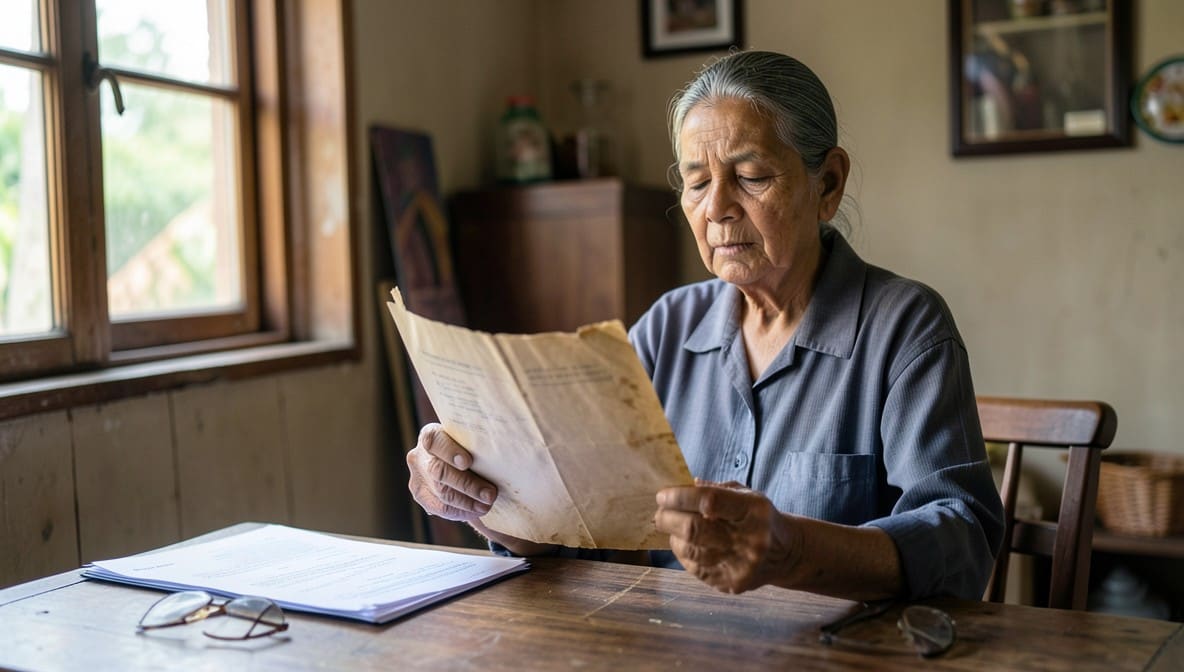
The Madras High Court has clarified that in suits for specific performance, courts must not deny defendants the opportunity to present crucial evidence - such as unregistered sale agreements - when fraud or coercion is alleged. This ruling reinforces the principle that substantive justice outweighs procedural technicalities when a party’s right to defend is at stake.
Background & Facts
The Dispute
The respondent, P. Manish Kumar Jain, filed Original Suit No. 5024 of 2019 before the XVIII Additional City Civil Court, Chennai, seeking specific performance of a sale agreement dated 26.07.2011 relating to immovable property. The petitioner, S. Karpagam, widow of the original owner, was the defendant in the suit. She denied the validity of the 2011 agreement, alleging it was obtained through fraud and coercion.
Key Facts
- The petitioner’s husband, Gopal, had entered into a prior transaction with the respondent in 2010, evidenced by an unregistered sale agreement dated 10.05.2010
- The respondent claimed ownership based on the 2011 agreement, which the petitioner contends was forged and executed under duress
- The petitioner’s husband passed away before the suit was filed, leaving her as the sole legal heir
- The petitioner is a widow with no legal representation during the initial stages of the transaction
- The unregistered 2010 agreement was not produced during the trial’s evidence stage, despite being central to her defense
Procedural History
- 26.07.2011: Alleged sale agreement executed between respondent and petitioner’s husband
- 10.05.2010: Unregistered sale agreement allegedly executed between petitioner’s husband and respondent (key document in dispute)
- 2019: Respondent files O.S. No. 5024 of 2019 for specific performance of the 2011 agreement
- Trial commenced: Evidence recording began; PW1 (respondent) examined and cross-examined
- 2025: Petitioner filed three interim applications:
- I.A. No. 6 of 2025: To condone delay and produce the 2010 unregistered sale agreement as an exhibit
- I.A. No. 7 of 2025: To reopen PW1’s evidence for cross-examination on the 2010 agreement
- I.A. No. 8 of 2025: To recall PW1 for further cross-examination
- 14.11.2025: Trial Court dismissed all three applications, holding that change of counsel and belated filing are insufficient grounds, and that evidence was closed
- 17.03.2026: Civil Revision Petitions filed before the Madras High Court challenging the dismissal
Relief Sought
The petitioner sought setting aside of the Trial Court’s order dated 14.11.2025 and permission to:
- Mark the unregistered sale agreement dated 10.05.2010 as an exhibit
- Reopen and recall PW1 for cross-examination on the authenticity and circumstances surrounding both the 2010 and 2011 agreements
The Legal Issue
The central question was whether a defendant in a suit for specific performance may be denied the opportunity to produce an unregistered sale agreement and recall a witness when she alleges that the plaintiff’s relied-upon agreement was procured by fraud and coercion, and the alternative document is directly relevant to her defense.
Arguments Presented
For the Petitioner
The petitioner’s counsel argued that the 2010 unregistered sale agreement is not merely collateral but central to her defense, as it establishes a prior transaction that undermines the validity of the 2011 agreement. She contended that the Trial Court’s refusal to permit its production and the recall of PW1 effectively deprived her of a fair opportunity to rebut allegations of fraud. Reliance was placed on the principle that courts must ensure substantive justice, especially when a vulnerable party - a widow - is at risk of being prejudiced by rigid procedural application.
For the Respondent
The respondent’s counsel argued that the applications were filed after closure of evidence, and that the petitioner had ample opportunity to produce documents during trial. He contended that the 2010 agreement was irrelevant to the 2011 agreement, and that allowing belated production would prejudice the plaintiff and disrupt the orderly conduct of trial. He further submitted that change of counsel cannot be a ground to reopen evidence.
The Court's Analysis
The Court examined the nature of the suit and the allegations raised by the petitioner. It noted that the respondent’s claim for specific performance hinges entirely on the authenticity of the 2011 agreement, which the petitioner has consistently challenged as fraudulent. The Court emphasized that the 2010 agreement, though unregistered, is not inadmissible for the purpose of proving a prior transaction or rebutting allegations of coercion.
"If the opportunity is not given to the petitioner her valuable right to defend the case will be defeated, otherwise it will put much hardship on the petitioner."
The Court rejected the notion that procedural compliance must override substantive fairness, particularly where fraud is alleged. It held that the Trial Court erred in treating the applications as mere delays caused by change of counsel, without considering the gravity of the allegations and the centrality of the document to the defense. The Court observed that the right to a fair hearing under Article 21 of the Constitution and the principles of natural justice require that a party be given a meaningful opportunity to present all relevant evidence, even if belated, when it goes to the root of the dispute.
The Court further clarified that while the Code of Civil Procedure permits courts to control procedural delays, such control must not become a tool to deny justice. The unregistered agreement, though not enforceable for transfer of title, is admissible to prove the existence of a prior transaction and to challenge the credibility of the plaintiff’s claim.
The Verdict
The Madras High Court allowed the Civil Revision Petitions. The order dated 14.11.2025 of the XVIII Additional City Civil Court, Chennai, dismissing I.A. Nos. 6, 7 and 8 of 2025 was set aside. The petitioner is permitted to mark the unregistered sale agreement dated 10.05.2010 as an exhibit. The respondent is permitted to adduce further evidence and to file additional documents. The Trial Court shall reopen the evidence stage to allow recall and cross-examination of PW1 on the 2010 agreement and its relation to the 2011 agreement. No costs were awarded. The matter was remanded to the Trial Court for fresh adjudication in accordance with this order.
What This Means For Similar Cases
Fraud Allegations Override Procedural Rigidity
- Practitioners must argue that allegations of fraud or coercion in contract formation justify relaxation of procedural timelines for evidence admission
- Courts cannot dismiss applications to produce key documents merely because they are unregistered or filed belatedly if they directly rebut the plaintiff’s claim
- The burden shifts to the court to assess whether the document is material to the defense, not whether it was filed on time
Unregistered Documents Are Not Inadmissible for All Purposes
- Unregistered sale agreements may be admitted to prove prior transactions, establish context, or challenge the authenticity of subsequent documents
- This does not validate the unregistered document as a title-deed, but allows its use as evidence of circumstances surrounding the transaction
- Legal teams should preserve and proactively identify such documents early, but even if missed, they may still be admitted under this precedent if fraud is alleged
Judicial Discretion Must Serve Substantive Justice
- Courts must balance procedural discipline with the constitutional right to a fair hearing
- Change of counsel alone is not a valid ground to deny evidence, but the court must examine the substance of the application
- This judgment empowers advocates to seek reopening of evidence in specific performance suits where the validity of the agreement is contested on grounds of fraud, undue influence, or coercion