The Orissa High Court has clarified the stringent legal standards for proving the validity of a gift deed executed by an elderly, illiterate, and Pardanashin woman, reinforcing that the burden of proof lies entirely on the propounder to establish not just execution but also conscious understanding and free will.
Background & Facts
The Dispute
The dispute centers on the ownership of two parcels of land - ‘A’ Schedule and ‘B’ Schedule properties - originally held by a joint Hindu family comprising two brothers, Bhika Gouda and Khali Gouda. Bhika Gouda died in 1951, leaving behind his widow Jasoda, two daughters - Radhika and Sakuntala - and a son, Magata, who died unmarried. Radhika died in 1979, survived by her husband, Bhagirathi Khuntia (Defendant No.1). Jasoda died in 1988. During her lifetime, Jasoda executed two registered gift deeds on 07.03.1980 (Ext.1 and Ext.2): one in favor of Golapi Gouda (Plaintiff), the daughter of Khali Gouda, over ‘A’ Schedule property; and another in favor of Sakuntala (Defendant No.2) over ‘B’ Schedule property. Sakuntala later sold her share to Golapi in 1986 via a registered sale deed. Bhagirathi Khuntia, claiming ownership of the ‘B’ Schedule property, filed a suit in 1990 and obtained a decree for possession, which he enforced on 23.02.1991. Golapi then filed the present suit for declaration of title and possession over the entire suit property, seeking to set aside the earlier decree.
Key Facts
- Bhika Gouda died in 1951; Khali Gouda died in 1976
- Jasoda, Bhika’s widow, was illiterate, aged, and reportedly lost her eyesight by 1980
- The two gift deeds (Ext.1 and Ext.2) were executed on 07.03.1980
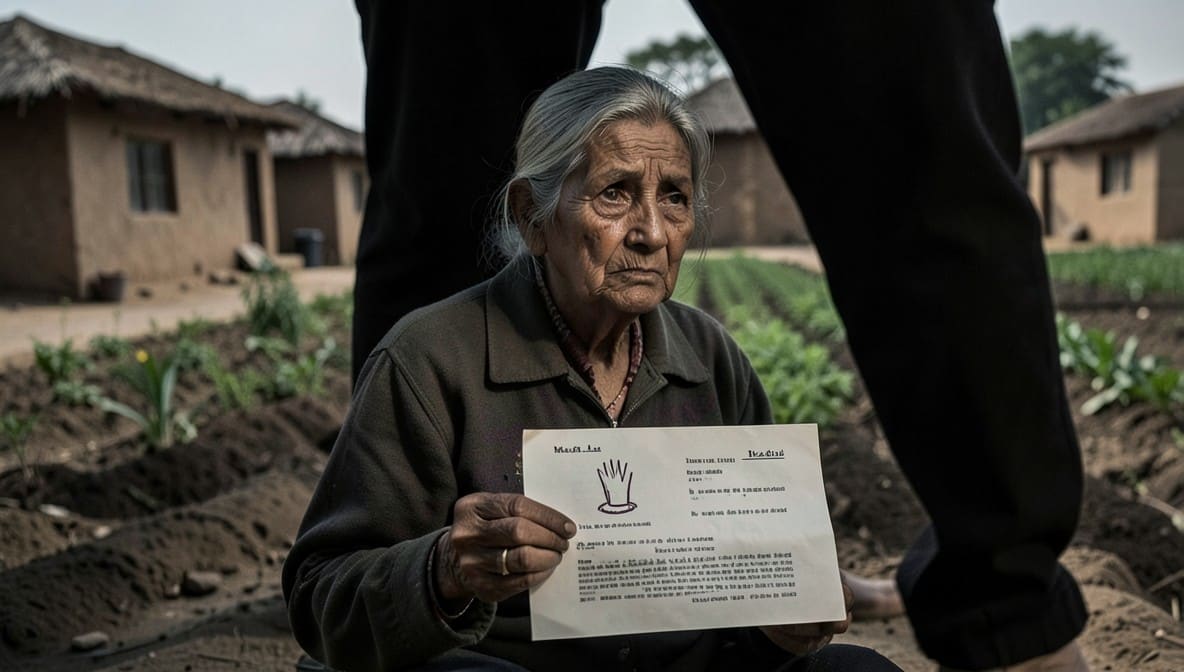
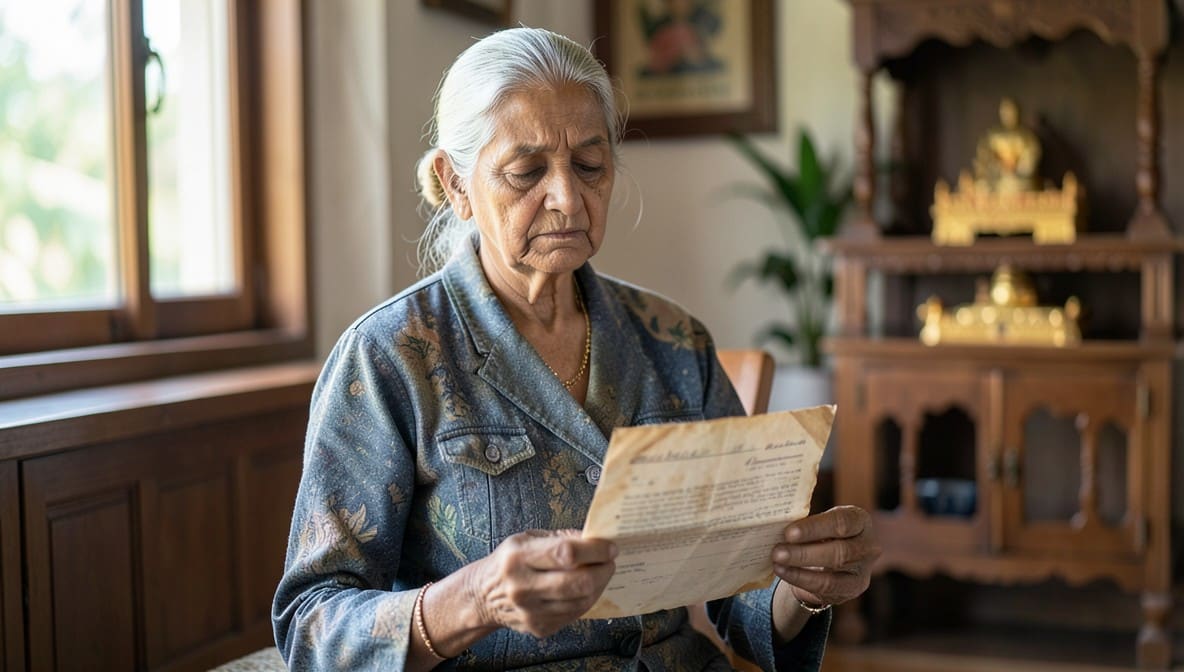
- Jasoda was a Pardanashin woman, confined to purdah and dependent on male relatives
- No independent legal advice was produced to show Jasoda understood the nature of the deeds
- The trial court found the deeds invalid due to lack of proof of mental capacity and understanding
- Defendant No.1 (Bhagirathi) claimed to be the illatom son-in-law of Bhika and had been in open, continuous possession for over 30 years
- Golapi (Plaintiff) did not file an appeal or cross-objection against the trial court’s finding that Ext.1 was invalid
Procedural History
- 03.04.1992: Trial Court (Addl. Munsif, Bissamcuttack) in T.S. No.2/1991 held that the gift deeds were not validly executed due to Jasoda’s illiteracy, age, and lack of independent advice; decreed plaintiff’s title only over ‘B’ Schedule property
- 15.04.1992: Decree passed by Trial Court
- 24.03.1994: First Appellate Court (Civil Judge, Sr. Division, Gunupur) in T.A. No.3/1992 reversed the trial court’s finding on Ext.1, held the gift deed valid, and extended plaintiff’s title to the entire suit property
- 19.03.2026: Second Appeal (S.A. No.121/1994) decided by Orissa High Court
The Parties' Positions
Plaintiff (Golapi Gouda): Claimed ownership through valid gift deeds from Jasoda and subsequent sale from Sakuntala. Argued that the first appellate court was justified in re-examining the validity of Ext.1 under Order XLI Rule 33 CPC.
Defendant No.1 (Bhagirathi Khuntia): Contended that Jasoda was not competent to execute the deeds due to advanced age, blindness, and illiteracy. Argued that the trial court’s finding of invalidity was final since the plaintiff did not appeal it. Also claimed adverse possession over the property for over 30 years.
Relief Sought
The plaintiff sought declaration of title and possession over the entire suit property, permanent injunction against Defendant No.1, and costs. The defendant sought dismissal of the suit and affirmation of the trial court’s judgment.
The Legal Issue
Whether the first appellate court could re-examine and reverse the trial court’s finding that a gift deed executed by an illiterate, elderly Pardanashin woman was invalid, in the absence of any appeal or cross-objection by the plaintiff, and whether the burden of proving valid execution was discharged by the propounder.
Arguments Presented
For the Appellant/Petitioner
Mr. S.S. Rao, Senior Advocate, argued that the first appellate court exceeded its jurisdiction by altering the trial court’s finding on the validity of Ext.1, since the plaintiff had not filed an appeal or cross-objection against that specific finding. He relied on the principle that appellate courts cannot reopen issues not challenged by the parties, unless under exceptional circumstances. He emphasized that the trial court had correctly applied the law requiring proof of independent legal advice and mental capacity for a Pardanashin executant, and that the first appellate court’s reversal was legally unsustainable.
For the Respondent/State
Mr. Ghanashyam Dash contended that Order XLI Rule 33 CPC empowers the appellate court to pass any order necessary for complete justice, even in favor of a party who did not appeal. He argued that the validity of the gift deed was central to the entire dispute and that the appellate court was duty-bound to ensure a just outcome. He further argued that the defendant’s written statement raised sufficient doubts about Jasoda’s mental capacity, shifting the burden to the propounder to dispel suspicion, which was not done.
The Court's Analysis
The Court began by affirming that Order XLI Rule 33 CPC grants appellate courts wide powers to pass any decree or order that ought to have been passed, even in favor of a party who did not appeal. The Court cited Bihar Supply Syndicate v. Asiatic Navigation and Koksingh v. Deokabai to hold that the appellate court was not barred from re-examining the validity of Ext.1, even in the absence of a cross-appeal, because the issue was integral to the final determination of title.
However, the Court then turned to the substantive legal question: whether the gift deed was validly executed. The Court emphasized that Jasoda was a Pardanashin, illiterate, elderly, and reportedly blind by 1980. Under settled law, the burden of proving valid execution of a document by such a person lies entirely on the propounder. The Court cited Kharbuja Kuer v. Jangbahadur Rai and Narayan Mishra v. Champa Dibya to hold that mere proof of signature is insufficient; the propounder must establish that the executant understood the nature and effect of the transaction, and that this understanding was not merely physical but mental.
The Court noted that no independent legal advice was produced. The attesting witnesses did not testify to explaining the contents of the deed to Jasoda, nor was there evidence of her capacity to comprehend the transaction. The trial court’s finding that the deed was not proved was therefore correct.
The Court rejected the first appellate court’s reasoning that the absence of a specific plea of fraud in the written statement shifted the burden to the defendant. Quoting Meena Pradhan v. Kamla Pradhan, the Court held that even in the absence of fraud allegations, if suspicious circumstances exist - such as age, illiteracy, blindness, and lack of independent advice - the propounder must dispel those suspicions. The written statement of Defendant No.1 clearly raised such circumstances: Jasoda’s age, blindness, and lack of mental capacity.
"Whenever there exists any suspicion as to the execution of the Will, it is the responsibility of the propounder to remove all legitimate suspicions before it can be accepted as testator’s last Will. In such cases, the initial onus on the propounder becomes heavier."
The Court concluded that the first appellate court erred in reversing the trial court’s finding. The gift deed Ext.1 was not proved to have been executed with the conscious, informed consent of Jasoda.
The Verdict
The appeal succeeded. The Orissa High Court set aside the judgment and decree of the first appellate court dated 24.03.1994. The trial court’s judgment and decree dated 03.04.1992 were restored. The plaintiff’s title was limited to the ‘B’ Schedule property only, as originally held by the trial court. The defendant’s claim of adverse possession was not adjudicated, as it was not raised in the pleadings before the appellate court. No monetary relief was awarded.
What This Means For Similar Cases
Burden of Proof Is Non-Negotiable for Vulnerable Executants
- Practitioners must now treat any gift deed or will executed by an elderly, illiterate, or Pardanashin woman as inherently suspect unless the propounder produces independent legal advice and clear evidence of mental comprehension
- Mere registration of the deed is insufficient; attesting witnesses must testify to explanation and understanding
- Failure to produce independent legal advice will almost always result in the deed being invalidated
Suspicious Circumstances Do Not Require Formal Allegations of Fraud
- Courts will examine the factual matrix - age, health, literacy, dependency, and benefit to the propounder - to determine if suspicion arises
- Even if fraud, undue influence, or coercion are not pleaded, the burden remains on the propounder to explain inconsistencies
- Written statements raising questions about the executant’s capacity are sufficient to trigger the heightened burden
Appellate Courts May Revisit Unchallenged Findings Only If Integral to Justice
- While Order XLI Rule 33 CPC permits appellate courts to re-examine issues, they must do so cautiously
- Reversal of a trial court’s factual finding on execution of a document requires compelling justification
- Appellate courts cannot substitute their view on credibility unless the trial court’s finding is perverse or based on no evidence