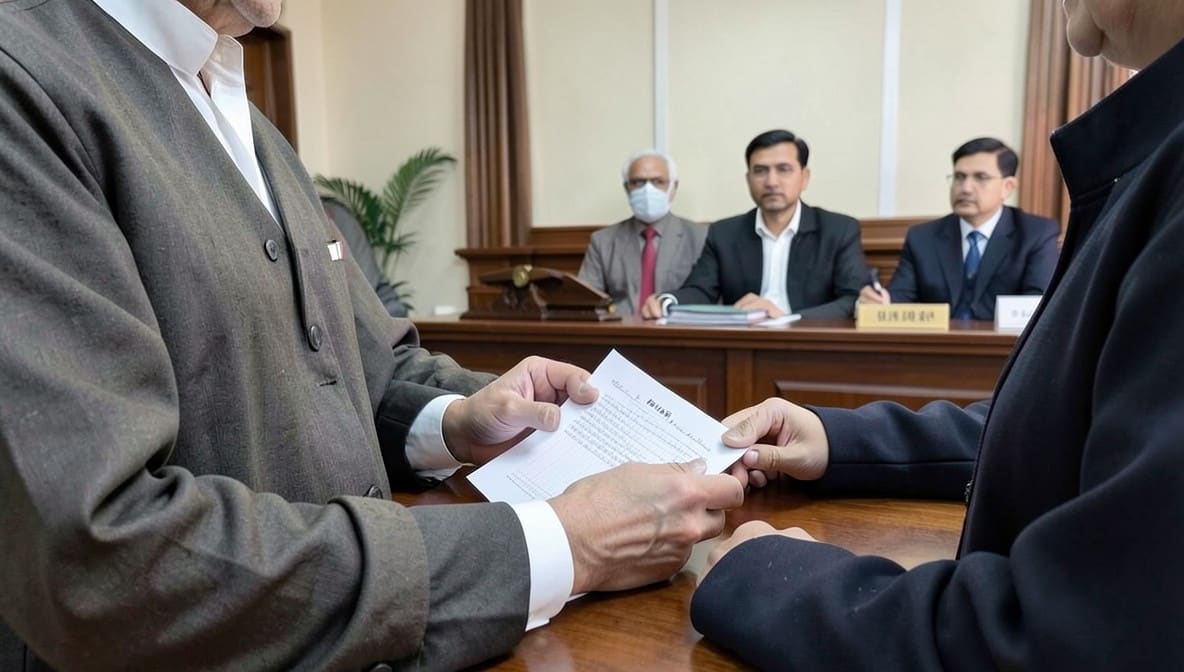
The Gauhati High Court (Mizoram Bench) granted bail to an accused in a major narcotics case, holding that his arrest by the Narcotics Control Bureau was illegal due to total non-compliance with Sections 36, 47, and 48 of the Bharatiya Nagarik Suraksha Sanhita. The court found the arrest memo lacked a witness signature, the notice of grounds was vague, and no grounds were communicated to the family before remand, violating Articles 21 and 22 of the Constitution.
Background & Facts
The Genesis
The petitioner, Sh. Lalhmingsanga, a resident of Edenthar, Aizawl, was arrested by the Narcotics Control Bureau (NCB) on 09.04.2026 in connection with NCB Crime No. 1/2025, registered under Sections 8(c), 22(c), 25, 27A, and 29 of the Narcotic Drugs and Psychotropic Substances Act, 1985. The case originated from a seizure by the Excise and Narcotics Department, Mizoram, on 06.03.2025, and was taken over by the NCB on 13.03.2025.
Key Facts
- 06.03.2025 (2115 hrs): Excise and Narcotics, Mizoram seized 48.061 kg of crystal methamphetamine from a Mahindra Scorpio (registration AS 16E 0044) at Khatla near Tennis Court, Aizawl, from the conscious possession of accused Joseph Hmangaihzual and Muglamtuanga.
- Three other accused - Ms. Zaitinthluaii, Sing Hun Lian, and Lalengzaua - were arrested in a follow-up operation.
- 06.03.2025: Excise and Narcotics registered Ex. N-Case No. 40/25 under Section 22(c) NDPS Act.
- 13.03.2025: Case taken over by NCB, re-registered as NCB Crime No. 1/2025.
- 09.04.2026: Petitioner arrested by NCB after service of notice under Section 67 NDPS Act.
- 11.04.2026: Petitioner produced before Judicial Magistrate First Class, Aizawl; remanded to 72 hours NCB custody, subsequently to judicial custody where he remains.
- The petitioner challenged the arrest on three grounds: (i) arrest memo under Section 36 BNSS lacked signature of any witness (family member or respectable local person); (ii) notice under Section 47 BNSS mentioned only "conscious involvement" without facts demonstrating such involvement; (iii) no effective communication of grounds of arrest to family - only a telephonic intimation of arrest (not grounds) to wife, and written notice dated 10.04.2026 posted only on 24.04.2026, after remand.
Procedural History
- 09.04.2026: Arrest of petitioner by NCB.
- 11.04.2026: Production before JMFC, Aizawl; remand to 72 hours NCB custody, then judicial custody.
- 10.04.2026: Purported written notice under Section 48 BNSS dated this date.
- 24.04.2026: Postal consignment report shows notice actually dispatched on this date.
- 27.08.2026: Judgment reserved.
- 03.09.2026: Judgment pronounced (Neutral Citation: 2026:GAU-MZ:481).
Relief Sought
The petitioner sought bail on the ground that the arrest was illegal due to gross violations of Sections 36, 47, and 48 BNSS and Articles 21 and 22 of the Constitution, entitling him to release.
The Legal Issue
Whether the arrest of the petitioner by the NCB complied with the mandatory requirements of Sections 36, 47, and 48 of the Bharatiya Nagarik Suraksha Sanhita, and whether the procedural violations - absence of witness signature on arrest memo, failure to communicate substantive grounds of arrest to the arrestee and his family, and delayed dispatch of written notice - rendered the arrest illegal and entitled the petitioner to bail.
Arguments Presented
For the Petitioner
Counsel argued that the arrest memo under Section 36 BNSS bore no witness signature, violating the mandatory requirement. The notice under Section 47 BNSS merely stated "conscious involvement" without specifying the petitioner's role (financier, supplier, etc.) or that he was the vehicle's registered owner. Under Section 48 BNSS, only a telephonic intimation of arrest (not grounds) was given to the wife; the written notice dated 10.04.2026 was posted on 24.04.2026, after remand, constituting total non-compliance. Reliance was placed on Vihaan Kumar v. State of Haryana (2025) 5 SCC 799 and Mihir Rajesh Shah v. State of Maharashtra (2026) 1 SCC 500. The petitioner was unrepresented at the remand hearing, causing demonstrable prejudice.
For the Respondent
The NCB contended there was substantial compliance. The arrest memo was signed by the petitioner; the Section 47 notice mentioned recovery of contraband from the Scorpio registered in the petitioner's name alongside NDPS offences. The wife was intimated by telephone. The NCB cited State of Meghalaya v. Sonam Raghuvanshi (2026) SCC OnLine SC 1392, State of Karnataka v. Sri. Darshan (2025) SCC OnLine SC 1702, and Karan Singh v. State of NCT of Delhi (2026) SCC OnLine DEL 282, arguing that non-furnishing of adequate reasons (as opposed to non-service of grounds) does not render arrest illegal, and a prejudice-oriented test applies - mere absence of written grounds does not ipso facto invalidate arrest unless demonstrable prejudice is shown.
The Court's Analysis
The court examined each statutory requirement sequentially. On Section 36 BNSS, it held the absence of a witness signature on the arrest memo was an admitted fact. The prosecution's explanation that family members resided elsewhere did not address why a respectable local person's signature could not be obtained, constituting a violation of the mandatory provision.
On Section 47 BNSS, the court found the notice fatally defective:
"The notice omits stating that the petitioner was the registered owner of the vehicle (despite mentioning its registration number) and fails to indicate whether his alleged 'conscious involvement' was in the capacity of a financier, supplier, or otherwise. In short, there is no indication of how the petitioner was allegedly involved."
The NCB's written objection referenced bank statements and call records, but none of this was reflected in the notice. The court held this amounted to total non-compliance - not even the substance of grounds was communicated.
On Section 48 BNSS, the court noted the NCB's own affidavit admitted only "intimation of arrest" was communicated to the wife, not the grounds. The written notice dated 10.04.2026 was dispatched on 24.04.2026, long after remand, and contained no grounds. This violated Vihaan Kumar, which mandates communication of grounds to the nominated person.
The court distinguished Sonam Raghuvanshi and Karan Singh, which addressed adequacy of reasons, not total absence of grounds. Citing Kasireddy Upender Reddy v. State of Andhra Pradesh (2025) SCC OnLine SC 1228, the court held information must be sufficient for the accused to understand why they were arrested, akin to charges framed for trial - a standard the notices failed.
On demonstrable prejudice, the court noted the remand order of 11.04.2026 revealed the petitioner had no legal representation - neither private nor legal aid - and the magistrate did not ascertain or appoint counsel. The failure to furnish grounds prevented effective opposition to the remand prayer, constituting demonstrable prejudice.
The Verdict
The petitioner was granted bail. The court held the arrest illegal due to total non-compliance with Sections 36, 47, and 48 BNSS, violating Articles 21 and 22. The petitioner was released on a bail bond of Rs. 2,00,000 with two sureties of like amount (one a government servant residing in Mizoram), subject to six conditions: cooperation in trial (ND&PS Case No. 166/2025), appearance as required, no witness tampering, provision of contact details and ID documents, no leaving jurisdiction without permission, and no commission of offences. The NCB may re-arrest after complying with statutory requirements if investigation is incomplete.
What This Means For Similar Cases
Arrest Memo Witness Signature Is Non-Negotiable
- Section 36 BNSS mandates a witness signature (family member or respectable local person) on the arrest memo.
- Practical difficulty in obtaining family signatures does not excuse the requirement - a local respectable person must be found.
- Absence of this signature is a standalone ground to challenge arrest legality.
Grounds of Arrest Must Be Substantive, Not Formulaic
- Section 47 BNSS requires communication of substantive grounds, not bare conclusions like "conscious involvement."
- The notice must specify the arrestee's alleged role (financier, supplier, transporter, owner) and material facts.
- Reference to underlying evidence (bank statements, call records) in court filings cannot cure omission from the notice itself.
Family Notice Must Convey Grounds, Not Mere Intimation
- Section 48 BNSS requires communication of grounds of arrest to the nominated person, not just intimation of arrest.
- Written notice must be dispatched before or at the time of remand; post-remand dispatch is non-compliance.
- Telephonic communication of grounds (not just arrest) may suffice if substantive, but mere intimation does not.
Prejudice Is Presumed When Unrepresented at Remand
- If an accused is unrepresented at the remand hearing due to non-communication of grounds, demonstrable prejudice is established.
- Magistrates have a duty to ascertain representation and appoint legal aid counsel if absent.
- Sonam Raghuvanshi and Sri Darshan (prejudice-oriented test) do not apply where there is total non-communication of grounds.
Re-Arrest Remains Open After Statutory Compliance
- Bail for procedural violations does not bar re-arrest.
- Investigating agencies can re-arrest after complying with Sections 36, 47, 48 BNSS if investigation is incomplete.
- Practitioners should advise clients that bail on procedural grounds is not acquittal.