In a significant ruling on the procedural safeguards under the Bharatiya Nagarik Suraksha Sanhita, 2023 (BNSS), the Kerala High Court granted bail to a Deputy Superintendent of Police accused of demanding and accepting bribes. The judgment clarifies that while communication of grounds of arrest is mandatory, refusal by the arrestee to acknowledge receipt does not render the arrest illegal, provided the grounds were duly intimated.
Background & Facts
The Dispute
The petitioner, Anil Kumar T, a Deputy Superintendent of Police (Dy.SP) in Cherthala, Kerala, was accused of demanding Rs. 2,00,000 as illegal gratification from the de facto complainant. The demand was allegedly made to release four vehicles belonging to the complainant, which were being used for dumping waste. The petitioner further demanded Rs. 1,00,000 as advance and Rs. 25,000 monthly to ensure smooth operation of the complainant's business.
Key Facts
- 15.05.2026: The petitioner demanded Rs. 2,00,000 from the complainant.
- 27.05.2026: A trap was laid by the Vigilance and Anti-Corruption Bureau (VACB), Alappuzha. The petitioner was caught red-handed accepting Rs. 50,000 as part of the bribe.
- Phenolphthalein test: Conducted on the trap money, yielding a positive result, corroborating the prosecution's case.
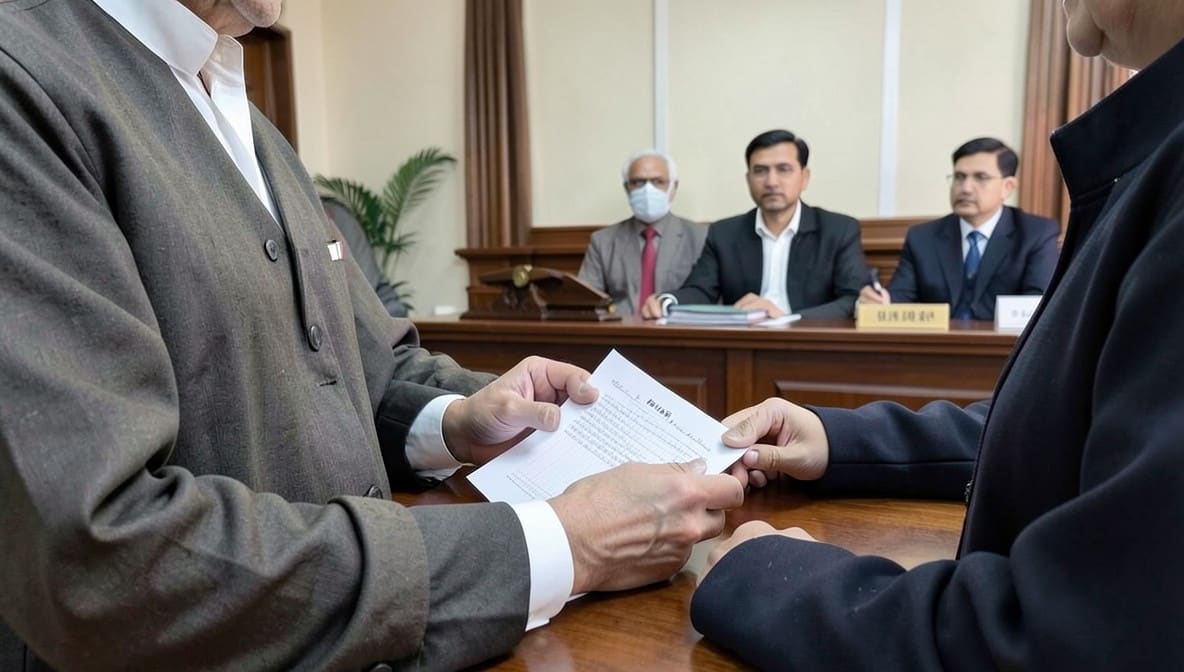
- Arrest and remand proceedings: The petitioner was arrested, and remand documents, including the arrest memo and grounds of arrest, were prepared. However, the petitioner refused to sign the remand application acknowledging receipt of the grounds of arrest.
Procedural History
- 27.05.2026: Crime No. 7/2026 registered under relevant provisions of the Bharatiya Nagarik Suraksha Sanhita, 2023 and Prevention of Corruption Act, 1988.
- 27.05.2026: Petitioner arrested and produced before the jurisdictional court for remand.
- 17.06.2026: Bail application (B.A. No. 3208 of 2026) filed before the Kerala High Court.
- 30.06.2026: High Court delivered the judgment, allowing the bail application.
The Parties' Positions
For the Petitioner:
- Argued that the arrest was illegal as the grounds of arrest were not communicated in writing, relying on the Supreme Court's decision in Mihir Rajesh Shah v. State of Maharashtra (2025 KHC 6915). The apex court had held that grounds of arrest must be communicated in writing or orally within a reasonable time, failing which the arrest would be rendered illegal.
For the Respondent (State):
- Opposed bail, contending that the petitioner, a senior police officer, had demanded and accepted bribes. The prosecution records, including the remand application, contained the grounds of arrest, but the petitioner refused to acknowledge receipt. The Public Prosecutor argued that the petitioner's refusal to sign did not invalidate the arrest, as the grounds were duly intimated.
Relief Sought
The petitioner sought regular bail under Section 483 of the Bharatiya Nagarik Suraksha Sanhita, 2023, arguing that his arrest was illegal due to non-communication of grounds of arrest.
The Legal Issue
The central question was whether the failure to communicate grounds of arrest in writing, due to the arrestee's refusal to acknowledge receipt, renders the arrest illegal under Section 483 of the Bharatiya Nagarik Suraksha Sanhita, 2023.
Arguments Presented
For the Petitioner
The learned counsel for the petitioner relied on Mihir Rajesh Shah v. State of Maharashtra, wherein the Supreme Court held:
"56. In conclusion, it is held that: i) The constitutional mandate of informing the arrestee the grounds of arrest is mandatory in all offences under all statutes including offences under IPC 1860 (now BNS 2023); ii) The grounds of arrest must be communicated in writing to the arrestee in the language he/she understands; iii) In case(s) where, the arresting officer/person is unable to communicate the grounds of arrest in writing on or soon after arrest, it be so done orally. The said grounds be communicated in writing within a reasonable time and in any case at least two hours prior to production of the arrestee for remand proceedings before the magistrate. iv) In case of non compliance of the above, the arrest and subsequent remand would be rendered illegal and the person will be at liberty to be set free."
Based on this precedent, the counsel argued that the petitioner's arrest was illegal as the grounds were not communicated in writing, and thus, he was entitled to be released forthwith.
For the Respondent
The learned Public Prosecutor opposed the bail application, submitting:
- The petitioner, a Dy.SP, had demanded Rs. 2,00,000 and accepted Rs. 50,000 as bribe, which was corroborated by the phenolphthalein test.
- The remand application and other documents contained the grounds of arrest, but the petitioner refused to sign them.
- The investigation was at a premature stage, and custodial interrogation was necessary.
- The petitioner's conduct, including attempting to escape and threatening the vigilance team with a sickle, demonstrated his potential to tamper with evidence or intimidate witnesses.
The Court's Analysis
The Court examined the rival contentions and the prosecution records, which prima facie established the demand and acceptance of bribes. The Court noted:
-
Communication of Grounds of Arrest: The remand application and other documents prepared by the prosecution contained the grounds of arrest. However, the petitioner refused to acknowledge receipt by signing the documents. The Court observed that the petitioner's refusal to sign did not absolve the prosecution of its duty to communicate the grounds, but it also did not invalidate the arrest where the grounds were duly intimated.
-
Precedent Application: The Court distinguished the facts of the present case from Mihir Rajesh Shah. While the Supreme Court had emphasized the mandatory nature of communicating grounds of arrest, the present case involved a scenario where the petitioner deliberately refused to acknowledge receipt. The Court held that such refusal could not be equated with non-communication of grounds.
-
Prima Facie Case: The prosecution records, including the trap proceedings and phenolphthalein test, established a prima facie case against the petitioner. However, the Court noted that further custodial interrogation was not necessary, as the petitioner had been in custody since 27.05.2026 and no additional evidence was likely to be uncovered through his continued detention.
-
Bail Considerations: The Court balanced the seriousness of the allegations with the petitioner's lack of criminal antecedents and the stage of investigation. It concluded that the petitioner could be enlarged on bail, subject to stringent conditions to ensure his cooperation with the investigation and trial.
The Verdict
The Kerala High Court allowed the bail application, directing the petitioner's release on executing a bond of Rs. 2,00,000 with two solvent sureties, each for the like amount. The Court imposed the following conditions:
- The petitioner shall not intimidate witnesses or tamper with evidence.
- He shall cooperate with the investigation and remain available for trial.
- He shall appear before the Investigating Officer as directed, including every Monday between 9 am and 10 am for four months or until the completion of the investigation, whichever is earlier.
- He shall not induce, threaten, or promise any person acquainted with the facts of the case.
- He shall not enter his office until further orders from the court or the Special Court.
- He shall not involve in any other offence during the currency of bail, failing which the bail shall be cancelled.
- He shall not leave India without prior permission of the jurisdictional court.
- Violation of any condition shall result in cancellation of bail.
What This Means For Similar Cases
Refusal to Acknowledge Grounds of Arrest Does Not Invalidate Arrest
- The judgment clarifies that mere refusal by an arrestee to sign or acknowledge receipt of grounds of arrest does not render the arrest illegal, provided the grounds were duly communicated.
- Practitioners must ensure that grounds of arrest are documented and communicated, even if the arrestee refuses to acknowledge receipt. Prosecution records, such as remand applications, can serve as evidence of such communication.
Prima Facie Evidence and Bail in Corruption Cases
- Courts may grant bail in corruption cases where prima facie evidence (e.g., trap proceedings, phenolphthalein tests) exists, but further custodial interrogation is not deemed necessary.
- The stage of investigation and the conduct of the accused (e.g., attempts to escape or intimidate) play a crucial role in bail considerations. However, prolonged custody without necessity may not be justified.
Stringent Bail Conditions for Public Servants
- Public servants accused of corruption or misuse of office may be subjected to stricter bail conditions, such as:
- Regular appearances before the Investigating Officer.
- Restrictions on entering their workplace or leaving the country.
- Prohibitions on contacting witnesses or tampering with evidence.
- Violations of bail conditions can lead to immediate cancellation of bail, emphasizing the need for strict compliance.