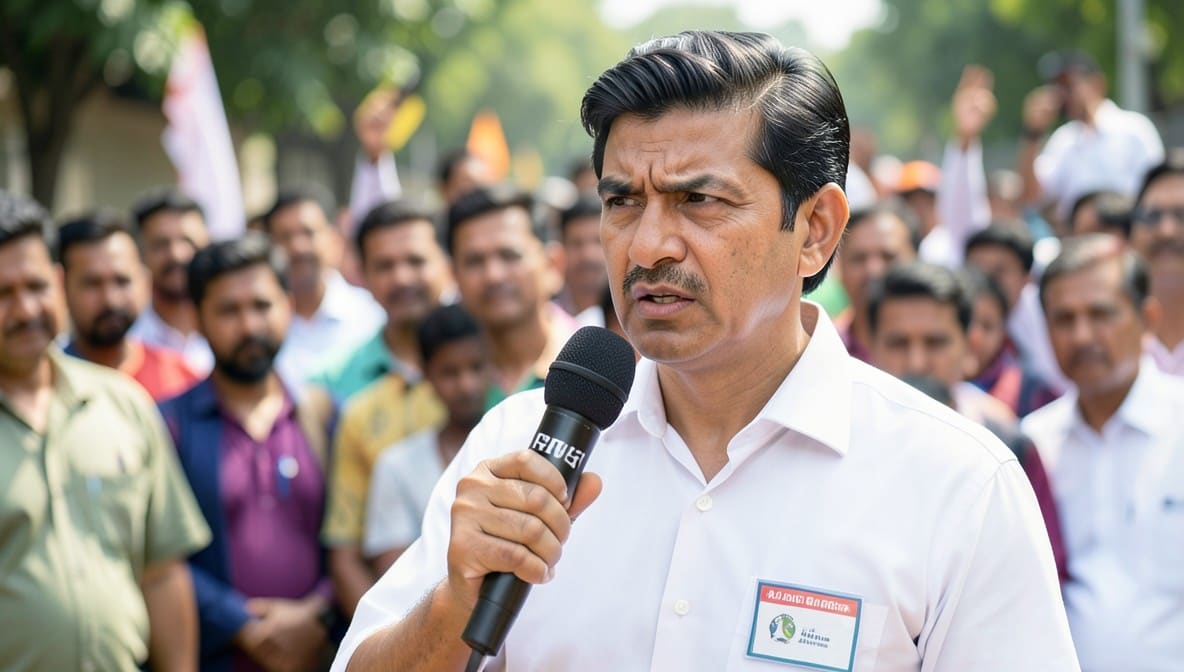
The Andhra Pradesh High Court has affirmed that journalists performing their professional duties cannot be subjected to coercive arrest without strict adherence to statutory safeguards. In a significant ruling, the Court granted anticipatory bail to eight media personnel facing criminal charges under the Bharatiya Nyaya Sanhita, 2023, while mandating compliance with procedural norms to prevent abuse of investigative power.
Background & Facts
The Dispute
The petitioners, eight individuals employed by the CVR News Channel as reporters, editors, and camera operators, are accused in Crime No. 7 of 2026 registered at the III Town Police Station, Visakhapatnam Commissionerate. The complainant, M. Rajasekhara Reddy, alleges that the petitioners, while reporting on a public event, engaged in acts constituting offences under Sections 126(2), 308(2), and 351(1) read with Section 3(5) of the Bharatiya Nyaya Sanhita, 2023. The complainant claims the journalists acted with intent to provoke public disorder and insult him during a live broadcast.
Key Facts
- The petitioners are all employed by CVR News Channel in journalistic roles: input editor, staff reporter, field reporter, stop cameraman, and reporter
- The alleged incident occurred during a public gathering in Visakhapatnam on or about 10.01.2026
- No monetary transaction or payment was made by the complainant to any petitioner
- The complainant is a private individual engaged in business, not a public official
- The petitioners assert they were performing their professional duty of reporting on a matter of public interest
- The FIR was registered on 15.01.2026
- No arrest has been made as of the date of the petition
Procedural History
- 10.01.2026: Alleged incident occurred during a public event in Visakhapatnam
- 15.01.2026: Crime No. 7 of 2026 registered at III Town Police Station, Visakhapatnam
- 28.01.2026: Coordinate Bench of the same High Court, in Crl.P.No.572 of 2026, granted anticipatory protection to Accused No.1 in the same case, directing police to follow Section 35(3) of BNSS
- 05.04.2026: Criminal Petition No.2454/2026 filed before the High Court seeking anticipatory bail for Petitioners Nos.2 to 9
- 07.04.2026: Hearing conducted before Dr. Justice Venkata Jyothirmai Pratapa
The Parties' Positions
For the Petitioners/Accused
- Learned counsel, Sri Venkat Chalasani, submitted that the petitioners are professional journalists acting in the public interest
- Emphasized that no payment or inducement was involved, negating any criminal motive
- Relied on the precedent set by the same High Court in Crl.P.No.572/2026, where anticipatory protection was granted to a co-accused journalist
- Argued that arrest without following Section 35(3) of BNSS would violate constitutional rights under Article 21
For the Respondent/State
- The Public Prosecutor, Ms. K. Priyanka Lakshmi, conceded the legal position advanced by the petitioners
- Did not oppose the grant of anticipatory bail
- Accepted that the procedural safeguards under Section 35(3) of BNSS and the Arnesh Kumar guidelines must be strictly followed
Relief Sought
The petitioners sought anticipatory bail under Section 482 of the Bharatiya Nagarik Suraksha Sanhita, 2023, to prevent arrest pending investigation, and directed the police to comply with mandatory procedural requirements before any coercive action.
The Legal Issue
The central question was whether journalists engaged in legitimate reporting can be subjected to arrest without first complying with the procedural safeguards under Section 35(3) of the Bharatiya Nagarik Suraksha Sanhita, 2023, and the guidelines laid down in Arnesh Kumar v. State of Bihar and Satender Kumar Antil v. CBI.
Arguments Presented
For the Petitioner/Accused
The petitioners’ counsel argued that journalism is a constitutionally protected activity under Article 19(1)(a). The petitioners were not acting with malice or personal vendetta but were discharging their professional duty. The absence of any financial transaction negated any element of criminal intent. The counsel relied on the precedent of the same High Court’s order dated 28.01.2026 in Crl.P.No.572/2026, which had already recognized the necessity of following Section 35(3) before arrest in a similar factual matrix involving a journalist. The counsel further invoked Arnesh Kumar v. State of Bihar to argue that arrest cannot be automatic, especially in non-heinous offences, and must be preceded by a reasonable satisfaction that arrest is necessary.
For the Respondent/State
The Public Prosecutor did not contest the petitioners’ submissions. She acknowledged that the nature of the allegations did not warrant immediate arrest and that the procedural requirements under Section 35(3) of BNSS, which mandates the investigating officer to record reasons in writing before arrest, must be strictly followed. She conceded that the High Court’s earlier order in Crl.P.No.572/2026 was binding on the same bench and that the same protection should extend to all co-accused journalists in the case.
The Court's Analysis
The Court observed that the petitioners are not accused of violent or heinous offences but of acts allegedly committed during the course of journalistic reporting. The Court emphasized that the right to freedom of the press is integral to democracy and that journalists must be protected from arbitrary arrest while performing their duties. The Court noted that the complainant has not alleged any physical assault or threat to life, but rather conduct during a broadcast, which falls within the ambit of professional expression.
"The investigating officer must record reasons in writing before resorting to arrest, and must consider whether the accused can be questioned without detention."
The Court reiterated the principles laid down in Arnesh Kumar v. State of Bihar and Satender Kumar Antil v. CBI, which hold that arrest is not a routine step in investigation but a last resort. The Court held that the earlier order dated 28.01.2026 in Crl.P.No.572/2026, which granted protection to one accused journalist, was binding on the same court and must be extended to all similarly situated petitioners. The Court found no material to suggest that the petitioners would flee, tamper with evidence, or intimidate witnesses.
The Court also noted that the petitioners have not been arrested and are cooperating with the investigation. The Court stressed that the investigative process must proceed without violating the constitutional rights of the accused, particularly those engaged in public interest journalism.
The Verdict
The petitioners succeeded. The Court granted anticipatory bail to Petitioners Nos.2 to 9. The investigating officer is permitted to complete the investigation in accordance with law. In the event of any coercive action, police authorities must scrupulously follow the procedure under Section 35(3) of the Bharatiya Nagarik Suraksha Sanhita, 2023, and the guidelines in Arnesh Kumar v. State of Bihar and Satender Kumar Antil v. CBI. The petitioners are directed to cooperate fully with the investigation and furnish any requested documents or information. All pending applications are closed.
What This Means For Similar Cases
Journalistic Activity Is Not a Proxy for Criminal Conduct
- Practitioners must argue that reporting on public events, even if controversial, does not automatically constitute an offence under BNSS Sections 126, 308, or 351
- Absence of financial motive or personal vendetta must be highlighted to negate criminal intent
- Courts must distinguish between legitimate journalism and intentional provocation
Section 35(3) BNSS Is Mandatory, Not Discretionary
- Police cannot bypass the written record requirement under Section 35(3) even in cases involving media personnel
- Failure to comply renders any arrest illegal and subject to quashing under Section 482 CrPC/BNSS
- Lawyers must file applications under Section 482 immediately if Section 35(3) is ignored
Precedent from Coordinate Benches Is Binding
- Orders granting anticipatory protection to co-accused in the same case must be extended to all similarly situated accused
- Courts cannot deny protection on technical grounds when the factual and legal matrix is identical
- This reinforces the doctrine of consistency in judicial pronouncements within the same High Court