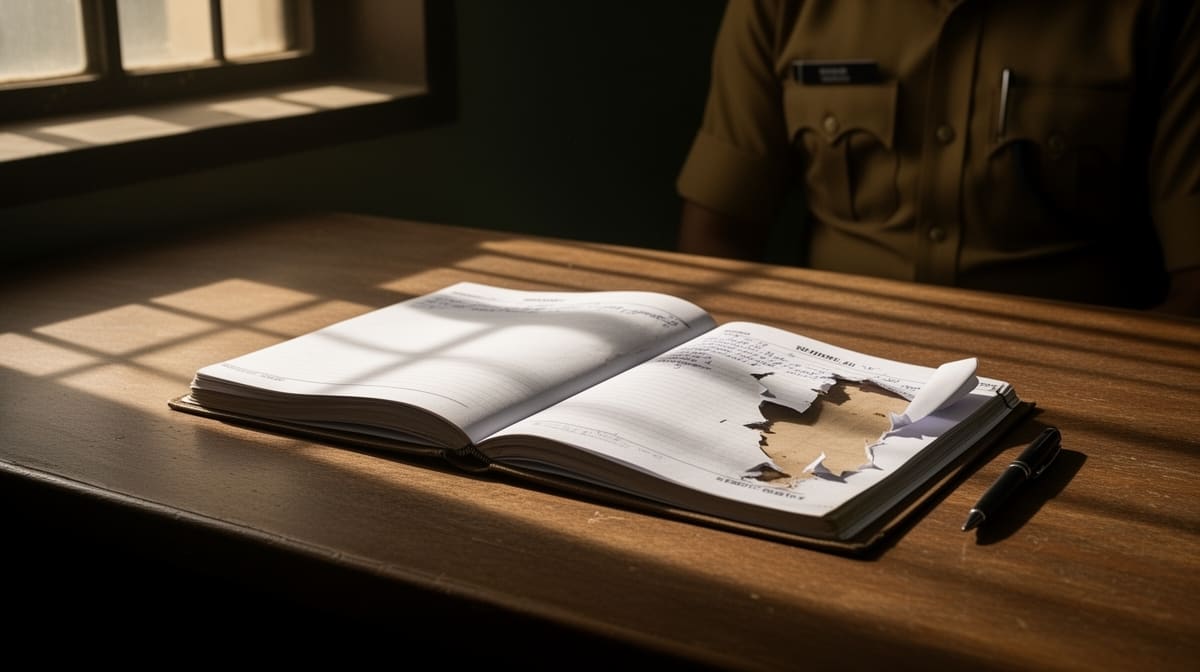
The Madhya Pradesh High Court has reaffirmed that the right to liberty under Article 21 cannot be compromised by investigative malfeasance. In a decisive order, the Court granted anticipatory bail to an accused whose liberty was jeopardized not by the gravity of allegations, but by the deliberate non-production of a critical counter case diary by the police. This ruling underscores that procedural integrity is non-negotiable in criminal proceedings.
Background & Facts
The Dispute
The applicant, Divya Raja alias Devkumari, faces allegations under Sections 296, 115(2), 351(2), 331(6), and 3(5) of the Bharatiya Nagarik Suraksha Sanhita, 2023 for allegedly assaulting the complainant with fists and blows. The prosecution’s case primarily attributes the use of weapons to co-accused persons, not the applicant.
Procedural History
- Crime No. 37/2025 was registered at Police Station Bhagwa, Chhatarpur, against the applicant.
- The applicant filed an application under Section 482 of the Bharatiya Nagarik Suraksha Sanhita seeking anticipatory bail.
- The State was directed to produce the case diary of Counter Case No. 39/2025, which allegedly contained exculpatory or contextually relevant material.
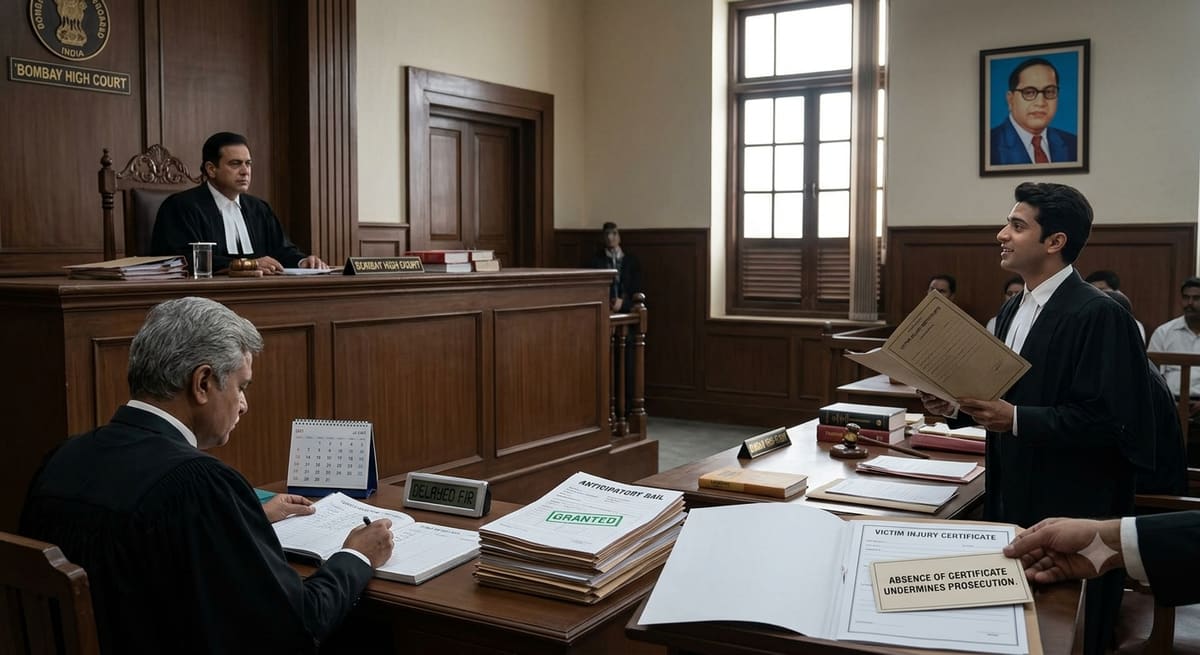
- The State admitted that the case diary of Counter Case No. 39/2025 was not available, and that its non-production was deliberate.
Relief Sought
The applicant sought anticipatory bail on grounds of no prior criminal record, the non-involvement in weapon-related allegations, and the State’s obstruction of justice through suppression of evidence.
The Legal Issue
The central question was whether anticipatory bail can be denied merely because the investigating agency has withheld material evidence, even when the accused has no criminal antecedents and the allegations against them are relatively minor compared to co-accused.
Arguments Presented
For the Petitioner
The applicant’s counsel argued that the deliberate withholding of the counter case diary violated the principles of natural justice and fair trial enshrined in Article 21. Reliance was placed on Arnesh Kumar v. State of Bihar to emphasize that arrest and denial of bail must not be automatic, especially where the accused has no history of criminal conduct. The counsel contended that the State’s conduct amounted to an abuse of process.
For the Respondent
The State did not contest the absence of criminal history but offered no justification for the non-production of the counter case diary. The Panel Lawyer conceded the diary’s unavailability, effectively admitting to procedural failure without challenging the legal premise of the applicant’s request.
The Court's Analysis
The Court held that the Investigating Officer’s conduct in deliberately withholding the case diary of the counter case was not merely negligent but an intentional obstruction of justice. Such conduct, the Court observed, undermines the foundational principle that the State must act with transparency and fairness in criminal investigations.
"Such misadventurous act on the part of the police authorities cannot be appreciated because they cannot curtail the life and liberty of any citizen of this country as per their own whims and wishes."
The Court emphasized that the applicant’s lack of criminal record and the relatively lesser role attributed to him in the alleged assault weighed heavily in his favor. The Court further noted that the denial of bail on the basis of evidence the State itself refused to produce would be a gross miscarriage of justice. The Court applied the triple test for anticipatory bail - nature of accusation, likelihood of flight, and possibility of tampering - with particular emphasis on the State’s own misconduct as a decisive factor.
The Verdict
The applicant won. The Court held that anticipatory bail must be granted where police misconduct obstructs fair investigation, and that the right to liberty cannot be conditioned on the State’s compliance with procedural norms. The applicant was granted anticipatory bail subject to conditions.
What This Means For Similar Cases
Police Withholding Evidence Invalidates Bail Denial
- Practitioners must now raise police non-cooperation or evidence suppression as a standalone ground for bail applications.
- Courts are likely to treat deliberate non-production of case diaries as a presumptive violation of fair trial rights.
- The burden shifts to the State to explain why evidence is unavailable - not to the accused to prove innocence.
No Prior Record Is a Strong Mitigating Factor
- Even in cases involving serious BNS offences, absence of criminal history significantly strengthens the bail plea.
- Courts will distinguish between principal offenders and secondary participants when assessing flight risk.
- Applications under Section 482 should explicitly cite the State’s failure to disclose material as grounds for relief.
Procedural Compliance Is Non-Negotiable
- The Court’s language signals that investigative malfeasance will not be tolerated, even if the accused is charged under stringent provisions.
- Bail orders may now include explicit directions to produce all case diaries, with non-compliance triggering contempt proceedings.
- Defence counsel should routinely file applications under Section 482 seeking production of all related case records before bail hearings.