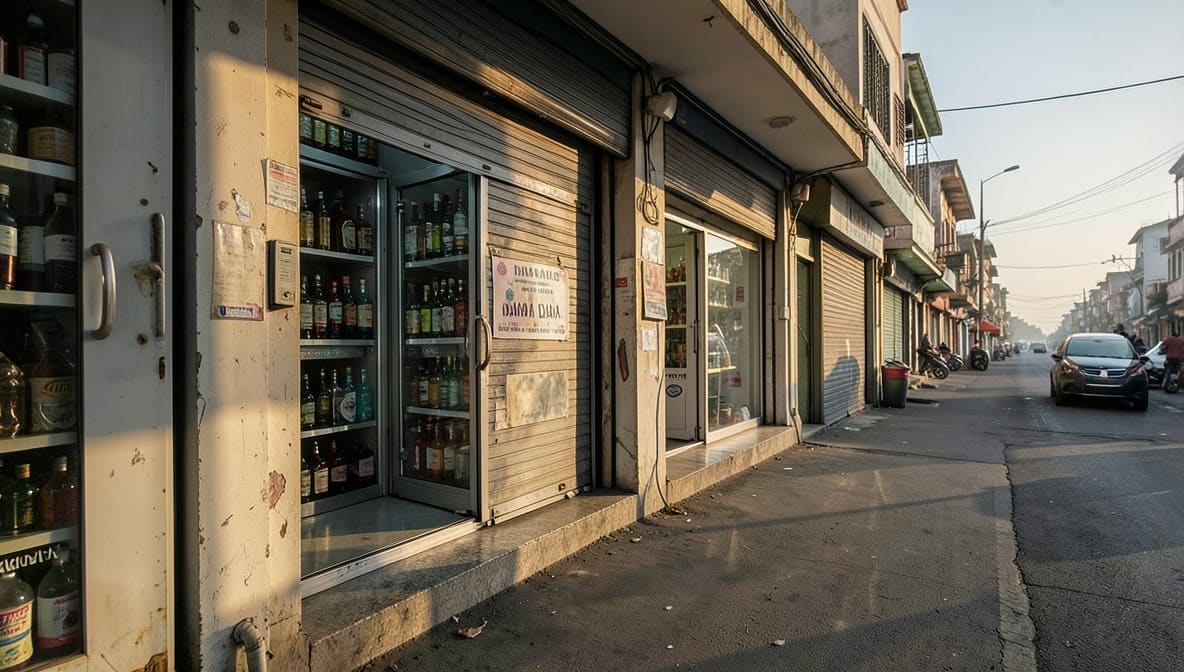
The Bombay High Court, Aurangabad Bench, has underscored the importance of natural justice and procedural fairness in administrative actions while setting aside the cancellation of a fair price shop licence. The judgment directs revenue authorities to reconsider the allotment, emphasizing that explanations tendered by licence holders must be properly appreciated before adverse orders are passed.
Background & Facts
The Dispute
The petitioner, a 37-year-old woman belonging to the Scheduled Caste category, was allotted a fair price shop (Shop No. 211) at village Madni, Taluka Sillod, District Aurangabad, on 25.02.2004. The allotment was made under the Maharashtra Scheduled Commodities (Regularization and Distribution) Order, 1975. Following complaints from cardholders, revenue authorities initiated action against the petitioner.
Key Facts
25.02.2004: Petitioner allotted fair price shop (Shop No. 211) at village Madni.
October 2007: District Supply Officer issued show cause notice alleging:
Failure to supply food grains for September 2007.
Non-display of rate card.
Non-availability of records during inspection.
28.11.2007: Petitioner submitted explanation, attributing the lapse to her son’s illness and refuting other allegations.
10.12.2007: District Supply Officer cancelled the licence, finding the explanation unsatisfactory.
03.03.2009: Deputy Commissioner (Supply), Aurangabad, rejected the petitioner’s appeal under Section 24 of the Maharashtra Scheduled Commodities Order, 1975.
05.03.2012: Hon’ble Minister for Food, Civil Supply and Consumer Protection dismissed the revision petition.
22.06.2026: Tahsil Office, Sillod, confirmed no fresh allotment had been made for Shop No. 211.
Procedural History
2004: Petitioner allotted fair price shop licence.
October 2007: Show cause notice issued by District Supply Officer.
28.11.2007: Petitioner’s explanation submitted.
10.12.2007: District Supply Officer cancelled licence.
03.03.2009: Deputy Commissioner (Supply) rejected appeal.
05.03.2012: Minister dismissed revision petition.
2013: Petitioner filed Writ Petition No. 8500 of 2013 before Bombay High Court.
02.07.2026: Judgment reserved.
03.07.2026: Judgment pronounced.
Relief Sought
The petitioner sought:
Quashing of orders dated 10.12.2007, 03.03.2009, and 05.03.2012.
Direction to revenue authorities to reconsider the allotment of the fair price shop.
The Legal Issue
The central question was whether the revenue authorities and the Hon’ble Minister had properly appreciated the petitioner’s explanation and adhered to principles of natural justice before cancelling the fair price shop licence.
Arguments Presented
For the Petitioner
The petitioner, a Scheduled Caste woman, was eligible for the licence and had adhered to all conditions.
The lapse in supplying food grains was due to her son’s illness, supported by medical evidence.
No irregularities were committed, and the allegations in the show cause notice were unfounded.
The revenue authorities acted under vested interests, leading to injustice.
No fresh allotment had been made for Shop No. 211, and the petitioner’s claim subsisted.
For the Respondent/State
The State defended the actions of the revenue authorities and supported the Minister’s order.
However, the State candidly submitted that if directed by the Court, a fresh licence could be granted to the petitioner.
The Court's Analysis
The Court observed that the District Supply Officer, Deputy Commissioner (Supply), and the Hon’ble Minister had failed to properly appreciate the petitioner’s explanation. The charges against the petitioner included:
Failure to supply food grains for September 2007.
Non-display of rate card.
Non-availability of records during inspection.
The petitioner had tendered a written explanation (Exhibit 'C'), attributing the lapse to her son’s illness and refuting the other allegations. However, the District Supply Officer dismissed the explanation without adequate consideration, leading to the cancellation of the licence. The Deputy Commissioner (Supply) and the Hon’ble Minister upheld this order without assigning sound reasons.
The Court noted that the petitioner belonged to the Scheduled Caste category and that no fresh allotment had been made for Shop No. 211. The State’s counsel fairly submitted that the petitioner could be re-allotted the shop if directed by the Court. In light of these circumstances, the Court held that the orders passed by the revenue authorities and the Minister were procedurally flawed and violated principles of natural justice.
"There seems to be an explanation to all the charges, however, initially, District Supply Officer does not seem to be pleased or convinced with the same and he directed action of forfeiture and closure. Even Deputy Commissioner (Supply), who was approached challenging the above order, does not seem to have assigned sound reason for not considering the explanation to show cause and rather said authority seems to have upheld the order of District Supply Officer. Likewise, even at Mantralaya level, Hon'ble Minister has refused to interfere in the order of Deputy Commissioner (Supply) and thereby dismissed the review."
The Verdict
The Writ Petition was allowed. The Court:
Quashed and set aside the orders dated 10.12.2007 (District Supply Officer), 03.03.2009 (Deputy Commissioner), and 05.03.2012 (Hon’ble Minister).
Directed the revenue authorities to reconsider the allotment of the fair price shop to the petitioner, subject to her eligibility and fulfilment of essential criteria.
Made the rule absolute in the above terms.
What This Means For Similar Cases
Procedural Fairness Is Non-Negotiable
Administrative authorities must properly appreciate explanations tendered by licence holders before passing adverse orders.
Failure to consider mitigating circumstances (e.g., illness, lack of intent) may render the order unsustainable in law.
Natural Justice Must Be Upheld
The judgment reinforces that principles of natural justice apply even in administrative proceedings, particularly when livelihoods are at stake.
Authorities must provide sound reasoning for rejecting explanations, failing which the order may be liable to be set aside.
Reconsideration on Merits
Where no fresh allotment has been made, and the original licence holder’s claim subsists, courts may direct reconsideration of the allotment.
Scheduled Caste and marginalized licence holders may receive heightened judicial scrutiny in such cases.