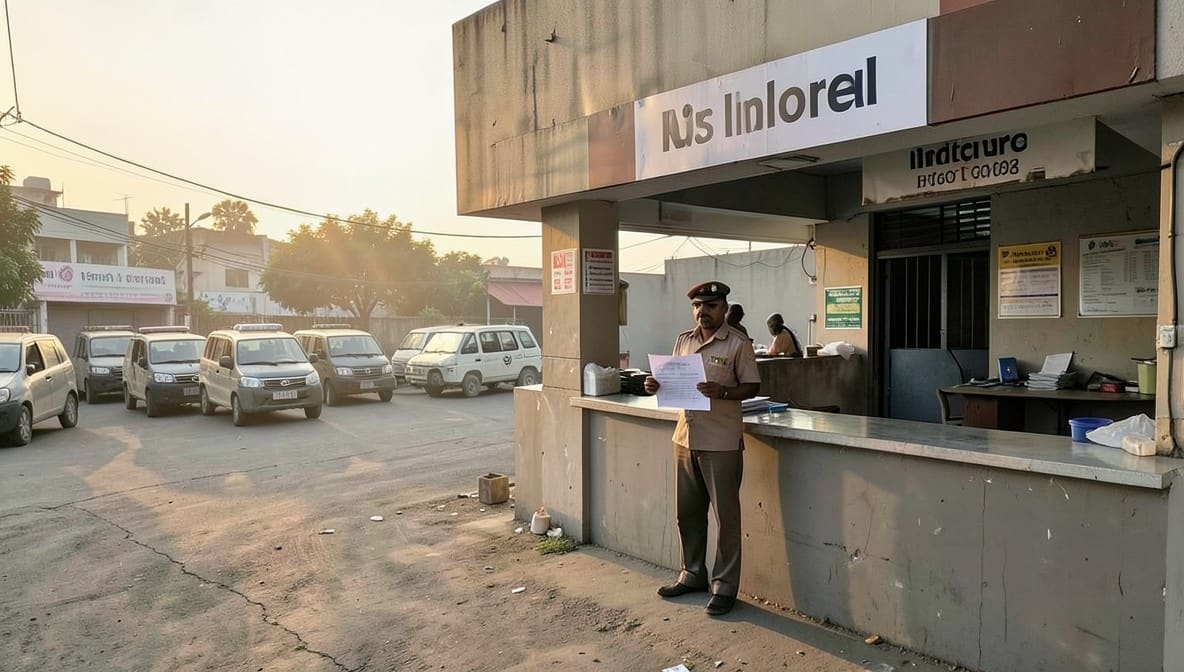
The High Court of Telangana has affirmed that public authorities cannot remain passive when citizens report the loss of critical registered documents, especially when such loss may enable fraud or title disputes. The Court’s directive underscores the non-discretionary duty of police to act on complaints under Article 226, reinforcing procedural fairness as a constitutional imperative.
Background & Facts
The Dispute
The petitioner, Janapareddy Padmaja, reported the loss of two original registered sale deeds - Document No. 466 and 467 of 2013, both dated 18-01-2013 and registered at the Sub-Registrar Office, Bodhan. These documents are vital for establishing legal ownership of immovable property. The petitioner submitted three complaints: one dated 09-01-2026 before the Station House Officer, another dated 16-01-2026, and an online complaint via the Mee-Seva portal on 12-01-2026 with acknowledgment number 15201201261809315302. Despite these submissions, no FIR was registered, and no Non-Traceable Certificate was issued.
Procedural History
- 09-01-2026: Written complaint filed with Station House Officer, III Town Police Station, Nizamabad
- 12-01-2026: Online complaint lodged via Mee-Seva portal
- 16-01-2026: Second written complaint submitted
- 09-10-2025: Respondents claim the complaint was rejected due to non-cooperation, though this predates the earliest complaint
- 16-02-2026: Writ Petition No. 3637 of 2026 filed under Article 226
Relief Sought
The petitioner sought a writ of mandamus directing the police to register an FIR and issue a Non-Traceable Certificate for the lost documents, arguing that inaction violated principles of natural justice and Article 14 of the Constitution.
The Legal Issue
The central question was whether the police can lawfully refuse to register an FIR or issue a Non-Traceable Certificate for lost registered documents merely because the complainant has not produced physical copies, and whether such inaction constitutes a violation of natural justice and constitutional duty under Article 226.
Arguments Presented
For the Petitioner
Learned counsel argued that the loss of registered sale deeds creates a real risk of fraudulent transactions and title disputes. The petitioner had fulfilled all procedural requirements by submitting complaints in writing and online. Reliance was placed on State of Haryana v. Bhajan Lal to assert that police cannot refuse FIR registration on speculative grounds. The failure to issue a Non-Traceable Certificate, the counsel contended, deprives the petitioner of a legal mechanism to protect property rights and seek remedies under the Transfer of Property Act.
For the Respondent
The Assistant Government Pleader claimed that the petitioner was asked to produce supporting documents for verification, but failed to appear or submit them within two months. The respondents asserted that the complaint was rejected on 09-10-2025 due to non-cooperation. However, this date predates the earliest complaint (09-01-2026), rendering the claim factually inconsistent and legally untenable.
The Court's Analysis
The Court observed that the respondents did not dispute the receipt of the complaints. The claim of non-cooperation was undermined by the fact that the alleged rejection date (09-10-2025) preceded the filing of the first complaint. The Court emphasized that the duty to register an FIR arises upon receipt of credible information about a cognizable offence, regardless of whether original documents are produced. The loss of registered sale deeds may constitute theft or criminal breach of trust under Sections 378 and 405 IPC, which are cognizable offences.
"The State cannot remain a silent spectator when a citizen reports the loss of legally significant documents that form the bedrock of property rights."
The Court further held that the issuance of a Non-Traceable Certificate is not discretionary but a procedural safeguard to prevent misuse of lost documents. The failure to issue it leaves the complainant vulnerable to third-party fraud and denies access to remedies under civil and property law. The Court declined to adjudicate the merits of whether a crime occurred, but affirmed that the mere receipt of a complaint triggers a mandatory duty to initiate inquiry.
The Verdict
The petitioner succeeded. The Court held that police must conduct an inquiry upon receipt of a complaint regarding lost registered documents, and must issue a Non-Traceable Certificate if the documents are confirmed lost. The Court directed the petitioner to re-approach the Station House Officer with all available documents, and mandated that the police take appropriate steps in accordance with law.
What This Means For Similar Cases
FIR Registration Cannot Be Conditional on Document Production
- Practitioners must now argue that police cannot demand original documents as a precondition for FIR registration in cases of lost registered deeds, passports, or title papers
- A complaint supported by copies, acknowledgment receipts, or digital trail suffices to trigger mandatory action under Section 154 CrPC
- Failure to register an FIR in such cases is grounds for immediate writ relief under Article 226
Non-Traceable Certificates Are a Legal Right, Not a Favor
- The issuance of a Non-Traceable Certificate is now recognized as a procedural safeguard under constitutional duty, not administrative discretion
- Clients should be advised to formally request this certificate in writing, and if denied, file a writ petition without delay
- This precedent extends beyond sale deeds to any registered document critical to property, identity, or financial rights
Administrative Delays Are Not a Defense to Constitutional Obligations
- The Court rejected the argument that delay or non-cooperation justifies inaction when the complainant has made multiple submissions
- Practitioners should document all communications with police via email, portal receipts, and written acknowledgments to establish a clear record of compliance
- Any delay beyond 7 - 10 days in responding to such complaints may now be challenged as arbitrary under Article 14