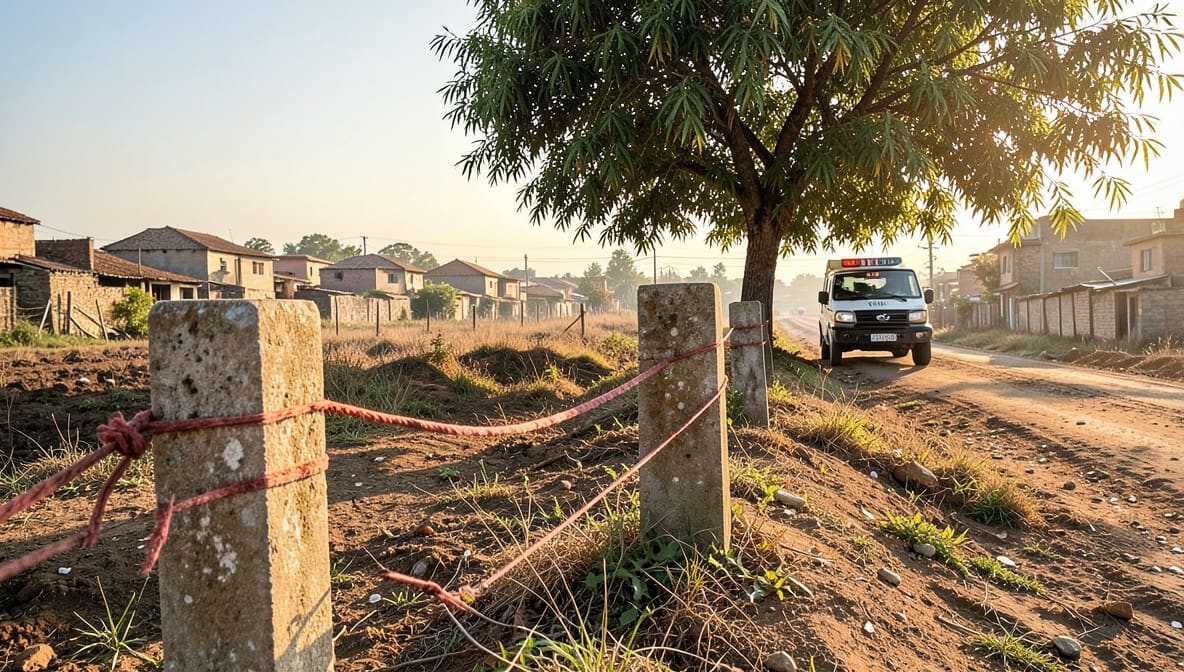
The Andhra Pradesh High Court has reiterated that police authorities cannot interfere in disputes of a purely civil nature, such as those involving land acquisition compensation, without following the due process of law. This judgment underscores the importance of distinguishing between civil and criminal disputes and the necessity of adhering to statutory remedies under relevant laws like the Land Acquisition Act, 2013.
Background & Facts
The Dispute
The petitioner, Pinnamaneni Shanmukha Rao, a 72-year-old resident of Taduvai Village, Jangareddygudem Mandal, Eluru District, approached the High Court under Article 226 of the Constitution of India seeking a writ of mandamus. The petitioner challenged the actions of the respondents - including the Superintendent of Police, Eluru, the Sub-Divisional Police Officer, Jeelugumilli, and the Station House Officer, Jeelugumilli - for entertaining a complaint filed by the 5th respondent, Pinnamaneni Rajasekhar, regarding the entitlement and apportionment of compensation for land acquired under the Polavaram Irrigation Project.
Key Facts
- The petitioner owned land in RS Nos. 136/4, 62/6A, 62/6C, and 136/5 situated in Taduvai Village, Jangareddygudem Mandal, East Godavari District.
- The land was acquired by the Government under the Polavaram Irrigation Project, and an award was passed fixing compensation in accordance with the Land Acquisition Act, 2013.
- The 5th respondent lodged a complaint with the police on 28.01.2026, alleging grievances regarding the entitlement and apportionment of the compensation amount.
- The police conducted a preliminary enquiry and found that the dispute was purely civil in nature, governed by the provisions of the Land Acquisition Act, 2013.
- The petitioner was called to appear before the 3rd respondent (Sub-Divisional Police Officer) based on the complaint, prompting the filing of this writ petition.
Procedural History
- 28.01.2026: Complaint lodged by the 5th respondent with the police.
- 20.05.2026: Written instructions submitted by the Station House Officer, Jeelugumilli, stating that no action was taken on the complaint as it was civil in nature.
- 22.05.2026: Writ Petition (WP No. 12378/2026) filed before the Andhra Pradesh High Court.
- 22.05.2026: The High Court disposed of the writ petition with directions to the police.
Relief Sought
The petitioner sought:
- A writ of mandamus declaring the impugned action of the respondents in entertaining the complaint without referring it to a competent court as illegal, arbitrary, and unjust.
- A direction to the respondents not to entertain the complaint dated 28.01.2026, which was civil in nature.
- Interim relief under Section 151 CPC to restrain the respondents from interfering with the petitioner's personal life and liberty pending disposal of the writ petition.
The Legal Issue
The central question before the Court was whether police authorities can entertain complaints involving civil disputes, such as those arising under the Land Acquisition Act, 2013, without following the due process of law and referring the matter to a competent civil court.
Arguments Presented
For the Petitioner
- The petitioner contended that the dispute regarding the entitlement and apportionment of compensation under the Land Acquisition Act, 2013 was purely civil in nature.
- The police had no jurisdiction to interfere in such matters, as they were governed by statutory remedies available under the Land Acquisition Act, 2013.
- The actions of the respondents in calling the petitioner to appear based on the complaint were arbitrary and illegal, violating the petitioner's right to due process.
For the Respondents
- The Assistant Government Pleader for Home submitted written instructions from the Station House Officer, stating that the police had conducted a preliminary enquiry and found the dispute to be civil in nature.
- The police had not taken any action on the complaint, recognizing that an alternative remedy existed under the Land Acquisition Act, 2013.
- The respondents argued that the petitioner's grievance was misdirected, as the police had already decided not to interfere in the matter.
The Court's Analysis
The Court observed that the dispute pertained to the entitlement and apportionment of compensation for land acquired under the Polavaram Irrigation Project, which was governed by the Land Acquisition Act, 2013. The Court emphasized that such disputes are civil in nature and must be resolved through the statutory remedies provided under the relevant law.
The Court relied on the principle that police authorities cannot interfere in civil disputes without following the due process of law. The written instructions submitted by the Station House Officer confirmed that the police had recognized the civil nature of the dispute and had refrained from taking any action on the complaint. The Court noted that the respondents had acted within the bounds of law by not entertaining the complaint, as it fell outside their jurisdiction.
"Having found that nature of complaint is purely civil in nature and the proceedings are governed by the provisions of the Land Acquisition Act, 2013 and as there exists an alternative remedy to approach competent Civil Court, no action has been taken basing on the said complaint."
The Court further held that the petitioner's grievance was without merit, as the police had already decided not to interfere in the matter. The Court disposed of the writ petition with a direction to the police to refrain from interfering in civil disputes without following due process.
The Verdict
The Court disposed of the writ petition with the following directions:
- The respondents, particularly the police authorities, were directed not to interfere in civil disputes, such as those involving land acquisition compensation, without following the due process of law.
- The Court recorded the submission of the Assistant Government Pleader that the police had not taken any action on the complaint dated 28.01.2026, as it was civil in nature.
- There was no order as to costs, and any pending interlocutory applications were closed.
What This Means For Similar Cases
Police Jurisdiction in Civil Disputes
This judgment reinforces the principle that police authorities cannot entertain complaints involving civil disputes without following the due process of law. Practitioners must ensure that:
- Complaints involving land acquisition compensation, contractual disputes, or property matters are not lodged with the police if they are purely civil in nature.
- The alternative remedies available under relevant statutes (e.g., Land Acquisition Act, 2013) are exhausted before approaching the police or courts.
Due Process and Alternative Remedies
- The Court's decision highlights the importance of adhering to statutory remedies for civil disputes. Parties must approach the competent civil courts for resolution of such matters.
- Police authorities are not empowered to interfere in civil disputes unless there is a criminal element involved. This judgment serves as a precedent to prevent arbitrary actions by the police in civil matters.
Practical Takeaways for Practitioners
- For Petitioners: Ensure that complaints lodged with the police are not purely civil in nature. If they are, approach the competent civil court for redressal.
- For Respondents: If a complaint is lodged with the police regarding a civil dispute, refrain from taking action and direct the complainant to the appropriate forum.
- For Courts: This judgment can be cited to restrain police interference in civil disputes and to emphasize the importance of due process under relevant statutes.