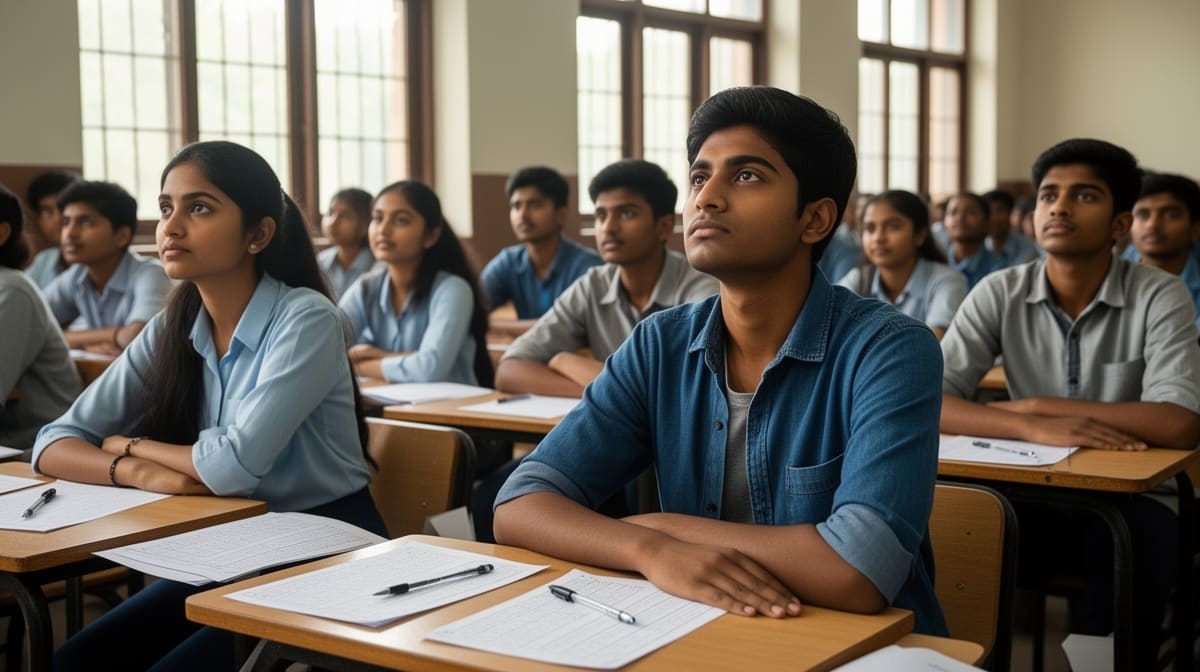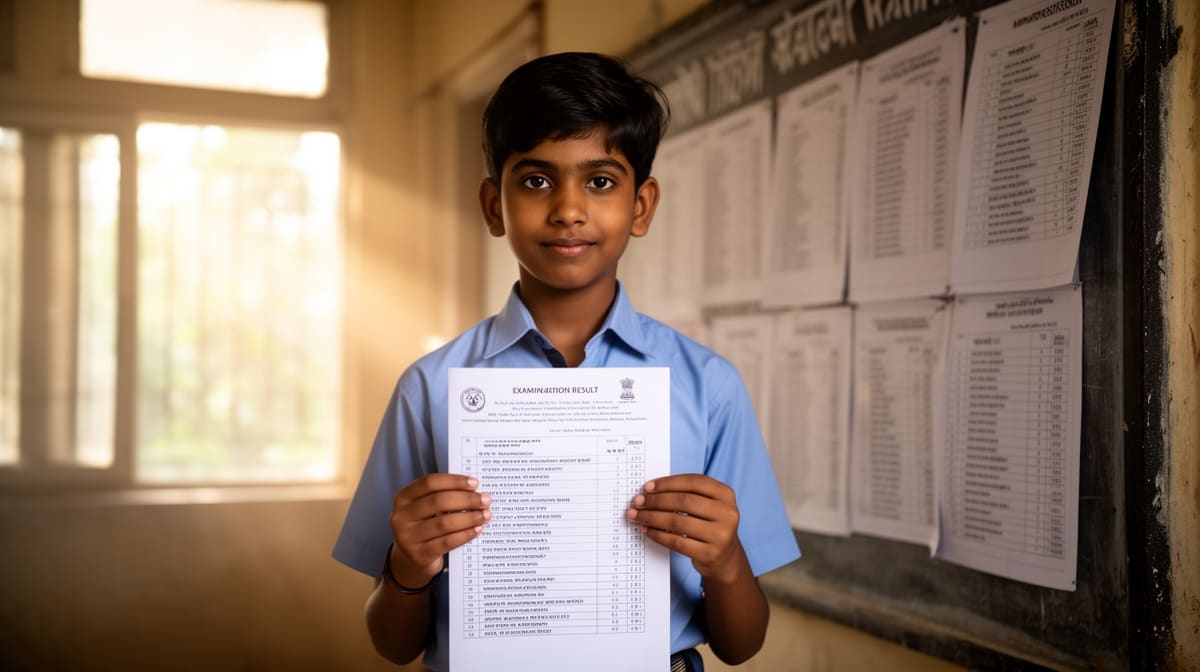
A student’s right to complete academic assessments must not be contingent on unresolved disputes with educational institutions. The Madras High Court has affirmed this principle by directing a private school to facilitate a minor’s examination in a neutral venue, ensuring his academic progression despite allegations of institutional misconduct.
Background & Facts
The Dispute
The petitioner, Shreya Nidhi, filed the writ petition on behalf of her younger brother, Umang Nidhi, a Class XI student at Chettinad Vidyashram in Chennai. The family had relocated to Delhi after their father, a Central Government employee, was transferred. Umang, who had been enrolled in the school since the family’s stay in Chennai, allegedly suffered mental distress due to alleged harassment by school staff. As a result, he was unable to continue attending classes or sit for examinations at the school premises.
Procedural History
- The petitioner approached the Madras High Court under Article 226 of the Constitution seeking relief.
- No prior administrative remedies were pursued, as the urgency of academic continuity and the student’s fragile mental state necessitated immediate judicial intervention.
- The school (Respondents 1 and 2) contested the allegations but did not dispute the student’s right to appear in examinations.
- The Central Board of Secondary Education (CBSE) and the State Education Department expressed no objection to the proposed solution.
Relief Sought
The petitioner sought a writ of mandamus directing the school to:
- Allow Umang to appear in all Class XI examinations - internal and annual - without enforcing attendance requirements.
- Conduct the examinations at a neutral location.
- Issue the Mark List, Transfer Certificate, and Conduct Certificate upon completion.
- Facilitate transfer of his academic records to a CBSE school in Delhi.
The Legal Issue
The central question was whether a student’s fundamental right to education under Article 21A and the right to fair academic assessment can be denied due to unresolved interpersonal grievances between the student and the institution, particularly when the student is no longer physically present on campus.
Arguments Presented
For the Petitioner
The petitioner, appearing in person, argued that denying examination access violated the student’s right to education, right to dignity, and right to equal opportunity under Article 14 and Article 21. She emphasized that the student’s mental health had deteriorated due to alleged harassment, making return to the school environment impossible. She cited Unni Krishnan v. State of Andhra Pradesh to underscore that education is a fundamental right and cannot be conditioned on compliance with unreasonable institutional demands.
For the Respondent
The school’s counsel did not contest the factual basis of the student’s inability to attend classes but argued that school rules required physical attendance and internal assessments to be completed on campus. However, they conceded that the Court could issue directions in the student’s best interest, without opposing the proposed neutral venue.
The Court's Analysis
The Court examined the constitutional obligations of educational institutions under Article 21A and the right to life with dignity under Article 21. It noted that while schools may prescribe attendance norms, these cannot override a student’s right to complete academic evaluation, especially when external circumstances - such as relocation and psychological distress - render compliance impossible.
"The right to education is not merely the right to be enrolled, but the right to be given a fair and uninterrupted opportunity to complete one’s academic journey."
The Court rejected the notion that procedural compliance - such as mandatory attendance - could be weaponized to deprive a student of academic certification. It emphasized that the CBSE, as the examining body, has a duty to ensure that students are not penalized due to institutional failures or disputes. The consensus among respondents 4, 5, and 6 that the examinations could be conducted at the CBSE Regional Office further supported the feasibility of the proposed solution.
The Court held that the school’s administrative rules must yield to the overriding principle of student welfare and constitutional rights. The direction to conduct exams at the CBSE office was not an infringement on institutional autonomy but a necessary safeguard to uphold educational equity.
The Verdict
The petitioner succeeded. The Court held that a student’s right to appear in examinations cannot be conditioned on attendance where circumstances make it impossible, and directed the school to conduct all Class XI examinations for Umang Nidhi at the CBSE Regional Office in Chennai. The school was further directed to issue all necessary academic documents and facilitate transfer of records to a school in Delhi.
What This Means For Similar Cases
Examination Access Cannot Be Withheld for Non-Attendance
- Schools cannot deny students the right to sit for board or internal exams solely on grounds of non-attendance when the absence is due to documented health, relocation, or harassment.
- Practitioners must now argue that Article 21A and Article 21 override rigid institutional rules in cases of compelling personal circumstances.
Neutral Venues Are a Legally Recognized Remedy
- Courts may direct examinations to be conducted at CBSE offices, government schools, or other neutral locations when the student’s safety or well-being is at risk.
- Institutions must cooperate with such directions; refusal may attract contempt proceedings.
Transfer of Records Is a Constitutional Imperative
- Issuance of Transfer Certificate and Conduct Certificate is not discretionary - it is a mandatory obligation under the Right to Education Act and CBSE guidelines.
- Delay or refusal to issue these documents constitutes a violation of the student’s right to continue education without interruption.
Practical Takeaways for Practitioners
- File writ petitions under Article 226 promptly when academic continuity is threatened.
- Gather medical or psychological reports to substantiate claims of inability to attend school.
- Seek cooperation from CBSE or State Education Departments to strengthen the petition’s feasibility.