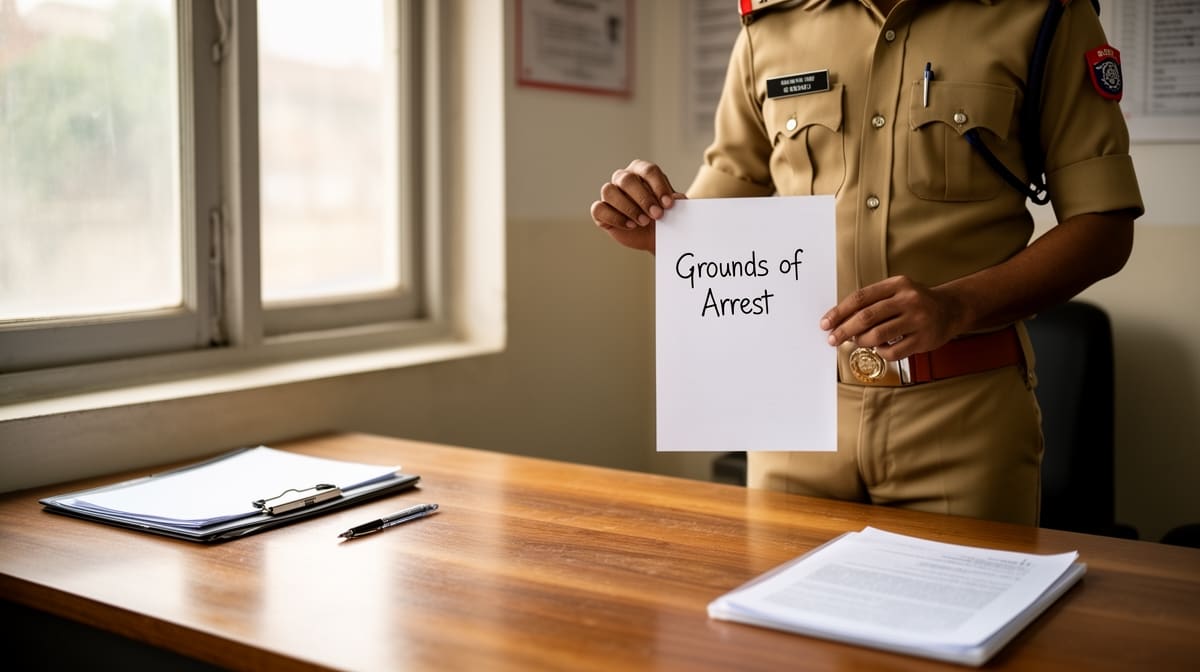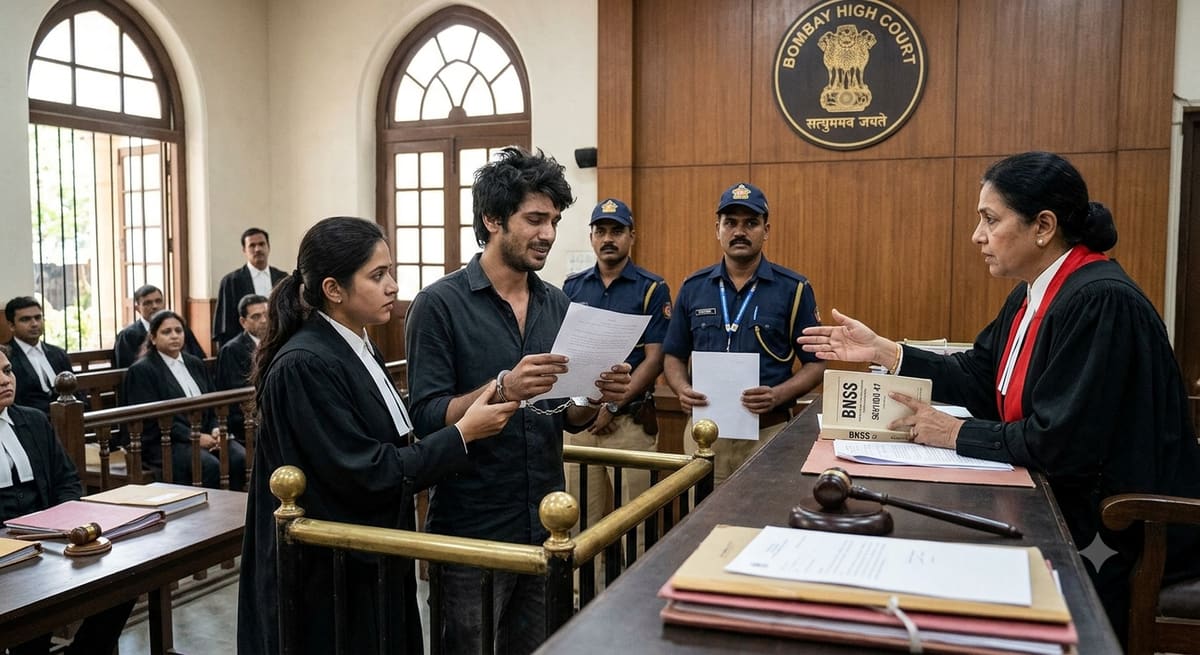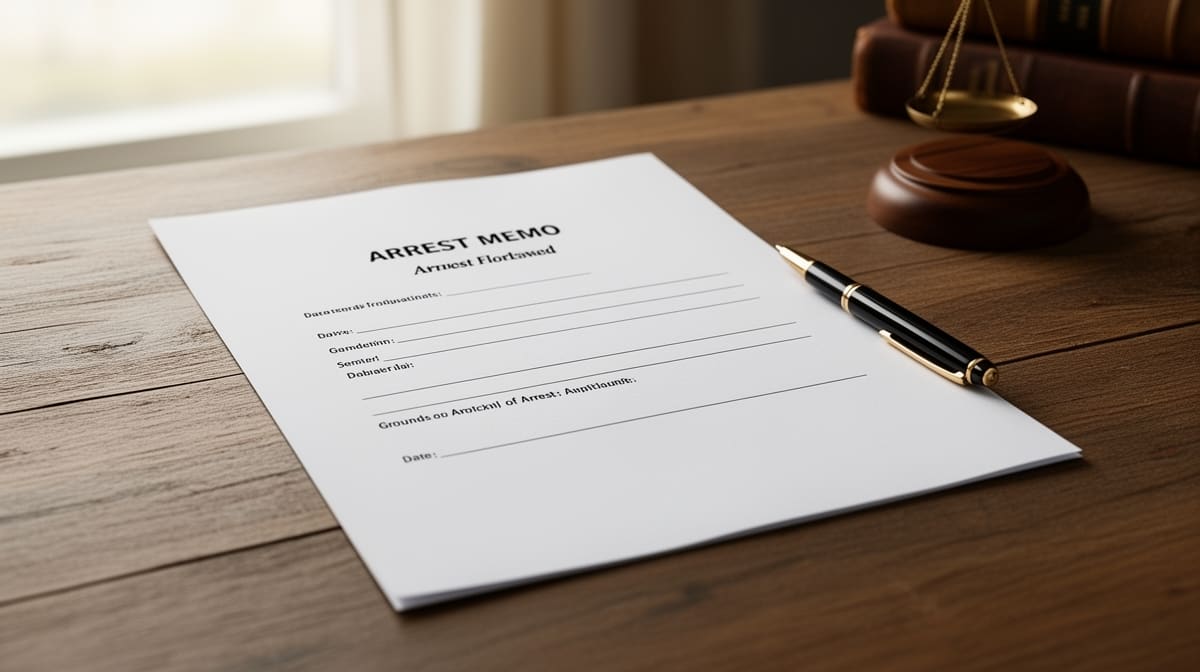
The Allahabad High Court has reaffirmed that the failure to communicate the grounds of arrest in writing renders any detention illegal, irrespective of the nature of the offence or the filing of a charge-sheet. This ruling, grounded in Article 22(1) of the Constitution and the Supreme Court’s binding precedent in Mihir Rajesh Shah v. State of Maharashtra, establishes a non-negotiable procedural safeguard for personal liberty.
Background & Facts
The Dispute
The petitioner, Manoj Kumar, was arrested on 27.01.2026 in connection with FIR No. 244 of 2024, lodged on 03.09.2024 at Police Station Asiwan, District Unnao, by the complainant (Respondent No. 4). The arrest was followed by a remand order dated 28.01.2026 passed by the Additional Chief Judicial Magistrate-III, Unnao. The petitioner challenged both the arrest and remand through a writ petition in habeas corpus, contending that the authorities failed to inform him of the grounds of arrest in writing, in violation of Article 22(1) of the Constitution.
Key Facts
- The petitioner was arrested on 27.01.2026.
- The arrest memo (Annexure-3) listed only the FIR number (244/2024) as the reason for arrest, with no description of the alleged offence, specific allegations, or statutory provisions invoked.
- An application for anticipatory bail (No. 3614 of 2025) was filed before the District & Sessions Judge, Unnao, and rejected on 07.01.2026.
- The petitioner was not provided any written document detailing the grounds of arrest at the time of arrest or thereafter.
- The Supreme Court judgment in Mihir Rajesh Shah v. State of Maharashtra (2026) 1 SCC 500 was delivered on 06.11.2025, mandating written communication of grounds of arrest in all cases.
- The arrest occurred on 27.01.2026, more than two months after the Supreme Court’s directive.
- The petitioner remained in custody from 27.01.2026 until the date of this judgment (29.04.2026), a period of over three months.
Procedural History
- 03.09.2024: FIR No. 244 of 2024 registered at Police Station Asiwan, Unnao.
- 07.01.2026: Anticipatory bail application rejected by District & Sessions Judge, Unnao.
- 27.01.2026: Petitioner arrested without written grounds of arrest.
- 28.01.2026: Remand order passed by Additional Chief Judicial Magistrate-III, Unnao.
- 12.03.2026: Habeas corpus writ petition (No. 137 of 2026) filed before Allahabad High Court, Lucknow Bench.
- 24.04.2026: Single Judge of Allahabad HC issued an interim order recognizing the arrest as illegal under Mihir Rajesh Shah and directed the Additional Chief Secretary (Home) to explain why exemplary costs should not be awarded.
- 29.04.2026: Division Bench delivered final judgment.
The Parties' Positions
For the Petitioner
The petitioner’s counsel, Akhilesh Kumar Tripathi and Prashant Tiwari, relied on the Supreme Court’s judgment in Mihir Rajesh Shah v. State of Maharashtra (2026) 1 SCC 500 and Dr. Rajinder Rajan v. Union of India (2026 Live Law (SC) 327). They argued that:
- The arrest memo merely cited the FIR number, which does not constitute grounds of arrest.
- The failure to provide written grounds violated Article 22(1) and Section 47 of the BNSS 2023 (replacing Section 50 CrPC).
- The remand order, being a consequence of an illegal arrest, is void ab initio.
- The State’s non-compliance after the Supreme Court’s clear directive on 06.11.2025 amounted to flagrant constitutional violation.
For the Respondent
The Additional Government Advocate (AGA) did not dispute the legal position laid down in Mihir Rajesh Shah or Dr. Rajinder Rajan. However, the State’s response was limited to a personal affidavit from the Additional Chief Secretary (Home), which:
- Did not address why exemplary costs should not be imposed.
- Only stated that "prompt action" was being taken and a report from the DGP was awaited.
- Contained no explanation for the continued detention despite the court’s prior order of 24.04.2026.
Relief Sought
The petitioner sought:
- A writ of habeas corpus declaring his arrest and detention illegal.
- Setting aside of the remand order dated 28.01.2026.
- Immediate release from custody.
- Exemplary costs for illegal incarceration spanning over three months.
The Legal Issue
The central question was whether the failure to communicate the grounds of arrest in writing, after the Supreme Court’s binding directive in Mihir Rajesh Shah v. State of Maharashtra, renders an arrest illegal under Article 22(1) of the Constitution, and whether continued detention without such compliance entitles the arrested person to release and compensation.
Arguments Presented
For the Petitioner
The petitioner’s counsel relied on Mihir Rajesh Shah v. State of Maharashtra (2026) 1 SCC 500, which held that informing the arrested person of the grounds of arrest in writing is not a formality but a mandatory constitutional safeguard under Article 22(1), integral to Article 21. The Court in Mihir Rajesh Shah explicitly ruled that non-compliance vitiates the arrest and any subsequent remand. The counsel further cited Dr. Rajinder Rajan v. Union of India (2026 Live Law (SC) 327), where the Supreme Court held that merely mentioning the FIR number in the arrest memo is insufficient. The arrest memo must contain specific allegations, the nature of the offence, and the statutory provisions invoked. The petitioner’s arrest on 27.01.2026 occurred after the Supreme Court’s directive of 06.11.2025, making the violation deliberate and inexcusable.
For the Respondent
The AGA did not contest the legal principles established in the cited judgments. However, the State’s response was procedurally deficient. The personal affidavit of the Additional Chief Secretary (Home) failed to address the court’s specific direction to explain why exemplary costs should not be awarded. Instead, it offered vague assurances of "active consideration" and pending reports, demonstrating a complete lack of accountability and judicial respect.
The Court's Analysis
The Division Bench of the Allahabad High Court undertook a meticulous review of the Supreme Court’s jurisprudence on Article 22(1). The Court emphasized that the judgment in Mihir Rajesh Shah was not merely interpretative but transformative - it established a new, non-negotiable standard for all arrests in India with effect from 06.11.2025. The Court noted:
"The requirement to communicate the grounds of arrest in writing to a person arrested in connection with an offence... is sacrosanct and cannot be breached under any situation. Non-compliance of this constitutional requirement and statutory mandate would lead to the custody or the detention being rendered illegal."
The Court rejected the State’s argument that the FIR number sufficed as grounds of arrest, citing Dr. Rajinder Rajan where the Supreme Court explicitly held that such a practice is legally inadequate. The Court observed that the arrest memo in this case was a mere formality, devoid of substance, and failed to enable the petitioner to consult counsel or oppose remand.
The Court further held that the remand order dated 28.01.2026, being a direct consequence of an illegal arrest, was void. Citing its own judgment in Shivam Chaurasiya v. State of U.P., the Court affirmed the principle that "when the edifice goes, the superstructure collapses." The legality of custody cannot be salvaged by subsequent procedural steps if the initial arrest is constitutionally invalid.
The Court also examined the State’s conduct post the 24.04.2026 order, which had explicitly directed the Additional Chief Secretary (Home) to explain why exemplary costs should not be imposed. The affidavit filed on 29.04.2026 contained no such explanation. The Court condemned this as a "non-application of mind at the highest level of the Home Department," and noted that the petitioner’s continued detention for over three months was a direct result of institutional negligence.
The Court then turned to the question of compensation, relying on Rini Johar v. State of Madhya Pradesh (2016) 11 SCC 703, where the Supreme Court awarded ₹5 lakh to petitioners illegally detained for 17 - 21 days. The Court found the petitioner’s detention of over three months - occurring after a clear, binding constitutional directive - to be an egregious violation warranting a higher quantum of compensation.
The Verdict
The writ petition was allowed. The Court declared the arrest of the petitioner on 27.01.2026 illegal and set aside the remand order dated 28.01.2026. The petitioner was ordered to be released immediately, provided he is not wanted in any other case. The State was directed to pay exemplary costs of ₹10,00,000 (Ten Lakhs) to the petitioner within four weeks of receipt of the certified copy of this order. The State was granted liberty to recover the amount from the responsible officials. The Court further directed the Additional Chief Secretary (Home) to appear in person if the reply on costs was not filed within three days.
What This Means For Similar Cases
Written Grounds of Arrest Are Non-Negotiable
- Practitioners must now insist on a written, substantive grounds of arrest memo in every case, regardless of the offence.
- Merely citing an FIR number, section of IPC, or general allegation is insufficient.
- The memo must specify the nature of the alleged offence, the time, place, and conduct constituting the offence.
Post-Arrest Compliance Is Not a Cure
- Even if grounds are provided after arrest but before remand, the arrest remains illegal if not communicated at the time of arrest or within two hours prior to production before the Magistrate.
- Any remand order based on such an arrest is void and must be challenged immediately.
Exemplary Costs Are Now a Real Consequence
-
Courts will impose substantial monetary penalties on the State for flagrant violations of Article 22(1), especially after binding Supreme Court directives.
-
The ₹10 lakh award in this case sets a new benchmark for compensation in cases of prolonged illegal detention.
-
State officials must now anticipate personal liability for recovery of costs.
-
Practitioners should file habeas corpus petitions immediately upon discovering non-compliance with written grounds of arrest.
-
Applications for bail or quashing should be supported by affidavits highlighting the absence of written grounds and the date of Mihir Rajesh Shah.
-
Legal aid providers must train police and jail staff on the mandatory content of arrest memos.