The Allahabad High Court has reaffirmed that arbitrary detention without lawful grounds violates fundamental rights under Article 21 of the Constitution. In a decisive habeas corpus petition, the Court quashed a remand order issued on a printed proforma, holding that mechanical judicial compliance without application of mind renders detention illegal.
Background & Facts
The Dispute
The petitioners, Dal Chand alias Dal Chandra and another, were arrested in connection with FIR No. 0081 of 2025 registered at P.S. Babrala, District Sambhal, under Sections 420 and 409 IPC for alleged criminal breach of trust and cheating. The petition challenges the legality of their arrest, detention, and the remand order dated 25.03.2026 passed by the Chief Judicial Magistrate, Sambhal.
Key Facts
- The petitioners were arrested on or about 24.03.2026
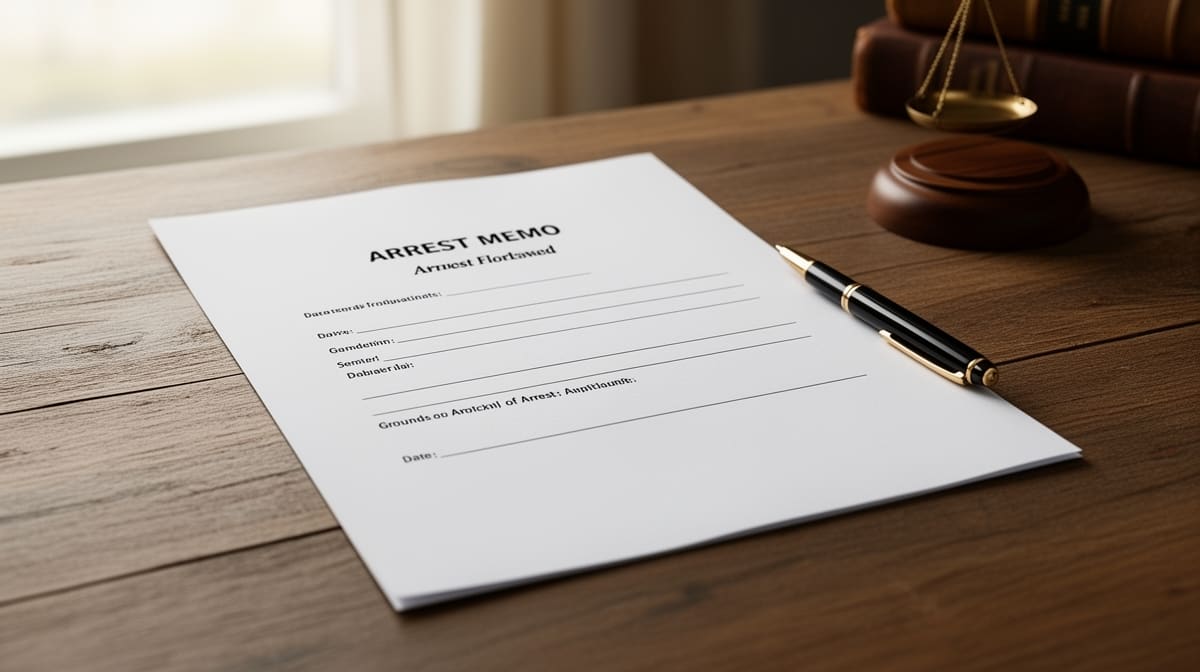
- The arrest memo allegedly contains no specific grounds justifying the arrest
- The Investigating Officer used an outdated proforma for the arrest memo
- The remand order dated 25.03.2026 was passed using a pre-printed, standardized form without any independent judicial reasoning
- No particulars of the alleged offence, evidence, or necessity for custody were recorded by the Magistrate
- The petitioners were not produced before the Magistrate within 24 hours of arrest as mandated under Section 57 CrPC
Procedural History
- 24.03.2026: Arrest of petitioners by police at P.S. Babrala, District Sambhal
- 25.03.2026: Remand order passed by Chief Judicial Magistrate, Sambhal, in Case Crime No. 0081 of 2025
- 27.03.2026: Writ petition filed before the Allahabad High Court under Article 226 of the Constitution
- 29.03.2026: Hearing conducted before a Division Bench
- 29.04.2026: Judgment delivered
The Parties' Positions
For the Petitioners
Sri Mohit Singh, learned counsel, contended that:
- The arrest memo failed to state any specific grounds for arrest, violating Section 50 CrPC
- The use of an obsolete proforma indicates routine, non-discretionary policing
- The remand order was mechanically copied from a printed template, devoid of judicial scrutiny
- The Magistrate did not record reasons for believing the custody was necessary under Section 167 CrPC
- The order violated the principles laid down in Umang Rastogi v. State of U.P. and Sangam Lal v. State of U.P.
For the Respondents
The Additional Government Advocate (AGA) did not dispute the factual assertions made by the petitioner. No counter-affidavit or justification for the arrest or remand was filed or argued.
Relief Sought
The petitioners sought:
- A writ of habeas corpus directing production of the petitioners and their immediate release
- Quashing of the remand order dated 25.03.2026
- Declaration that the arrest and detention were unconstitutional, illegal, and arbitrary
The Legal Issue
The central question was whether a remand order passed on a printed proforma without any judicial application of mind, and an arrest made without recording specific grounds, can survive constitutional scrutiny under Article 21 and statutory mandates under Sections 50 and 167 CrPC.
Arguments Presented
For the Petitioner
The petitioner relied on two key judgments of the Allahabad High Court:
- Umang Rastogi v. State of U.P. (W.P. No. 35 of 2026): Held that remand orders must reflect independent judicial consideration and cannot be mechanical.
- Sangam Lal v. State of U.P. (A.S. No. 3963 of 2022): Emphasized that arrest must be justified by specific facts and not based on generic allegations.
It was argued that the failure to record reasons for arrest under Section 50 CrPC and the absence of any reasoning in the remand order under Section 167 CrPC rendered both acts illegal and violative of the right to personal liberty.
For the Respondent
The Additional Government Advocate did not contest the petitioner’s submissions. No legal argument or evidentiary rebuttal was presented to justify the arrest or the remand order.
The Court's Analysis
The Court observed that the right to personal liberty under Article 21 is not merely procedural but substantive. The arrest and detention of a citizen must be grounded in lawful authority and subject to judicial oversight.
"The use of a printed proforma for remand, without any record of the Magistrate applying his mind to the necessity of custody, reduces judicial function to a rubber stamp. This is impermissible under the rule of law."
The Court noted that Section 50 CrPC mandates that every person arrested must be informed of the grounds of arrest. The absence of such grounds in the arrest memo rendered the arrest procedurally defective. Similarly, Section 167 CrPC requires the Magistrate to be satisfied that the investigation cannot be completed without custody and that the detention is necessary. The Magistrate’s failure to record any such satisfaction rendered the remand order a nullity.
The Court distinguished the present case from situations where remand is granted after detailed hearing and reasoning. Here, the record showed no such process. The reliance on Umang Rastogi and Sangam Lal was found to be directly applicable.
The Court further held that the State’s silence in the face of clear procedural violations cannot be construed as acquiescence. The burden lies on the State to justify deprivation of liberty, and it has failed to discharge that burden.
The Verdict
The writ petition is allowed. The remand order dated 25.03.2026 passed by the Chief Judicial Magistrate, Sambhal, in Case Crime No. 0081 of 2025 is hereby quashed. The arrest and detention of the petitioners are declared illegal. The petitioners are directed to be released forthwith by the Chief Judicial Magistrate, Sambhal. It is open to the respondents to initiate fresh proceedings against the petitioners in accordance with law.
What This Means For Similar Cases
Arrest Must Be Grounded in Specific Facts
- Practitioners must insist on production of arrest memos containing specific grounds under Section 50 CrPC
- Any arrest based on generic allegations without factual basis is vulnerable to habeas corpus challenge
- Police using outdated or template-based arrest memos risk invalidation of detention
Judicial Remand Cannot Be Mechanical
- Magistrates must record reasons for custody under Section 167 CrPC - mere ticking of boxes on a form is insufficient
- Habeas corpus petitions can succeed where remand orders show no judicial application of mind
- Courts will not tolerate rubber-stamping of police custody requests
State’s Silence Is Not a Defence
- When petitioners establish prima facie illegality, the burden shifts to the State to justify detention
- Failure to file a counter-affidavit or appear meaningfully in court will result in adverse inference
- Procedural lapses in arrest and remand are not curable by subsequent investigation