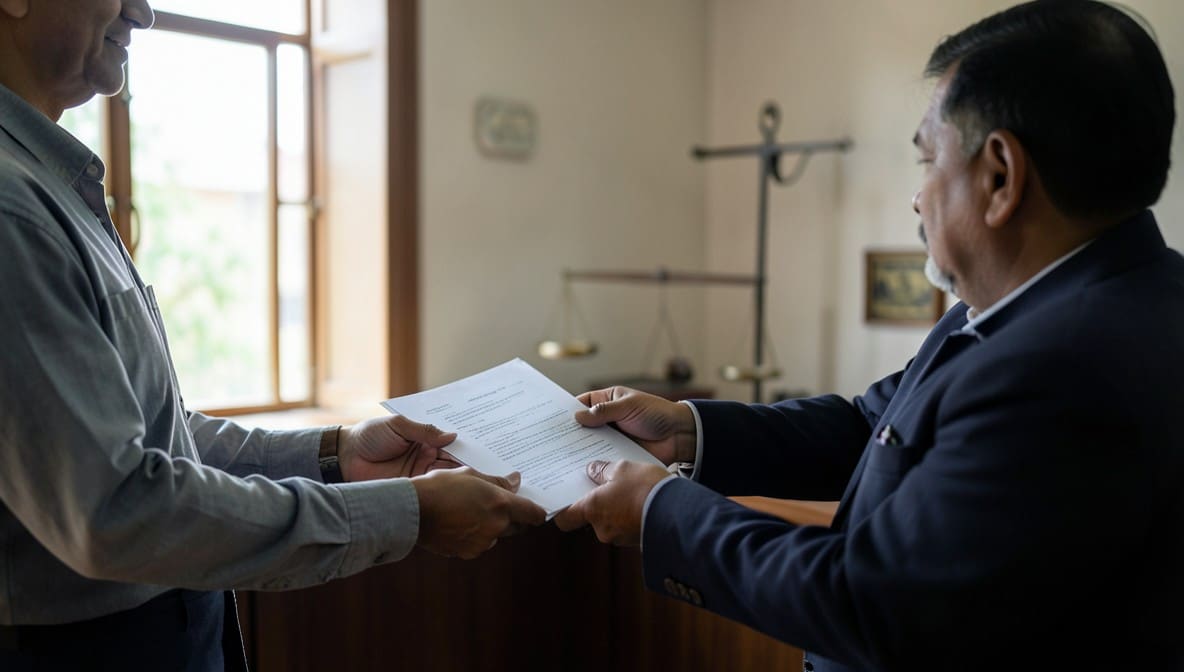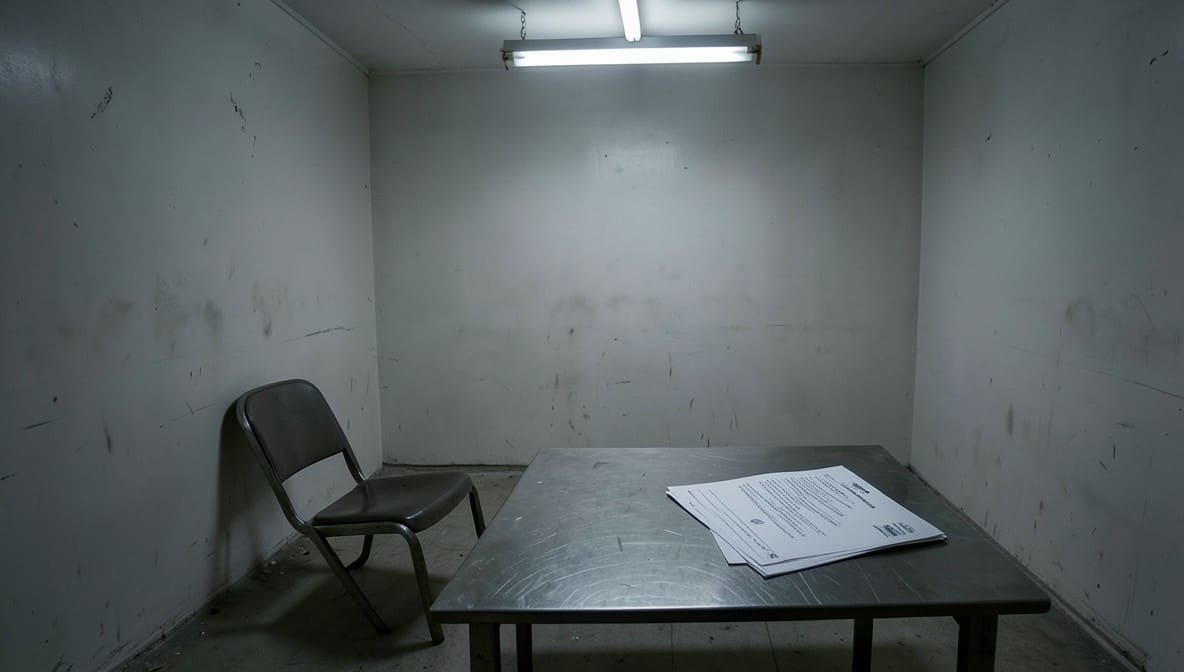
The Allahabad High Court has declared an arrest illegal and arbitrary for flagrant violations of Article 22 of the Constitution and the safeguards laid down in D.K. Basu v. State of West Bengal, ordering the immediate release of a petitioner detained without proper procedural compliance. This judgment reinforces that constitutional protections against unlawful detention are non-negotiable, even in serious non-bailable offences.
Background & Facts
The Dispute
The petitioner, Shantanu Bhartiya, was arrested on 25.04.2026 from his residence in Sadar Bazar, Anand Bagh, Police Station Cantt., Prayagraj, by unidentified individuals in civilian attire. The arrest occurred without any formal identification, no arrest memo was prepared at the time, and no information was provided to his family regarding his detention. The FIR under Section 326(g) of the Bharatiya Nyaya Sanhita, 2023 and Section 4 of the Explosive Substances Act, 1908 was registered at 19:55 PM on the same day - over six hours after the arrest. The petitioner’s mother attempted to file a missing person complaint at Police Station Cantt. on 25.04.2026, but it was not registered. An e-FIR was later filed by his elder brother under E-FIR No. 202600041610.
Key Facts
- The petitioner was arrested on 25.04.2026 at approximately 1:30 PM from his residence
- No police personnel in uniform were present during arrest
- No arrest memo was prepared at the time of arrest
- Family members were not informed of the arrest or its grounds
- FIR No. 0133 of 2026 was registered at 19:55 PM on 25.04.2026
- Arrest memo dated 27.04.2026 (later produced) falsely claimed arrest occurred at 11:30 AM on that date
- Column 12 and 13 of the arrest memo contained generic statutory language without specific grounds relating to the petitioner
- No independent local witnesses were present at the time of arrest
- The arresting officer was listed as the sole witness in the arrest memo
- No compliance with Section 37 of BNSS, 2023 or Rule 25 of UP BNSS Rules, 2024 regarding communication of arrest to a Designated Officer
- No column existed in the arrest memo for recording communication to a Designated Officer, as mandated by Circular No. 25/2025 dated 25.07.2025
- Grounds of arrest were communicated to the petitioner on a separate sheet, alleging involvement in providing a bomb to friends and causing damage to 9280 Restaurant
Procedural History
- 25.04.2026: Arrest of petitioner at 1:30 PM; no arrest memo prepared; family not informed
- 25.04.2026: FIR registered at 19:55 PM
- 27.04.2026: Arrest memo produced, falsely stating arrest occurred on that date at 11:30 AM
- 27.04.2026: Petitioner produced before Chief Judicial Magistrate, Prayagraj; remand order passed
- 27.04.2026: Bail application rejected by Magistrate without speaking order
- 08.05.2026: Bail application rejected by Sessions Court/FTC, Prayagraj without addressing 24-hour production violation
- 08.06.2026: Habeas Corpus Writ Petition No. 658 of 2026 filed before Allahabad High Court
Relief Sought
The petitioner sought:
- A writ of Habeas Corpus directing release from illegal custody
- Quashing of the remand order dated 27.04.2026
- A writ of Mandamus directing initiation of departmental inquiry against errant police officials
- Costs of the petition
The Legal Issue
The central question was whether an arrest conducted without compliance with Article 22 of the Constitution and the D.K. Basu guidelines - particularly failure to inform family, prepare an arrest memo at the time of arrest, produce the detainee within 24 hours, and record communication to a Designated Officer - renders the detention illegal and warranting immediate release, even if the underlying offence is serious and non-bailable.
Arguments Presented
For the Petitioner
Counsel argued that the arrest violated multiple statutory and constitutional mandates: (1) Article 22(1) and (2) for failure to inform the petitioner of his right to legal counsel and to produce him before a magistrate within 24 hours; (2) Section 36(a) and 36(b)(i) of BNSS, 2023 for absence of independent witnesses; (3) Section 37 and Rule 25 of UP BNSS Rules, 2024 for omission of the mandatory Designated Officer column in the arrest memo; and (4) Circular No. 25/2025 which explicitly requires such a column. Reliance was placed on D.K. Basu, Joginder Kumar v. State of U.P., and Arnesh Kumar v. State of Bihar to establish that procedural compliance is mandatory, not optional. It was submitted that a remand order cannot validate an illegal arrest, and that a writ of Habeas Corpus remains maintainable even after bail rejection, as affirmed in Hanumant Jagganath Nazirkar, Madhu Limaye, and Senthil Balaji.
For the Respondent
The Government Advocate contended that the arrest was lawful, that grounds of arrest were communicated in writing, and that the petitioner had been produced before the Magistrate. It was argued that since bail applications had been rejected by both the Magistrate and Sessions Court, the Habeas Corpus petition was not maintainable. The State did not dispute the procedural lapses but claimed they were technical and did not affect the legality of detention.
The Court's Analysis
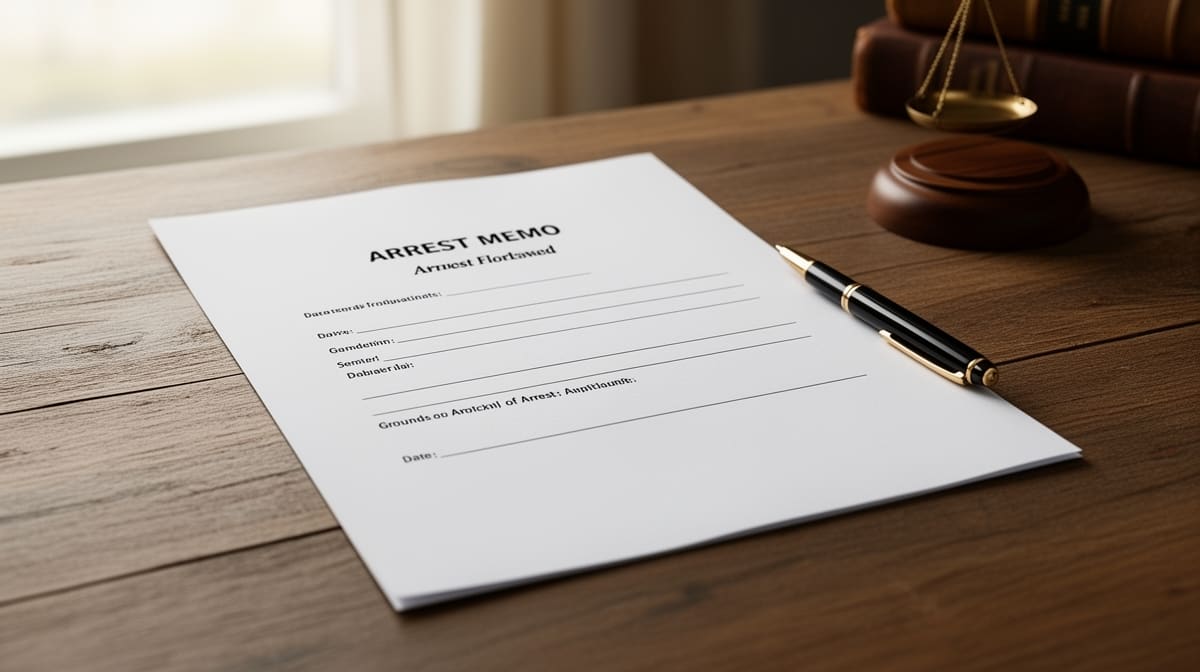
The Court undertook a rigorous examination of the arrest memo and the timeline of events. It noted that the arrest memo, though produced on 27.04.2026, claimed the arrest occurred on that date at 11:30 AM, directly contradicting the undisputed fact that the arrest occurred on 25.04.2026 at 1:30 PM. This discrepancy was not explained. The Court emphasized that the arrest memo, as a statutory document under BNSS, 2023, must reflect the actual time, place, and circumstances of arrest. The absence of independent witnesses, the arresting officer being the sole witness, and the failure to inform family members were held to be clear violations of D.K. Basu.
"There is no mention in the arrest memo of the petitioner that the petitioner was apprised of his right to consult and be defended by a legal practitioner of his choice nor it appears that any of his relatives were informed of his arrest."
The Court further held that the failure to produce the petitioner before a magistrate within 24 hours of arrest - whether due to delay or false documentation - constitutes a direct breach of Article 22(2). The remand order passed on 27.04.2026 was found to be a non-speaking order that mechanically accepted the flawed arrest memo without any independent scrutiny. The Court cited Madhu Limaye and Joginder Kumar to affirm that remand cannot cure an illegal arrest. The omission of the Designated Officer communication column, as mandated by Circular No. 25/2025, was held to be a statutory violation that cannot be overlooked.
The Court rejected the State’s argument that the seriousness of the offence justified procedural shortcuts. It held that constitutional safeguards are not suspended for grave offences. The Court observed that the right to life and personal liberty under Article 21 is foundational and cannot be diluted by the nature of the accusation.
The Verdict
The writ petition was allowed. The Court held that the arrest, detention, and remand of the petitioner were illegal, arbitrary, and in violation of Article 22 and D.K. Basu guidelines. The petitioner is directed to be released forthwith. The Court clarified that the respondents may initiate fresh proceedings against the petitioner strictly in accordance with law, if warranted. Costs of the petition are awarded to the petitioner.
What This Means For Similar Cases
Arrest Must Be Documented at the Time of Detention
- Practitioners must insist on immediate production of a properly completed arrest memo signed at the time of arrest
- Any delay or retrospective preparation of the memo renders the arrest illegal
- Failure to record the exact time and place of arrest invalidates the entire chain of custody
Designated Officer Notification Is Mandatory
- The absence of a column for Designated Officer communication in the arrest memo is a fatal defect under UP BNSS Rules, 2024 and Circular No. 25/2025
- Courts will not accept post-hoc affidavits to cure this omission
- Defence counsel must specifically challenge arrest memos lacking this clause
Habeas Corpus Survives Bail Rejection
-
Rejection of bail by Magistrate or Sessions Court does not bar a Habeas Corpus petition
-
The remedy remains available where there is a prima facie violation of Article 22
-
Courts will examine the legality of arrest independently of bail outcomes
-
Always request the arrest memo and compare its date/time with FIR and witness statements
-
File Habeas Corpus immediately if 24-hour production rule is violated
-
Cite D.K. Basu and Arnesh Kumar to establish that procedural compliance is non-negotiable