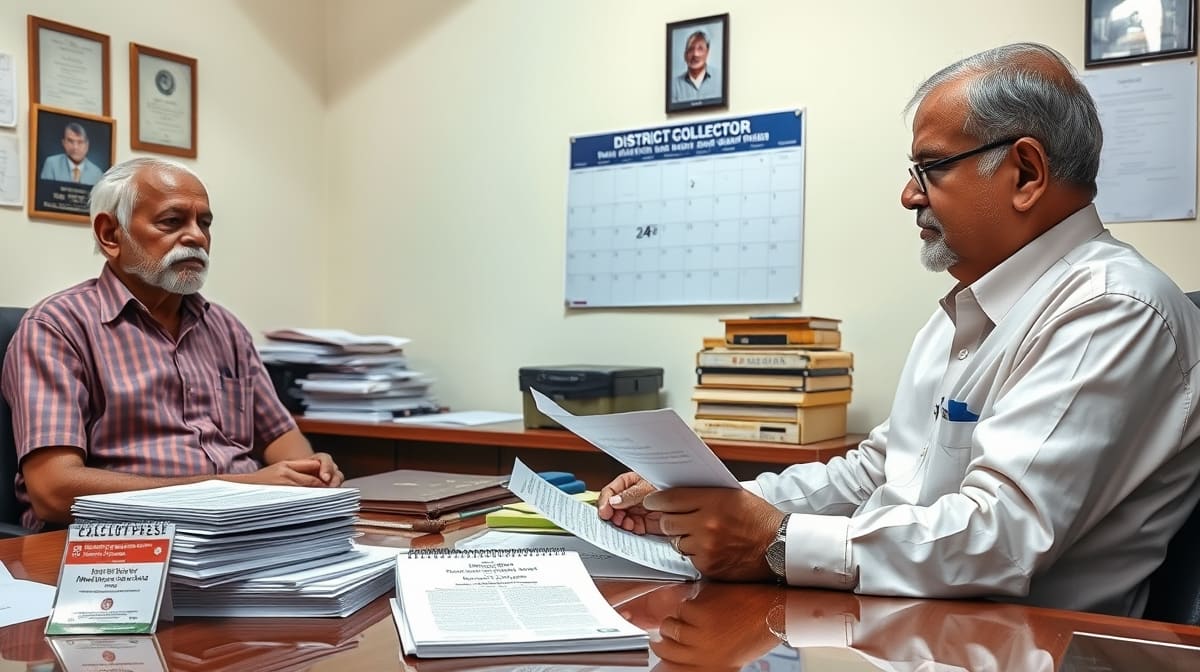
The Andhra Pradesh High Court has reaffirmed that administrative inaction on maintenance applications filed by senior citizens under the Maintenance and Welfare of Parents and Senior Citizens Act, 2007 constitutes a violation of fundamental rights. This judgment establishes that delay in adjudication is not mere procedural lapse but a substantive denial of justice to vulnerable elderly petitioners.
Background & Facts
The Dispute
The petitioner, a 60-year-old woman, is the absolute owner of a residential property in Samisragudem Village, acquired through an unregistered will from her father. In 2019, she executed a settlement deed in favor of her daughter, the fourth respondent, transferring possession of the property. Subsequently, the daughter allegedly failed to provide care, dispossessed the petitioner from the house, and left her residing in temple premises.
Procedural History
- 30.05.2019: Petitioner executed settlement deed in favor of her daughter
- 02.02.2026: Petitioner filed application before the Revenue Divisional Officer (third respondent) seeking cancellation of the settlement deed under the Maintenance and Welfare of Parents and Senior Citizens Act, 2007
- February - March 2026: Repeated requests made for disposal of application; no action taken
- 06.03.2026: Writ petition filed under Article 226 alleging violation of Articles 14, 21, and 300A
Relief Sought
The petitioner sought a writ of mandamus directing the third respondent to dispose of the pending application within a reasonable time, and an interim injunction restraining the fourth respondent from alienating the subject property.
The Legal Issue
The central question was whether the prolonged inaction by a statutory authority in disposing of a maintenance application under the Maintenance and Welfare of Parents and Senior Citizens Act, 2007 constitutes a violation of natural justice and the right to life under Article 21 of the Constitution.
Arguments Presented
For the Petitioner
Learned counsel argued that the Act mandates expeditious disposal of maintenance applications to protect the dignity and survival of senior citizens. The failure to act for over a month after filing, coupled with imminent threat of property alienation, amounted to arbitrariness under Article 14 and deprivation of livelihood under Article 21. Reliance was placed on Smt. Sushila Devi v. State of Haryana and Rajesh Kumar v. State of U.P., where courts held that delay in maintenance proceedings undermines the very purpose of the statute.
For the Respondent
The Government Pleader conceded the delay but submitted that the third respondent would dispose of the application shortly. No substantive legal defense was offered against the allegations of violation of natural justice or constitutional rights.
The Court's Analysis
The Court examined the legislative intent behind the Maintenance and Welfare of Parents and Senior Citizens Act, 2007, noting that Section 5 requires applications to be disposed of within 90 days, with provision for extension only on recordable reasons. The Court emphasized that the Act is a social welfare statute designed to prevent abandonment and neglect of the elderly.
"The State cannot remain a silent spectator while a senior citizen, deprived of shelter and sustenance, is left to languish in temple premises without any remedy in sight."
The Court held that the third respondent’s inaction was not merely administrative negligence but a failure to discharge a statutory and constitutional duty. The right to life under Article 21 includes the right to live with dignity, which encompasses access to timely maintenance and protection from dispossession. The Court further observed that the principle of natural justice, particularly audi alteram partem, was violated by denying the petitioner an opportunity for timely adjudication.
The Court rejected the notion that delay could be excused as routine bureaucratic inefficiency, stating that such conduct erodes public trust in statutory mechanisms meant to protect the most vulnerable.
The Verdict
The petitioner succeeded. The Court held that undue delay in disposing of maintenance applications under the 2007 Act violates Article 21 and the principles of natural justice. The third respondent was directed to dispose of the application within two months, after affording a hearing to all parties.
What This Means For Similar Cases
Timely Disposal Is a Constitutional Obligation
- Practitioners must now treat delays beyond 60 days in Maintenance and Welfare of Parents and Senior Citizens Act proceedings as actionable violations
- Writ petitions under Article 226 are maintainable even before the statutory 90-day period expires if there is evidence of bad faith or imminent harm
- Courts may issue interim directions to prevent alienation of property pending adjudication
Property Alienation During Pendency Is Presumptively Invalid
- Any attempt by a respondent to sell, mortgage, or transfer property subject to a pending maintenance application raises a strong presumption of mala fide
- Petitioners may seek immediate stay via interim application under Section 151 CPC, which courts must consider expeditiously
- Evidence of dispossession (e.g., living in temple premises) strengthens the claim for urgent relief
Statutory Authorities Are Now Under Judicial Scrutiny
- Revenue Divisional Officers and Tribunals under the 2007 Act are now subject to judicial review for inaction
- Failure to record reasons for delay may lead to contempt proceedings
- State governments must institutionalize monitoring mechanisms to prevent backlog