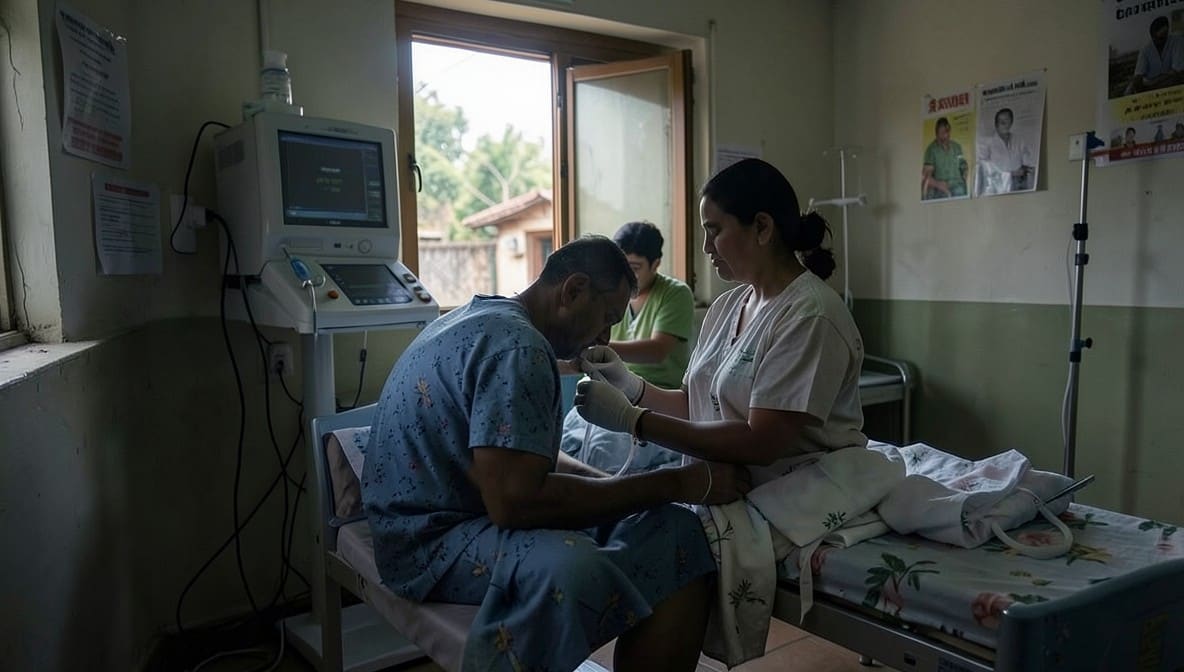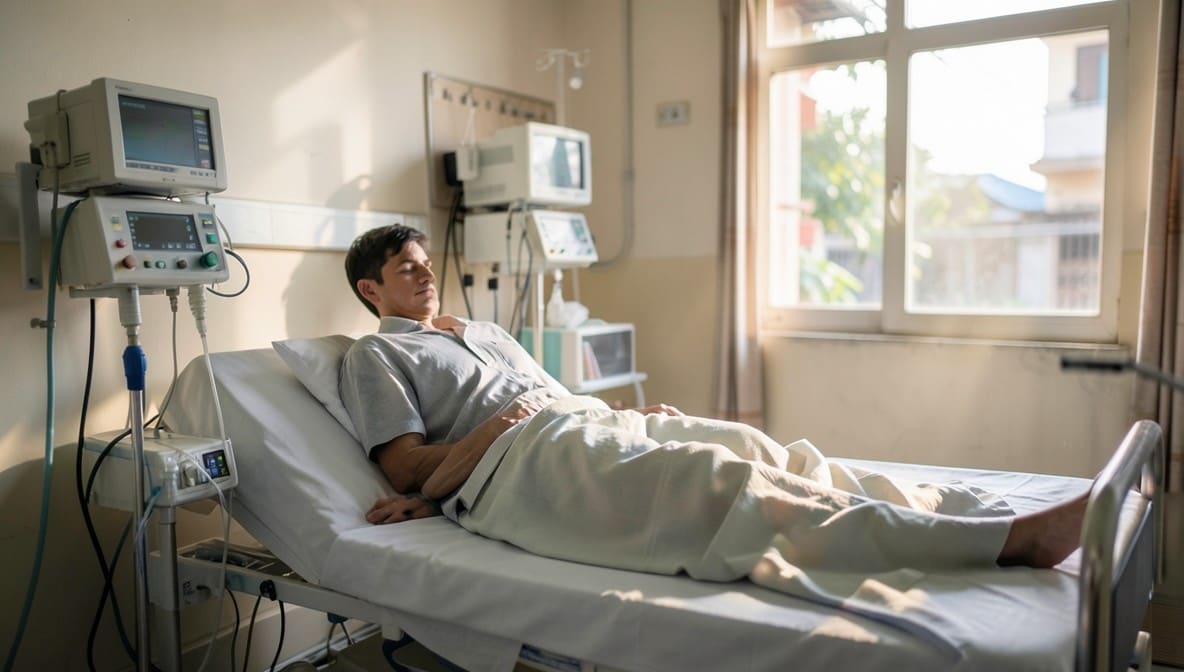
The Bombay High Court has recognized that terminal illness, specifically stage IV cancer, constitutes a compelling ground for temporary medical bail, even in pending criminal proceedings. The order establishes a clear, humane standard for judicial discretion in bail matters involving life-threatening conditions, without prejudicing the prosecution’s case.
Background & Facts
The Dispute
The applicant, Prakash Shirish Lad, is accused in a criminal case pending before a trial court in Maharashtra. He is currently in judicial custody and has applied for temporary bail on medical grounds, citing a diagnosis of stage IV cancer. The State does not dispute the medical condition but opposes bail on general grounds of gravity of offence and potential for flight.
Key Facts
- The applicant is suffering from stage IV cancer, a terminal and advanced form of the disease.
- He is currently admitted at Tata Memorial Hospital, Parel, Mumbai, for active treatment.
- No specific charges or nature of the alleged offence are detailed in the judgment, but the case is being prosecuted by the State.
- The applicant has not been acquitted or discharged; the trial is ongoing.
- The applicant’s counsel did not provide a definitive prognosis or treatment timeline, acknowledging the unpredictability of the condition.
Procedural History
- The applicant was arrested and is currently in custody.
- On 08.05.2026, he filed Criminal Bail Application No. 729 of 2026 before the Bombay High Court seeking temporary medical bail.
- The State, through the Additional Public Prosecutor, confirmed the medical condition but opposed the grant of bail.
- The Court sought clarification on the expected duration of treatment, which counsel could not specify.
Relief Sought
The applicant sought temporary bail for an initial period of one and a half months (1.5 months) to undergo critical medical treatment at Tata Memorial Hospital, with a commitment to seek further orders based on medical progress.
The Legal Issue
The central question was whether a person suffering from stage IV cancer, admitted to a specialized hospital for palliative or curative treatment, is entitled to temporary medical bail pending trial, and if so, under what conditions.
Arguments Presented
For the Applicant
Learned counsel argued that stage IV cancer is a life-threatening condition requiring continuous, specialized medical care unavailable in custody. He emphasized the humanitarian principle underlying bail jurisprudence and cited the Court’s duty to balance personal liberty with public interest. He requested an initial 1.5-month bail period, acknowledging the uncertainty of prognosis and the need for future review.
For the Respondent
The Additional Public Prosecutor did not contest the medical facts but opposed bail on the grounds that the applicant remains an accused in a criminal case and that granting bail, even temporarily, could set a precedent undermining the integrity of the investigation and trial process. No specific statutory or precedential bar was cited.
The Court's Analysis
The Court acknowledged the uncontroverted medical evidence and the severity of stage IV cancer. It emphasized that the right to life under Article 21 of the Constitution includes the right to timely and adequate medical care. The Court noted that incarceration in the absence of medical infrastructure for terminal illness amounts to cruel and unusual treatment.
"This Court finds no justification not to enlarge the Applicant on temporary medical bail initially, for a period of 1 and ½ month."
The Court declined to prejudge the merits of the case or the likelihood of conviction, stating that bail is not a verdict but a procedural safeguard. It recognized that the applicant’s medical condition is not a factor to be weighed against the seriousness of the offence, but rather a standalone ground for temporary release under Section 437 and Section 439 CrPC, read with constitutional principles.
The Court further held that the grant of temporary bail does not imply acquiescence to the applicant’s innocence, nor does it diminish the State’s right to pursue prosecution. It imposed strict conditions to mitigate risk of flight and ensure accountability.
The Verdict
The applicant succeeded. The Court granted temporary medical bail for an initial period of one and a half months, up to 22nd June 2026. The applicant must furnish a P.R. Bond of Rs. 15,000 with one or two sureties in the like amount, approved by the Trial Court. He is directed to inform the Investigating Officer of his health status and place of residence during the bail period. No automatic extension is permitted; any further relief requires a fresh application and hearing. The prosecution must obtain and submit a medical report from Tata Memorial Hospital before the next hearing on 22nd June 2026.
What This Means For Similar Cases
Medical Emergency Overrides Custody Presumption
- Practitioners may now invoke Article 21 and Section 439 CrPC to seek temporary bail for any accused suffering from terminal, life-threatening illness, regardless of the nature of the offence.
- The burden shifts to the State to demonstrate why medical necessity should be overridden - mere allegations of seriousness are insufficient.
Conditions Must Be Tailored, Not Standardized
- Bail conditions must be proportionate: financial bonds, reporting obligations, and medical verification are acceptable; blanket restrictions (e.g., house arrest) are not mandated unless justified.
- Prosecution must actively monitor medical status and submit official reports - passive opposition is not enough to deny relief.
No Precedent for Automatic Extension
- Temporary medical bail is inherently provisional. Courts will not presume continuation; applicants must file fresh applications with updated medical records.
- This creates a procedural rhythm: initial grant → medical review → renewed application → final decision - ensuring both compassion and accountability.