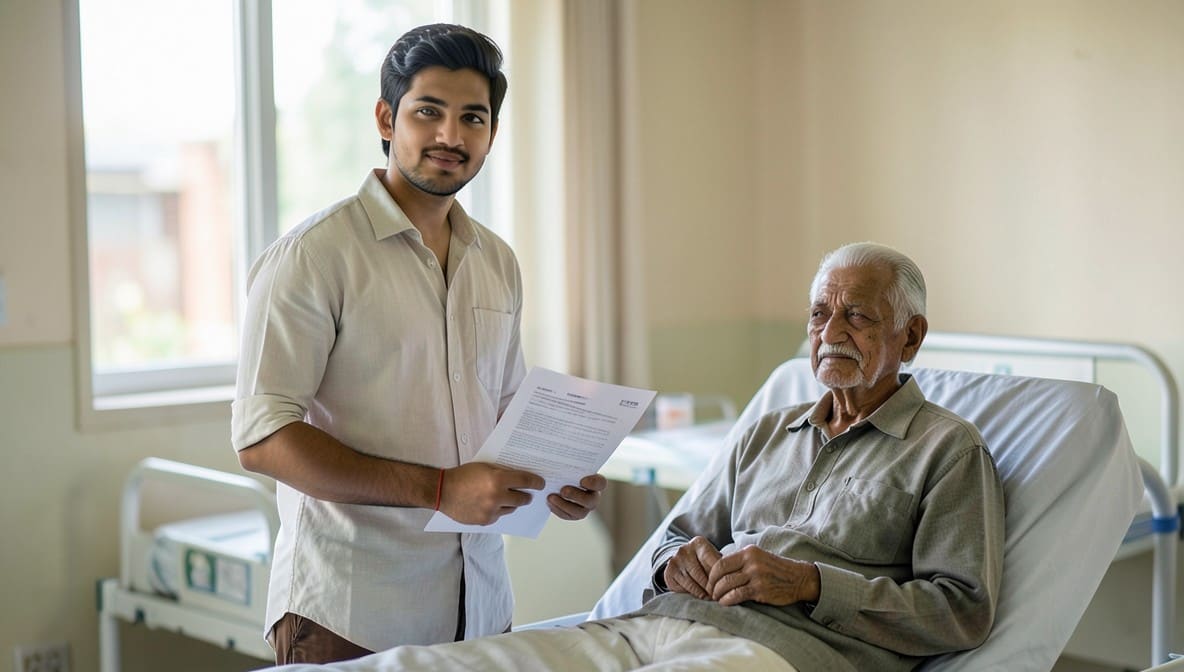
The Rajasthan High Court has recognized that humanitarian grounds can justify interim bail even in serious drug offenses, granting a 45-day release to an accused under the NDPS Act to enable care for his critically ill wife. This decision reaffirms that procedural justice must accommodate compelling personal circumstances without prejudging the merits of the case.
Background & Facts
The Dispute
The petitioner, Shrawan Kumar, son of Manohar Lal, aged approximately 30 years, is currently lodged in District Jail, Jaisalmer, in connection with FIR No. 171/2025 registered at Police Station Lohawat, District Phalodi. He is accused of offenses under Sections 8, 18, and 22 of the Narcotic Drugs and Psychotropic Substances Act, 1985. The petitioner has been arrested and is in judicial custody pending trial.
Key Facts
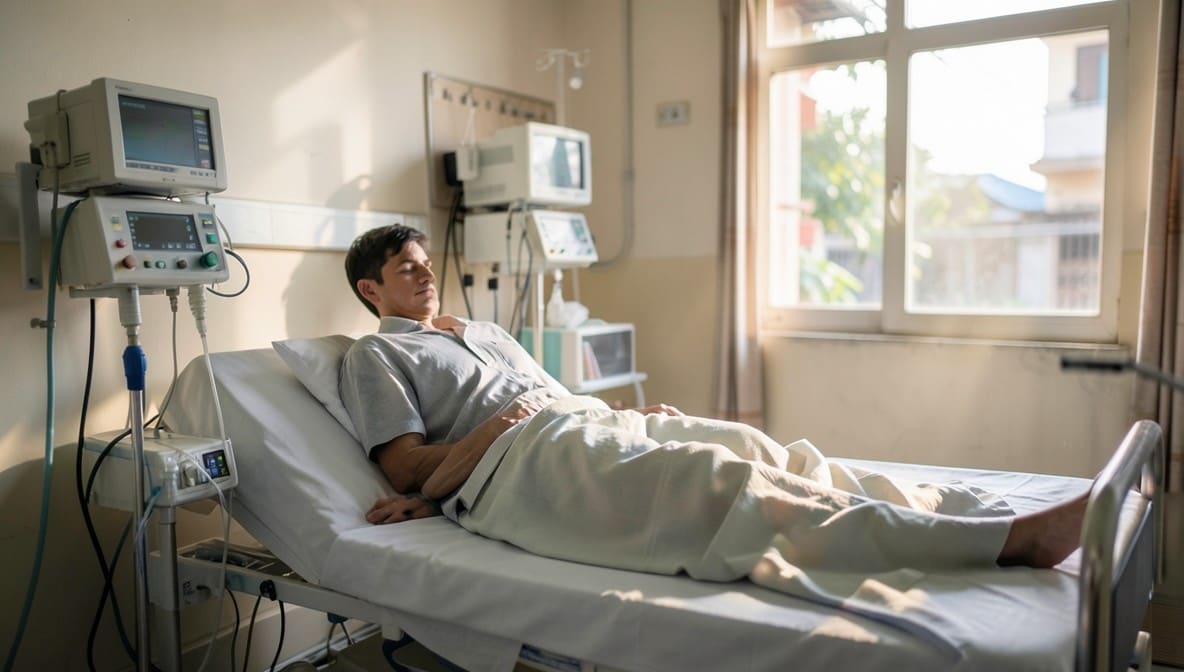
- The petitioner’s wife is suffering from a severe cardiac disorder requiring urgent surgical intervention.
- Medical reports from Mathuradas Mathur Hospital, Jodhpur, dated 20.05.2026, confirm the diagnosis and recommend admission for surgery on 25.05.2026.
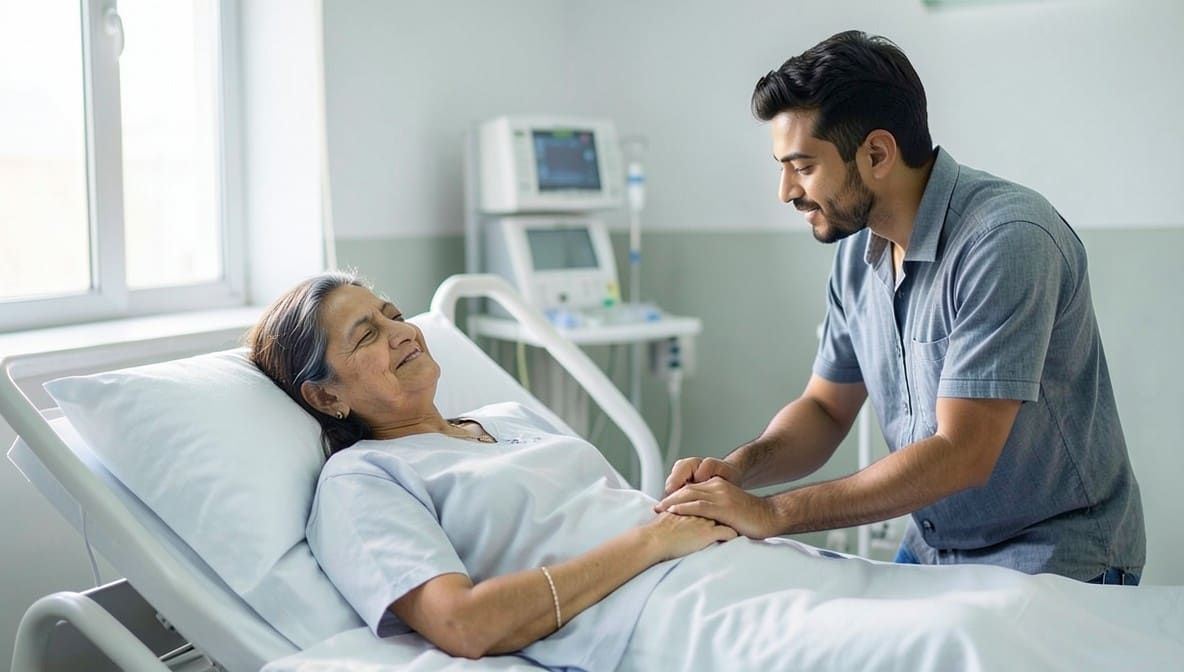
- The petitioner is the sole male caregiver in the family and has no other relative available to oversee his wife’s medical treatment.
- The Public Prosecutor, upon direction by the Court on 09.05.2026, obtained and submitted the medical documents, which were not disputed.
- No allegations of violence, prior criminal record, or risk of evidence tampering were raised by the prosecution.
Procedural History
- 15.04.2025: FIR No. 171/2025 registered at Police Station Lohawat, District Phalodi.
- 05.05.2025: Petitioner arrested in connection with the FIR.
- 21.05.2026: Interim bail application filed under Section 483 of BNSS (equivalent to Section 439 Cr.P.C.) before the High Court of Judicature for Rajasthan at Jodhpur.
- 09.05.2026: Court directed the Public Prosecutor to procure medical records of the petitioner’s wife.
- 20.05.2026: Medical report submitted by S.H.O., Lohawat, along with hospital records.
- 21.05.2026: Hearing held before Justice Mukesh Rajpurohit.
Relief Sought
The petitioner sought interim bail for a period of three months to enable him to accompany and care for his wife during her scheduled cardiac surgery and post-operative recovery.
The Legal Issue
The central question was whether an accused person charged under the stringent provisions of the NDPS Act may be granted interim bail on humanitarian grounds arising from a critical family medical emergency, even in the absence of a challenge to the prosecution’s case on merits.
Arguments Presented
For the Petitioner
Learned counsel for the petitioner submitted that the petitioner’s wife is suffering from a life-threatening cardiac condition requiring immediate surgical treatment on 25.05.2026. He emphasized that the petitioner is the only adult male family member capable of providing care during hospitalization and recovery. Reliance was placed on judicial precedents recognizing humanitarian considerations in bail matters, including State of Rajasthan v. Ramswaroop and Kalyan Chandra Sarkar v. Rajesh Ranjan, where interim relief was granted for similar family emergencies. It was argued that the gravity of the offense does not override the fundamental right to family care under Article 21 of the Constitution.
For the Respondent
The Public Prosecutor opposed the bail prayer on the ground that offenses under the NDPS Act are serious and attract stringent bail conditions. However, he did not dispute the authenticity or content of the medical reports. He conceded that the wife’s condition was genuine but maintained that interim bail should not be granted in drug-related cases unless exceptional circumstances are proven beyond doubt.
The Court's Analysis
The Court explicitly declined to evaluate the merits of the prosecution’s case, stating that the issue before it was purely humanitarian. It noted that the medical evidence was unchallenged and corroborated by official hospital records. The Court observed that the petitioner’s role as the sole caregiver in a family facing a life-threatening medical emergency constitutes a compelling circumstance warranting temporary relief.
"The Court is not required to weigh the strength of the prosecution’s case at this stage. The sole consideration is whether the petitioner’s presence is indispensable for the medical care of his wife, and the record clearly establishes that it is."
The Court distinguished this case from routine bail applications by emphasizing the immediacy and irreversibility of the medical need. It held that denying bail under these circumstances would amount to a violation of the petitioner’s right to dignity and family life under Article 21. The Court further noted that the conditions imposed - deposit of a substantial sum and personal bond with sureties - would ensure the petitioner’s return to custody.
The Verdict
The petitioner succeeded. The Court granted interim bail for a period of 45 days, subject to the following conditions: (1) deposit of Rs. 5,00,000 before the trial court; (2) execution of a personal bond of Rs. 2,00,000 with two solvent sureties, one of whom must be a close relative, each in the amount of Rs. 1,00,000; (3) surrender to jail on completion of 45 days; (4) refund of the Rs. 5,00,000 deposit upon surrender; and (5) forfeiture of the deposit if the petitioner fails to return. The Public Prosecutor is directed to file a compliance report on the next hearing date, 09.07.2026.
What This Means For Similar Cases
Humanitarian Grounds Override Strict Statutory Presumptions
- Practitioners may now invoke Article 21 to seek interim bail in NDPS cases where a close family member faces imminent, life-threatening medical treatment.
- The burden shifts to the prosecution to demonstrate a real risk of flight or tampering; mere seriousness of the offense is insufficient to deny relief.
Conditions Must Be Proportionate and Practical
- Courts are likely to impose financial conditions (deposit + bond) to ensure compliance, but these must be reasonable and not punitive.
- The requirement of a close relative as one surety is now a recognized standard in such humanitarian bail applications.
Medical Documentation Is Key
- Unchallenged medical reports from recognized hospitals are sufficient to establish the necessity for interim bail.
- Applications must include specific dates of treatment, doctor’s recommendations, and proof of caregiver dependency.
Timing Is Critical
- Applications must be filed promptly upon emergence of the medical emergency.
- Delay in filing may be viewed as an attempt to manipulate the process, even if the medical condition is genuine.
No Prejudgment of Merits
- Courts will not assess the strength of the prosecution’s case at the interim bail stage.
- The focus remains exclusively on the humanitarian need and the likelihood of compliance with bail conditions.