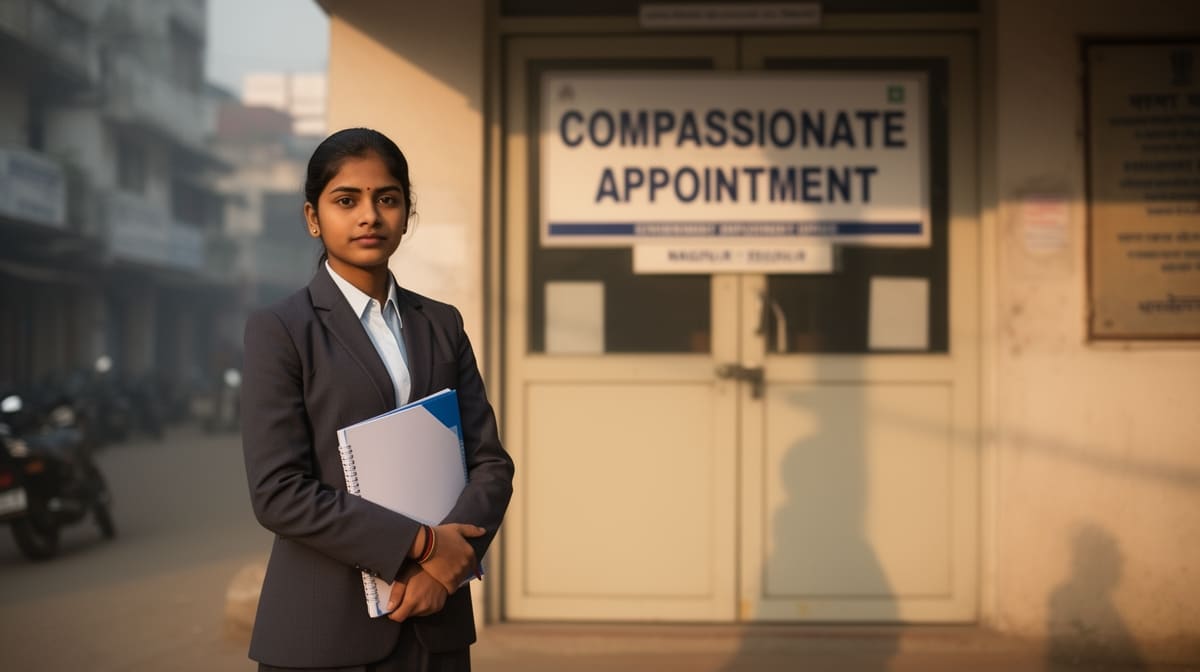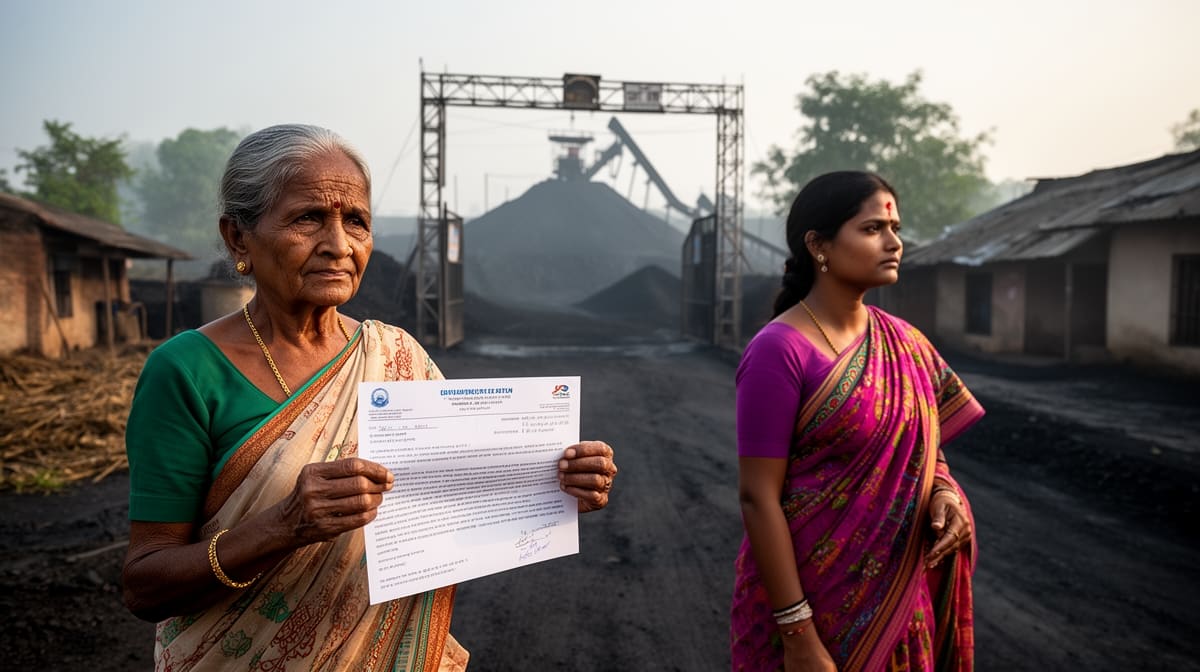
The Chhattisgarh High Court has clarified that eligibility for compassionate appointment cannot be denied solely on the ground of marriage, where a revised policy explicitly extends benefits to married daughters. The judgment underscores that procedural cutoffs must yield to substantive equity when the policy itself contemplates reconsideration.
Background & Facts
The Dispute
The petitioner, Smt. Prem Kumari Bharti, sought compassionate appointment following the death in service of her father, Late Budra Ram Bharti, on 04.02.2009. At the time of his death, the then-existing policy excluded married daughters from eligibility. The petitioner’s initial application was rejected on this basis.
Procedural History
The case evolved through administrative and judicial channels:
- 2009: Father died in service; petitioner applied for compassionate appointment, rejected due to marital status
- 2015: Smt. Sarojani Bhoi v. State of Chhattisgarh was decided by the same High Court, holding that married daughters are entitled to compassionate appointment
- 2016: Revised policy issued on 22.03.2016, incorporating the Bhoi judgment and granting a one-time opportunity to apply for reconsideration until 30.06.2016
- 2019: Petitioner filed application on 03.07.2019 - three years after the deadline
- 2019: Application rejected solely on grounds of delay and marital status
Relief Sought
The petitioner sought quashing of the rejection order and direction for grant of compassionate appointment, arguing that the revised policy rendered the prior exclusion obsolete and that delay should be excused in light of substantive rights.
The Legal Issue
The central question was whether the rejection of a compassionate appointment application solely on the ground of delay beyond the 30.06.2016 cutoff, without examining the reason for delay or the substantive entitlement under the revised policy, violates the principles of reasonable classification and substantive equality under Article 14 of the Constitution.
Arguments Presented
For the Petitioner
Learned counsel relied on Smt. Sarojani Bhoi v. State of Chhattisgarh to argue that the revised policy of 22.03.2016 was a corrective measure to eliminate gender-based discrimination. He contended that the cutoff date was procedural, not substantive, and that the petitioner’s delay - though unexplained - did not extinguish her right under the new policy. He further cited State of U.P. v. Krishna Kumar to emphasize that administrative convenience cannot override constitutional rights.
For the Respondent
The State counsel argued that the revised policy was clear: the one-time window closed on 30.06.2016, and applications filed thereafter were ineligible. They relied on Union of India v. Rameshwar Prasad to assert that policy deadlines are binding and that allowing exceptions would open floodgates. They also emphasized that the petitioner had lived for 16 years without financial support from the state, implying acquiescence.
The Court's Analysis
The Court examined the nature of the 2016 policy revision and its relationship to the Bhoi judgment. It noted that the policy was not merely procedural but a recognition of constitutional morality in eliminating gender-based discrimination in public employment benefits.
"The policy of 22.03.2016 was not a mere administrative convenience but a corrective measure to align state practice with the constitutional mandate of equality. To treat the cutoff date as an absolute bar without considering the substantive right conferred is to defeat the very purpose of the revision."
The Court distinguished between procedural deadlines and substantive entitlements. While acknowledging the petitioner’s delay, it held that the State’s refusal to consider the application at all - without inquiry into the cause of delay or the petitioner’s circumstances - amounted to arbitrary application of policy. The Court emphasized that Article 14 prohibits mechanistic rejection of claims that fall within the scope of a constitutionally sound policy.
The Court further rejected the argument that 16 years of non-claiming implied waiver, noting that lack of awareness or financial hardship may reasonably explain delay, especially in remote areas like Bastar.
The Verdict
The petitioner succeeded. The Court held that rejection of a compassionate appointment application solely on the ground of delay beyond a policy cutoff, without examining the reason for delay or the substantive entitlement under a revised policy, is arbitrary and violative of Article 14. The order dated 05.12.2019 was set aside, and the matter was remanded to the competent authority to consider the application on merits, including the cause of delay.
What This Means For Similar Cases
Compassionate Appointment Cannot Be Denied on Marriage Alone
- Practitioners must now argue that any policy excluding married daughters is void under Article 15(1) and Article 14, post-Bhoi and this judgment
- Applications from married daughters must be evaluated on substantive eligibility, not marital status
Delay Must Be Examined, Not Automatically Dismissed
- Administrative cutoffs are not absolute bars; authorities must record reasons for rejecting delayed applications
- Petitioners should be given opportunity to explain delay - especially in rural, illiterate, or marginalized communities
- Bullet points for practice:
- File a writ petition if delay is unexplained but substantive right exists
- Cite Smt. Sarojani Bhoi and this judgment to challenge mechanistic rejections
- Demand a reasoned order, not a boilerplate rejection
Policy Revisions Override Prior Discriminatory Practices
- Revised policies that correct discriminatory norms cannot be undermined by rigid procedural timelines
- Authorities must proactively notify beneficiaries of policy changes, especially in remote regions
- This judgment reinforces that administrative policy must evolve with constitutional jurisprudence