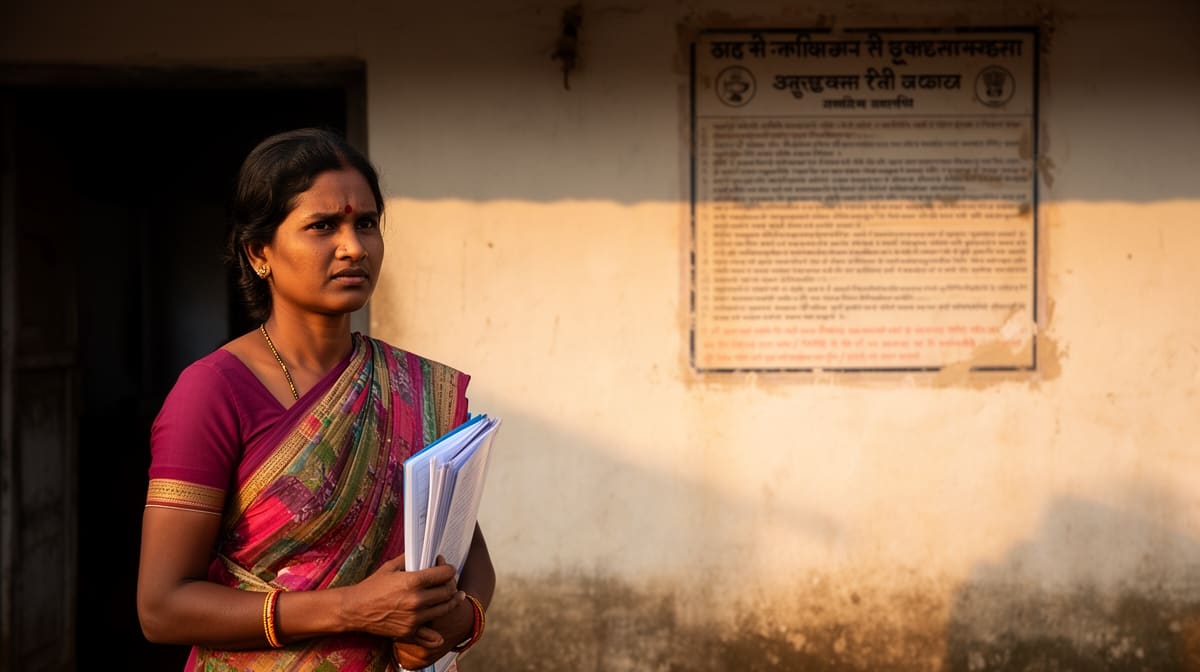
The Allahabad High Court has reaffirmed that married daughters are entitled to compassionate appointment upon the death of a parent in service, holding that any rule excluding them is unconstitutional and violative of Articles 14 and 15 of the Constitution. This judgment underscores the binding nature of High Court rulings on all authorities, reinforcing judicial discipline and constitutional equality in service matters.
Background & Facts
The Dispute
The petitioner, Smt. Beena, sought compassionate appointment following the death of her mother, Smt. Krishna Devi, who was employed as a peon in the office of respondent no. 5. The petitioner’s application for compassionate appointment was rejected on 19.12.2016 solely on the ground that she was a married daughter, citing the absence of any rule or government order permitting such appointments for married daughters.
Key Facts
- Smt. Krishna Devi, the petitioner’s mother, was appointed as a peon and died in service on 16.10.2016
- The petitioner applied for compassionate appointment, which was rejected on 19.12.2016
- The rejection order stated that no rule or government order permitted compassionate appointment for married daughters
- The petitioner relied on the judgment in Km. Ruby Mausoof v. State of U.P. and 4 Ors. (Writ-A No. 21437 of 2016), dated 11.05.2016, which held that married daughters are entitled to compassionate appointment despite contrary rules
Procedural History
- 16.10.2016: Death of Smt. Krishna Devi in service
- 19.12.2016: Rejection of petitioner’s application for compassionate appointment
- 2017: Filing of the instant writ petition (Writ-A No. 52265 of 2017) before the Allahabad High Court
- 11.05.2016: Judgment in Km. Ruby Mausoof relied upon by the petitioner
- 04.12.2015: Judgment in Smt. Vimla Srivastava v. State of U.P. and another (2016(1) ADJ 21 (DB)), which struck down the word "unmarried" from Rule 2(c)(iii) of the U.P. Recruitment of Dependents of Government Servants Dying-In-Harness Rules, 1974 as unconstitutional
Relief Sought
The petitioner sought:
- Quashing of the order dated 19.12.2016 rejecting her application for compassionate appointment
- A direction to the respondents to consider her case afresh in accordance with the law laid down in Smt. Vimla Srivastava
- Compassionate appointment as a dependent of her deceased mother
The Legal Issue
The central question was whether Rule 2(c)(iii) of the U.P. Recruitment of Dependents of Government Servants Dying-In-Harness Rules, 1974, which excluded married daughters from the definition of "family" for compassionate appointment, was constitutionally valid under Articles 14 and 15 of the Constitution.
Arguments Presented
For the Petitioner
- Relied on the judgment in Km. Ruby Mausoof v. State of U.P. and 4 Ors., which held that married daughters are entitled to compassionate appointment
- Cited Smt. Vimla Srivastava v. State of U.P. and another, wherein the Division Bench struck down the word "unmarried" from Rule 2(c)(iii) as unconstitutional and violative of Articles 14 and 15
- Argued that the impugned order was contrary to the law laid down by the High Court, which is binding on all authorities under Article 141 of the Constitution
For the Respondent
- Contended that there was no express rule or government order permitting compassionate appointment for married daughters
- Relied on the Full Bench judgment in Km. Shehnaj Begum v. State of U.P. and others (2013 Law Suit (All) 754), which held that the definition of "family" under Rule 2(c) was exhaustive and did not include married daughters
- Argued that the judgment in Smt. Vimla Srivastava did not consider the Full Bench judgment and was therefore not binding
The Court's Analysis
The Court examined the constitutional validity of Rule 2(c)(iii) and the binding nature of its judgments on all authorities. Key observations included:
-
Constitutional Validity of Rule 2(c)(iii):
- The Court noted that the Division Bench in Smt. Vimla Srivastava had struck down the word "unmarried" from Rule 2(c)(iii) as unconstitutional, holding that its exclusion of married daughters was violative of Articles 14 and 15 of the Constitution
- The Court emphasized that the judgment in Smt. Vimla Srivastava was binding on all authorities, including those not party to the case, under the principle of judicial discipline
-
Binding Nature of High Court Judgments:
- The Court relied on Dr. Rohit Gupta v. Principal, S.N. Medical College, Agra and others (1995 1 UPLBEC 365), wherein it was held that judgments of the High Court are binding on all authorities automatically, and non-compliance would invite contempt proceedings
- The Court observed that authorities cannot take the stand that they will comply with judgments only upon receiving instructions from the State Government
"The judgments of this Court are binding on all authorities automatically and it is not that they become finding only when approved by the State Govt. It is surprising that the Principal of a Medical College has taken a wholly illegal and untenable stand... We were inclined to issue contempt notice but we refrained ourselves from doing so as we feel that he has issued the letter which is annexure-7 in ignorance of the legal position but we will grant not further indulgence to him in future."
- Judicial Discipline and Precedent:
- The Court clarified that the judgment in Smt. Vimla Srivastava had not been challenged before the Supreme Court and was holding the field
- It directed that the petitioner’s claim should not be rejected solely on the ground that she is a married daughter, though dependency and other relevant factors should be considered
The Verdict
The Court allowed the writ petition and quashed the order dated 19.12.2016 rejecting the petitioner’s application for compassionate appointment. The respondents were directed to:
- Consider the petitioner’s case afresh in accordance with the law laid down in Smt. Vimla Srivastava
- Ignore any provision debarring married daughters from claiming compassionate appointment
- Take a decision within three months from the date of the judgment after giving the petitioner a due opportunity of hearing and supplying relevant documents
What This Means For Similar Cases
Married Daughters Are Entitled to Compassionate Appointment
- Practitioners can now argue that any rule excluding married daughters from compassionate appointment is unconstitutional and violative of Articles 14 and 15
- The judgment reinforces that Rule 2(c)(iii) of the U.P. Dying-In-Harness Rules, 1974 is no longer valid to the extent it excludes married daughters
- Authorities cannot reject applications solely on the ground of marital status without considering dependency and other relevant factors
High Court Judgments Are Binding on All Authorities
- Authorities, including government departments and tribunals, must comply with High Court judgments even if they are not party to the case
- Non-compliance with High Court judgments can invite contempt proceedings, as highlighted in Dr. Rohit Gupta
- Authorities cannot wait for instructions from the State Government to comply with judicial orders
Dependency and Other Factors Remain Relevant
- While marital status cannot be a ground for rejection, authorities may still consider:
- Whether the married daughter was financially dependent on the deceased parent
- The economic status of the married daughter’s husband
- Other relevant factors under the rules governing compassionate appointment