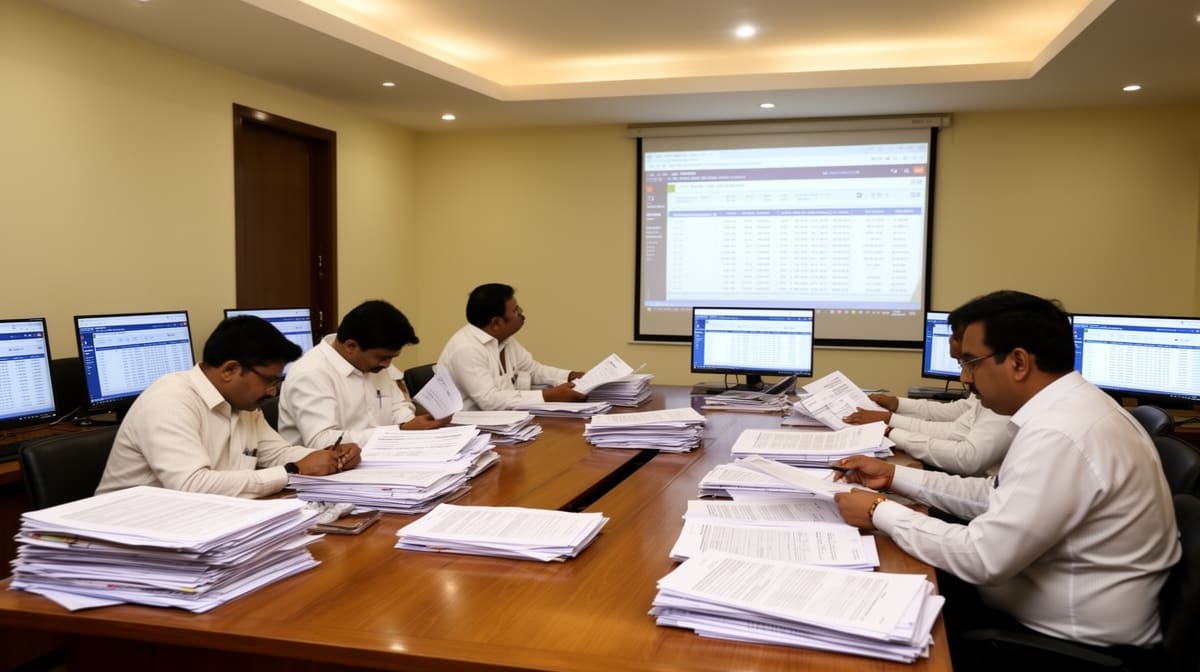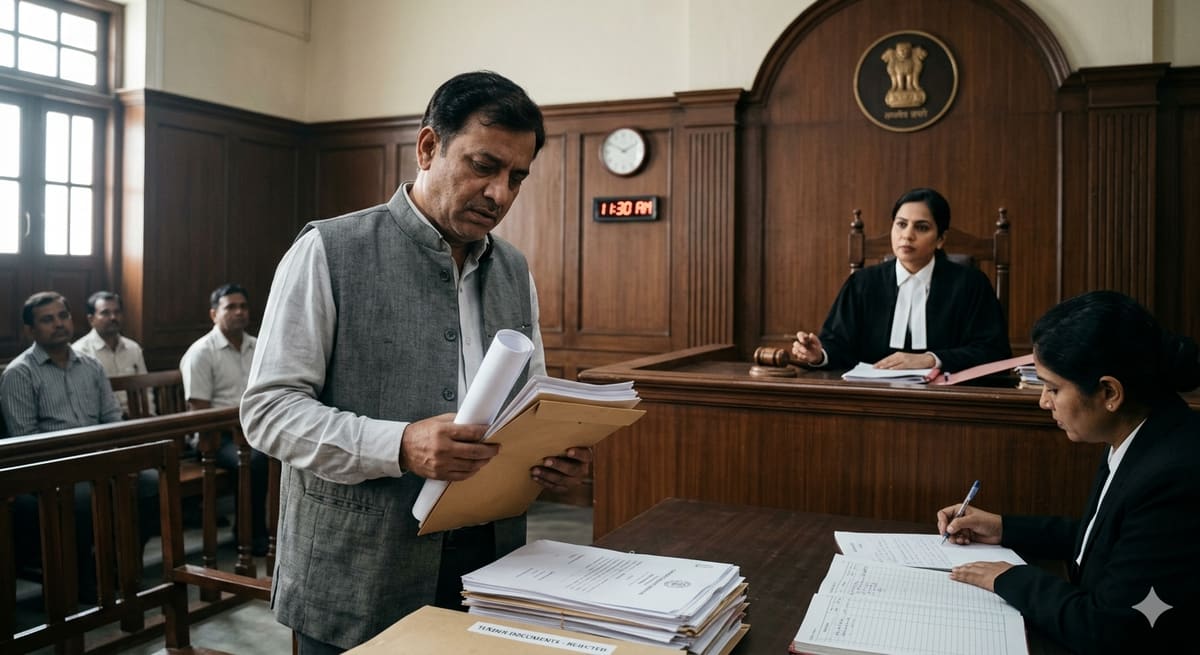
The Delhi High Court has upheld a tender condition mandating that bidders for Take Home Ration (THR) supplies under the ICDS Scheme must own a manufacturing unit within Uttar Pradesh prior to the tender’s issuance. The judgment affirms that such a requirement, though geographically restrictive, is not arbitrary when justified by operational necessity, perishability of goods, and statutory obligations under the National Food Security Act, 2013.
Background & Facts
The Dispute
The National Agricultural Cooperative Marketing Federation of India (NAFED), acting on behalf of the Government of Uttar Pradesh, issued Tender No. NAFED/HO/ICDS/RECIPE/2025-2026/01 dated 16.02.2026 for the supply of Recipe-Based Supplementary Nutrition (RBSN) food items under the Integrated Child Development Services (ICDS) Scheme for the financial year 2026-27. The tender, valued at approximately ₹2,768 Crores, sought to supplement the existing supply by Self-Help Groups (SHGs), which were only meeting about 20% of the State’s nutritional demand for children aged 6 months to 6 years, pregnant women, and lactating mothers.
Key Facts
- The RBSN food items are fortified, ready-to-eat nutritional supplements with a shelf life of approximately three months.
- Raw materials (wheat and rice) are supplied by the Food Corporation of India (FCI) to the State of Uttar Pradesh under central subsidies and are to be lifted on an ex-godown basis.
- The tender requires bidders to have a manufacturing unit in Uttar Pradesh as of 16.02.2026, supported by title deeds, factory licenses, electricity connection proofs, and FSSAI certificates.
- Bidders must have a minimum annual turnover of ₹75 Crores from THR supplies for each of the last three financial years (2022-23 to 2024-25).
- Bidders are required to submit a non-compete undertaking and an affidavit affirming no pending legal/criminal cases or disputes related to THR supplies with any government agency.
- The petitioner, Rasi Nutri Foods India Private Limited, operates manufacturing units in Namakkal (Tamil Nadu) and Rudrapur (Uttarakhand), with a combined capacity exceeding 1,450 MT/day, and had previously supplied ICDS products to Uttar Pradesh under a 2017 tender.
- The petitioner had initiated arbitration proceedings against the State of Uttar Pradesh over alleged breaches in the 2018 agreement concerning barcoding and delivery compliance, with no adjudicated finding of deficiency.
- Kota Dall Mill, another petitioner, had an arbitral award in its favor against the State and was contesting the pendency of the State’s Section 34 petition under the Arbitration and Conciliation Act, 1996.
- NAFED itself plans to establish a manufacturing unit within Uttar Pradesh to supply 20% of the requirement within six months of award.
Procedural History
- 16.02.2026: Tender No. NAFED/HO/ICDS/RECIPE/2025-2026/01 issued by NAFED.
- 22.02.2026: Petitioners filed writ petitions challenging eligibility clauses.
- 10.03.2026: Judgment reserved.
- 19.03.2026: Judgment delivered by the Division Bench of the Delhi High Court.
The Parties' Positions
For the Petitioners
- Argued that Clause A(1) (local manufacturing unit requirement) is arbitrary, violative of Articles 14, 19(1)(g), and 21, and contrary to Rule 144 of the General Financial Rules, 2017 (GFR, 2017).
- Contended that Clause A(12) (pending litigation disqualification) penalizes lawful exercise of legal rights and lacks intelligible differentia.
- Asserted that their existing FSSAI-compliant units in Tamil Nadu and Uttarakhand can supply RBSN to Uttar Pradesh within timelines, with logistics borne by the bidder.
- Cited Vision Diagnostic India Pvt. Ltd. v. AIIMS to argue that mere pendency of proceedings cannot disqualify a bidder.
- Highlighted that the 2017 tender did not impose such restrictions and was successfully executed.
- Argued that Rule 160, 159, and 161 of GFR, 2017 were violated due to non-compliance with e-procurement portals (GeM, CPPP).
For the Respondents (NAFED & Uttar Pradesh)
- Justified Clause A(1) on grounds of perishability of RBSN, logistical impracticality of transporting subsidized wheat/rice across states, and need for physical inspection and quality control.
- Stated that local manufacturing ensures timely delivery, prevents pilferage, and aligns with the directive in Shipra Devi v. State of Uttar Pradesh (PIL No. 960/2024) to strengthen local infrastructure.
- Argued that Clause A(12) is narrowly tailored to THR-related disputes and prevents awarding contracts to entities with a history of default.
- Cited Directorate of Education v. Educomp Datamatics, Municipal Corporation, Ujjain v. BVG India, and Montecarlo Ltd. v. NTPC to assert that courts must not rewrite tender conditions unless arbitrary, mala fide, or discriminatory.
- Maintained that the ₹75 Crore turnover requirement is proportionate given the scale (₹300 Crore per bidder for two clusters) and ensures financial and operational capability.
- Clarified that the non-compete clause (Clause 11) does not apply to the petitioners.
Relief Sought
The petitioners sought:
- Declaration that Clauses A(1), A(12), and A(2) are unconstitutional and ultra vires GFR, 2017.
- Invalidation of the tender conditions.
- Direction to allow participation of out-of-State manufacturers.
- Permitting interim supply from existing units during a 2-3 month window for establishing local facilities.
The Legal Issue
The central question was whether the requirement that a bidder must own a manufacturing unit in Uttar Pradesh as of the tender’s issuance date, and the disqualification for pending THR-related legal disputes, are arbitrary, violative of Articles 14 and 19(1)(g) of the Constitution, and contrary to public procurement norms under the General Financial Rules, 2017.
Arguments Presented
For the Appellant/Petitioner
The petitioners relied on constitutional principles of equality and non-discrimination, arguing that the local manufacturing requirement excludes otherwise qualified bidders without rational nexus to the objective of quality and timely supply. They cited Vision Diagnostic India Pvt. Ltd. v. AIIMS to assert that mere pendency of arbitration proceedings cannot equate to misconduct. They emphasized that the 2017 tender, which they successfully executed, imposed no such restrictions, and that logistical challenges could be mitigated by allowing interim supply from existing FSSAI-compliant units. They further contended that the turnover requirement and non-compete clause were anti-competitive and violated Rule 144 of GFR, 2017.
For the Respondent/State
The respondents argued that the perishable nature of RBSN, the subsidized nature of raw materials allocated exclusively to Uttar Pradesh, and the need for physical supervision rendered local manufacturing a non-negotiable operational imperative. They relied on Shipra Devi to show that the State was fulfilling a statutory mandate under the National Food Security Act, 2013. They contended that the disqualification clause was narrowly confined to THR-related disputes and aimed at ensuring credibility and reliability. The turnover requirement was justified by the scale of the contract (₹600 Crores per bidder for two clusters), and the non-compete clause was clarified as inapplicable to the petitioners.
The Court's Analysis
The Court conducted a rigorous analysis of the tender conditions in light of constitutional and statutory norms. It acknowledged the petitioners’ arguments regarding competition and equal opportunity but found them insufficient to override the operational realities of the ICDS Scheme.
"It is logistically impossible, economically disastrous and highly prone to pilferage to permit an out-of-state bidder to transport thousands of metric tons of Central Government allocated, subsidized U.P. quota wheat and rice to an alternate state, process it and then transport the highly perishable finished Take-Home Ration for daily doorstep delivery to U.P. Anganwadis."
The Court emphasized that the shelf life of RBSN (three months) and the one-month lead time required for distribution by Anganwadis made local processing indispensable. The Court noted that transporting subsidized grains across state borders would invite diversion, delay, and quality degradation, directly undermining the nutritional objectives of the Scheme.
The Court further held that physical inspection of manufacturing units was a legitimate and necessary safeguard, especially after the Shipra Devi judgment revealed systemic failures in quality control when supplies were manufactured outside the State. The requirement for ownership (not lease) was deemed reasonable to avoid disputes with landlords, licensing inconsistencies, and production interruptions.
Regarding Clause A(12), the Court observed that while the pendency of arbitration proceedings alone cannot be equated with culpability, the challenge to this clause became academic because the petitioners failed to satisfy the mandatory condition under Clause A(1). The Court declined to adjudicate the legality of Clause A(12) in isolation, noting that the petitioners were already disqualified on primary grounds.
The Court also upheld the ₹75 Crore turnover requirement as proportionate to the scale of the contract, citing Association of Registration Plates v. Union of India and Municipal Corporation, Ujjain v. BVG India, which recognize the State’s discretion in setting eligibility criteria to ensure performance capability.
The Court rejected the petitioners’ arguments on e-procurement violations (Rules 159, 160, 161), finding no evidence of non-compliance in the record and noting that the tender’s scale did not automatically trigger mandatory GeM/CPPP publication absent explicit statutory mandate.
The Court concluded that the tender conditions were not arbitrary, discriminatory, or mala fide, and that the State was entitled to "reasonable play in its joints" in designing procurement mechanisms for critical public welfare schemes.
The Verdict
The Delhi High Court dismissed all three writ petitions. The Court upheld the validity of Clause A(1) requiring ownership of a manufacturing unit in Uttar Pradesh as of 16.02.2026, Clause A(2) mandating ₹75 Crore annual turnover from THR supplies for the last three financial years, and Clause A(12) disqualifying bidders with pending THR-related legal disputes. The Court found no illegality in the 20% reservation for NAFED and held that the non-compete clause was inapplicable to the petitioners. No relief was granted. The tender process was permitted to proceed as issued.
What This Means For Similar Cases
Local Manufacturing Can Be Mandated for Perishable Public Welfare Goods
- Practitioners must now recognize that for goods with short shelf life (e.g., fortified foods, vaccines, dairy products) supplied under welfare schemes, courts may uphold local manufacturing mandates even if they exclude out-of-State bidders.
- The justification must be grounded in logistical, quality, or safety imperatives - not mere administrative convenience.
- Evidence of past failures (e.g., Shipra Devi) strengthens the State’s case for localized infrastructure.
Pending Litigation Clauses Are Not Per Se Invalid, But Must Be Narrowly Tailored
- Disqualification clauses tied to specific subject-matter disputes (e.g., THR supplies) are more likely to survive scrutiny than blanket disqualifications.
- Bidders with pending arbitration or civil suits, but no adjudicated default, may still be eligible if the clause is not applied mechanically.
- Affidavits and disclosures should be required, not automatic disqualification, to preserve access to justice.
Turnover Requirements Must Be Proportionate to Contract Value
- A turnover requirement of ₹75 Crores was upheld because the contract value per bidder was estimated at ₹300 - 600 Crores.
- Practitioners should assess whether the turnover threshold is rationally linked to the scale of the contract - otherwise, it risks being struck down as arbitrary.
- CA-certified turnover documents are now standard; failure to submit them is a fatal defect.
Judicial Restraint in Tender Review Is the Norm
- Courts will not substitute their judgment for that of the procuring authority unless the condition is mala fide, discriminatory, or violates statutory norms.
- The principle of "reasonable play in the joints" (Directorate of Education v. Educomp) remains the governing standard.
- Challenges based on procedural non-compliance (e.g., GeM/CPPP) require concrete evidence of violation - not mere assertion.
Strategic Takeaway for Bidders
- If bidding for welfare schemes involving perishable goods, consider establishing local units or joint ventures in the target State well in advance.
- Maintain impeccable compliance records to avoid triggering disqualification clauses.
- Arbitration proceedings should be documented as legitimate contractual remedies, not as admissions of fault.