The Bombay High Court has clarified that anticipatory bail may be granted in contraband cases where no further recovery is pending and custodial interrogation is not essential, even as the Supreme Court considers the validity of Section 123 of the Bhartiya Nyaya Sanhita. This order reinforces the principle that arrest is not automatic in non-violent, evidence-based offences.
Background & Facts
The Dispute
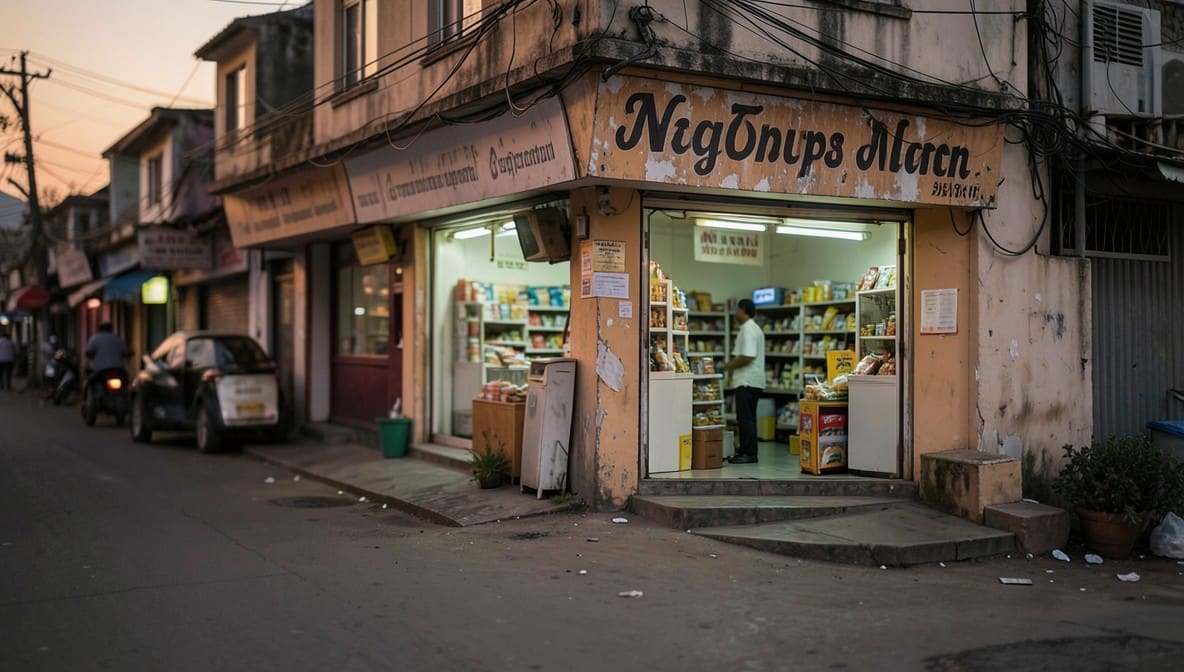
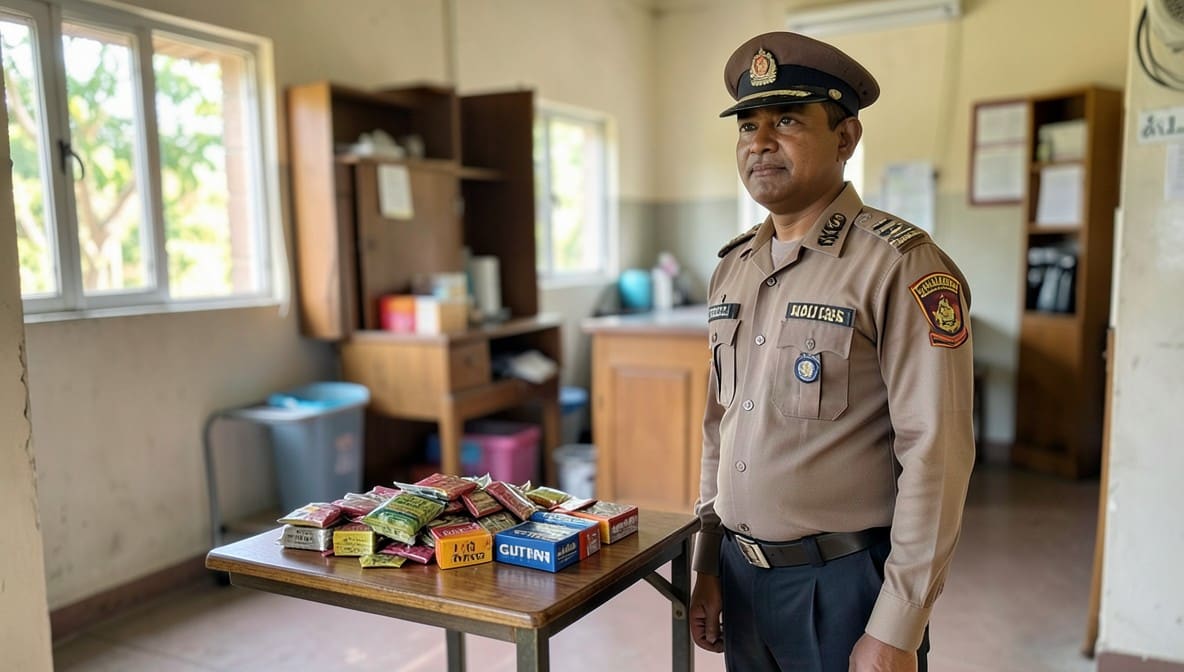
The applicant, Suresh Satyanarayan Parikh, is facing prosecution under Crime No. 0249 of 2026 registered at Nanded Rural Police Station, District Nanded, for alleged sale of scented tobacco and Gutka - products prohibited under Maharashtra state law. The prosecution alleges that contraband goods worth Rs. 1,355/- were seized from him during a raid. The applicant fears arrest and seeks anticipatory bail under Section 438 of the Code of Criminal Procedure.
Key Facts
- The contraband seized consisted of scented tobacco and Gutka, banned in Maharashtra but not classified as contraband under central law
- No additional contraband was recovered beyond the initial seizure of Rs. 1,355/-
- The applicant has no prior criminal record
- The legal validity of Section 123 of the Bhartiya Nyaya Sanhita, 2023 (which replaces Section 328 of the Indian Penal Code) is currently under consideration by the Supreme Court
- The applicant is not alleged to have engaged in violence, trafficking, or organized distribution
Procedural History
- Date of seizure: Not explicitly stated, but Crime No. 0249 of 2026 was registered prior to 18.06.2026
- 18.06.2026: Anticipatory Bail Application No. 754 of 2026 filed before the Bombay High Court, Aurangabad Bench
- 18.06.2026: Hearing conducted and order passed on the same day
The Parties' Positions
For the Applicant:
- Argued that custodial interrogation is unnecessary since the contraband has already been seized and no further recovery is anticipated
- Highlighted the absence of criminal antecedents
- Submitted that the constitutional validity of Section 123 BNS is sub judice before the Supreme Court, making prosecution uncertain
- Requested protection from arbitrary arrest
For the Respondent-State:
- Opposed bail, asserting that custodial interrogation is required to trace the source of contraband
- Relied on Abhijeet Jitendra Lolage v. State of Maharashtra (Diary No. 2806/2023) to argue for a condition prohibiting the applicant from dealing in Gutka or Pan Masala with tobacco
- Contended that the nature of the offence warrants investigation into supply chains
Relief Sought
The applicant sought anticipatory bail with conditions to prevent arrest, including a personal bond and restrictions on witness contact and evidence tampering.
The Legal Issue
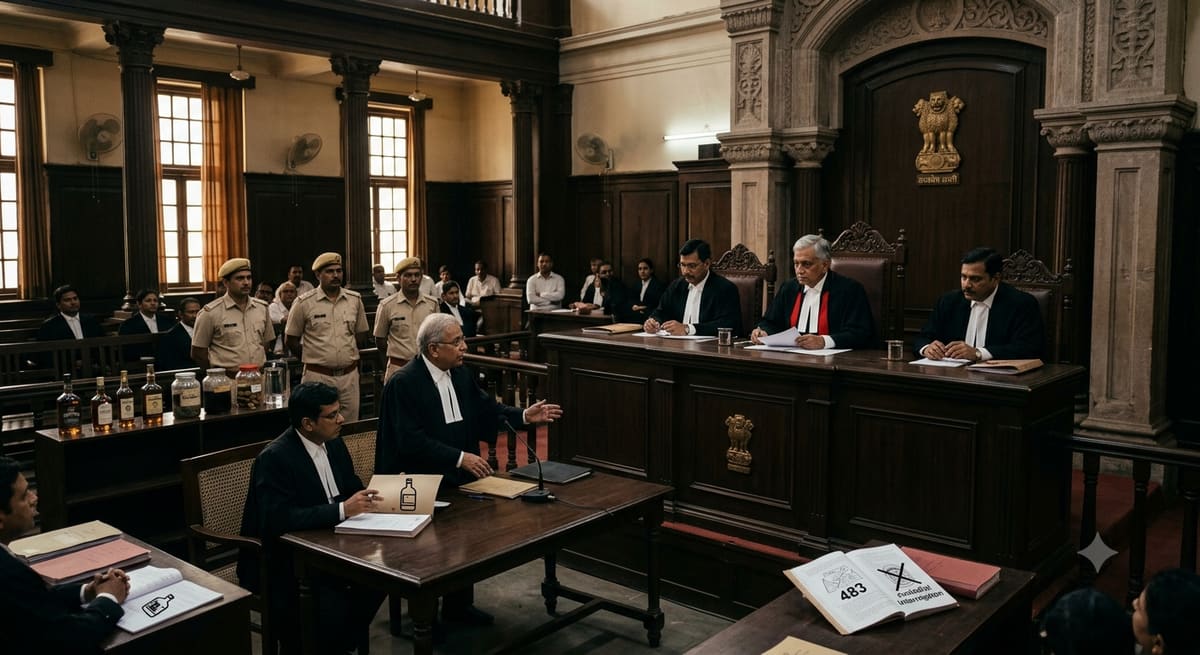
Can anticipatory bail be granted in a contraband case under Section 123 of the Bhartiya Nyaya Sanhita where the contraband has been fully seized, no further recovery is pending, and the legal validity of the provision is sub judice before the Supreme Court?
Arguments Presented
For the Appellant/Petitioner
The applicant’s counsel emphasized that Section 438 CrPC permits anticipatory bail where arrest is not essential for investigation. He cited the absence of criminal history and the fact that the entire contraband was seized at the time of detection, rendering custodial interrogation redundant. He further argued that imposing a condition to refrain from dealing in Gutka - which is banned only in Maharashtra but legal elsewhere - is impractical and unenforceable. He relied on the principle that bail should be the norm, not the exception, particularly in non-violent, non-repeat offences.
For the Respondent/State
The State’s counsel contended that tracing the source of contraband is critical to dismantling illegal supply networks. He relied on Abhijeet Jitendra Lolage to argue that courts may impose conditions restricting the accused from engaging in the prohibited activity. He maintained that even minor contraband cases require custodial interrogation to identify suppliers, especially where the trade is organized.
The Court's Analysis
The Court acknowledged the State’s interest in investigating the supply chain but found that the factual matrix of this case did not justify custodial detention. The Court noted that the entire contraband had been seized, and no further recovery was indicated. The Court observed that the applicant had no prior record and that the legal basis for prosecution under Section 123 BNS was uncertain, as the Supreme Court had not yet ruled on its validity.
"In so far as this case is concerned, there is already seizure of contraband from the applicant. No further recovery is made from them."
The Court rejected the State’s request to impose a condition prohibiting the applicant from dealing in Gutka, noting that such a restriction would be unenforceable given that the product is not banned in other states. The Court emphasized that conditions of bail must be specific, reasonable, and capable of enforcement.
The Court applied the triple test for anticipatory bail - nature of accusation, likelihood of flight, and necessity of custodial interrogation - and concluded that none of the grounds for denial were present. The Court held that the applicant’s cooperation with the investigation could be ensured through non-custodial conditions.
The Verdict
The applicant succeeded. The Court granted anticipatory bail. In the event of arrest, the applicant shall be released on furnishing a personal bond of Rs. 15,000/- with one solvent surety of like amount. He must report to the Nanded Rural Police Station on 29.06.2026 and 01.07.2026 between 11:00 AM and 01:00 PM, and as and when summoned by the Investigating Officer. He shall not contact witnesses, tamper with evidence, or obstruct the investigation. The State is directed to communicate this order to the concerned police station.
What This Means For Similar Cases
Custodial Interrogation Is Not Automatic After Seizure
- Practitioners may now argue that once contraband is fully seized and no further recovery is anticipated, custodial interrogation loses its necessity under Section 438 CrPC
- This applies to cases involving tobacco, Gutka, or other locally banned items where the evidence is complete at the time of seizure
Conditions Must Be Enforceable and Specific
- Bail conditions prohibiting conduct that is legal outside the state (e.g., selling Gutka in other states) are invalid and unenforceable
- Courts must reject vague or overbroad conditions that lack practical compliance mechanisms
Pending Supreme Court Rulings on Statutory Validity Favor Bail
- When the legal basis of prosecution is sub judice before the Supreme Court, courts may treat the charge as uncertain and grant bail as a precautionary measure
- This creates a precedent for anticipatory bail applications in cases involving newly enacted statutes whose constitutional validity is under challenge