The Bombay High Court’s order in this case reaffirms a critical principle in modern criminal procedure: the mere allegation of data theft under the Bharatiya Nyaya Sanhita and Information Technology Act does not justify automatic detention. When all digital evidence is recovered and custodial interrogation serves no investigative purpose, anticipatory bail must be granted to uphold personal liberty under Article 21.
Background & Facts
The Dispute
The applicant, Mahesh Kishor Nasare, was employed as a commission-based Sales Executive with The Spices Indiano International LLP, working remotely. He ceased employment on 20 May 2025. On 26 May 2025, the company discovered that data from the preceding three months had been deleted from the company laptop. Upon retrieval of the device, it was found that the applicant had copied and deleted sensitive corporate data, prompting a criminal complaint under Sections 314, 316, 319(2), 318(4) of the Bharatiya Nyaya Sanhita, 2023 and Sections 66 and 66C of the Information Technology Act, 2000.
Procedural History
- 26 May 2025: Crime No. 67/2025 registered at Nagpur City Cyber Police Station
- 18 September 2025: Applicant granted ad interim anticipatory bail
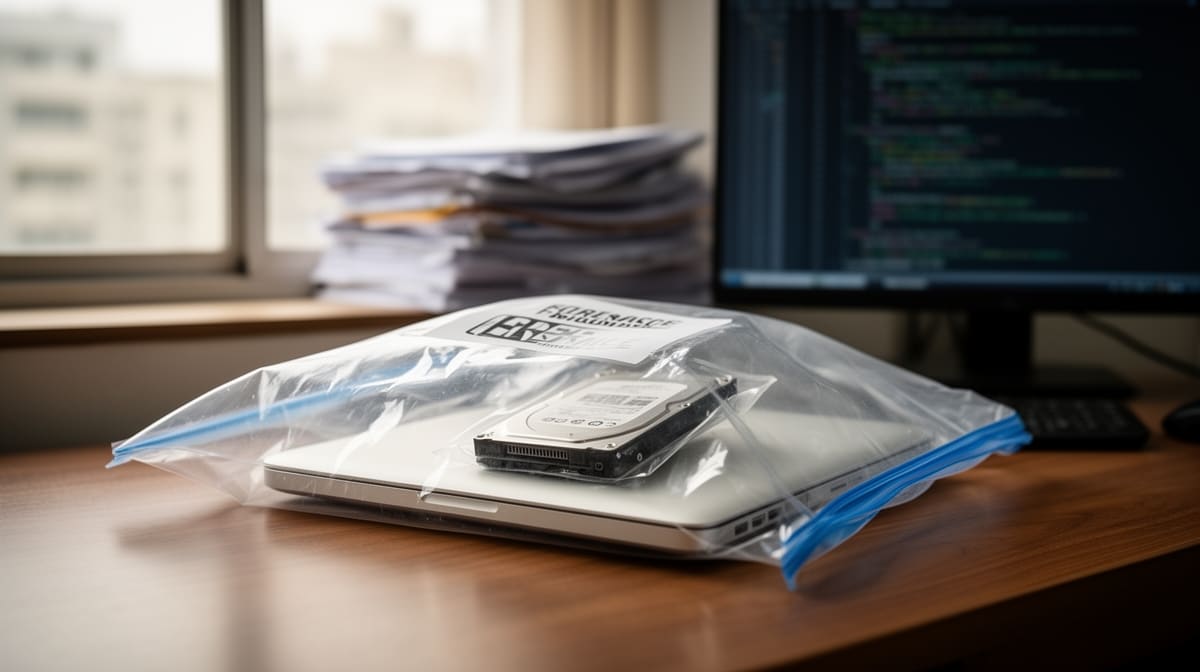
- 14 October 2025: Laptop, mobile phone, hard disk, and pen drive seized under panchanama
- 20 February 2026: Application for confirmation of ad interim bail heard and granted
Relief Sought
The applicant sought confirmation of his ad interim anticipatory bail, arguing that custodial interrogation was unnecessary since all digital evidence had been seized and he had cooperated fully with the investigation.
The Legal Issue
The central question was whether anticipatory bail can be denied solely on the nature of the offence under the Bharatiya Nyaya Sanhita and IT Act, when all relevant digital evidence has been recovered and no custodial interrogation is required to advance the investigation.
Arguments Presented
For the Appellant/Petitioner
The applicant’s counsel argued that he was being unfairly targeted as a scapegoat in a commercial dispute involving a foreign entity. He emphasized that the laptop, mobile phone, hard disk, and pen drive had been seized under panchanama, rendering custodial interrogation redundant. He relied on Arnesh Kumar v. State of Bihar to assert that arrest is not automatic even for non-bailable offences, and that personal liberty must prevail absent a genuine threat of evidence tampering or flight.
For the Respondent/State
The Additional Public Prosecutor conceded that all digital evidence had been recovered and that custodial interrogation was not essential. However, the complainant’s counsel contended that further investigation was needed to determine whether the stolen data had been sold to a third party, thereby justifying continued custody.
The Court's Analysis
The Court examined the balance between investigative needs and fundamental rights under Article 21. It noted that the Bharatiya Nyaya Sanhita and IT Act offences, while serious, do not inherently require custodial detention if the accused has no history of non-cooperation and all instrumentalities of the crime are in police possession. The Court observed:
"The recovery of the laptop, mobile phone, hard disk and pen drive under panchanama leaves no scope for apprehension of destruction or tampering of evidence. The applicant has consistently cooperated with the investigation since the grant of ad interim bail."
The Court distinguished this case from those involving active concealment or repeated non-appearance, emphasizing that custodial interrogation is not a default remedy but a last resort. It held that the principle of proportionality under K.S. Puttaswamy v. Union of India mandates that any deprivation of liberty must be strictly necessary and narrowly tailored.
The Verdict
The applicant won. The Court confirmed the ad interim anticipatory bail order dated 18 September 2025, with modified conditions. It held that anticipatory bail must be granted where digital evidence is fully recovered and custodial interrogation serves no investigative purpose, reinforcing that arrest is not automatic under the Bharatiya Nyaya Sanhita or IT Act.
What This Means For Similar Cases
Arrest Is Not Automatic for Data Theft Offences
- Practitioners must argue that mere possession of stolen data does not equate to risk of tampering if devices are seized
- Courts must apply the triple test from Arnesh Kumar - gravity, likelihood of flight, and necessity of custody - before denying bail
- Investigating agencies must document why custody is indispensable, not merely assert it
Digital Evidence Seizure Precludes Custodial Interrogation
- Once laptops, hard drives, and mobile devices are seized under panchanama, the presumption shifts to the prosecution to justify continued detention
- Courts should reject blanket objections based on "further investigation" unless specific, non-speculative grounds are shown
- This sets a precedent for cases under Section 66C (identity theft) and Section 314 (destruction of electronic records) under BNS
Cooperation With Investigation Is a Key Bail Factor
- Attendance at police stations and voluntary surrender of devices must be treated as positive indicators of non-flight risk
- Ad interim bail compliance should be rewarded, not penalized, to encourage lawful cooperation
- Courts may now routinely impose conditions of regular reporting instead of custody for tech-related offences