The Punjab & Haryana High Court has reaffirmed that anticipatory bail must be granted where custodial interrogation offers no investigative advantage, particularly when the prosecution's case rests entirely on documentary evidence. This ruling reinforces the principle that arrest is not automatic even in serious drug-related offences, and procedural fairness must prevail over presumption of guilt.
Background & Facts
The Dispute
The petitioner, Mohtamad Niyamat alias Mohtamad Niyamat Hussain, is named in a complaint filed under the Drugs and Cosmetics Act, 1940, alleging offences under Section 18-A, 18-B, 27(d), 18(c), 27(b)(ii), 17B(e), 27(a), and 27(c) read with Section 36AB. The case originated from a raid conducted by the Drugs Control Officer at P.S. Sadar, Gurugram, resulting in the registration of DDR No.19 on 25.09.2024. The complaint was later converted into COMA No.21 of 2024, with cognizance taken by the Trial Court on 20.12.2024.
Procedural History
- 25.09.2024: DDR registered based on investigation by Drug Inspector
- 21.04.2025: Petitioner filed anticipatory bail petition under Section 482 of BNSS, 2023
- 21.04.2025: High Court granted interim bail with conditions including surrender, passport submission, and court appearance
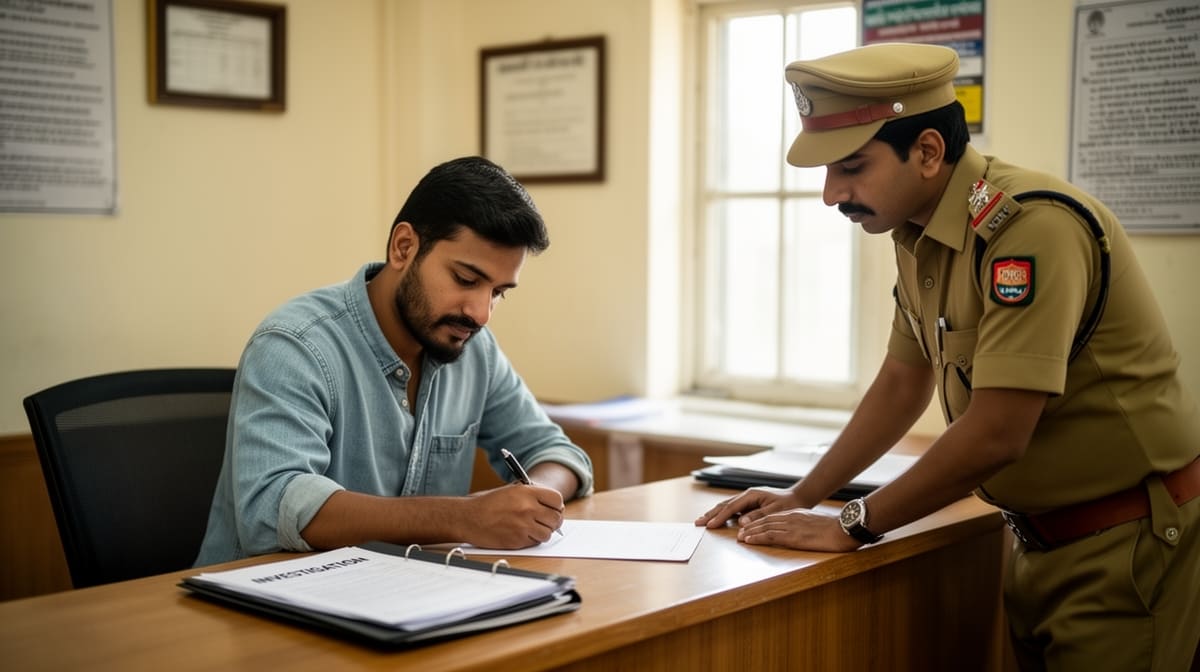
- 29.04.2025: Petitioner appeared before the Additional Sessions Judge, Gurugram, as directed
- 16.09.2025: State filed status report opposing bail, citing no reason for release
- 09.03.2026: High Court made interim bail absolute
Relief Sought
The petitioner sought anticipatory bail to avoid arrest, arguing that custodial interrogation was unnecessary since the case depended entirely on documentary evidence collected during the investigation. He undertook to cooperate fully with the investigation and comply with all court conditions.
The Legal Issue
The central question was whether anticipatory bail under Section 482 of BNSS, 2023 can be denied solely on the gravity of the alleged offences, when the prosecution’s case rests on documentary evidence and there is no plausible justification for custodial interrogation.
Arguments Presented
For the Petitioner
Counsel argued that the investigation was complete and the case turned on seized documents, lab reports, and inspection records - not on confessional statements or custodial recovery. He cited Arnesh Kumar v. State of Bihar to emphasize that arrest is not mandatory in non-bailable offences where custody serves no investigative purpose. The petitioner had already appeared before the Trial Court, demonstrating willingness to cooperate.
For the Respondent
The State contended that the offences under the Drugs and Cosmetics Act are serious and involve public health risks, warranting custodial interrogation to uncover wider networks. It relied on the status report to argue that the petitioner’s release might hamper investigation, though no specific grounds were articulated beyond the nature of the charges.
The Court's Analysis
The Court examined the nature of the evidence and the stage of investigation. It noted that the complaint was filed only after the Drug Inspector completed the inquiry and submitted a final report. The prosecution did not allege any need to extract confessions, recover incriminating material, or prevent tampering with witnesses.
"No reason expressed by learned State counsel as to for what reason, petitioner should be subjected to custodial interrogation by putting him behind bars."
The Court held that custodial interrogation cannot be justified merely on the basis of the seriousness of the offence when the evidentiary foundation is purely documentary. It distinguished cases involving active concealment, flight risk, or witness intimidation, none of which were alleged here. The petitioner’s voluntary appearance before the Trial Court negated any presumption of non-cooperation. The Court further emphasized that Section 482 of BNSS, 2023 inherits the spirit of Section 438 CrPC, which mandates a balanced approach to liberty and investigation.
The Court also noted that the petitioner had already complied with the interim conditions, including surrender and passport submission, reinforcing his credibility and reducing flight risk.
The Verdict
The petitioner won. The Court held that anticipatory bail must be granted where custodial interrogation serves no investigative purpose and the case rests on documentary evidence. The interim bail order dated 21.04.2025 was made absolute, subject to compliance with conditions under Section 482(2) of BNSS, 2023.
What This Means For Similar Cases
Custodial Interrogation Must Be Justified
- Practitioners must challenge arrest in drug cases where investigation is complete and evidence is documentary
- The burden shifts to the State to articulate specific reasons for custody - not rely on offence severity alone
- Courts must scrutinize whether custody is necessary to prevent evidence tampering, witness intimidation, or flight
Documentary Evidence Prevails Over Oral Allegations
- In cases under the Drugs and Cosmetics Act, lab reports, seizure memos, and inspection records form the core of prosecution
- Oral testimony of investigating officers cannot substitute for tangible evidence to justify arrest
- Petitioners should proactively file affidavits confirming cooperation and non-possession of travel documents
Procedural Compliance Is Non-Negotiable
- Failure to comply with bail conditions (e.g., passport submission) renders the order void ab initio
- Courts will treat non-compliance as automatic vacation of bail - no separate hearing required
- Advocates must ensure clients strictly adhere to all conditions, including reporting timelines and travel restrictions