The Bombay High Court at Nagpur has granted anticipatory bail to an accused in a food safety case where the contraband was not found in his possession and the legal applicability of a key provision under the Bharatiya Nyaya Sanhita, 2023 remains sub judice before the Supreme Court. This order reinforces the principle that pre-arrest liberty must be protected where evidence is circumstantial and investigation is not dependent on custodial interrogation.
Background & Facts
The Dispute
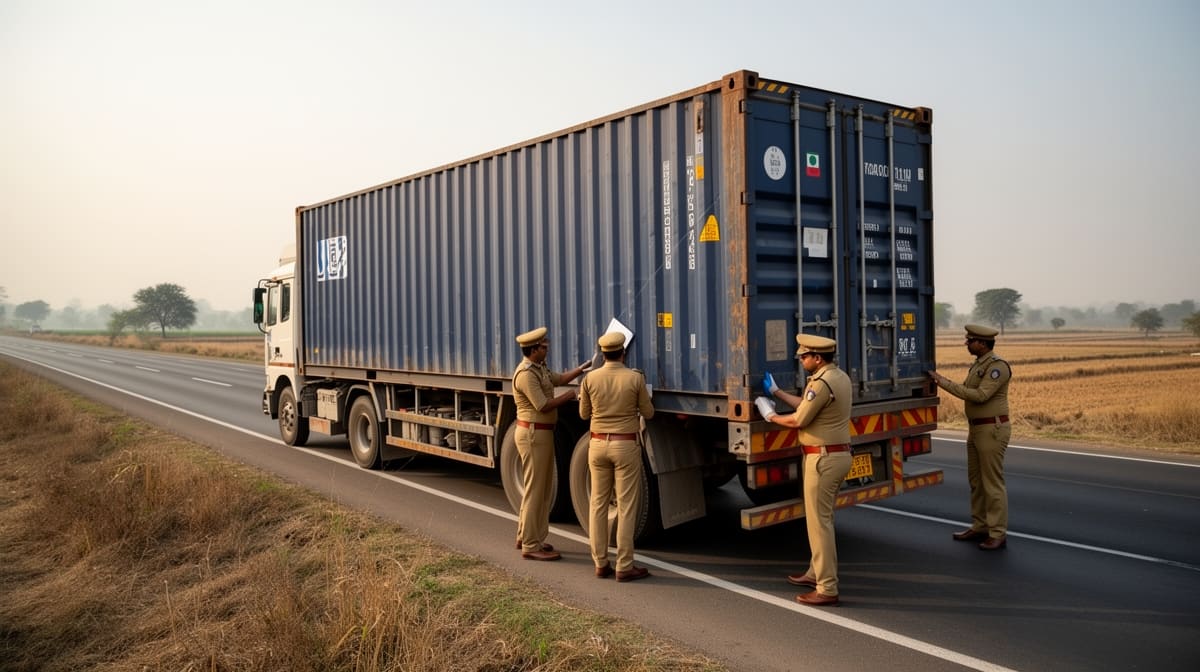
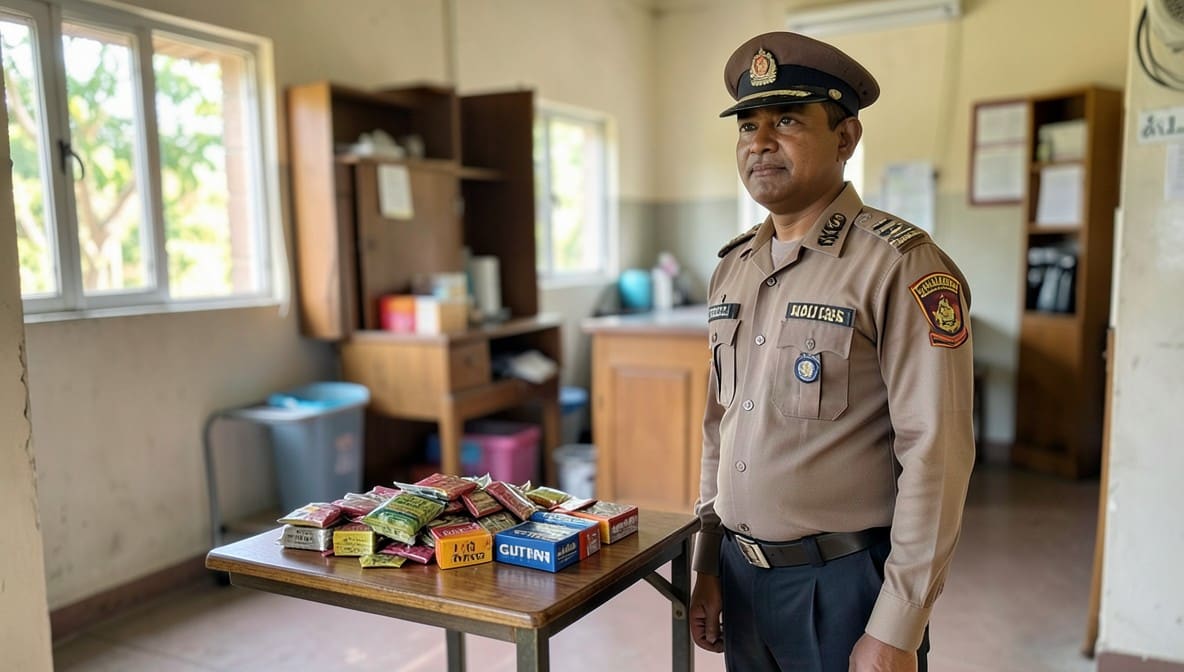
The applicant, Rajendra s/o Mahadevrao Thombare, operates the Parimal Grocery shop in Nagpur. He apprehends arrest in connection with Crime No. 173/2026 registered at Police Station, Nandanwan, Nagpur, for alleged violations under the Bharatiya Nyaya Sanhita, 2023 and the Food Safety and Standards Act, 2006. The case stems from the seizure of scented tobacco from the residence of co-accused Chetan Dodewar, who disclosed during interrogation that the contraband was procured from the applicant’s shop.
Key Facts
- The scented tobacco, the central contraband article, was not recovered from the applicant’s premises or business
- The applicant’s involvement is solely based on the disclosure statement of Chetan Dodewar
- No independent evidence links the applicant to the physical possession, sale, or distribution of the contraband
- The Food Safety Officer lodged the FIR on the basis of this disclosure alone
- The applicant has no prior criminal record for similar offences
Procedural History
- Date of FIR: 2026 (exact date not specified, but case registered as Crime No. 173/2026)
- Date of Application: 08.05.2026 (date of hearing and order)
- The applicant filed Criminal Application (ABA) No. 365 of 2026 seeking anticipatory bail prior to arrest
- No prior arrest or custody occurred
- No charge sheet filed as of the date of judgment
The Parties' Positions
For the Applicant
The applicant’s counsel, Shri S.A. Mohta, argued that:
- The applicant’s involvement is purely derivative, based on a disclosure statement of a co-accused
- The contraband was not recovered from his premises, negating direct culpability
- The legal validity of Section 123 of the Bharatiya Nyaya Sanhita, 2023 is pending adjudication before the Supreme Court
- There is no risk of evidence tampering as the incriminating material has already been seized
- Granting anticipatory bail would safeguard personal liberty under Article 21 of the Constitution
For the Respondent/State
The learned Additional Public Prosecutor, Shri N.R. Rode, contended that:
- The applicant has prior criminal antecedents involving similar offences
- Custody is necessary to facilitate further investigation
- The pendency of a Supreme Court matter on Section 123 BNS does not preclude arrest
- The nature of food safety offences demands strict enforcement
Relief Sought
The applicant sought anticipatory bail in the event of arrest for offences under:
- Sections 123, 223(b), 274, and 275 of the Bharatiya Nyaya Sanhita, 2023
- Sections 26(1), 26(2)(i), 26(2)(iv), 27(3)(e), 30(2)(a), 3(1)(zz)(iv), and 59 of the Food Safety and Standards Act, 2006
The Legal Issue
Can anticipatory bail be granted where the accused is implicated solely on the basis of a disclosure statement by a co-accused, the contraband was not recovered from his premises, and the legal validity of the principal charge under the Bharatiya Nyaya Sanhita, 2023 is pending before the Supreme Court?
Arguments Presented
For the Appellant/Petitioner
The applicant’s counsel relied on the principle that anticipatory bail is a constitutional safeguard under Section 438 CrPC, and must be granted where arrest is not essential for investigation. He cited Arnesh Kumar v. State of Bihar to emphasize that arrest cannot be automatic merely because an offence is non-bailable. He argued that since the incriminating material was already seized and the applicant had no physical control over the contraband, there was no risk of evidence destruction. The pendency of the Supreme Court’s decision on Section 123 BNS further justified restraint, as the very foundation of the charge may be legally unsustainable.
For the Respondent/State
The State contended that the applicant’s alleged prior involvement in similar offences warranted caution. It argued that disclosure statements, even if uncorroborated, form part of the investigative process and that custodial interrogation may be necessary to trace the supply chain. The State maintained that the pendency of a Supreme Court matter does not create a legal bar to arrest, and that public interest in enforcing food safety laws required the applicant’s presence in custody.
The Court's Analysis
The Court undertook a careful review of the factual matrix and the nature of the allegations. It noted that the contraband was not recovered from the applicant’s premises, nor was there any independent evidence linking him to the possession or sale of the scented tobacco. The sole basis of implication was the disclosure statement of a co-accused, which, under established jurisprudence, cannot be the sole foundation for arrest without corroboration.
"The incriminatory material is already seized and therefore, liberty of the applicant can be protected."
The Court emphasized that the purpose of anticipatory bail is to prevent arbitrary arrest where the investigation does not require custodial interrogation. It observed that the applicant had no history of absconding and that the investigation had progressed sufficiently to secure evidence. The Court further acknowledged the pending adjudication before the Supreme Court on the applicability of Section 123 BNS, noting that the legal foundation of the charge is not yet settled.
The Court rejected the State’s reliance on alleged prior antecedents, finding no record of conviction or even formal charge in the materials before it. It held that speculative allegations of past conduct cannot override the constitutional right to liberty in the absence of concrete evidence of flight risk or tampering.
The Verdict
The applicant succeeded. The Court allowed the anticipatory bail application and directed that in the event of arrest in connection with Crime No. 173/2026, the applicant shall be released on bail upon furnishing a personal bond of ₹25,000 with one solvent surety of like amount. The applicant shall attend the Nandanwan Police Station on 14th, 15th, and 16th May 2026 between 2:00 pm and 5:00 pm, cooperate fully with the investigation, not tamper with evidence or influence witnesses, not leave India without permission, and shall face cancellation of bail if he commits a similar offence.
What This Means For Similar Cases
Disclosure Alone Cannot Justify Arrest
- Practitioners must challenge arrests based solely on uncorroborated disclosure statements
- The burden shifts to the prosecution to demonstrate independent evidence of involvement
- Anticipatory bail applications should be framed around the absence of physical possession or direct evidence
Pending Legal Questions Favor Pre-Arrest Liberty
- When a key statutory provision is under challenge before the Supreme Court, courts may grant anticipatory bail as a precautionary measure
- This creates a precedent for invoking constitutional safeguards where the legal basis of the charge is uncertain
- Lawyers should cite pending Supreme Court matters as grounds for restraint in arrest
Procedural Compliance Is Non-Negotiable
- Courts expect strict adherence to bail conditions, including scheduled police appearances
- Violation of conditions, even minor ones, will trigger immediate cancellation
- Applicants must be advised of the consequences of non-compliance before bail is granted