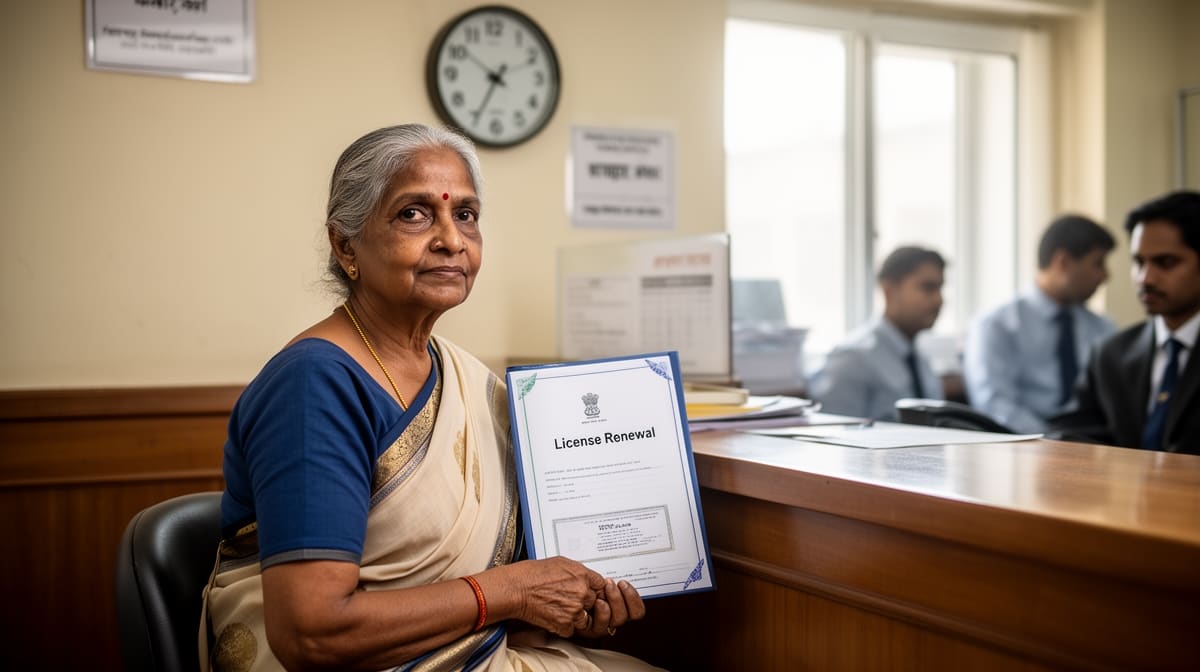
The Gujarat High Court has affirmed that undue administrative delay in deciding license renewal applications for commercial enterprises constitutes a violation of the right to livelihood under Article 21. This ruling reinforces the state’s positive obligation to act expeditiously on applications that directly impact economic survival.
Background & Facts
The Dispute
The petitioner, Gujarat Amusement and Funworld Pvt. Ltd., operates a water park in Vadodara that has been in continuous operation since 1994. The business relies on a statutory license issued by the Additional District Magistrate, which must be renewed periodically. The license expired on 31.12.2018, and despite repeated submissions of renewal applications and compliance documents, no decision has been rendered for over five years.
Procedural History
- 2018: License expired; renewal application filed on 27.12.2018
- 2019: Additional application submitted to Sub-Divisional Magistrate on 29.12.2019
- 2020: Operations halted due to COVID-19 pandemic
- 2020 - 2023: Petitioner submitted multiple clarifications, NOCs, safety certificates, and insurance documents
- 10.01.2025: Comprehensive renewal application filed with all requisite documents
- 19.01.2026: Supplementary documents submitted
- No decision issued by any authority despite repeated reminders and personal visits
Relief Sought
The petitioner sought a writ of mandamus directing the authorities to decide the renewal applications and, pending disposal, to permit continued operation of the water park.
The Legal Issue
The central question was whether prolonged, unjustified administrative inaction on a statutory license renewal application, which effectively shuts down a lawful business, violates the right to livelihood under Article 21 of the Constitution.
Arguments Presented
For the Petitioner
The petitioner relied on Chambers of Commerce v. State of Maharashtra and S.P. Gupta v. Union of India to argue that administrative delay tantamounts to constructive denial of a statutory right. It emphasized that the business had complied with all procedural requirements and that the delay was neither justified nor attributable to the petitioner. The closure of the park had caused irreparable financial loss and unemployment for over 150 employees.
For the Respondent
The State did not contest the factual timeline or the petitioner’s compliance. The Additional District Magistrate’s office acknowledged receipt of all documents but offered no legal justification for the delay. The Advocate General conceded the pendency and undertook to decide the applications within four weeks.
The Court's Analysis
The Court examined the nature of the license as a statutory entitlement essential for economic activity. It held that the right to carry on a lawful business is an integral component of the right to livelihood protected under Article 21. The Court rejected the notion that mere non-decision could be treated as passive inaction, noting that the state’s failure to act within a reasonable time, especially after repeated submissions, amounted to a violation of procedural fairness and legitimate expectation.
"The State cannot remain a silent spectator while a lawful enterprise, which has operated for over three decades and complied with all statutory norms, is rendered defunct due to its own inaction."
The Court distinguished State of U.P. v. Krishna where delay was attributed to litigation, noting that here, the delay was entirely attributable to administrative apathy. The Court also referenced K.S. Puttaswamy v. Union of India to affirm that economic dignity is inseparable from personal liberty.
The Verdict
The petitioner succeeded. The Court held that administrative inaction on a license renewal application for over five years violates Article 21 and directed the authorities to decide the applications within four weeks. The petition was disposed of on the undertaking given by the Advocate General.
What This Means For Similar Cases
Administrative Delay Is a Violation of Fundamental Rights
- Practitioners may now invoke Article 21 in writ petitions against prolonged delays in licensing, permits, or registrations affecting livelihood
- Courts will treat unexplained delay beyond 6 - 12 months as prima facie arbitrary, especially in commercial licensing
Legitimate Expectation Applies Even Without Statutory Time Limits
- Even where no statutory deadline exists, repeated submissions and compliance create a legitimate expectation of timely decision
- Petitioners must document all submissions, reminders, and communications to establish pattern of inaction
Mandamus Is Available Against Passive Inaction
- A writ of mandamus can be issued not only for refusal but for constructive denial through silence
- Courts may now impose timelines on authorities even without a statutory mandate, based on the nature of the right affected