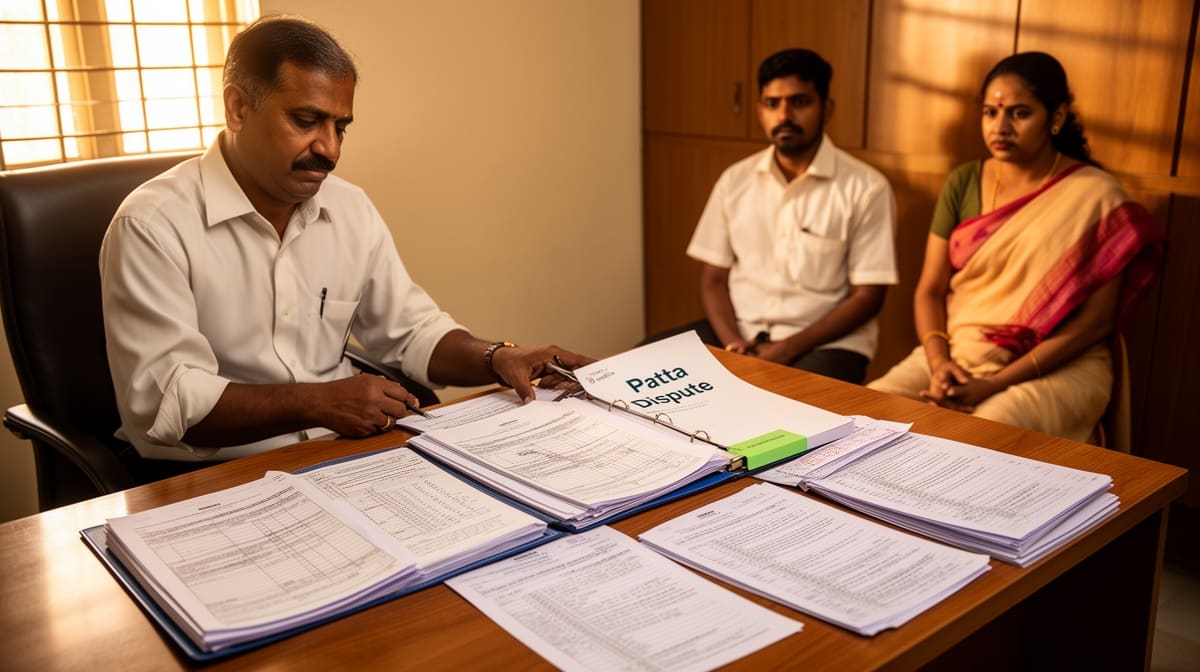
The Madras High Court has underscored the importance of timely administrative action in matters affecting public welfare, directing the Block Development Officer to decide on a representation seeking cancellation of a wood cutting mill license in a residential area within 12 weeks. This judgment reinforces the principle that statutory authorities must act on representations within a reasonable timeframe, ensuring compliance with environmental and zoning regulations.
Background & Facts
The Dispute
The petitioner, Suburamaniyan, filed a writ petition under Article 226 of the Constitution of India seeking a writ of mandamus to direct the fourth respondent, the Block Development Officer (BDO) of Sendurai Unit, Ariyalur Taluk, to conduct and complete an enquiry into the petitioner’s representation dated 30.10.2025. The representation sought cancellation of the permission granted to the seventh respondent, Thangamani, for setting up a wood cutting mill in a residential area. The petitioner alleged that the mill’s operation was illegal and violated zoning regulations.
Key Facts
- The seventh respondent was granted permission to set up a wood cutting mill in a residential area.
- The petitioner filed a representation dated 30.10.2025 seeking cancellation of the license on grounds of illegality.
- The second respondent, the District Environment Engineer of the Tamil Nadu Pollution Control Board (TNPCB), directed the fourth respondent to consider the petitioner’s representation.
- Despite the direction, the fourth respondent failed to pass any final order on the representation.
- The petitioner sought interim relief restraining the fifth and sixth respondents (TNEB officials) from providing high-voltage electricity service to the mill until statutory approvals were verified.
Procedural History
- 30.10.2025: Petitioner filed a representation before the fourth respondent seeking cancellation of the license.
- Undisclosed Date: Second respondent directed the fourth respondent to consider the representation.
- Undisclosed Date: No final order was passed by the fourth respondent.
- Undisclosed Date: Writ petition (WP No. 11203 of 2026) filed before the Madras High Court.
- 27.03.2026: The Madras High Court disposed of the writ petition with directions.
Relief Sought
The petitioner sought the following reliefs:
- A direction to the fourth respondent to conduct and complete an enquiry into the petitioner’s representation within a timeframe fixed by the Court.
- Pending the enquiry, an interim order restraining the fifth and sixth respondents from providing high-voltage electricity service to the mill.
- A direction to forbear the fifth and sixth respondents from extending any electrical service until statutory approvals were verified.
The Legal Issue
The central question before the Court was whether the Block Development Officer could be compelled, through a writ of mandamus, to decide on a representation seeking cancellation of a license for a wood cutting mill in a residential area within a specified timeframe, and whether interim relief could be granted pending such enquiry.
Arguments Presented
For the Petitioner
The petitioner argued that:
- The wood cutting mill was operating illegally in a residential area, violating zoning and environmental regulations.
- The second respondent had already directed the fourth respondent to consider the petitioner’s representation, but no action was taken.
- The delay in deciding the representation prejudiced the petitioner’s rights, warranting judicial intervention under Article 226.
- The fifth and sixth respondents should be restrained from providing electricity to the mill until statutory compliance was verified.
For the Respondents
The learned Additional Government Pleader (AGP) and counsel for the fourth respondent:
- Accepted notice and did not oppose the petitioner’s request for a time-bound disposal of the representation.
- Contended that the fourth respondent would consider the representation on merits after hearing objections from the seventh respondent and other relevant parties.
- Argued that no adverse orders were passed against the seventh respondent, and thus, notice to the seventh respondent was dispensed with.
The Court's Analysis
The Court observed that the petitioner’s representation dated 30.10.2025 had not been decided by the fourth respondent despite the direction from the second respondent. The Court emphasized the principle that statutory authorities must act on representations within a reasonable timeframe, failing which judicial intervention is warranted.
The Court noted that no prejudice would be caused to the fourth respondent if the representation was considered on merits after hearing objections from the seventh respondent and other relevant parties. The Court refrained from expressing any opinion on the merits of the representation, leaving it open for the fourth respondent to decide after a proper enquiry.
"No prejudice will be caused to the fourth respondent if the petitioner’s representation as stated supra is considered on merits and in accordance with law, after hearing the objections from the 7th respondent and any other party whom the fourth respondent deems it fit to enquire, within a time frame to be fixed by this Court."
The Court disposed of the writ petition with a direction to the fourth respondent to pass final orders on the petitioner’s representation within 12 weeks from the date of receipt of a copy of the order. The Court also clarified that it was not expressing any opinion on the merits of the representation.
The Verdict
The Madras High Court disposed of the writ petition with the following directions:
- The fourth respondent was directed to pass final orders on the petitioner’s representation dated 30.10.2025 within 12 weeks from the date of receipt of the order.
- The fourth respondent was to consider the supporting documents produced by the petitioner and hear objections from the seventh respondent and any other relevant parties.
- The Court refrained from expressing any opinion on the merits of the representation.
- No costs were awarded.
What This Means For Similar Cases
Timely Disposal of Representations Is Mandatory
This judgment reinforces the principle that statutory authorities must dispose of representations within a reasonable timeframe. Practitioners can cite this judgment to argue for time-bound disposal of representations, especially in cases involving public welfare or environmental concerns. Failure to act within a reasonable period may invite judicial intervention under Article 226.
Judicial Restraint in Merits of Administrative Decisions
- The Court refrained from expressing any opinion on the merits of the representation, leaving it to the statutory authority to decide after a proper enquiry.
- This approach underscores the limited scope of judicial review in administrative matters, where courts typically intervene only to ensure procedural compliance rather than substantive outcomes.
Interim Relief Pending Administrative Action
- The Court did not grant the interim relief sought by the petitioner (restraining electricity supply to the mill), as no adverse orders were passed against the seventh respondent.
- Practitioners must note that interim relief in writ petitions is discretionary and depends on the balance of convenience and the presence of a prima facie case. Courts may decline interim relief if no prejudice is demonstrated or if the respondent is not given an opportunity to be heard.