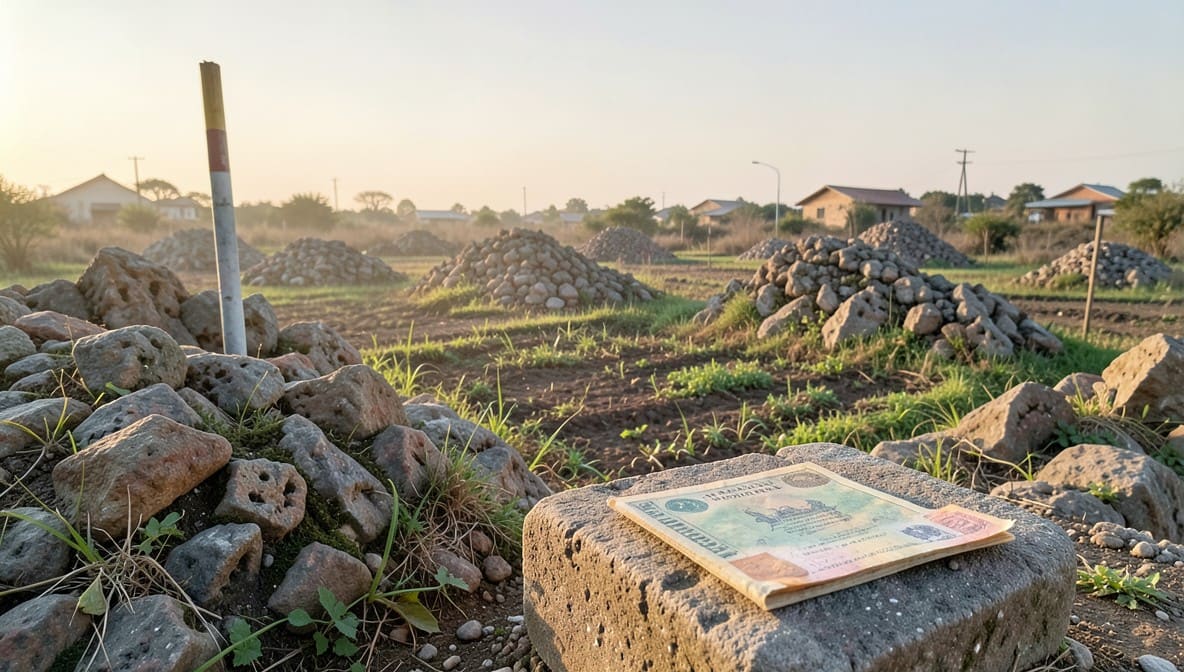
The Telangana High Court has issued a critical interim directive in a land dispute involving a pattadar pass book issued for land classified as government poramboke. The order balances the petitioner’s apparent possession against the state’s claim of illegal encroachment, establishing a temporary status quo while procedural rectification is undertaken.
Background & Facts
The Dispute
The petitioner, Smt. Mutyala Venkatamma, a 62-year-old agriculturalist from Edammagadda village in Chandampeta Mandal, Nalgonda District, holds a pattadar pass book bearing No. T28080082168 for land admeasuring 3.00 acres in Survey No. 657/Ai2, Devarakonda Village. The respondents, including the State of Telangana and revenue officials, contend that this land is classified as Sarkari Poramboku (government waste land) under the 1955-58 Chessala pahani, and that the petitioner has no legal title or ancestral claim to it.
Key Facts
- The land in Survey No. 657 totals 125.07 guntas, of which only 93.25 guntas are rocky/hilly and non-cultivable, and 31.22 guntas are cultivable.
- The cultivable portion was assigned to various farmers between 1960-61 and 1969-70.
- The petitioner and her predecessors were never recorded as assignees of government land in any official record prior to 2018-19.
- During the Land Reforms Updation Programme (2018-19), the petitioner’s name was erroneously entered into the Dharani portal for 3.00 acres in Survey No. 657/Ai2 without supporting documentation.
- The pattadar pass book was issued to her based on this erroneous entry.
- It was later discovered that the same land was wrongly recorded in the name of Smt. Muthyala Ramulamma, another wife of the petitioner’s husband, Sri Muthyala Sarvaiah.
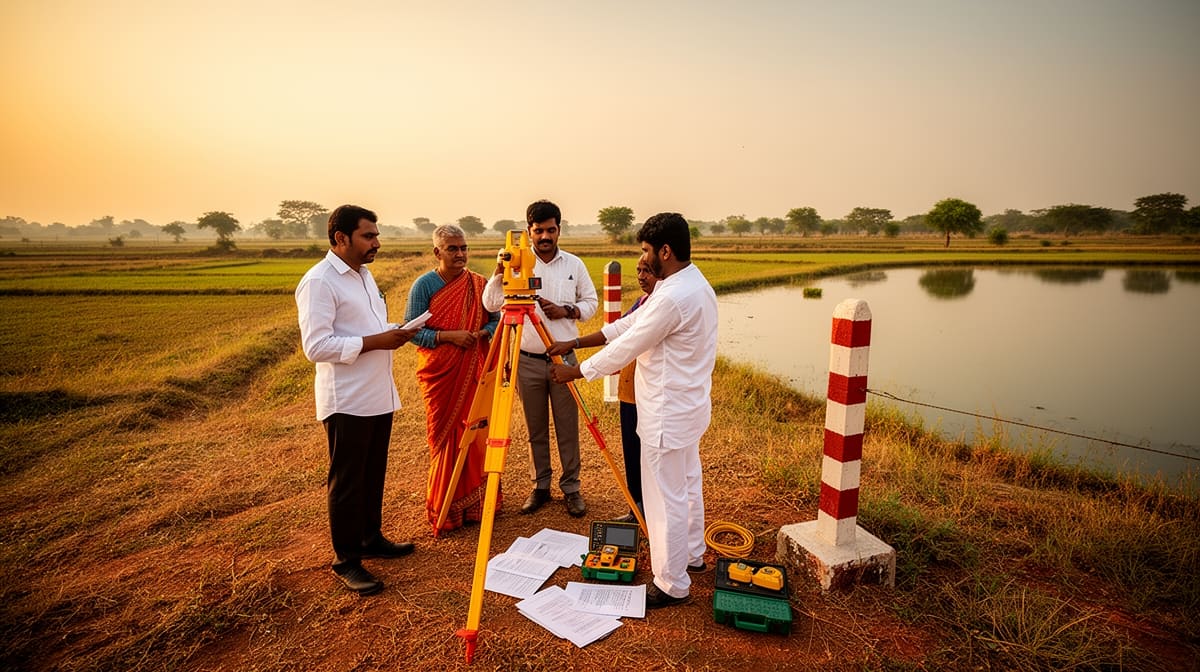
- The Tahsildar of Devarakonda Mandal conducted a field inspection and confirmed that the petitioner is leveling the unassigned government land, which is recorded in the Bhu Bharati portal as Government land under Khata No. 20000101.
- The petitioner is alleged to have been selling house plots on this land to landless poor.
Procedural History
- The petitioner filed Writ Petition No. 8452 of 2026 under Article 226 of the Constitution on grounds of violation of Articles 14, 21, and 300-A.
- A parallel petition under Section 151 CPC was filed seeking interim injunction against dispossession.
- The matter was heard on 23.03.2026 before the Hon’ble Justice B. Vijaysen Reddy.
The Parties' Positions
Petitioner’s Position:
- The pattadar pass book was issued in accordance with law and confers legitimate rights.
- The land has been in her family’s possession for decades.
- Any attempt to dispossess her without due process violates natural justice and her right to property under Article 300-A.
Respondents’ Position:
- The land is government poramboke land, not privately assignable.
- The pattadar pass book was issued erroneously during the Dharani updation without verification.
- The petitioner is encroaching on state land and attempting to alienate it illegally.
- Steps are underway to cancel the pass book.
Relief Sought
The petitioner seeks a declaration that the proposed dispossession is illegal, arbitrary, and violative of Articles 14, 21, and 300-A. She also seeks a permanent injunction restraining the respondents from dispossessing her from the land.
The Legal Issue
The central question was whether the issuance of a pattadar pass book for land classified as government poramboke, without lawful assignment or record of possession, can confer any enforceable right under Article 300-A of the Constitution, and whether the state may suspend such an erroneous record pending verification without violating natural justice.
Arguments Presented
For the Petitioner
Counsel argued that the pattadar pass book, once issued by the revenue authorities, creates a presumption of title under the Telangana Land Records Act. He cited State of Andhra Pradesh v. K. Rama Reddy to assert that possession coupled with a pass book entitles the holder to protection under Article 300-A. He contended that cancellation without a hearing violates the principles of natural justice and that dispossession would amount to arbitrary deprivation of property.
For the Respondent
The Assistant Government Pleader submitted that the land is classified as Sarkari Poramboku under the 1955-58 Chessala pahani, which is the authoritative record for land classification. He emphasized that no assignment deed, revenue receipt, or ancestral record supports the petitioner’s claim. He relied on Union of India v. T. S. R. Subramanian to argue that the state has the sovereign right to reclaim poramboke land, and that erroneous entries in Dharani do not create vested rights. He further stated that cancellation proceedings are already underway and that the petitioner’s actions constitute encroachment.
The Court's Analysis
The Court acknowledged the petitioner’s possession and the issuance of the pattadar pass book but emphasized that such documents are not conclusive proof of title when the underlying land is classified as government poramboke. The Court noted that the 1955-58 Chessala pahani, being the oldest available revenue record, carries significant evidentiary weight under Section 33 of the Indian Evidence Act.
"The fact that a pattadar pass book has been issued does not override the classification of land as Sarkari Poramboku in the original pahani, especially where no assignment or lawful possession is established."
The Court further observed that the petitioner’s name was entered in Dharani due to an administrative error, and that the same land was erroneously recorded under another wife’s name, indicating systemic irregularity. The Court held that while the petitioner cannot be summarily dispossessed, the state must be given a reasonable opportunity to correct the record.
The Court applied the doctrine of status quo ante to prevent irreversible changes to the land’s nature while the cancellation process is underway. It emphasized that Article 300-A does not protect illegal encroachments on government land, but it also prohibits arbitrary action by the state without due process.
The Verdict
The writ petition is disposed of without costs. The status quo is maintained for a period of six weeks: the petitioner shall not alter the nature of the land, and the Tahsildar shall complete the cancellation of pattadar pass book No. T28080082168 within this period. If the pass book is not cancelled within six weeks, the petitioner shall be entitled to enjoy the land with full rights as per the pass book. All interim petitions are closed.
What This Means For Similar Cases
Erroneous Dharani Entries Do Not Create Vested Rights
- Practitioners must challenge pattadar pass books issued for poramboke land by referencing the earliest pahani records, not just the Dharani portal.
- Possession alone is insufficient to establish title if the land is statutorily classified as government property.
Status Quo Is a Procedural Safeguard, Not a Title Grant
- Courts may impose temporary status quo to prevent irreversible dispossession while administrative rectification proceeds.
- This does not validate the claim but prevents abuse of power during verification.
State Must Act Within Reasonable Time
- The six-week deadline sets a precedent: delays in cancelling erroneous records may result in the recognition of possession as lawful.
- Revenue authorities must act diligently; inaction may convert illegal possession into de facto entitlement.