The National Green Tribunal has reaffirmed that environmental statutes demand strict compliance, regardless of industry category or local administrative convenience. Operating an industrial unit on land designated as 'nalla' in revenue records - without statutory consents under the Water and Air Acts - constitutes a clear violation of ecological safeguards and public health obligations.
Background & Facts
The Dispute
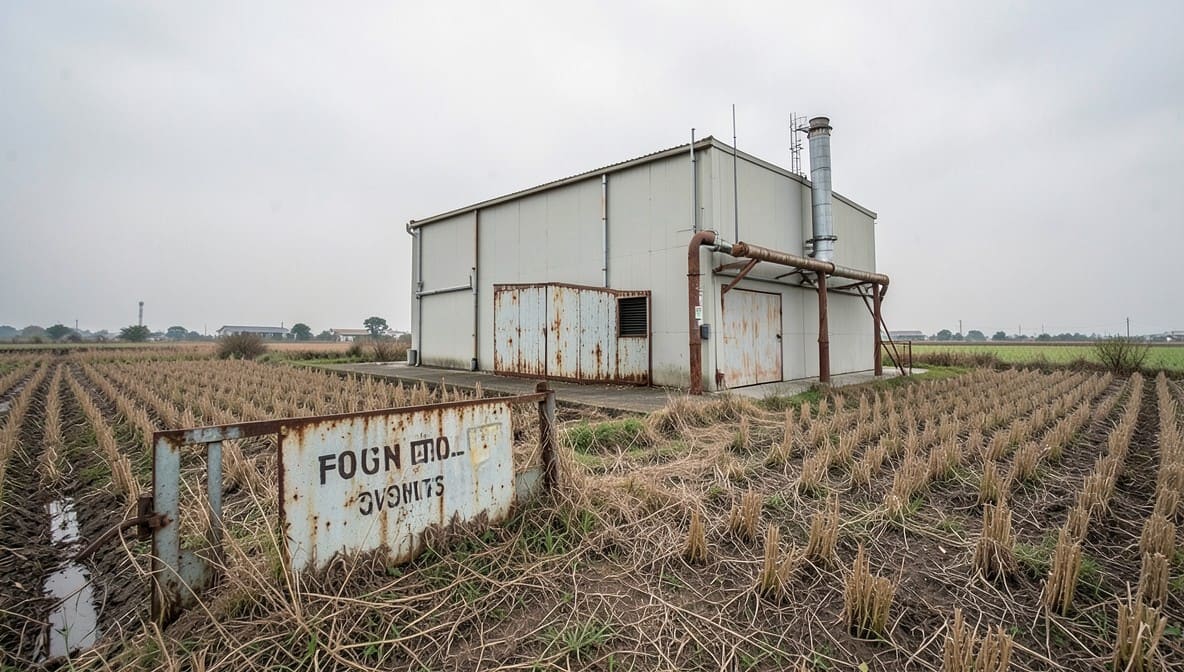
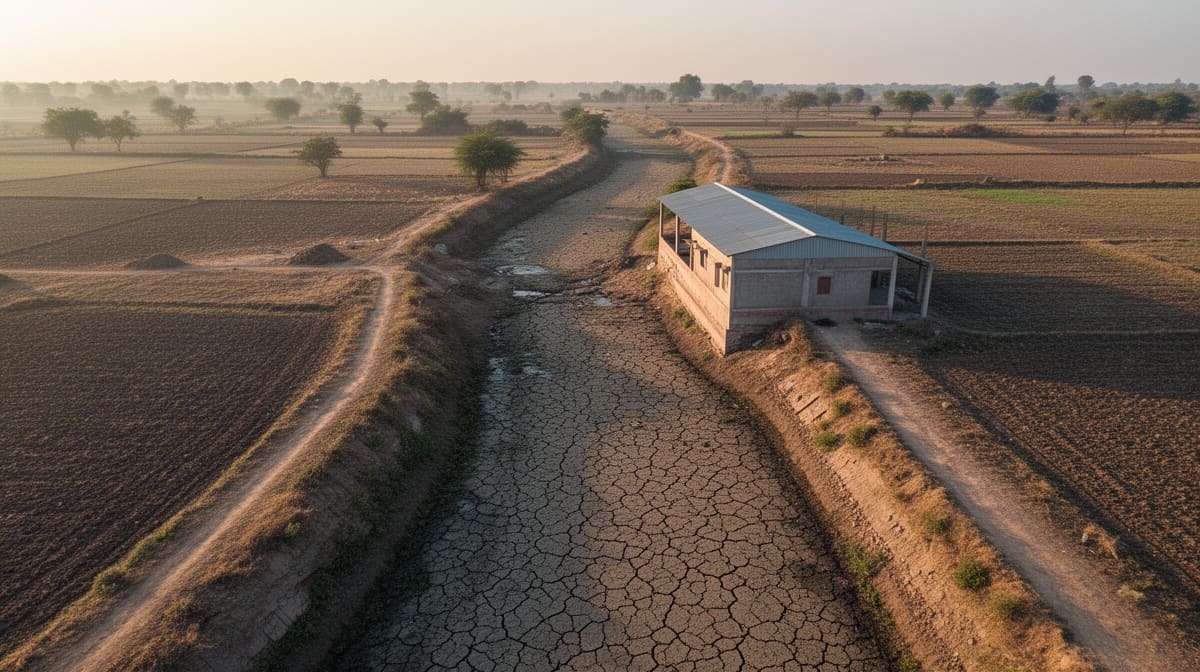
The applicant, Yuvraj Singh, alleged that two industrial units - M/s Kankriya Plasto Technique and M/s S. Kankriya Wire & Cable - were illegally constructed and operated on Khasra No. 29/1 and 33/1 in Desuriya Khrolan, Jodhpur. Revenue records classified Khasra No. 33/1 as "Gair Mumkin Bala (Nalla)" - a natural drainage channel critical for flood control and groundwater recharge. No land conversion approval had been granted, and neither unit held Consent to Establish (CTE) or Consent to Operate (CTO) from the Rajasthan State Pollution Control Board (RSPCB).
Procedural History
- 2024: Original Application filed before NGT Central Zone Bench, Bhopal, alleging illegal industrial activity on protected drainage land.
- 26.11.2024: NGT constituted a joint inspection committee comprising representatives from RSPCB and Jodhpur District Collector.
- 08.01.2025: Committee visited site and confirmed both units were operational without consents.
- 02.04.2025: RSPCB issued final closure directions under Section 31-A of the Air Act and Section 33-A of the Water Act.
- 04.04.2025: Consent applications for both units were rejected.
- 05.02.2026: Hearing concluded; order uploaded on 09.02.2026.
Relief Sought
The applicant sought immediate closure of the units, restoration of the nalla land, and imposition of environmental compensation. He also demanded accountability from the Jodhpur Development Authority and District Collector for permitting illegal construction.
The Legal Issue
The central question was whether industrial operations on land classified as 'nalla' in revenue records can be permitted without Consent to Establish and Consent to Operate under the Water (Prevention and Control of Pollution) Act, 1974 and the Air (Prevention and Control of Pollution) Act, 1981, and whether exemptions under state enterprise laws override compliance with central environmental statutes.
Arguments Presented
For the Appellant/Petitioner
The applicant contended that:
- Operation on a drainage channel violates the public trust doctrine and ecological integrity.
- The Rajasthan Micro and Medium Enterprises Act, 2019 cannot override central environmental laws.
- The absence of CTE/CTO renders the entire operation illegal, irrespective of industry category.
- The proximity to a government school and residential area heightens the risk to public health.
For the Respondent/State
The respondents argued that:
- The units had applied for consents and were awaiting final approval.
- The unit M/s Kankriya Plasto Technique was categorized as "Green" under RSPCB guidelines and posed minimal pollution risk.
- Operations had ceased voluntarily, and affidavits were submitted to shift the units.
- The matter was sub judice before the Rajasthan High Court, and RSPCB was constrained from taking independent action.
The Court's Analysis
The Tribunal rejected the argument that state-level exemptions could override central environmental statutes. It emphasized that Section 21 of the Air Act and Section 25 of the Water Act mandate prior consent for any industrial activity, irrespective of scale or perceived environmental impact. The Tribunal noted that even "Green Category" industries are not exempt from this requirement.
"The classification of an industry as Green, Red or Orange by the State Board does not absolve it from the statutory obligation to obtain Consent to Establish and Consent to Operate under the central environmental statutes."
The Tribunal further held that land designated as "nalla" in revenue records is protected under the principle of ecological continuity and cannot be converted for industrial use without explicit approval under land use regulations. The fact that the units were operating without consents, despite clear revenue classification, constituted a violation of Section 31-A of the Air Act and Section 33-A of the Water Act.
The Tribunal acknowledged that RSPCB had already taken decisive action - issuing closure directions and rejecting consent applications - and that the units had submitted undertakings to remain non-operational until compliance. The Tribunal found these actions sufficient to discharge the State’s obligations under environmental law.
The Verdict
The applicant’s petition was disposed of as the State authorities had already taken appropriate action. The Court held that operating an industrial unit without CTE/CTO on land classified as 'nalla' is a statutory violation, and that consent under the Air and Water Acts is mandatory and non-negotiable, even for low-impact industries.
What This Means For Similar Cases
Consent Is Non-Negotiable, Even for Green-Category Units
- Practitioners must advise clients that no industry, regardless of environmental classification, can operate without CTE and CTO under the Air and Water Acts.
- Relying on state-level exemptions (e.g., MSME Acts) to bypass central environmental laws is legally untenable.
- Applications for consent must be filed before any construction or operation begins.
Nalla Land Cannot Be Industrialized Without Explicit Conversion
- Revenue records classifying land as "nalla", "nullah", or "drainage channel" trigger heightened scrutiny under environmental law.
- Any attempt to use such land for industry without land conversion approval under Rule 90-A or equivalent provisions is void ab initio.
- Local development authorities must verify land use classification before granting any building permits.
Judicial and Administrative Action Must Be Timely and Coordinated
- When RSPCB issues closure directions and rejects consents, courts should not delay disposal of applications merely because the matter is sub judice in High Court.
- NGT may close matters if State authorities have acted decisively, but must ensure compliance is monitored.
- Practitioners should file follow-up applications if closure orders are not enforced within 30 days.