The National Green Tribunal has affirmed that industries in critically polluted areas cannot evade environmental obligations due to economic hardship, establishing that compliance with state fuel policies and Supreme Court directives is non-negotiable under the Environment (Protection) Act, 1986.
Background & Facts
The Dispute
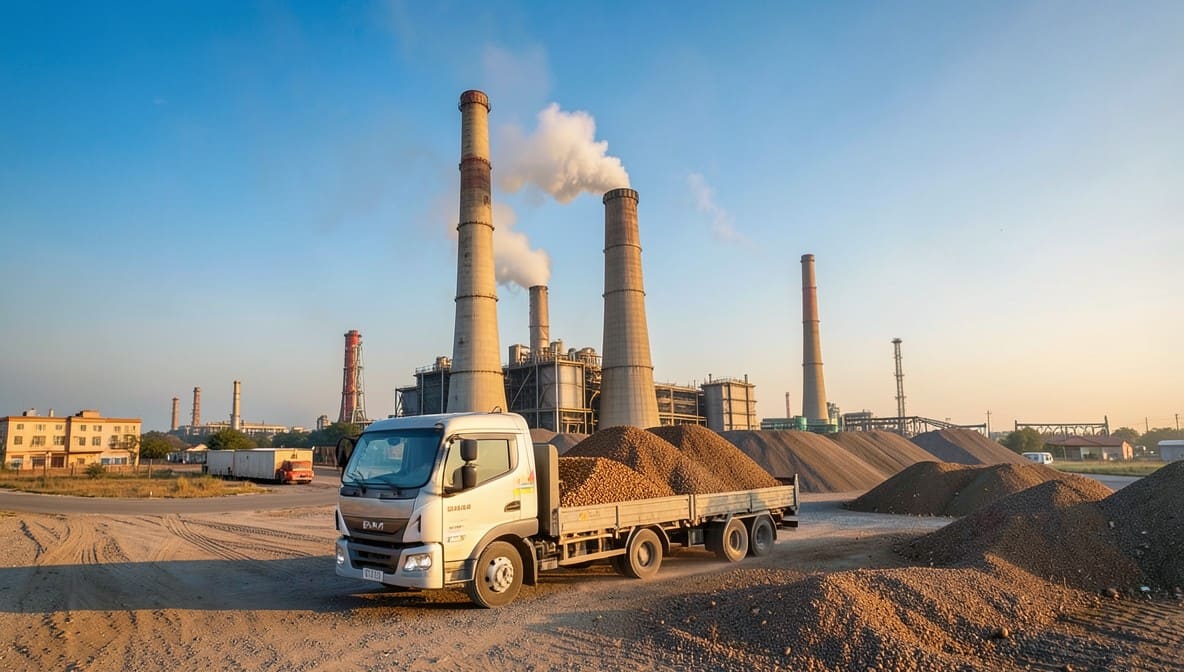
The applicant alleged severe violations of air quality norms by over 220 industries in Mandi Gobindgarh, Punjab, primarily engaged in recycled steel production, ceramics, forging, and lead smelting. These units were operating coal-based furnaces despite being located in a designated non-attainment city, contributing to hazardous levels of PM10 and PM2.5. The applicant sought closure of coal-based units until they transitioned to Piped Natural Gas (PNG), along with relocation to designated industrial zones and strict enforcement of Hazardous Waste Rules, 2016.
Procedural History
- 2023: Original Application filed before NGT seeking environmental remediation.
- 21.04.2023: Tribunal constituted a joint committee comprising CPCB, PPCB, and District Magistrate to investigate and submit a factual report.
- 05.12.2023: Applicant filed objections to the joint committee’s findings.
- 2023 - 2025: Multiple compliance reports submitted by PPCB, NHAI, Municipal Council, and MoEF&CC.
- 04.10.2023: State of Punjab notified its Fuel Policy mandating transition to cleaner fuels.
- 25.02.2026: Final order pronounced by NGT.
The Parties' Positions
- Applicant: Argued that continued use of coal violates national ambient air quality standards, Supreme Court directives, and the State’s own Fuel Policy. Emphasized that economic hardship cannot override environmental duty.
- Respondents (Industries): Contended that PNG prices (₹50 - 52 per m³) rendered operations uncompetitive compared to neighboring states using cheaper coal (₹12 per kg). Requested continued coal use until fuel pricing stabilizes.
- State of Punjab & PPCB: Acknowledged the price disparity but affirmed that the Fuel Policy of 04.10.2023 rendered prior temporary relaxations infructuous. Highlighted compliance efforts including APCD upgrades and 113 units already switched to PNG.
- NHAI & Municipal Council: Reported measures to reduce road dust, including mechanical sweeping, water sprinkling, and road repairs.
Relief Sought
The applicant sought: (1) immediate closure of coal-based units; (2) mandatory conversion to PNG; (3) enforcement of carrying capacity assessment; (4) strict compliance with CPCB’s 2019 directions under Section 5 of the Environment (Protection) Act, 1986.
The Legal Issue
The central question was whether industries in a non-attainment city may continue using coal as fuel despite a state-enacted fuel policy mandating cleaner alternatives, and whether economic competitiveness can override statutory environmental obligations under the Environment (Protection) Act, 1986 and Air (Prevention & Control of Pollution) Act, 1981.
Arguments Presented
For the Petitioner
The applicant relied on MC Mehta v. Union of India (1985) and Vardhman Kaushik v. Union of India (2024), arguing that the Supreme Court’s 2017 directive to prohibit pet coke and furnace oil nationwide, coupled with CPCB’s 2019 order under Section 5 of the Environment (Protection) Act, 1986, imposed a binding obligation on all states to formulate and enforce fuel policies. The applicant emphasized that Mandi Gobindgarh’s PM10 levels were 1.5 times above permissible limits, and that the principle of sustainable development and precautionary principle under Article 21 of the Constitution required immediate action, irrespective of cost.
For the Respondent
The industries, represented by AISRA, argued that the sudden surge in PNG prices - triggered by global gas market volatility post-Russia-Ukraine war - made compliance economically unviable. They cited that neighboring states like Haryana and Uttar Pradesh had not enforced similar bans, creating an uneven playing field. They requested a phased transition, citing hardship under Section 31A of the Air Act, and claimed that infrastructure for PNG remained intact, indicating willingness to comply if pricing normalized.
The Court's Analysis
The Tribunal conducted a rigorous analysis of statutory obligations, precedent, and factual compliance. It held that the State’s Fuel Policy of 04.10.2023, notified under the Air (Prevention & Control of Pollution) Act, 1981, was not merely advisory but a legally enforceable instrument. The Tribunal emphasized that the temporary relief granted to industries during price volatility had been explicitly revoked by PPCB’s order dated 05.10.2023, rendering any continued coal use unlawful.
"The issue is now concluded by the direction of this Tribunal contained in the order dated 01.10.2020 passed in OA 924/2019, requiring the shifting of the rolling mills from coal to PNG."
The Court distinguished economic hardship from legal non-compliance, citing MC Mehta v. Union of India (2017), where the Supreme Court had explicitly rejected the argument that pollution control measures should be relaxed due to industry competitiveness. The Tribunal noted that the CPCB’s 2019 direction under Section 5 of the Environment (Protection) Act, 1986 mandated strict enforcement of fuel policies across all states, making Punjab’s policy binding and non-optional.
The Court also rejected the argument that neighboring states’ non-compliance justified non-compliance in Punjab, holding that each state is independently accountable under national environmental law. The Tribunal further affirmed that the carrying capacity study, mandated in Neeraj Goyal v. State of Punjab, remained unfulfilled and was critical for long-term planning.
The Tribunal acknowledged the technological upgrades undertaken by industries - such as side-hood suction APCDs and automation - but held that these were complementary, not substitutive, to fuel conversion. The continued use of coal, even with improved emission controls, failed to meet the minimum threshold of environmental protection required for non-attainment cities.
The Verdict
The applicant succeeded. The National Green Tribunal held that industries in Mandi Gobindgarh must fully comply with the State’s Fuel Policy of 04.10.2023 and cease using coal immediately. The Court directed strict enforcement of prior orders, mandated completion of the carrying capacity study within three months, and affirmed that economic hardship cannot override statutory environmental duties under the Environment (Protection) Act, 1986.
What This Means For Similar Cases
Compliance with State Fuel Policies Is Mandatory
- Practitioners must treat state-level fuel policies notified under the Air Act as legally binding instruments, not soft guidelines.
- Temporary relaxations granted during crises are revocable by notice and do not create vested rights.
- Industries cannot claim exemption based on pricing volatility unless explicitly permitted by the policy itself.
Non-Attainment Cities Cannot Be Exempted
- All industries in non-attainment cities must prioritize fuel conversion, regardless of regional disparities in enforcement.
- Economic competitiveness arguments are irrelevant when national ambient air quality standards are breached.
- Courts will uphold Supreme Court directives and CPCB orders under Section 5 as binding on state authorities.
Carrying Capacity Studies Are Not Optional
-
Failure to complete carrying capacity assessments, as mandated in prior orders, constitutes procedural non-compliance.
-
Practitioners must proactively seek and file such studies in all pending environmental applications involving industrial clusters.
-
The Tribunal may re-list matters if compliance reports are not filed within stipulated timelines.
-
Industries must document all steps toward fuel conversion, including infrastructure retention, to demonstrate good faith.
-
Enforcement actions under Section 31A of the Air Act and Section 37(1) for non-compliance are now clearly justified.
-
Municipal and NHAI responsibilities for road dust control are integral to air quality remediation and must be included in compliance reporting.