The National Green Tribunal Southern Zone has reaffirmed that ecological preservation of freshwater bodies takes precedence over statutory minimum buffer requirements when judicial oversight and environmental integrity are at stake. In a significant ruling concerning Byalakere Lake in Bengaluru, the Tribunal imposed a 30-meter buffer zone despite a newly enacted law permitting only 12 meters, underscoring the primacy of judicial directives and environmental harm prevention.
Background & Facts
The Dispute
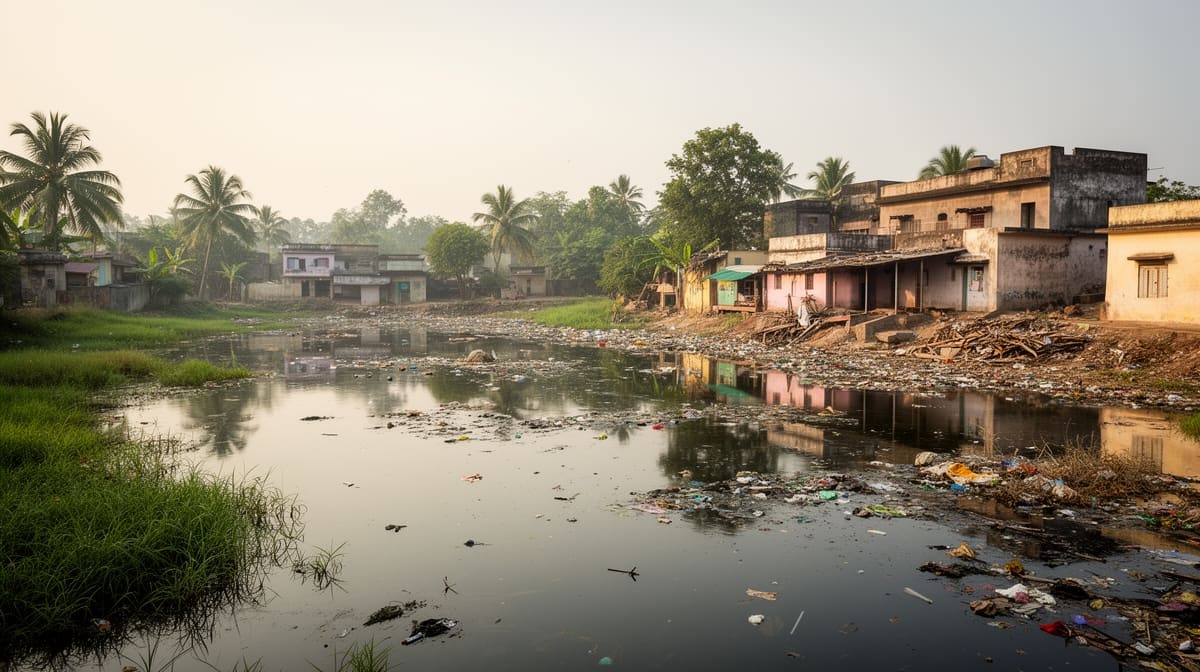
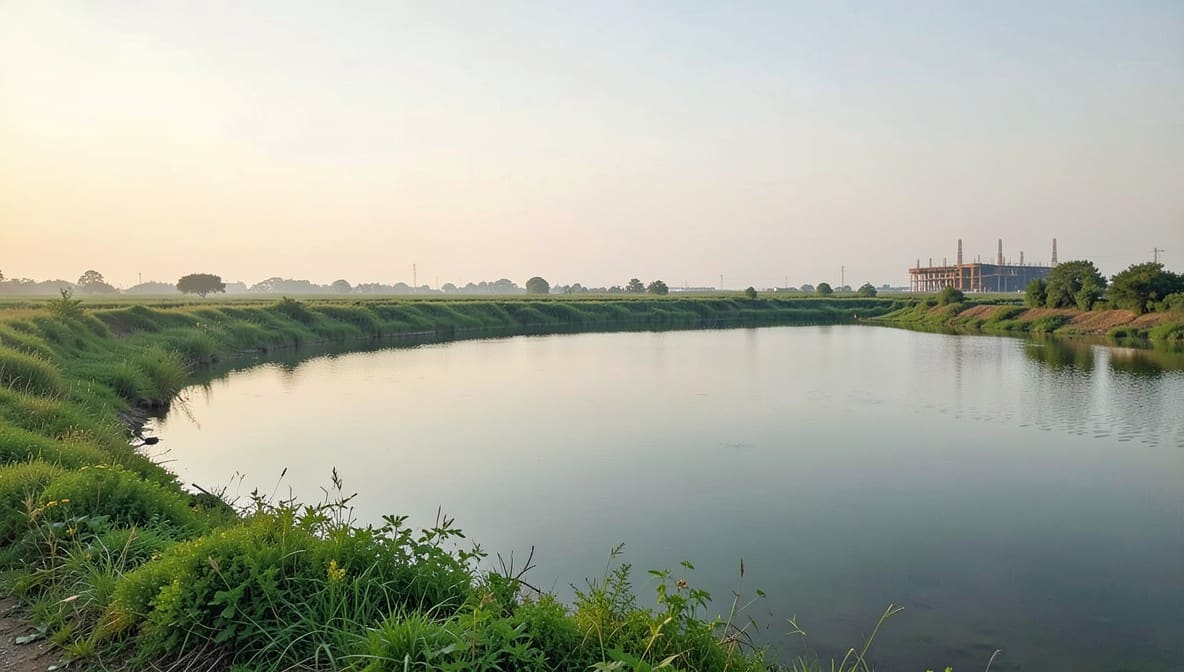
The applicant, Babajan S/o. Late Mabusabi, filed an Original Application before the National Green Tribunal Southern Zone challenging developmental activities by the Bangalore Development Authority (BDA) within the ecological buffer zone and lake bed of Byalakere Lake, a 13-acre, 10-gunta freshwater body located in Hesaraghatta Hobli, Yelahanka North Taluk, Bengaluru. The applicant alleged that the BDA’s construction of the Dr. Shivaram Karanth Layout involved filling the lake bed with debris, road formation, and infrastructure development in violation of environmental norms and statutory protections for water bodies.
Key Facts
- Byalakere Lake measures 13 acres and 10 guntas and serves as a critical local water resource.
- The BDA initiated the Dr. Shivaram Karanth Layout project covering 3,837 acres across 17 villages in Bengaluru North Taluk.
- The layout’s road alignment originally passed through Grama Thana and congested areas of Byalakere village, raising environmental and social concerns.
- The Karnataka Tank Conservation and Development Authority (KTCDA) issued an order on 29.11.2023 directing a halt to all encroachments and developmental activities within the lake’s buffer zone.
- The Supreme Court, in Bangalore Development Authority & Anr. v. State of Karnataka (C.A. Nos. 7661-63 of 2018), constituted a Three-Member Committee on 03.12.2020 to review the legality of the layout.
- The Committee, in its 30th Meeting on 02.12.2022, recommended alternative bypass alignments for 12 RMP roads, including the one through Byalakere village, to avoid demolition and protect Grama Thana.
- The Supreme Court accepted the Committee’s recommendations on 06.12.2022 and closed all pending applications.
- The BDA revised its layout plans in accordance with the Supreme Court’s directions and submitted a report on 13.04.2026 committing to a 30-meter buffer around the lake.
- The Karnataka Tank Conservation and Development Authority (Amendment) Act, 2025, received presidential assent on 16.02.2026 and reduced the mandatory buffer for lakes between 10 and 25 acres from 24 meters to 12 meters.
Procedural History
- 29.11.2023: KTCDA issued order restraining development within Byalakere Lake buffer zone.
- 03.12.2020: Supreme Court constituted Three-Member Committee to oversee layout legality.
- 02.12.2022: Committee recommended revised road alignments to avoid lake encroachment.
- 06.12.2022: Supreme Court accepted Committee’s recommendations and closed related applications.
- 16.02.2026: Karnataka Tank Conservation and Development Authority (Amendment) Act, 2025, came into force.
- 12.06.2025: KTCDA substituted as Respondent No. 2 in I.A. No. 66/2025 (SZ).
- 15.04.2026: Judgment reserved by NGT Southern Zone.
- 09.06.2026: Judgment delivered by NGT Southern Zone.
The Parties' Positions
Applicant: Argued that the BDA’s activities violated the environmental sanctity of the lake, contravened KTCDA’s 2023 order, and ignored ecological principles. Emphasized that even if statutory buffer was reduced, judicially mandated protections must prevail.
Respondents (BDA and others): Contended that the project was approved by the Government of Karnataka (G.O. No. UDD/553/MNX/2018), aligned with Revised Master Plan 2015, and fully compliant with Supreme Court directives. Stated that the 30-meter buffer was voluntarily adopted and that the 2025 Amendment Act permits public utility works within 12-meter buffer with prior approval.
Relief Sought
The applicant sought: (1) immediate halt to all construction and debris dumping within the lake bed and buffer zone; (2) restoration of the lake’s natural hydrology; (3) enforcement of a buffer zone exceeding statutory minimums; and (4) directions to KTCDA and KSPCB to monitor compliance and prevent pollution.
The Legal Issue
The central question was whether the statutory 12-meter buffer zone mandated by the Karnataka Tank Conservation and Development Authority (Amendment) Act, 2025, overrides judicially recognized environmental protections and a voluntarily committed 30-meter buffer, or whether ecological integrity and prior judicial directions require a higher standard.
Arguments Presented
For the Petitioner
The applicant relied on the principle of precautionary principle and polluter pays principle under environmental jurisprudence, citing M.C. Mehta v. Kamal Nath and Vellore Citizens Welfare Forum v. Union of India. It was argued that the KTCDA’s 2023 order, issued under the 2014 Act, remained valid and binding until superseded by a competent authority. The applicant emphasized that the 2025 Amendment Act permits public utility works only with prior approval and must not obstruct natural water flow - conditions not met here. The 30-meter commitment by BDA, they argued, was a recognition of ecological necessity and must be enforced.
For the Respondent
The BDA contended that the project was fully compliant with the Revised Master Plan 2015 and the Supreme Court’s 2022 order, which approved the revised road alignments. It argued that the 2025 Amendment Act, being a later and specific legislation, governs the buffer requirements and that the 12-meter zone is legally sufficient. The BDA further stated that the 30-meter buffer was a voluntary undertaking and not a legal obligation, and that the project was under active monitoring by the Karnataka High Court.
The Court's Analysis
The Tribunal conducted a layered analysis of statutory, judicial, and ecological imperatives. It acknowledged the validity of the Karnataka Tank Conservation and Development Authority (Amendment) Act, 2025, and its 12-meter buffer requirement for lakes between 10 and 25 acres. However, the Tribunal emphasized that statutory provisions cannot override judicial orders or environmental harm.
"The statutory minimum cannot be read as a ceiling on environmental protection, particularly when judicial oversight has already mandated a higher standard and when ecological degradation is demonstrably occurring."
The Tribunal noted that the BDA itself had committed to a 30-meter buffer in its 13.04.2026 report - a commitment made in the context of Supreme Court supervision and public interest. The Tribunal held that such voluntary undertakings, especially when made in response to environmental concerns and under judicial scrutiny, acquire legal weight and cannot be diluted by subsequent legislative amendments.
The Tribunal further observed that the 2025 Amendment Act permits public utility works only "with prior approval of the Authority" and "without any obstruction at the natural or normal course of inflow or outflow." The BDA had not demonstrated that such approval was obtained for the works already undertaken within the lake’s buffer. Moreover, the Tribunal found that road formation and debris dumping had already altered the lake’s hydrology, as evidenced by KTCDA’s 2023 order.
The Tribunal distinguished between legislative flexibility and environmental necessity, holding that where judicial bodies have intervened to prevent irreversible ecological damage, the law must bend to preserve the resource.
The Verdict
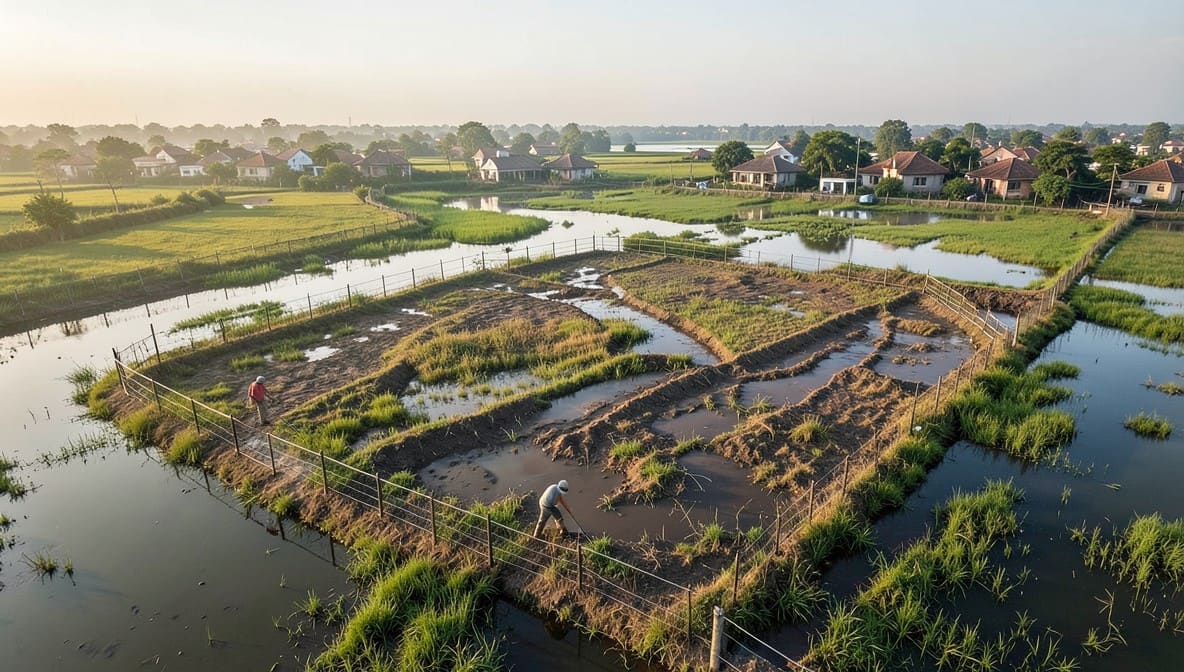
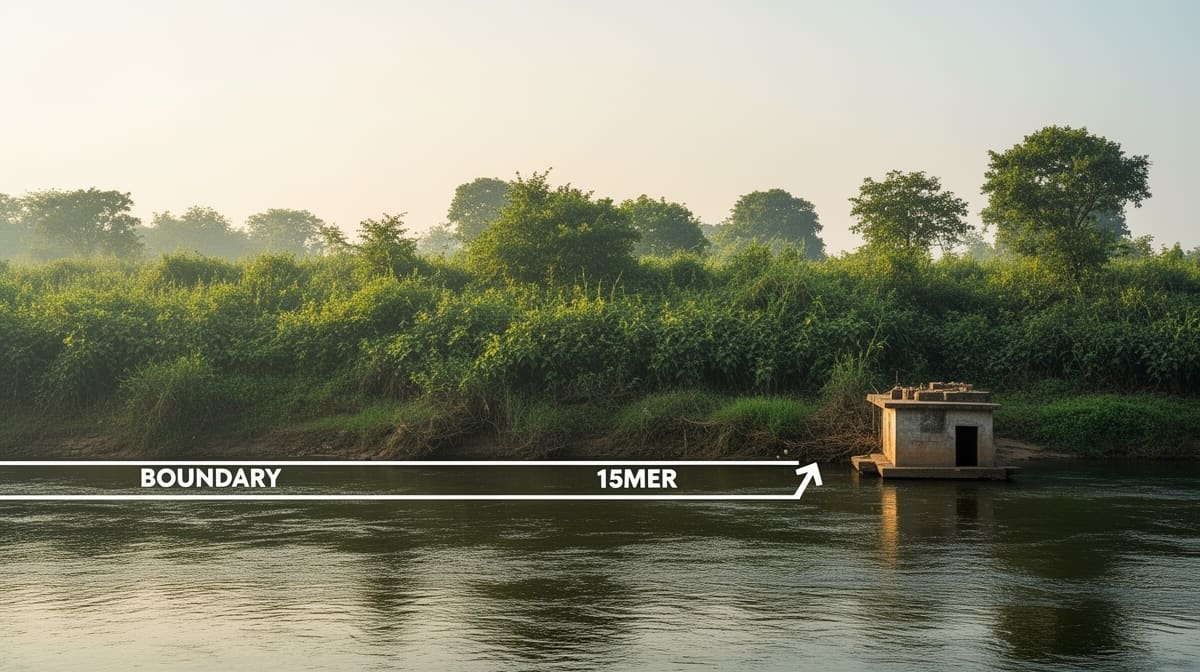
The applicant succeeded. The Tribunal directed the Bangalore Development Authority to maintain a 30-meter buffer zone around Byalakere Lake, as voluntarily undertaken in its 13.04.2026 report. No construction, debris dumping, or road formation is permitted within the lake bed or buffer zone. The Karnataka Tank Conservation and Development Authority shall remove any existing encroachment and restore the lake to its original condition within 12 weeks. The Karnataka State Pollution Control Board shall ensure no sewage or construction waste enters the lake or its feeder channels. Compliance shall be monitored by the NGT through a report submitted every 30 days.
What This Means For Similar Cases
Judicial Commitments Trump Statutory Minimums
- Practitioners must argue that voluntary undertakings made before courts or tribunals, especially in environmental matters, become binding obligations.
- Even if a statute permits a lower buffer, courts may enforce higher standards where ecological harm is evident or judicial orders exist.
Buffer Zones Are Not Just Measurements - They Are Ecological Safeguards
- The 12-meter buffer under the 2025 Amendment Act is a floor, not a ceiling.
- Any development within buffer zones must prove no obstruction to inflow/outflow, regardless of statutory allowance.
- Environmental tribunals will prioritize hydrological integrity over administrative convenience.
Procedural Compliance Is Non-Negotiable
- Prior approval from KTCDA is mandatory for any public utility work within buffer zones - mere legislative permission is insufficient.
- Developers must document and submit proof of such approvals; failure renders works illegal.
- Pollution control boards must actively monitor discharge during construction - passive oversight is inadequate.