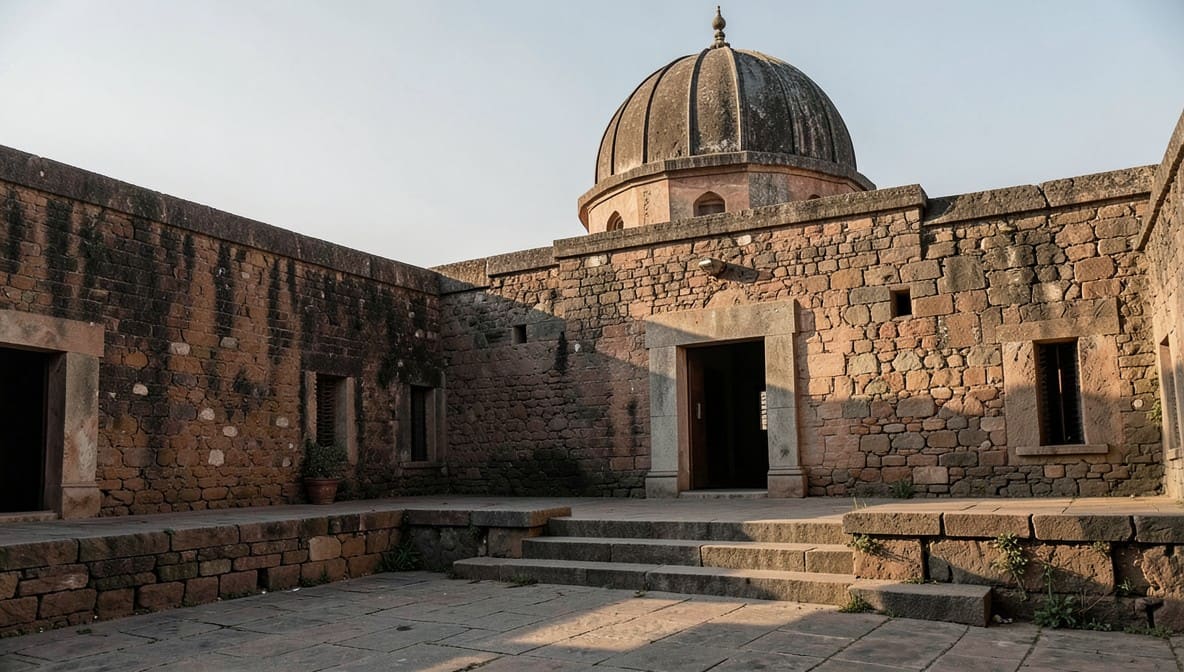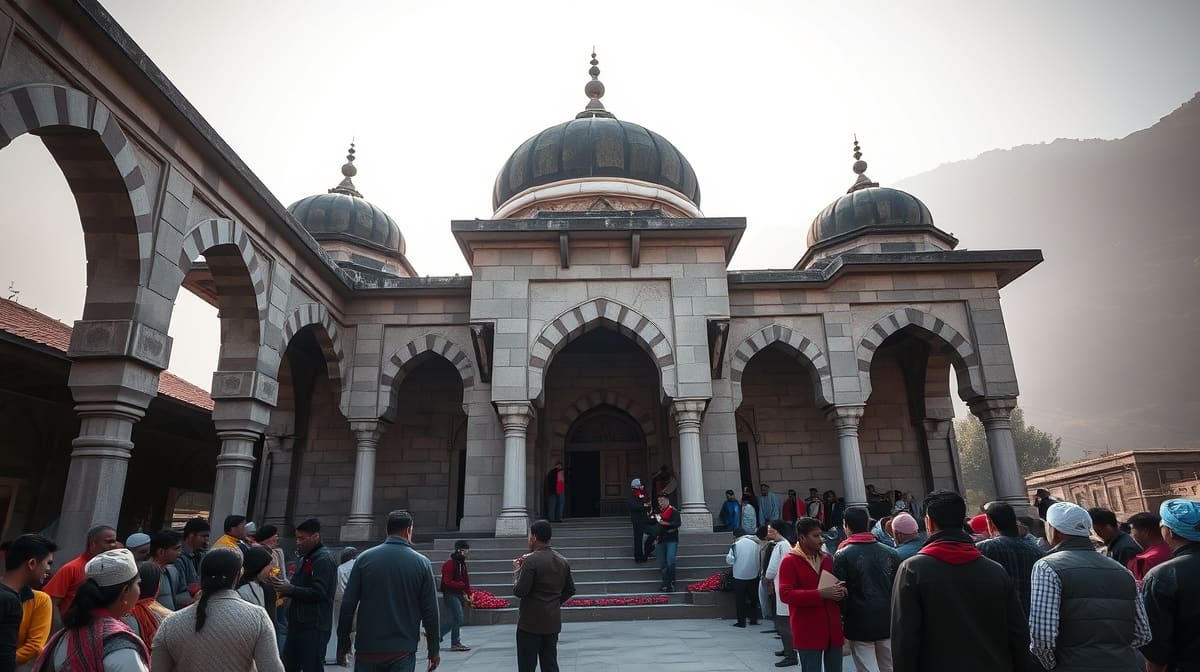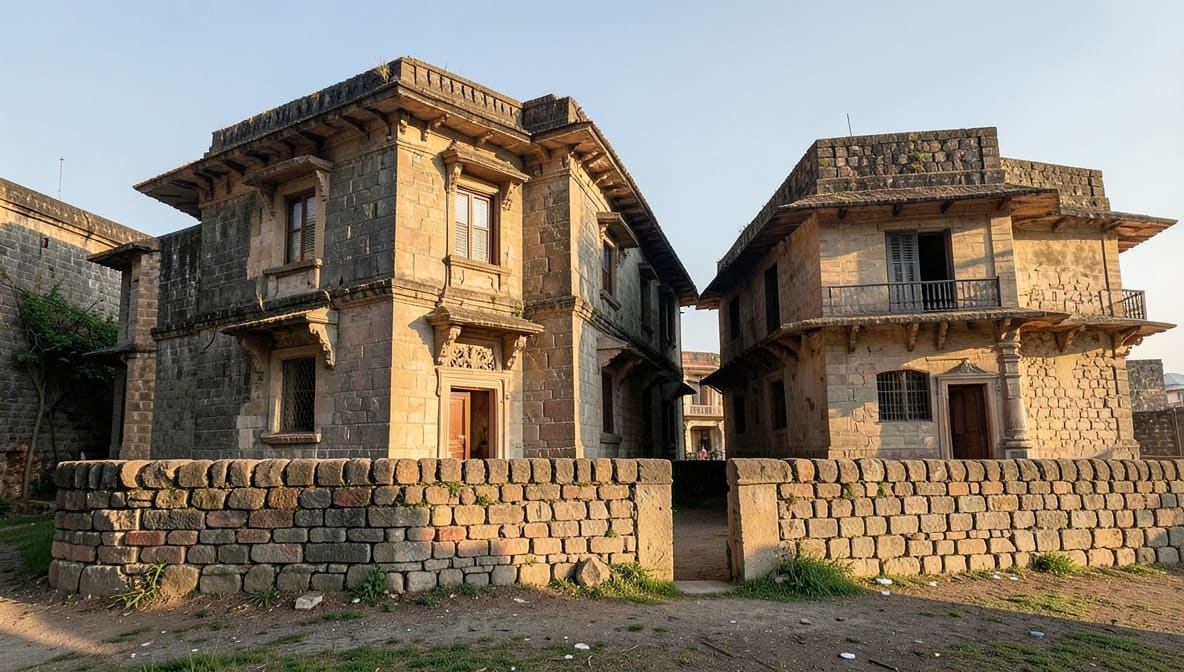
The Andhra Pradesh High Court has clarified that hereditary claims to the position of Mutawalli over a Waqf property cannot override the findings of a statutory enquiry conducted under the Waqf Act, 1995. In a case involving competing claims to manage the Lanka Peer Run-Hussain Panja in Vijayawada, the Court upheld the Waqf Board’s decision to permit one claimant to conduct the Muharram procession, emphasizing procedural compliance and evidentiary substantiation over familial lineage alone.
Background & Facts
The Dispute
The dispute centers on the hereditary succession to the position of Mutawalli of the Waqf property known as Lanka Peer Run-Hussain Panja, located at D.No.8-6-1, Panja Centre, Vijayawada. Two claimants - SK Suleman (petitioner in WP No.15440/2026) and Sheikh Jeelani alias Shaida (respondent no.7 in WP No.15440/2026 and petitioner in WP No.13245/2026) - assert competing rights to manage the Waqf property and conduct the annual Muharram procession. The petitioner claims succession through his father, who served as Mutawalli until his death in 2015. The respondent claims descent through his great grandfather, who allegedly served as an interim Mutawalli during the minority of the petitioner’s father.
Key Facts
- The Waqf property was notified under the Waqf Act, 1995.
- The petitioner’s father was appointed Mutawalli vide notification dated 01.12.2003 and served until his death on 2015.
- The respondent’s great grandfather acted as an interim caretaker during the minority of the petitioner’s father, but no formal appointment was recorded.
- An enquiry report dated 19.12.2018, conducted by the Waqf Board, concluded that the respondent is the maternal grandson of Dada Saheb, the deceased notified Mutawalli.
- Based on this report, the respondent was appointed as temporary Mutawalli under Section 63 of the Waqf Act, 1995, for a period of two years, effective from 2022 to 07.11.2024.
- The petitioner filed multiple representations between 2018 and 2026 seeking recognition as Mutawalli, all of which remained pending.
- In 2022, a Coordinate Bench of this Court permitted both parties to conduct the Muharram procession in two shifts: 10.00 a.m. to 1.00 p.m. (petitioner) and 2.00 p.m. to 5.00 p.m. (respondent).
- In 2025, the respondent alone conducted the procession following an order in Writ Appeal No.752 of 2025.
- On 09.06.2026, the Waqf Board issued order F.No.89/NTR/Per/2023, permitting the respondent to conduct the Muharram procession from 15.06.2026 to 30.06.2026, rejecting the petitioner’s request.
Procedural History
- 01.12.2003: Petitioner’s father formally appointed Mutawalli.
- 2015: Death of petitioner’s father; succession dispute arises.
- 23.08.2014: Respondent alleges petitioner filed fraudulent partition deed to claim ownership.
- 19.12.2018: Enquiry report submitted by Waqf Board officer recognizing respondent as legal heir.
- 2021: Respondent files W.P.No.1362/2021 seeking recognition as Mutawalli.
- 05.08.2022: Coordinate Bench permits joint procession in two shifts (W.P.Nos.21670 & 24071 of 2022).
- 07.11.2024: Temporary Mutawalliship of respondent expires.
- 2025: Respondent conducts Muharram procession alone following W.A.No.752 of 2025.
- 16.05.2024 & 11.02.2026: Respondent submits representations seeking permanent appointment.
- 02.04.2026: Petitioner seeks permission to conduct Muharram procession.
- 09.06.2026: Waqf Board grants permission to respondent; rejects petitioner’s request.
- 15.06.2026: Writ Petition No.15440/2026 filed by petitioner challenging rejection.
- 15.06.2026: Writ Petition No.13245/2026 filed by respondent seeking recognition as Mutawalli and permission.
- 18.06.2026: High Court delivers common order.
The Parties' Positions
- Petitioner (SK Suleman): Claims hereditary right as son of the last formally appointed Mutawalli. Argues that the respondent’s claim lacks documentary proof and that the Board’s rejection of his request is arbitrary and contrary to prior court orders.
- Respondent (Sheikh Jeelani): Claims descent through maternal lineage to the original notified Mutawalli. Relies on the 2018 enquiry report and his prior temporary appointment. Argues that the petitioner’s civil suits are barred under Section 85 of the Waqf Act and that the Board’s decision is lawful and reasoned.
- Waqf Board: States that the 2018 enquiry report formed the basis for the respondent’s temporary appointment and that the 2026 permission order was issued after due consideration of legal and factual grounds.
Relief Sought
- Petitioner: Quash the order dated 09.06.2026; direct the Board to permit him to conduct the Muharram procession; recognize him as Mutawalli.
- Respondent: Declare his appointment as Mutawalli lawful; direct immediate appointment as permanent Mutawalli; permit him to conduct the 2026 procession.
- Both: Seek resolution of the succession dispute through statutory procedure.
The Legal Issue
The central question was whether a claimant’s assertion of hereditary succession to the position of Mutawalli under a Waqf property overrides the findings of a statutory enquiry conducted under the Waqf Act, 1995, and whether the Waqf Board’s decision to grant procession permission to one claimant, based on such an enquiry, constitutes arbitrariness or violation of natural justice.
Arguments Presented
For the Appellant/Petitioner
The petitioner’s counsel argued that succession to Mutawalli is hereditary under the Waqf Act and that his father’s long-standing tenure as Mutawalli from 2003 to 2015 established his prima facie right. He contended that the respondent’s claim was unsubstantiated, as no record showed his great grandfather was ever formally appointed. He relied on the 2022 order permitting joint processions as binding precedent and argued that the 2026 rejection was capricious, based on irrelevant grounds including pending civil suits, and violated the principle of consistency. He urged the Court to direct a return to the two-shift arrangement.
For the Respondent/State
The respondent’s counsel contended that the 2018 enquiry report, which identified him as the maternal grandson of the original notified Mutawalli, was the only legally valid basis for succession. He emphasized that the Waqf Board’s temporary appointment under Section 63 was lawful and that the 2025 procession permission by the Division Bench was based on this report. He argued that the petitioner’s civil suits were barred under Section 85 of the Waqf Act and that the 2026 order was reasoned, transparent, and consistent with prior judicial findings. He opposed the two-shift arrangement, citing the Division Bench’s 2025 order as having superseded the 2022 directive.
The Court's Analysis
The Court examined the statutory framework under the Waqf Act, 1995, particularly Sections 63 and 85, and the nature of judicial review in matters involving administrative discretion. It noted that while hereditary succession is recognized under the Act, it is not automatic and must be substantiated by evidence and formal appointment.
"The enquiry report dated 19.12.2018, which identified the respondent as the maternal grandson of the notified Mutawalli, formed the basis for his temporary appointment under Section 63 of the Waqf Act, 1995. This statutory mechanism supersedes mere familial assertion."
The Court observed that the respondent’s temporary appointment was not merely administrative but grounded in a documented enquiry, which the petitioner never challenged through appropriate legal recourse. The Court further noted that the 2022 two-shift arrangement was a temporary accommodation to maintain peace, not a precedent establishing a right to shared procession.
The Court held that the Waqf Board’s 2026 order was not arbitrary. It correctly relied on the 2018 enquiry report and the Division Bench’s 2025 order, both of which favored the respondent’s claim. The Court also rejected the petitioner’s allegation of violation of natural justice, noting that no specific material was identified as being ignored, and that the Board had afforded both parties multiple opportunities to present their case.
The Court emphasized that while it cannot adjudicate disputed facts of lineage in writ jurisdiction, it can review whether administrative action is based on relevant considerations and lawful procedure. Here, the Board’s decision met that standard.
The Verdict
The writ petition filed by SK Suleman (WP No.15440/2026) was dismissed. The writ petition filed by Sheikh Jeelani (WP No.13245/2026) was disposed of with directions. The Waqf Board’s order dated 09.06.2026 permitting the respondent to conduct the Muharram procession from 15.06.2026 to 30.06.2026 was upheld. The authorities are directed to appoint a permanent Mutawalli to the Lanka Peer Run-Hussain Panja within the next 60 days, after affording both parties a fair opportunity to present their case and hear submissions. There shall be no order as to costs.
What This Means For Similar Cases
Statutory Enquiry Trumps Hereditary Assertion
- Practitioners must now establish succession to Mutawalliship through documented statutory enquiry reports, not merely through family lineage.
- Oral testimony or unverified claims of descent are insufficient without formal recognition under the Waqf Act.
- Courts will defer to administrative findings where a proper enquiry has been conducted.
Temporary Appointments Carry Legal Weight
- Temporary appointments under Section 63 of the Waqf Act are not mere stopgaps - they form the basis for subsequent decisions and can be relied upon in judicial review.
- A temporary Mutawalli’s conduct of religious ceremonies, if sanctioned by the Board and upheld by courts, establishes a precedent for future permissions.
- Repeated annual litigation over procession rights is discouraged; permanent appointments are now the expected remedy.
Civil Court Jurisdiction Is Barred for Waqf Property Disputes
- Any challenge to ownership or possession of Waqf property must be raised before the Waqf Tribunal, not civil courts.
- Pending civil suits concerning Waqf properties are not valid grounds to deny religious permissions.
- Practitioners must ensure that all claims are channeled through the statutory framework under the Waqf Act, 1995.