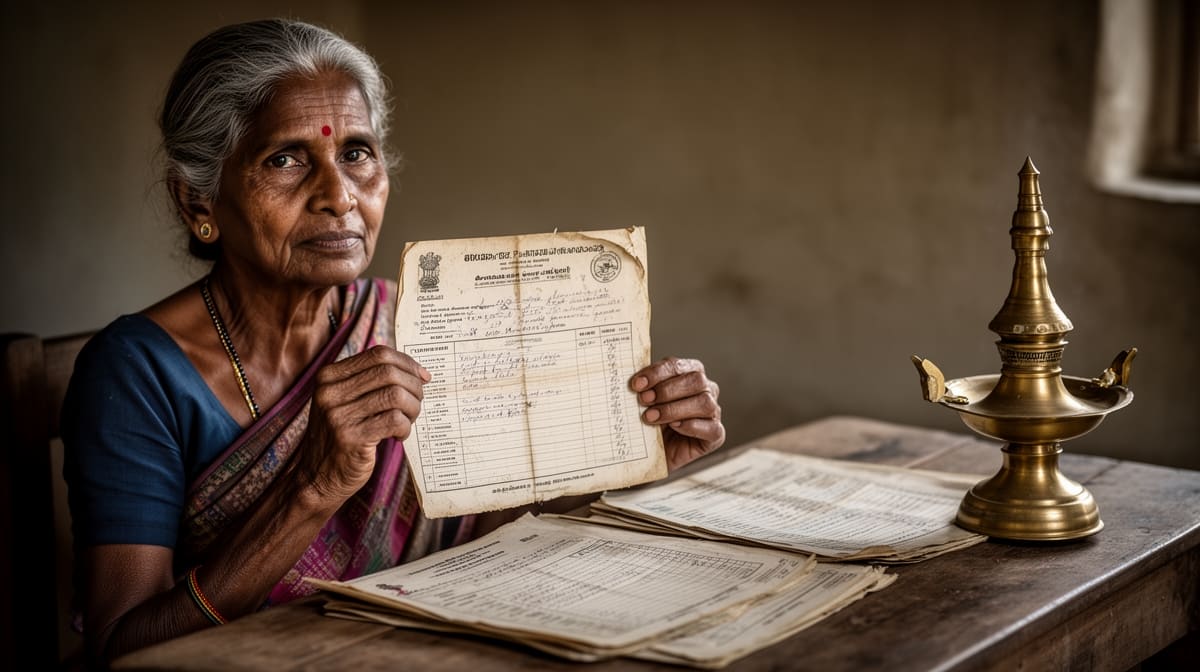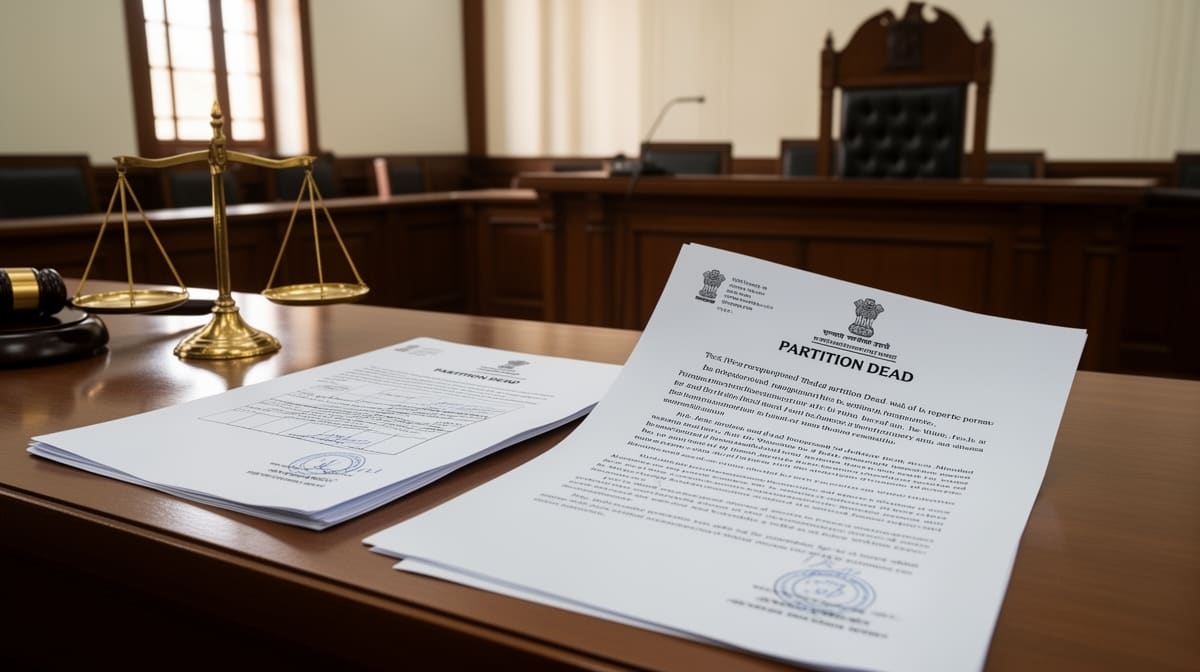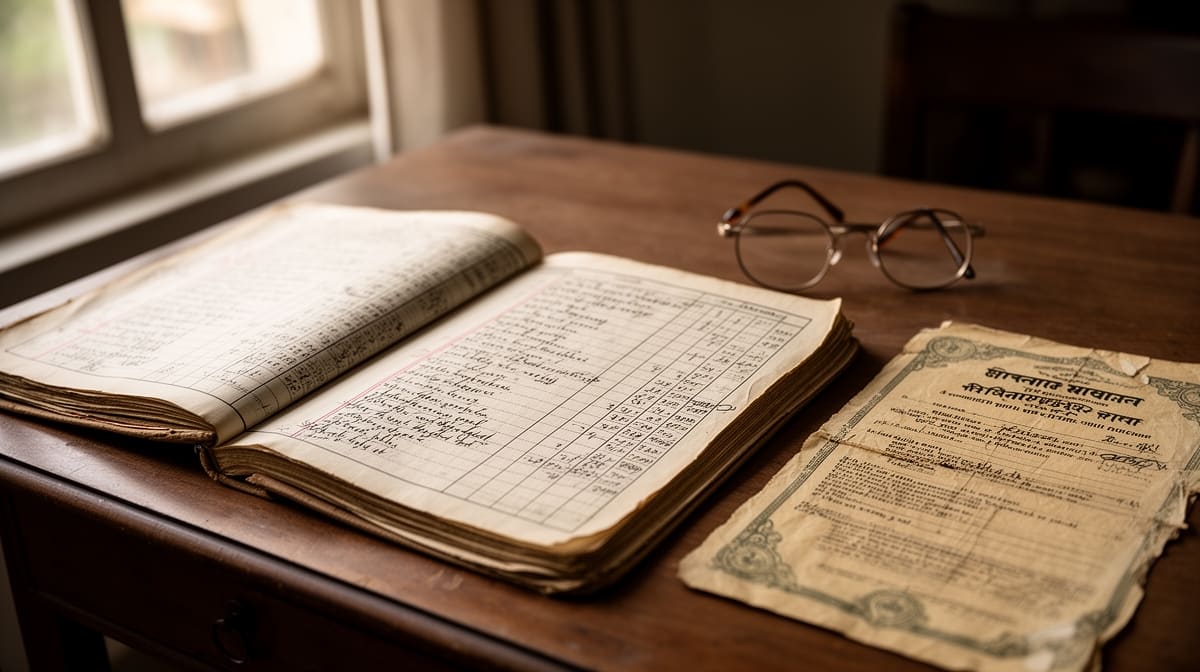
The Madras High Court has reaffirmed that claims to ancestral property cannot rest on speculative assertions or familial narratives alone. In a decisive ruling, the Court emphasized that legal title, documentary evidence, and statutory compliance under the Hindu Succession Act, 1956, are indispensable to establish joint family character. This judgment provides critical clarity for practitioners handling partition suits and inheritance disputes.
Background & Facts
The Dispute
The plaintiffs, descendants of Srihari Naidu, filed a suit for partition of multiple properties, claiming they were ancestral and part of a joint Hindu family. They contended that properties listed in Schedules A through H were acquired using income from Schedule B, which they alleged was originally owned by Srihari Naidu. The defendants, including Srihari Naidu’s son and grandchildren, disputed this, asserting that all properties were self-acquired.
Procedural History
- 2014: Original suit (C.S. No. 409 of 2014) filed in the District Court seeking partition of eight schedule properties.
- 2019: Learned Single Judge decreed partition only in respect of Schedule C property and dismissed claims over others.
- 2019: Appellants filed Original Side Appeal under Section 15(1) of the Amended Letters Patent, 1865.
- 2025: Legal heirs of deceased 5th appellant were brought on record via CMP No. 1352 of 2025.
Relief Sought
The appellants sought partition and separate possession of their alleged shares in all schedule properties, arguing that the properties were acquired from joint family income and thus retained ancestral character. They also invoked Section 106 of the Indian Evidence Act to shift the burden of proof onto the first defendant.
The Legal Issue
The central question was whether property acquired from the income of a self-acquired asset retains ancestral character under the Hindu Succession Act, 1956, and whether the burden of proving joint family origin lies on the claimants or the property holder.
Arguments Presented
For the Appellant
The appellants argued that Schedule B property, though initially held by Srihari Naidu, became the source of income for acquiring other properties. They contended that since the family operated as a joint unit - with plaintiffs contributing labor and income - the properties acquired from Schedule B’s proceeds should be deemed ancestral. Reliance was placed on Section 106 of the Indian Evidence Act, asserting that the first defendant, as the holder of financial records, bore the burden to prove independent sources.
For the Respondent
The respondents countered that Schedule B was purchased by Srihari Naidu and devolved absolutely upon the first defendant upon his death in 1956. They submitted that Schedule A was paid for and registered in the first defendant’s name, and other properties were independently acquired by the second and third defendants using their own earnings. No documentary evidence linked the properties to joint family funds.
The Court's Analysis
The Court examined the foundational principle that ancestral property must originate from a common ancestor and be held jointly by successive generations. It held that property inherited from a father who acquired it himself does not become ancestral. The Court noted that Srihari Naidu died in 1956, and the plaintiffs were born after his death, making them heirs to his estate, not coparceners in an ancestral property.
"The property devolved upon the first defendant under Section 8 of the Hindu Succession Act, 1956, as his absolute property cannot be treated as ancestral property."
The Court further clarified that even if Schedule B generated income used to acquire other properties, those acquisitions remained the absolute property of the first defendant, as the source itself was not ancestral. Mere assertion of joint family nucleus, without proof of common intention, pooling of resources, or shared ownership, was deemed legally insufficient.
Regarding Section 106 of the Indian Evidence Act, the Court rejected its application, holding that the burden of proving ancestral character lies with the party asserting it. The first defendant was not required to disprove a claim that lacked prima facie evidentiary support.
The Court affirmed that documentary evidence trumps oral testimony in property disputes, and the absence of title deeds, bank records, or joint account statements fatally undermined the appellants’ case.
The Verdict
The appeal was dismissed. The Court upheld the Single Judge’s decree, holding that only Schedule C property was ancestral and entitled to partition. All other properties were confirmed as self-acquired. The Court emphasized that mere familial association or income derivation does not convert self-acquired property into ancestral property.
What This Means For Similar Cases
Ancestral Status Requires Documentary Proof
- Practitioners must now insist on title deeds, purchase records, and inheritance documents to establish ancestral character.
- Claims based on oral testimony or family history alone will be dismissed.
- Courts will not infer joint family ownership from mere cohabitation or income flow.
Burden of Proof Rests on Claimants
- Section 106 of the Indian Evidence Act does not shift burden to the property holder unless the claimant establishes a prima facie case.
- Plaintiffs in partition suits must plead and prove the joint family nucleus with contemporaneous records.
- Failure to produce bank statements, income tax returns, or property acquisition documents is fatal.
Income Source Does Not Alter Title
- Property purchased using income from a self-acquired asset remains self-acquired.
- The doctrine of "tracing" income to establish ancestral character is not recognized under Hindu law.
- Practitioners should advise clients to document all property acquisitions with clear source attribution.