The Uttarakhand High Court has clarified that the State can be held vicariously liable for accidents caused by vehicles requisitioned for official duties, even when the registered owner is a different entity. The judgment also reinforces the mandatory inclusion of future prospects in compensation calculations for permanent disability, setting a clear benchmark for Motor Accident Claims Tribunals.
Background & Facts
The Dispute
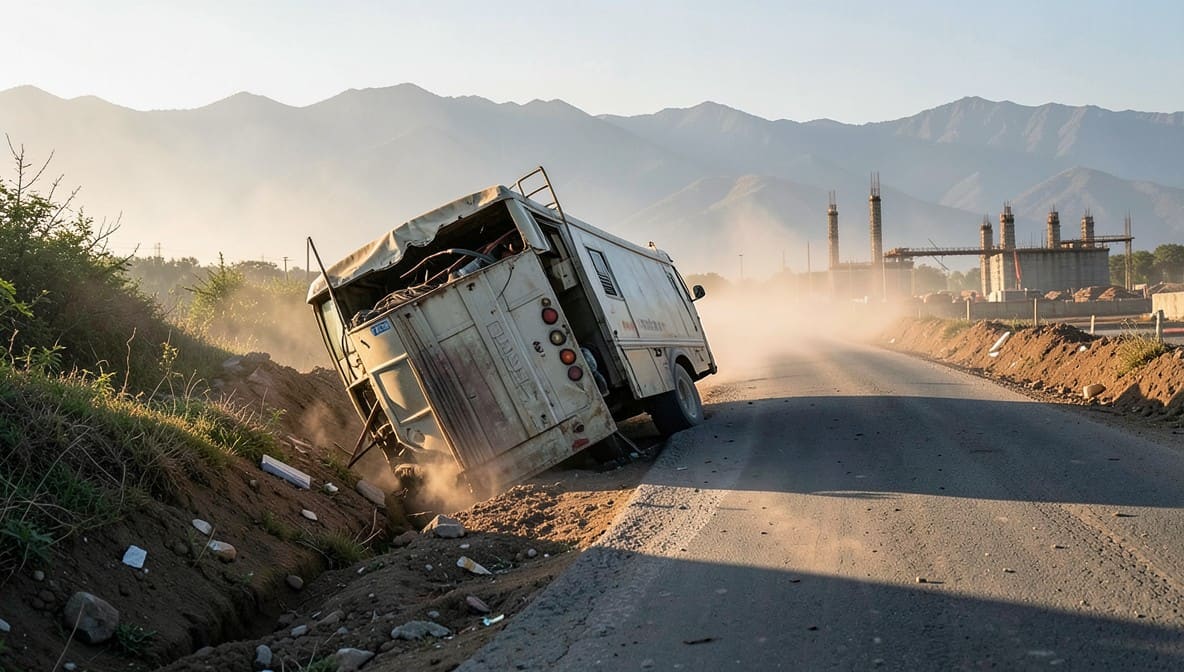
On 14 January 2006, Umesh Chandra Pandey was injured when a Jeep bearing registration No. UK-04-1698 collided with the motorcycle on which he was riding as a pillion passenger near Lalpur petrol pump. He sustained severe injuries, resulting in 90% permanent disability. The claimant filed a claim petition before the Motor Accident Claims Tribunal seeking compensation from the vehicle’s owner, driver, and insurer.
Procedural History
- 2006: Claim petition filed before Motor Accident Claims Tribunal, Udham Singh Nagar
- 2010: Tribunal awarded ₹7,24,000 with 6% interest, holding the State liable despite the vehicle being registered to U.P. Seeds and Tarai Vikas Nigam
- 2011: State appealed under Section 173 of the Motor Vehicles Act (AO/505/2011)
- 2018: Claimant filed cross-objections for enhancement of compensation (AO/7/2018)
- 2026: Uttarakhand High Court heard both appeals together
The Parties' Positions
- State of Uttarakhand: Argued it was not the registered owner and had no direct control over the driver; liability should rest with the original owner; questioned medical evidence and quantum of compensation
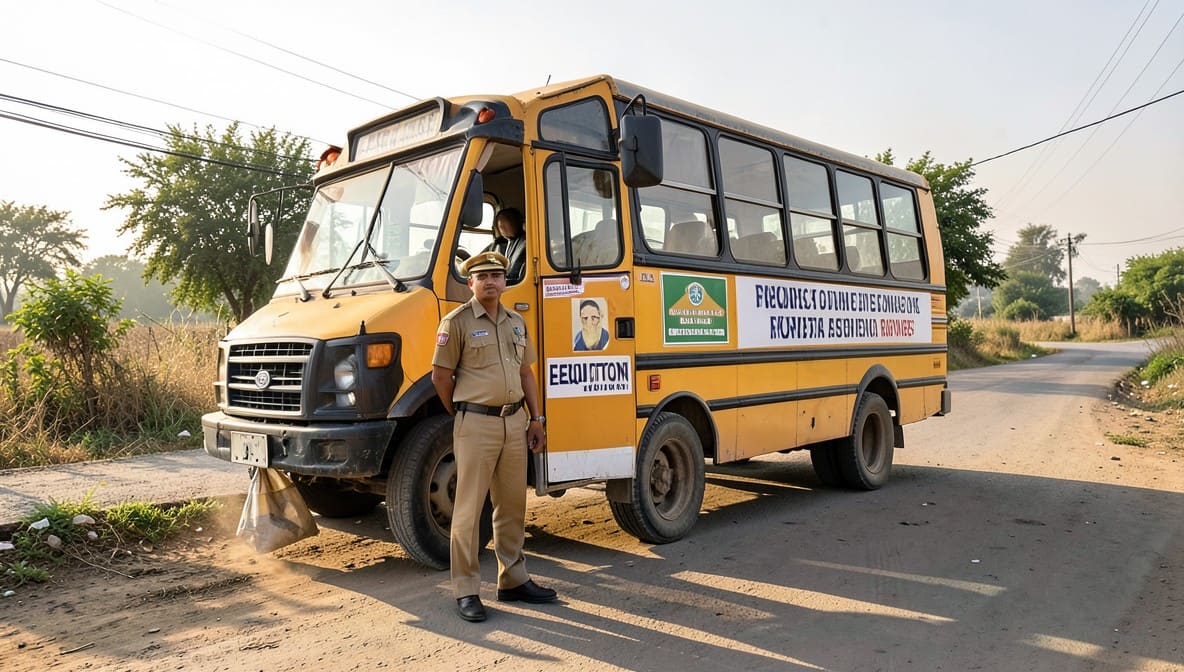
- Claimant (Umesh Chandra Pandey): Contended the vehicle was requisitioned by the State for the Pulse Polio Programme; State had operational control; compensation was inadequate given permanent disability and lack of future prospects
Relief Sought
The State sought dismissal of the award; the claimant sought enhancement of compensation to reflect true loss of earning capacity, inclusion of future prospects, higher interest, and adequate compensation for pain, suffering, and loss of amenities.
The Legal Issue
The central question was whether vicarious liability under the Motor Vehicles Act can be fastened on the State when a vehicle is requisitioned for official use, even if the registered owner is a different entity, and whether future prospects must be added to income while calculating compensation for permanent disability.
Arguments Presented
For the Appellant (State of Uttarakhand)
The State contended that liability could not be imposed on it under the doctrine of vicarious liability because it was not the registered owner of the vehicle. It relied on the literal interpretation of Section 2(19) of the Motor Vehicles Act, which defines "owner" as the person in whose name the vehicle is registered. It argued that the Tribunal mechanically presumed negligence without cogent evidence and failed to prove the driver’s tortious act. It further challenged the medical evidence, asserting that the Medical Officer was not examined and the disability assessment lacked foundation.
For the Respondent (Claimant)
The claimant relied on the factual reality of control, citing that the vehicle had been formally requisitioned by the District Magistrate for the Pulse Polio Programme. He invoked Rajasthan State Road Transport Corporation v. Kailash Nath Kothari to argue that effective control, not mere registration, determines vicarious liability. He submitted that the Tribunal’s failure to include future prospects violated the settled principles in Sarla Verma and National Insurance Co. Ltd. v. Pranay Sethi, rendering the compensation unjust and incomplete.
The Court's Analysis
The Court examined the nature of requisition and the doctrine of vicarious liability under the Motor Vehicles Act. It held that Section 2(19) is not exhaustive and must be interpreted contextually. The Court emphasized that the decisive factor is not registration but effective control and command over the vehicle and its driver.
"The liability of the ‘owner’ is vicarious for the tort committed by its employee during the course of his employment and it would be a question of fact in each case as to on whom can vicarious liability be fastened... If the original employer is able to establish that when the servant was lent, the effective control over him was also transferred to the hirer, the original owner can avoid his liability."
The Court found that the vehicle and driver were placed under the operational control of State authorities for a public health campaign. The driver acted under State instructions, and the State derived benefit from the vehicle’s use. Thus, the State became the de facto owner for liability purposes.
Regarding compensation, the Court noted that while the Tribunal correctly applied a multiplier of 13 for the claimant’s age (48 years), it erred in omitting future prospects. Citing National Insurance Co. Ltd. v. Pranay Sethi, the Court held that even in cases of permanent disability, a 25% addition to annual income is mandatory for claimants aged 45 - 55. The claimant’s monthly income of ₹4,000 was adjusted to ₹5,000 after adding future prospects, yielding an annual income of ₹60,000. Multiplying by 13, loss of earning capacity became ₹7,80,000. The Court further enhanced conventional heads - pain and suffering, medical expenses, attendant charges - to reach a total of ₹10,50,000. Interest was increased to 7% per annum from the date of filing.
The Verdict
The claimant won. The Court held that vicarious liability attaches to the State when a vehicle is requisitioned for official use and placed under its effective control, regardless of registered ownership. It also held that future prospects must be added to income in calculating compensation for permanent disability. The compensation was enhanced from ₹7,24,000 to ₹10,50,000, with interest at 7% per annum.
What This Means For Similar Cases
Vicarious Liability Is Based on Control, Not Registration
- Practitioners must now focus on proving operational control and command structure, not merely ownership documents
- In claims against government entities, evidence of requisition orders, deployment records, and chain of command is critical
- Registered owners may escape liability if they can prove transfer of control to another entity
Future Prospects Are Mandatory, Not Discretionary
- 25% addition to annual income is now the standard for claimants aged 45 - 55 in cases of permanent disability
- Tribunals must explicitly state whether future prospects were considered and why, if omitted
- Failure to include future prospects renders compensation legally inadequate and subject to enhancement on appeal
Compensation Must Reflect Functional, Not Just Physical, Disability
- Medical reports alone are insufficient; tribunals must assess impact on earning capacity
- Loss of amenities, attendant care, and future medical needs must be quantified separately
- Interest rates below 7% are increasingly likely to be revised upward on appeal